drone strikes usowned

Drone Strikes US-Owned Gas Tanker in Egyptian Port

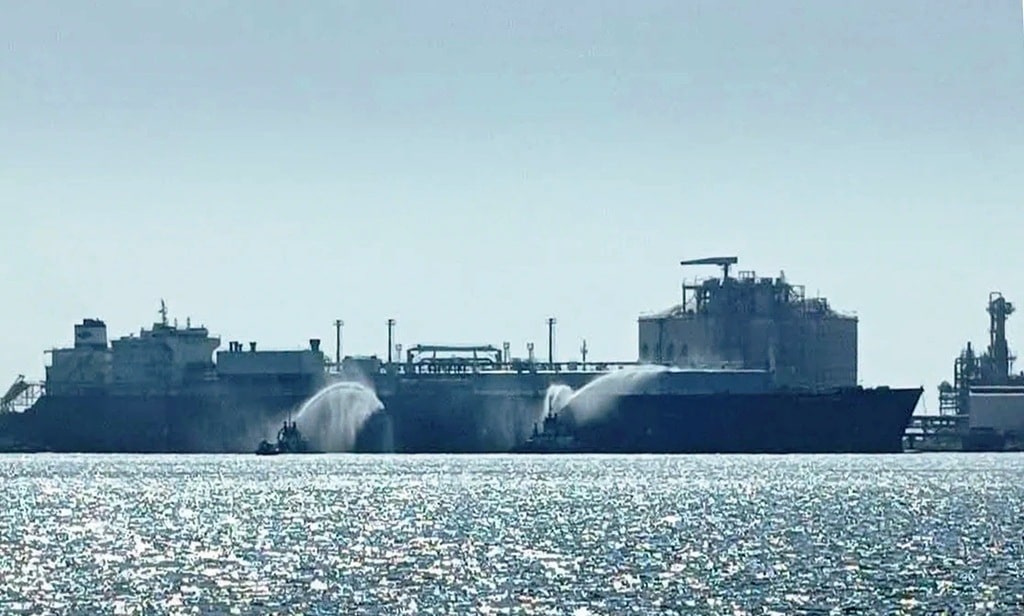
DAMIETTA, Egypt – On Wednesday evening, an unidentified drone struck a US-owned gas tanker at Egypt’s Damietta Port. The attack on the Energos Winter caused a massive fire that quickly spread to another vessel. Emergency teams evacuated the crews safely without injuries, but the incident threatens global energy supplies.

This surprising attack occurred at a critical energy hub located along the Mediterranean Sea. The British maritime security group Ambrey officially confirmed the drone strike on the floating facility. The sudden blast happened while the large vessel was actively handling its natural gas cargo.

Key Takeaways:

  • A drone struck the US-owned gas tanker Energos Winter at an Egyptian port on Wednesday.
  • The dangerous fire spread to a second ship, but all sailors escaped without any injuries.
  • This violent attack raises serious concerns about global energy security and wider Middle East conflicts.

The drone directly hit the Energos Winter, which is a massive floating gas storage ship. It was anchored safely at the Damietta Port in northern Egypt when the attack happened. After the initial explosion, fierce flames quickly jumped to a nearby gas carrier named GasLog Salem.

Local authorities and port emergency services rushed to the chaotic scene almost immediately. Brave firefighters battled the intense blaze to stop it from reaching the port’s main tanks. According to reports from India Today, emergency crews successfully contained the dangerous fire.

Safety officials safely relocated both damaged ships away from the very busy port area. Port services actually resumed their standard operations later that same night without further issues. This incredibly quick response saved many lives and prevented a much larger environmental disaster.

Egypt Responds to the Blast

Egyptian government officials quickly confirmed the fire but stayed completely quiet about the actual cause. The country’s Petroleum Ministry released a brief public statement regarding the scary incident. They described the event simply as a fire breaking out aboard a regular storage vessel.

The official ministry statement did not mention a drone strike in their initial safety report. Instead, they highly praised the fast actions of their local safety and security teams. They emphasized that the dangerous situation was handled using fully approved emergency response plans.

Egypt’s Petroleum Minister Karim Badawi traveled directly to the Damietta Port after the news broke. He wanted to personally oversee the ongoing rescue efforts and the critical recovery operations. According to The Times of Israel, technical teams are currently assessing the overall structural damage.

Rising Regional Tensions

This targeted drone strike marks a very dangerous shift in the ongoing Middle East conflict. Previously, the war had mostly stayed near the Gulf and its immediate surrounding areas. Now, the destructive violence is clearly spilling over into completely new, highly sensitive territories.

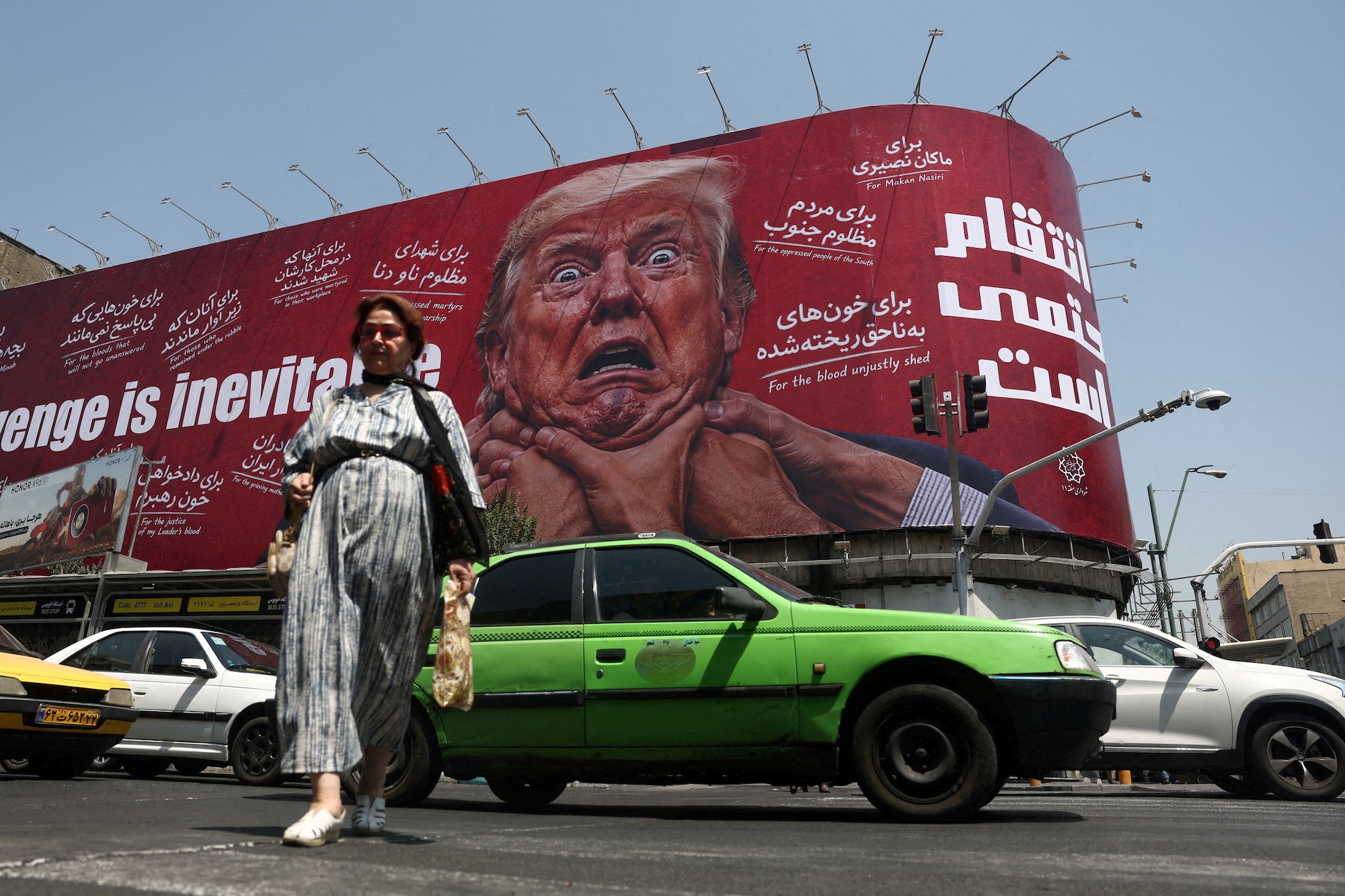
No specific militant group has officially claimed responsibility for this surprise attack just yet. However, Iranian television recently showed Damietta Port on a map of potential revenge targets. This troubling broadcast happened just two days before the actual drone strike hit the port.

The attack followed recent heavy clashes involving US military forces and Iran-backed militia groups. According to Ynet News, the Iranian threat map highlighted the port’s role in supplying Europe. The overall security situation remains very tense across the entire Middle Eastern region.

Following the fiery attack, US President Donald Trump issued a very strong public warning. He firmly promised a very hard response against those responsible for the drone strike. This tough talk strongly suggests that regional military actions could easily escalate very soon.

The Impact on Global Energy

The Damietta Port is one of Egypt’s most important natural gas export hubs today. It plays a massive role in supplying vital heating fuel to international energy markets. Any unexpected disruption here causes instant panic among global energy traders and shipping companies.

The targeted ship, Energos Winter, is not just a standard transport boat for fuel. It is a specialized floating unit that safely stores and processes liquefied natural gas. The large vessel changes liquid gas back into regular gas for standard domestic pipelines.

This complex daily process is absolutely vital for sending energy to homes and businesses. The US-based company Energos Infrastructure currently owns the large, highly valuable floating vessel. Meanwhile, Wilhelmsen Ship Management carefully handles the daily commercial operations and strict safety protocols.

What Happens Next?

Global energy markets are watching this developing security situation very closely right now. Nervous traders deeply worry about more unexpected attacks on oil facilities and shipping lanes. The Middle East currently provides a massive amount of the world’s daily fuel supply.

If these targeted drone strikes continue, global shipping costs will likely skyrocket very soon. Transport companies may have to find longer, much safer routes to avoid these danger zones. This unfortunate change would eventually raise basic fuel prices for everyday consumers worldwide.

For now, the Damietta Port is working incredibly hard to maintain its normal operations. Security measures will likely increase significantly around these highly valuable, vulnerable energy facilities. The entire world waits to see if this was an isolated event or a scary new trend.

Trending News:

Top Energy Firms Line Up Bids for BP’s Prized Egypt Gas Portfolio

Singapore Seeks Indonesian Deal for Stable Natural Gas Flows


Similar Posts

  • |

    Mayor shot dead inside town hall in Central Mexico

    Valentín Lavín Romero, the mayor of Temoac in the central Mexican state of Morelos, was shot dead on Wednesday inside the municipal government headquarters. The politician, affiliated with the Green Party, an ally of the ruling Morena party, was targeted in broad daylight when armed hitmen entered the town hall before escaping on a motorcycle. The fatal attack came six months after Lavín Romero survived a previous attempt on his life in late January, when gunmen opened fire on his vehicle at a highway petrol station. His assassination marks the 14th murder of a mayor in Mexico since President Claudia Sheinbaum took office in October 2024, highlighting the persistent vulnerability of municipal officials in regions contested by organised crime networks. Prior to his death, Lavín Romero faced intense local scrutiny and threats. In May, a criminal group left a warning banner in the town center accusing him of protecting rival syndicates. He was also under pressure from community activists who demanded investigations into his alleged links to the homicides of two local campaigners. The state prosecutor’s office confirmed that initial forensic investigations are underway at the crime scene, though no suspects or official motives have yet been formally identified. The killing coincides with broader federal anti-corruption drives under Operation Swarm, which targets collusion between municipal administration members and regional cartels across multiple states.

  • |

    China’s internet obsessed with Moonshot&#82…

    The release of Moonshot AI’s Kimi K3 has generated significant buzz across Chinese social media, sparking a vigorous debate about China’s emergence as a strong contender in the global AI race. The Chinese startup launched the open-weight model on Thursday, promoting its capability to align with dominant frameworks from OpenAI and Anthropic at discounted rates, while temporarily halting new subscriptions due to overwhelming demand. Kimi K3 has become the most prominent Chinese AI model to spark discussion about China’s position in the global AI landscape. The key question is how China will meet the rising demand for computing power, with Moonshot AI emphasizing that Kimi K3 converts computing power into AI capabilities more effectively than its predecessor. “Put simply, the more capable AI becomes, the greater its appetite for computing power. This race to build more powerful AI hardware isn’t slowing down anytime soon,” said a user from Shandong province. Another user from Jiangsu added: “Competition among AI software is likely to shift from focusing purely on performance to balancing both performance and token usage. In other words, it’ll become a competition over value for money. It doesn’t matter how powerful your model is if it uses too many tokens. And it doesn’t matter how good it is if the monthly subscription is too expensive.” The model has reportedly matched or outperformed GPT and Claude on some benchmarks, according to social media posts. The low-cost open-source nature of Kimi K3 has made it particularly appealing to developers and researchers, who have been eager to test its capabilities. The temporary halt on new subscriptions highlights the immense demand for the model, which has quickly become a viral sensation in China’s tech community. Moonshot AI’s launch of Kimi K3 reflects the growing competition in the AI sector, particularly between China and the US. Chinese companies are increasingly developing AI models that can compete with their American counterparts, often at lower costs. The success of Kimi K3 has fueled optimism about China’s ability to innovate in AI and has raised questions about the future of the global AI industry. As the demand for AI capabilities continues to grow, the competition between open-weight and proprietary models is likely to intensify. Kimi K3’s success suggests that open-weight models can be competitive, offering a viable alternative to proprietary systems from US companies. However, the debate over performance versus cost-effectiveness will continue to shape the direction of AI development. The viral success of Kimi K3 has put Moonshot AI in the spotlight, with many watching to see how the startup will navigate the challenges of scaling its operations to meet demand. The company’s ability to balance performance, cost, and accessibility will determine its long-term success in the competitive AI market. For now, Kimi K3 has captured the imagination of China’s internet users, signaling a new chapter in the global AI race.

  • |

    China’s Chongqing East becomes world’s largest railway station

    Almost everyone has travelled by train at some point and has seen railway stations. But do you know which country is home to the world’s largest railway station? If you do not, here is the answer: the world’s largest railway station is located in China and is nothing short of an architectural marvel. China is already known for numerous engineering wonders ranging from remarkable bridges to the world’s largest high-speed railway network. Chongqing East Railway Station Chongqing East Railway Station located in southwestern China is the world’s largest railway station in terms of area. It was opened to the public in June 2025. The railway station covers an area of approximately 13 million square feet equivalent to around 170 football fields. It is also about five times larger than New York’s Grand Central Terminal. The station has 15 platforms and 29 railway tracks and during peak hours, it can accommodate around 16,000 passengers per hour. Around 16,500 tonnes of steel were used for its roof. However, the most remarkable feature of the station is the speed at which it was constructed and it was built on top of a mountain. The Chongqing region is mountainous which has traditionally made the development of transportation infrastructure particularly challenging. The station was constructed in just 38 months with the help of around 40,000 workers and a fleet of robotic machinery. Although 38 months may seem like a long period, in many countries, simply obtaining approval for projects of this scale can take longer than that.

  • |

    Erdogan says Makkah defence pact could expand across region

    ANKARA: Turkish President Recep Tayyip Erdogan has said the vision behind the Makkah Joint Defence Agreement between Türkiye, Saudi Arabia and Pakistan extends beyond the three signatories and could eventually include other regional countries. Erdogan said the agreement was designed to strengthen collective security and promote lasting peace, stability and prosperity in the region. He stressed that the pact was not directed against any particular country. Speaking in an interview with an Arab newspaper, Erdogan said the three countries wanted to create a broader regional framework based on cooperation, mutual trust and collective responsibility. He said countries that support peace, stability and prosperity should be able to join the framework in the future. According to Erdogan, the agreement is based on the principle of collective deterrence. A security threat against one member would be treated as a concern for the other members. He said the arrangement could also encourage joint defence-industry projects and greater cooperation against terrorism. Erdogan argued that regional countries should take greater responsibility for addressing their own security challenges rather than relying on solutions imposed from outside the region. He described the agreement as the outcome of long-running consultations among the participating countries and said it reflected changing conditions in the region. The Turkish president also rejected the idea that the pact was simply a response to tensions between the United States and Iran. He said its broader objective was to establish a durable mechanism for regional security. Focus on Gulf security Erdogan said the agreement could contribute to stability in the Gulf, which he described as vital to international trade and the global economy. He highlighted the importance of energy supplies, maritime routes and trade links passing through the region. He also expressed concern over tensions surrounding the Strait of Hormuz, warning that prolonged disruption there could have consequences for economies around the world. Erdogan called for restraint and continued diplomatic engagement to ensure the waterway remains safe for international shipping. He said Türkiye preferred dialogue and negotiations over military escalation and believed diplomatic efforts were essential to resolving disputes in the region and beyond. The Makkah agreement formalises growing strategic cooperation between Pakistan, Saudi Arabia and Türkiye. The three countries describe the arrangement as defensive and aimed at strengthening collective deterrence rather than creating an offensive military bloc. Erdogan said stronger cooperation between Ankara and Riyadh would also contribute to regional stability. He pointed to expanding ties in defence, trade, investment, energy and tourism. Prime Minister Shehbaz Sharif has described the trilateral agreement as an extension of Pakistan and Saudi Arabia’s existing defence cooperation. Pakistan and Saudi Arabia had earlier signed a strategic mutual defence agreement under which aggression against either country would be treated as aggression against both. The latest trilateral framework builds on those longstanding security ties and introduces Türkiye into a wider mechanism for defence cooperation.

  • | | | | |

    Iran warns US of retaliation if nuclear sites are …

    TEHRAN: Iran has issued a fresh and stern warning to the United States, declaring that any military strike on its nuclear facilities would trigger a direct response against American interests and those of its allies across the Middle East, raising fears of a wider regional conflict. The warning came on Tuesday from Iran’s Khatam al-Anbiya Central Headquarters, the country’s top joint military command, amid growing tensions following recent statements by US President Donald Trump. In an official statement, the military command said that any attack targeting Iran’s nuclear infrastructure would not remain limited in scope and would instead lead to a dangerous expansion of conflict throughout the region. Iranian commanders stressed that the United States and its regional allies would bear the consequences of such military action, warning that their strategic interests could become legitimate targets if Iranian nuclear sites were attacked. The latest warning follows remarks by President Trump, who recently threatened military action against Iran’s nuclear facilities, particularly the underground nuclear complex near Natanz. Trump claimed that an attack on the site could happen soon and asserted that Iran would be unable to stop it. His comments have further heightened tensions between Washington and Tehran, which have remained locked in a prolonged confrontation over Iran’s nuclear programme and regional security issues. While Iranian officials insist their nuclear activities are for peaceful purposes, Western governments have repeatedly expressed concerns over Tehran’s uranium enrichment programme, leading to years of sanctions and diplomatic disputes. Security analysts believe that any direct strike on Iran’s nuclear facilities could dramatically escalate instability across the Middle East, potentially drawing multiple regional actors into a broader conflict and disrupting global energy markets. The latest exchange of threats underscores the fragile security situation in the region, with the international community closely monitoring developments amid growing fears that miscalculation by either side could spark a larger military confrontation.

  • | |

    Zelensky says Russia deploying North Korean missil…

    Ukrainian President Volodymyr Zelensky said Russia used North Korean missiles in overnight strikes on Zaporizhzhia that killed at least six people and injured 19 others, as both sides continued exchanging attacks across the front line. In a video address Monday evening, Zelensky said Russia has reached a point where it “cannot wage war without reinforcements from North Korea” for the first time. He warned that continued use of North Korean missiles and troops inside Ukraine and across Europe allows Pyongyang to identify and fix weaknesses in its weapons systems, calling this a growing danger that extends beyond the immediate conflict. Zaporizhzhia regional governor Ivan Fedorov shared images of burning vehicles and damaged buildings, saying Russian forces struck the city with missiles and guided bombs. He said the attack damaged industrial sites, infrastructure and non residential buildings across the city, in addition to causing casualties. The strikes followed a separate wave of Ukrainian drone attacks that killed at least 13 people, including a child, in Russia’s republic of Tatarstan, located more than 1,100 kilometers, or roughly 680 miles, from the Ukrainian border. Ukraine’s Armed Forces said the strikes hit the city’s Tanevo oil refinery, and verified social media footage showed large plumes of smoke and daytime flames at the site as air raid sirens sounded nearby. Officials said at least 75 people were injured in that attack, which ranks among the deadliest single strikes on Russian territory since the full scale invasion began in 2022. Uzbekistan’s consulate in Tatarstan said seven of those killed held Uzbek citizenship. In Kyiv, air raid sirens sounded twice overnight and explosions struck the outskirts of the capital, sparking fires and injuring one person. A strike also damaged a hospital in the city, though officials said staff and patients had already moved to shelter. Separate strikes on power substations in Kherson and Kharkiv caused outages in both cities. In Sumy, a Russian drone strike injured two women, aged 52 and 66, according to Sergiy Kryvosheenko, head of the Sumy City Military Administration. He said both were treated at the scene and that the strike also damaged civilian vehicles, warehouse buildings and other infrastructure. Ukrainian officials said Russia launched 120 drones overnight along with a mix of missile types, though for the first time authorities did not disclose how many missiles were fired or intercepted. The omission followed a statement from Ukraine’s Air Force on Monday asking media outlets to avoid sensationalized coverage or pessimistic framing regarding the country’s shortage of air defence interceptors. Ukraine also struck Russian territory overnight, hitting warehouses belonging to online retailer Wildberries in the Voronezh region in southern Russia. Wildberries, often described as Russia’s answer to Amazon, has faced repeated attacks on its facilities in recent weeks. The company has not confirmed the latest strike but said it evacuated facilities in the border region as a precaution. In July, Ukrainian drone strikes on several Wildberries warehouses disrupted operations for a large number of small and medium sized Russian businesses. Kyiv said at the time that it was targeting logistics hubs Russian buyers used to acquire military equipment, part of a broader effort to disrupt supply lines feeding the Russian military. In his Monday address, Zelensky also praised a separate strike on a Russian petrochemical plant in western Siberia, calling it a significant achievement for Ukraine’s military. He pledged additional long range Ukrainian strikes intended to convince Russia and the Russian public that peace remains necessary. This is not the first time Zelensky has raised alarm over North Korean military support for Russia. He said over the weekend that as many as 50,000 North Korean soldiers have been deployed to fight alongside Russian forces, part of a growing pattern of cooperation between Moscow and Pyongyang that Ukrainian officials say is reshaping the battlefield and raising broader security concerns well beyond the immediate conflict.

Leave a Reply

Your email address will not be published. Required fields are marked *