iran inflation surges
|

Iran inflation surges to 66%

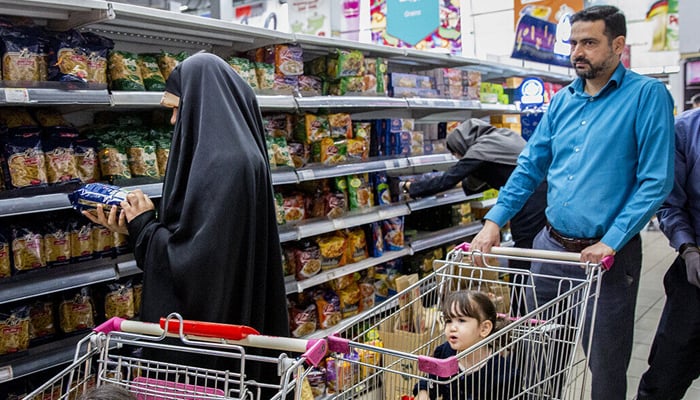
Iran’s annual inflation rate has climbed to 66%, highlighting the growing pressure on household budgets as the prices of essential goods continue to rise sharply across the country.

According to Iranian media reports, food and beverage prices recorded the most significant increase, rising by 128.1% compared with the same period last year. The steep increase has made everyday necessities considerably more expensive and placed additional strain on consumers, particularly low- and middle-income families.

Officials and economic observers have increasingly raised concerns over the rapid rise in the cost of basic commodities. Reports indicate that the prices of at least eight essential items have more than doubled over the past 12 months. The sharp increase has reduced consumers’ purchasing power and made it increasingly difficult for many households to maintain their usual standard of living.

The latest figures also point to continued price pressure on a monthly basis. Iran recorded a monthly inflation rate of 3.1% in July, according to the Iranian news agency. Although the monthly increase appears smaller than the annual rise, continued month-on-month price growth can further intensify inflationary pressures if the trend persists.

The surge in food prices is particularly significant because food represents a major portion of household spending. Rising costs for basic groceries can quickly affect family budgets, leaving consumers with less money for other necessities such as housing, transportation, healthcare and education.

Iran has faced persistent economic challenges in recent years, including currency pressures, high living costs and restrictions affecting trade and economic activity. The latest inflation figures add to concerns about the country’s economic outlook and the financial difficulties facing ordinary citizens.

With food and other essential commodities recording exceptionally high annual increases, Iranian households are likely to remain under significant financial pressure unless inflation begins to slow substantially in the coming months.
Similar Posts

  • | | |

    Iran says Pakistan ties gaining greater importance

    TEHRAN: Iran has described its relationship with Pakistan as increasingly important, saying Islamabad has played a significant role as a mediator since the outbreak of the regional conflict. Iranian Foreign Ministry spokesperson Esmaeil Baghaei said the two neighbouring countries were maintaining close diplomatic contacts. He also confirmed that Iranian Foreign Minister Abbas Araghchi and Parliament Speaker Mohammad Bagher Ghalibaf had been invited to visit Islamabad. Baghaei said the two officials would travel to Pakistan at a suitable time. He did not announce a specific date for the visit. He described reciprocal visits between the two countries as a natural part of their growing bilateral relationship. The Iranian official also played down concerns that the recently signed defence agreement between Pakistan, Saudi Arabia and Turkiye was aimed at Tehran. Pakistan, Saudi Arabia and Turkiye signed the Makkah Joint Defence Agreement on August 7. The agreement seeks to strengthen collective defence cooperation and provides for a joint response if any member comes under attack. Baghaei said Tehran did not consider the agreement a direct threat to Iran. He said regional countries were increasingly seeking security arrangements based on their own regional realities rather than relying entirely on external powers. He maintained that regional cooperation could contribute to stability if such arrangements remained inclusive and focused on preventing conflict. Baghaei also said Iran was not prepared to resume direct negotiations with the United States while Tehran believed Washington was violating an interim agreement. The Iranian government has also linked the reopening of the Strait of Hormuz to a number of demands. These include compensation for damage caused during the conflict and an end to the US naval blockade of Iranian ports. Meanwhile, Iran and Oman are continuing discussions on arrangements for commercial shipping through the Strait of Hormuz. Baghaei said the talks were progressing in a constructive manner. He said the two sides had reached an understanding on a proposed map for shipping traffic and were working on several technical details. According to the Iranian official, the proposed arrangement would establish mechanisms for safer maritime movement. It would also address environmental protection and maritime crimes. He stressed that the discussions with Oman were focused on ensuring safe international shipping and were separate from broader political disputes. Baghaei nevertheless reiterated that Tehran would not allow the full reopening of the strategic waterway unless its conditions concerning Washington were addressed. In a separate development, Iran has appointed former Islamic Revolutionary Guard Corps commander Mohsen Rezaei to a senior position in the Supreme National Security Council. Rezaei has replaced Mohammad Baqer Zolqadr as secretary of the body responsible for coordinating Iran’s security and foreign policy. No official reason was immediately given for the change. It also remains unclear whether the appointment will lead to any major shift in Iran’s security policy. Rezaei, 71, commanded the Revolutionary Guards from 1981 to 1997. He later served for more than two decades as secretary of Iran’s Expediency Discernment Council and also held the position of vice president for economic affairs. Iran’s Supreme National Security Council brings together senior military, intelligence and government officials. It is formally chaired by the president, while the supreme leader retains ultimate authority over major state matters. A separate decree appointed Rezaei as the supreme leader’s representative on the council. Zolqadr was instead named as a political adviser. The developments come as Iran faces heightened regional tensions and continues efforts to manage its relations with neighbouring countries and major international powers.

  • Sarah Ferguson, the former Duchess of York, is said to be pushing back against feelings of isolation from the royal family. Insiders  claim that she is now seeking a direct audience with King Charles and Queen Camilla. The details were shared with Heat World by a source close to the situation. According to the confidant, Ferguson has no intention of quietly fading from public life. She is reportedly determined to make her case directly to the King and Queen, hoping to secure some form of leniency regarding her standing within the family. The source quoted Ferguson as saying she refuses to be discarded simply because it would make things easier for Charles and Camilla. She reportedly believes she deserves far better treatment than that, and is prepared to keep pressing until she gets it. Despite her resolve, the insider noted that Ferguson is not approaching this without apprehension. Returning to England reportedly fills her with nerves, but that anxiety is not enough to make her back down from pursuing the meeting. What seems to be driving her most, according to the source, is the pain of feeling disconnected from her daughters and grandchildren. That separation is reportedly the hardest part of her current situation, more so than any concerns about her public image. The renewed push comes after months of Ferguson keeping an unusually low profile, a shift that followed fresh revelations in January regarding her past association with Jeffrey Epstein. It is worth noting that being named in related documents does not, on its own, suggest any wrongdoing on her part. Ferguson has largely stayed out of the public eye since then. Reports from The Sun suggest she’s been staying with her former partner, Formula 1 businessman Paddy McNally, at his Swiss chalet in Verbier, a property reportedly worth around £15 million known as “Les Gais Lutins.” Her stay there followed her reported eviction from Royal Lodge, the residence she once shared with Prince Andrew. The situation marks a notable shift for Ferguson, who has spent recent months largely removed from royal circles and public appearances. Whether her reported appeal to Charles and Camilla will result in an actual meeting remains unclear, but insiders suggest she has no plans to retreat quietly, even as she navigates both personal anxiety and the complicated dynamics of her relationship with the royal family.

  • | |

    Iran says Oman deal nears completion but insists U…

    Iran said on Sunday that a deal with Oman establishing new shipping lanes through the Strait of Hormuz has entered its final stages, though Tehran maintained the critical waterway will remain closed until Washington satisfies a broader set of conditions tied to the ongoing standoff between the two countries. A US official told Reuters on Friday that an agreement between Iran and Oman appeared close and could soon lead to the reopening of the strait, a passage that carried roughly a fifth of global oil and liquefied natural gas shipments before Iran shut it down in response to American and Israeli military strikes earlier this year. Iranian Foreign Minister Abbas Araqchi confirmed on Sunday that negotiations over the strait, which sits between Iran and Oman, had reached their final stages. However, he repeated comments made a day earlier stressing that the waterway would not reopen unless additional conditions set by Tehran were met first. Iran’s Mehr news agency quoted Araqchi as saying the emerging agreement would establish the new shipping lanes to be used once the United States fulfils those conditions and the strait formally reopens. Araqchi said Iran and the United States are not currently engaged in direct talks and that Tehran has no plans to begin them as long as Washington continues to breach an interim agreement the two countries signed in June. He added that messages between the two sides are being exchanged through intermediaries rather than direct contact. Iran demands compensation and sanctions relief The United States launched air strikes against Iran in late February, saying the campaign aimed to prevent the Islamic Republic from acquiring nuclear weapons or using missiles and regional proxy forces to threaten the wider Middle East. Washington and Tehran agreed to a ceasefire in June, but the United States reimposed a blockade on Iranian shipping in the Gulf in July, a move Iran characterised as a violation of a truce that had already shown signs of collapse. A US official, speaking to Reuters on condition of anonymity, said the blockade on Iranian ports would lift once a deal restoring unimpeded commercial shipping is formally announced. The official added that any American actions would remain directly tied to Iran fulfilling its own commitments under the emerging agreement, pointing to a carefully sequenced approach that both sides appear to be navigating cautiously. The arrangement under discussion appeared, according to sources who previously spoke to Reuters, to grant Tehran a degree of control over vessels entering the Gulf through the strait, an arrangement that shipping industry sources have said would be difficult to implement in practice. The precise current status of the agreement remained unclear on Sunday, and Iran’s latest statements suggested several additional factors could still complicate its finalisation. Araqchi said the strait’s reopening would depend in part on the United States providing compensation to Iran for what Tehran describes as widespread attacks on its territory and interests. Mohammad Baqer Zolqadr, secretary of Iran’s top national security body, outlined a broader list of demands, including an end to US threats against Iran, a halt to what Tehran calls aggression against its allies in Lebanon, the Palestinian territories, Yemen and Iraq, the lifting of the shipping blockade and broader sanctions, and the release of frozen Iranian financial assets. Supreme Leader’s condition remains unclear Ultimate decision making authority in Iran rests with Supreme Leader Mojtaba Khamenei, who has not appeared in public since an air strike killed his father and predecessor on February 28, the first day of the joint US and Israeli air campaign against Iran. State media reported on Sunday that Iranian President Masoud Pezeshkian met with Khamenei in late July, and a paramilitary leader promised that footage of the supreme leader would soon be released publicly. Khamenei was reportedly injured in the same strike that killed his father, according to earlier reporting. Separately, the United Arab Emirates said on Saturday that Iran had attacked a vessel affiliated with its state oil company. Iran did not immediately respond to the allegation. The country’s powerful Revolutionary Guards have attacked commercial vessels in the past, arguing that ships transiting the strait without coordinating their passage with Iranian authorities are not protected from such action. Houthi attacks widen regional shipping crisis Iran’s strikes on shipping in the Strait of Hormuz have coincided with intensified attacks from its Yemen based allies, the Houthis, who have targeted vessels at a separate chokepoint located between the Red Sea and the Gulf of Aden on the opposite side of the Arabian Peninsula. The Houthis declared a naval blockade against Saudi Arabia in the Red Sea last month, framing the move as retaliation for what they described as a Saudi imposed siege in Yemen, an accusation the Saudi government has firmly denied. Riyadh continues to back Yemen’s internationally recognised government in the country’s ongoing conflict. The group claimed responsibility for an attack on Saudi Aramco’s Jazan refinery on Sunday, coming just two days after the kingdom signed a defence pact with fellow Sunni Muslim majority nations Turkey and Pakistan amid growing concern over regional instability stemming from the US and Israeli military campaign against Shiite led Iran. Saudi Arabia’s energy ministry confirmed that a fire broke out at the refinery following the attack but was later extinguished without causing any injuries, and that authorities were continuing to manage the aftermath of the incident. The ministry did not specify a cause for the blaze. Houthi military spokesperson Yahya Saree said on social media platform X that the group used a drone to strike the facility. The Houthis have targeted Aramco sites in Jazan before, a refinery that processes approximately 400,000 barrels of crude oil daily in southwestern Saudi Arabia. It remains unclear whether or to what extent Pakistan or Turkey would participate in any Saudi response to the latest attack. Turkish Foreign Minister Hakan Fidan said the newly formed alliance between the three countries was not directed against Iran or any other nation, describing it instead as a general commitment to

  • | |

    Kabaddi player’s wife dies in suspected suicide

    HARYANA: Muskan, the 23-year-old wife of international Indian kabaddi player Shailu Ballhara, was found dead at her residence in the Indian state of Haryana in what police believe to be a suspected suicide, according to Indian media reports. The incident reportedly took place on Friday afternoon. Family members informed the police after discovering her unconscious at the house. Law enforcement officials, along with a forensic team, reached the scene soon afterward and began collecting evidence. Police have launched an investigation to determine the circumstances surrounding the death. Officials said the exact cause behind the suspected suicide has not yet been established, and investigators are examining all possible aspects of the case. According to Muskan’s family, she married Shailu Ballhara in December 2023. The couple welcomed their son, Hardik, in November 2025. Relatives said the family had been living together following the birth of their child. Investigators are also reviewing Muskan’s recent social media activity. Indian media reported that a day before her death, she shared a video featuring a sad Punjabi song, which has become part of the ongoing investigation. However, police have not confirmed whether the post was linked to the incident. Officials said statements from family members and other individuals are being recorded, while forensic evidence collected from the residence is being examined. Authorities added that no conclusions will be drawn until the investigation is complete.

Leave a Reply

Your email address will not be published. Required fields are marked *