matchmaking helps hundreds
|

AI matchmaking helps hundreds find life partners in Japan

Tokyo- Artificial Intelligence (AI) is now being used for a wide range of purposes around the world including helping people find a life partner. In Japan, AI-powered matchmaking has already helped hundreds of couples get married.

Japan has been facing a decline in marriage and birth rates while its aging population continues to grow. To address this issue, local governments have partnered with private companies to introduce AI-based matchmaking systems.

The AI analyzes users personalities, values, interests, hobbies and lifestyle preferences to recommend compatible life partners. An AI-powered matchmaking app was launched in September 2024 to make it easier for people seeking marriage to find a suitable lifelong partner.

To use the app, users must provide verified proof of identity, confirm that they are legally unmarried, submit income-related documents and complete an online interview before joining the platform.

According to Japanese authorities, the technology has encouraged more people especially young adults to consider marriage. Previously, many young people showed little interest in traditional matchmaking services.

Officials say the program has contributed to an increase in marriages in several Japanese cities. Its primary goal is to help boost Japan’s declining birth rate with the government introducing various initiatives to encourage marriage.

Experts note that while AI cannot decide relationships on its own, it can help remove barriers and make it easier for people to find compatible life partners.


Similar Posts

  • | |

    Saudi Arabia arrests suspects in major corruption cases

    Saudi Arabia’s Oversight and Anti-Corruption Authority, known as Nazaha, has launched a series of investigations into alleged bribery, abuse of authority, and other corruption-related offenses, leading to the arrest of several government employees, businesspeople, and foreign nationals. According to officials, authorities arrested a businessman who allegedly offered a bribe of **1.6 million Saudi riyals** to secure the illegal clearance of two containers. In a separate case, investigators arrested an employee accused of accepting **200,000 riyals** in exchange for favors. Nazaha also reported action against an employee of the **Ministry of Health**, who allegedly received **900,000 riyals** in return for illegally awarding government projects. Authorities also arrested a person linked to a **Ministry of Energy project** for allegedly accepting a 200,000-riyal bribe. The anti-corruption agency further said that authorities arrested a former passport official over allegations of receiving **60,500 riyals** in bribes. A customs employee also faced arrest after investigators accused the official of accepting **55,000 riyals** in exchange for facilitating unlawful activities. Nazaha said its investigations also covered employees working in municipal bodies and other government institutions, along with several individuals involved in suspected corruption schemes. The authority continues to investigate the cases and has stressed that it will take legal action against anyone found involved in bribery, misuse of public office, or violations of government regulations. The latest arrests reflect Saudi Arabia’s ongoing efforts to strengthen oversight, protect public funds, and hold officials and private individuals accountable for corruption.

  • Rabies still kills thousands in Pakistan

    Every year millions of people in Pakistan are bitten by dogs, and thousands are believed to die from  rabies a deadly viral disease that can almost always be prevented with timely treatment. Health experts say Pakistan still does not have a strong nationwide system to track rabies cases. Because of this around 5,000 people are estimated to lose their lives each year after being bitten by rabid dogs. Rabies is a viral infection that attacks the brain and nervous system.  Once symptoms appear the disease is almost always fatal with a survival rate of less than 1%. The first signs of rabies usually develop about six weeks after a bite from an infected animal. Common symptoms include fever headache body aches a sore throat and difficulty swallowing.  As the disease progresses it becomes much more dangerous. Children living in rural areas and on the outskirts of cities are among the most affected groups. A study published in the international journal Acta Tropica found that the high number of rabies cases in Pakistan is linked to low public awareness delays in seeking medical care and weak disease prevention efforts. Health experts say that immediate medical treatment after a dog bite including wound cleaning and timely vaccination can prevent rabies. They also welcomed the federal government’s recent in principle approval of the National Rabies Prevention and Control Framework calling it an important step toward improving rabies prevention and saving lives.

  • |

    US official insists Gaza peace plan remains active despite Netanyahu’s rejection

    A Board of Peace official confirmed on Monday that US President Donald Trump’s Gaza peace framework remains operative, despite public pushback from Israeli Prime Minister Benjamin Netanyahu. Netanyahu rejected any withdrawal of Israeli forces until the Palestinian militant group Hamas is genuinely disarmed. His remarks came as the Israeli military  halted offensive operations in Gaza following pressure from Washington. The Board of Peace official emphasized that the initiative relies on phased implementation and verification on the ground, ensuring Israel makes no irreversible security concessions prior to confirmed compliance. Under the plan announced last month, Israeli forces would withdraw as Hamas disarms, paving the way for an International Stabilisation Force to partner with a newly formed Palestinian police unit. Negotiation roadmaps are being coordinated between the Board of Peace and Hamas while bilateral discussions with Israeli leadership continue.

  • | | | |

    Mohsin Naqvi begins official visit to Iran

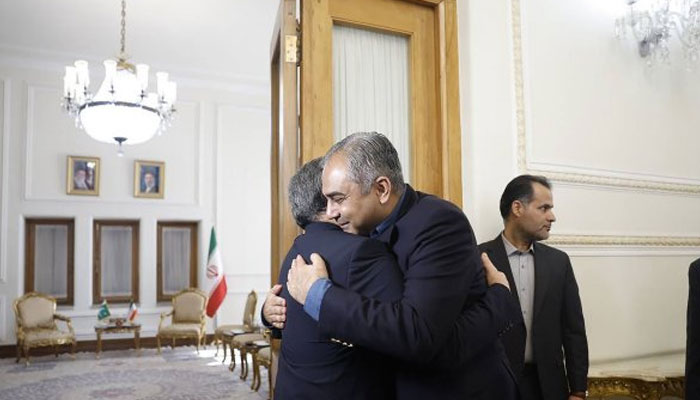
      Federal Interior Minister Mohsin Naqvi has arrived in Iran on an official visit, where he is set to hold meetings with senior Iranian officials, according to Iranian media reports. Naqvi’s visit is expected to focus on strengthening relations between Pakistan and Iran and improving coordination on issues of mutual interest. During his stay, the interior minister will meet high-ranking Iranian officials and exchange views on matters concerning the two neighbouring countries. The visit comes amid continued diplomatic engagement between Islamabad and Tehran, with both sides seeking to enhance cooperation and maintain regular contact at the leadership and ministerial levels. Discussions during Naqvi’s meetings are likely to cover bilateral relations as well as regional developments that have implications for both Pakistan and Iran. The two countries share a long border and have close historical, cultural and economic ties, making regular coordination between their governments important. Pakistan and Iran have also been working to improve cooperation on border management and other issues affecting communities along their shared frontier. High-level visits and official meetings provide an opportunity for both sides to review progress, address outstanding concerns and explore new areas of cooperation. Iranian media said Naqvi will meet senior officials during his visit, although further details about his schedule and the specific issues to be discussed were not immediately disclosed. The minister’s visit is part of Pakistan’s broader efforts to maintain engagement with neighbouring countries and strengthen bilateral ties through diplomatic and official channels. His meetings in Tehran are expected to contribute to continued dialogue between the two countries and provide a platform for discussing matters of shared concern.

  • |

    Australia initiates legal action against Telegram over failure to remove extremist content

    Australia’s eSafety Commissioner, Julie Inman-Grant, has launched legal proceedings in the Federal Court against messaging platform Telegram, alleging the company failed to comply with statutory safety obligations under the country’s Online Safety Act. The regulator claims Telegram permitted a permissive environment by hosting easily accessible extremist content, including footage of the 2019 Christchurch mosque shootings, the May 2022 Buffalo attack in New York, and filmed terrorist executions. The platform faces potential fines of up to 54.6 million Australian dollars for its non-compliance. The legal action follows a history of regulatory friction, including a one million Australian dollar fine imposed on Telegram in February 2025 for failing to answer inquiries regarding child abuse and violent material on time. Inman-Grant noted that whilst Australia does not license digital services, the regulator possesses the statutory authority to request a Federal Court order ceasing Telegram’s operations within the country if necessary. A spokesperson for Telegram rejected the allegations, stating that the platform’s anti-terrorism moderation efforts are well documented and confirming that the company will contest the claims in court.

  • |

    IRGC claims destruction of US Aircraft on ground a…

    Iran’s Islamic Revolutionary Guard Corps has claimed that its attacks have destroyed US aircraft on the ground at bases throughout the region, according to a statement published by Iran’s semi-official Fars news agency. The IRGC spokesman said the attacks resulted in the destruction of “17 reconnaissance and operational drones, one F-15 fighter jet inside a hangar, one P-8 aircraft, one C-17 transport aircraft, and 8 refuelling aircraft.” The claims come amid escalating tensions between Iran and the US, with both sides trading military strikes in the Middle East. The US has conducted strikes on Iranian targets, while Iran has launched attacks on US allies in the Gulf region and targeted US military assets. The IRGC’s statement is part of Iran’s ongoing efforts to showcase its military capabilities and assert its role in the conflict. The claims have not been independently verified, and the US has not yet responded to the IRGC’s assertions. However, the destruction of US aircraft would represent a significant escalation in the conflict, potentially drawing the US into a wider confrontation with Iran. The US has enforced a naval blockade in the Strait of Hormuz, while Iran has targeted vessels that violated its rules on navigating the vital waterway. The IRGC’s claims come as diplomatic efforts continue to de-escalate the situation. Iran has urged dialogue to resolve Saudi-Yemen tensions, while Qatar and Egypt have discussed regional stability and de-escalation efforts in a Doha meeting. The Yemeni Houthis’ spokesman has also met with a Saudi delegation, indicating ongoing diplomatic engagement despite the military escalation. The international community has urged restraint, with the UN warning of catastrophic consequences if the violence continues. However, the situation remains volatile, with both sides showing little willingness to de-escalate. The IRGC’s claims of destroying US aircraft are likely to further inflame tensions, raising the stakes in the conflict and increasing the risk of a wider war. As the situation continues to evolve, the international community will be watching closely for any signs of further escalation. The US has warned that Iran will pay “many times over” for any US troop deaths, while Iran has vowed to defend its territory against any aggression. The conflict has already disrupted global energy supplies and threatened economic stability, and the situation remains precarious. The coming days will be critical in determining whether diplomatic efforts can prevent a full-scale war or whether the region will slide further into chaos, with devastating consequences for the region and the global economy. The world hopes for a diplomatic breakthrough that can bring an end to the violence and restore stability to the region. The IRGC’s claims, if confirmed, would represent a significant development in the conflict, underscoring the need for urgent diplomatic intervention to prevent further escalation. The focus remains on finding a peaceful resolution to the crisis, with all parties urged to exercise restraint and engage in meaningful dialogue. The international community continues to support efforts to de-escalate tensions and promote regional stability, but the path to peace remains fraught with challenges. The coming weeks will be critical in shaping the future of the Middle East and the broader global order, with the conflict serving as a stark reminder of the dangers of unchecked escalation and the importance of diplomacy in resolving disputes.

Leave a Reply

Your email address will not be published. Required fields are marked *