beyond wallet

Beyond the Wallet

By Manahil Pasha

The women in Pakistan has a limited access towards financial independence for generations. Opening a bank account, purchase of property, willingness to travel have all been monitored by male family members for most women. Receiving money for daily or necessary use means being dependent on another member of the house.

The era has gradually changed with the growth in Pakistan’s fintech ecosystem. After the availability of digital payments methods, mobile wallets and ease of not having to visit banks with cashless banking, some things are rapidly changing. This has opened up new opportunities for a number of women across the country in the formal digitally optimized economy.

Barriers for women remain but the user friendly mobile wallets are gradually improving how women receive or save money. Fintech ecosystem in Pakistan is not just technology but it is about financial inclusion. According to the Karandaaz Financial Inclusion Survey (K-FIS) 2024, 14% of Pakistani women have access to a regulated financial account compared with 56% of men while just 11% of women own a mobile wallet compared to 48% of men. This highlights a clear gender gap in Pakistan’s fintech ecosystem which could be due to lack of basic financial education, access to digital resources or cultural norms.

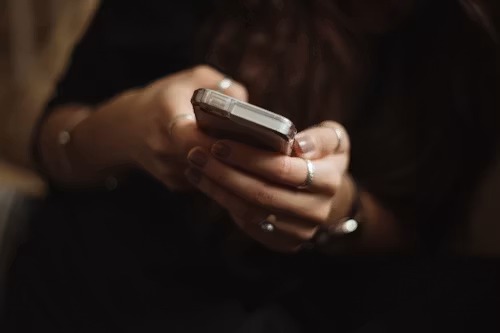
Fintech is now paving path to address traditional challenges for women including access to digital financial tools, mobility, maintaining credit history or wanting to be financially independent by lending or saving money. Where conventional banks require customers to visit branches for account opening, mobile wallets give easy access to create accounts through their phones. All facilities like paying utility bills, receiving salaries or making vendor payments is now easier than ever.

Many women in Pakistan has an entrepreneurial spirit and are running their microbusinesses across multiple villages, small towns and communities. Some sell clothing, handicrafts or even baked goods on a regular basis to make ends meet but lack financial education to invest and multiply their money for growth and expansion. However, fintech facilitates women with receiving money in digital wallets instead of cash or male members’ bank accounts. International research also suggests that women who adopt mobile money services are significantly more likely to access formal financial systems particularly when combined with education and mobile phone ownership.

Fintech is not limited to ease in digital payments. Fintech ecosystem increases transparency, reduces risks of carrying cash or theft, helps understand formal methods of saving and investing money. For women receiving salaries or government support do not rely on another person to receive their deserved money but has access to receive and manage their money on their own. According to the World Bank’s latest Global Findex research, receiving wages or government payments digitally is often the first reason many women open a financial account.

Pakistan is gradually moving towards financial inclusion but understanding technology is not the only barrier. Many hindrances lie outside of technology starting with the limited use or access to smart phones, approximately 82% of Pakistani men own a mobile phone while only 46% of women do creating a significant divide. Digital literacy is another challenge that comes with lack of education on the safe use of mobile wallets around scams and frauds.

Pakistan has gradually progressed in financial ecosystem and has been supported by policy makers with regulations to accelerate financial inclusion. Pakistan and private fintech sector has taken initiatives encouraging digital payments, delivering financial education, introducing cashless services while encouraging mobile wallets. However, better initiatives are needed around financial education on mobile wallets, designing products around women needs and ease which includes formal educational trainings, low-cost saving products or multilingual apps to cover provincial and regionally spoken and understood languages. Building trust, empowering women and developing a digital ecosystem are all equally important for the financial inclusion in Pakistan.


Similar Posts

  • The jaded gender talks

     By Saman Aftab We are so habitual of listening to the gender inequality, women empowerment, and ever growing population talks that now these topics have become an essential subject for the matter of discussing societal issues. But what we people have lacked to unravel is the very essence of these debates. Why gender inequality exists? Why we are still lagging behind in terms of employing more women? Why we are unable to control the growing rate of population in our country? Before addressing the ‘absolutely unavoidable’ questions, let me take the readers down an irksome memory lane of my life. Last year when our maid broke the news of her pregnancy to us, our most obvious question was why now? Considering her age which was 42 years that time and her financial grim along with unsupportive role of her husband in bearing the burden of their five children, this question clicked in every mind. And her answer though not surprising was quite gloomy for the existence of every female in this world; “baji, larka chahye humen” (we need a boy). She had four daughters and a deaf son. Her statement broke my heart because it questioned the capabilities of her daughters who were all physically and mentally sound. This memory was not worth forgetting because as a female it made me feel inferior. But this Babygirl vs Babyboy thing is not new, in fact it is one of the most deeply rooted concerns of our society. The normalcy of demanding the birth of a boy from a married woman is consolidating with the passage of time. The worst part of this matter – it’s getting acceptance. Ironically, majority of mothers in law showcase such demands to the newly married couple, as if it is in their hands to ‘design’ the genetic make-up of their offspring. The heart wrenching memory got afresh, when Tabassum shared her so called good news with us. Tabassum, 35 years old woman who works as a maid in three houses, a mother of four girls is expecting again for the sake of receiving a son this time. Her good news reminded me of her last fourth delivery when she gave birth to a girl in government hospital and she was made to give her daughter to a rich family on the persuasion of her drug addict husband. Whether they got money in return was dubious but chances of such happening were bright. I really hope and pray that this time she gets a son, otherwise the couple will continue to bring unwanted girls in this world and ruin their lives. For all the existing daughters of this couple are living a dark and disowned life. This brutal reality of life is not constrained to lower class people and it has crossed the demarcation of social groupings based on all classes, religions and races. Let us take an example of my sister’s friend, who is married to a well-established businessman and living in a posh locality. The poor lady who has a rich family, is a mother of two cute little girls. Although the little girls born to riches are living a good life, their mother is undergoing severe mental anxiety and pressure for not having a son. And of course, she for the sake of getting rid of such pressure is planning to have another baby neglecting her present deteriorating health condition. Unfortunately, the instances are innumerable and the rate of their occurrences is increasing day by day. Why boy child is mostly preferred over girl child? The answer lies in the heart of several burdens tied with bringing up a girl till her marriage. Among so many liabilities, the extra protection needed by the girls in our society and the curse of dowry have aggravated the scenario to such an extent that today girls are seen as “misfortune”. Of course exceptions are always there. Let us shift the focus from this melancholy to addressing those “absolutely unavoidable” questions raised earlier. 1: Gender inequality; Homo sapiens (humans) are generally categorized into three groups namely man, woman and transgender. Men are always ranked superior for enormous reasons but if we see things more pragmatically, it becomes evident that parents are left with sons in their old age while their daughters somehow abandon them and serve in laws for the rest of their lives. Call it our family system, it is the way it is. Then how can girls be loved or demanded? For voicing rights for equality, women should also bear the responsibilities equally. If a woman is capable of doing an employment being educated or skilled, she must pursue it for sake of giving all the best of resources to her parents that are expected of a son. The root cause of inequality among genders is the leverage given to men of being more useful and thus more needed. As long as the share of women in the society is constrained only to domestic chores and family caretaking, this inequality will never fade away. More women should be encouraged to become financially sufficient and independent. But how? This leads to our second question. 2: Women empowerment; there should be more campaigning with regards to educating girls and investing in their skill building. More powerful the educational background of a woman is, more will be the chances of her getting a good job for the sake of financial security. Thus, the number of women working for the betterment of society and raising capital will rise exponentially. And finally once these two milestones are achieved, the third ordeal of our country will evade automatically. 3: Overpopulation: as discussed in the start, demand and desire for the birth of a son has contributed a lot more towards overpopulation. Men are expected to take care of their parents but the same goes for women also. And in this age of compatibility, women should come forward and play a vital part in developing this society. Instead of placing all the

  • Grapes could be good for your joints

    Joint pain affects millions of people around the world and becomes more common as people get older. A new study from China suggests that eating grapes regularly may help support joint health. Researchers reviewed previous studies to understand how a natural plant compound called resveratrol affects the joints. This compound is found in grapes and berries. For many years scientists have studied resveratrol because of its strong antioxidant and anti-inflammatory properties. It is also believed to help protect cells and slow down the aging process. The researchers found that resveratrol may help reduce long term inflammation which is one of the main causes of joint problems such as arthritis. Although the body does not absorb resveratrol easily and most of it is processed by the liver earlier studies suggest it may still help protect joints from damage and reduce pain. The researchers said more studies are needed before medicines or supplements based on resveratrol can be developed. However adding grapes and berries to your diet may be a simple way to support healthier joints as part of a balanced lifestyle.

  • |

    Jean Rhys’s “Good Morning, Midnight” whispers in the dark

    When Jean Rhys published Good Morning, Midnight in 1939, it was met with a chorus of discomfort and bewilderment. Critics at the time found its tone too bleak, its protagonist too unvarnished, and its atmosphere too heavy with melancholy. Yet decades later, this tragic, brilliant novel stands out as one of the most hauntingly modern studies of isolation, vulnerability, and resilience ever written. It is a work that does not simply invite readers into a story; it pulls them directly into the fractures of a wounded mind. The novel centers on Sasha Jansen, an aging Englishwoman returning to Paris after a long absence. Having scraped together a modest sum of money, she hopes to use the trip as a desperate attempt to patch over her fraying life. But the Paris Sasha steps back into is not a romantic city of artists and cafes; it is a claustrophobic landscape of cheap, dimly lit hotel rooms, cold streets, and judgemental eyes. Traumatized by a past filled with poverty, loss, and abusive relationships, Sasha moves through the city like a ghost in her own life, attempting to dull her emotional pain with alcohol while simultaneously craving a human connection she fears will ultimately destroy her. What makes Rhys’s narrative so compelling is her incredible command of internal voice. Written in a tight, stream-of-consciousness style, the novel obliterates the boundary between Sasha’s thoughts and the world around her. Rhys captures the quiet humiliation of financial insecurity. The constant calculation of tips, the fear of being judged by hotel staff, the defensive impulse to buy cheap clothes just to look respectable. Through Sasha’s eyes, even everyday interactions carry a terrifying weight. When she encounters a young Russian man who mistakes her for someone wealthier, or when she interacts with an eccentric gigolo, the tension is palpable. The reader is trapped right alongside Sasha. They navigate the razor-thin line between her deep yearning for intimacy and her absolute terror of being hurt. Beyond its psychological depth, Good Morning, Midnight is a social critique. Published on the cusp of World War II, the novel subtly mirrors the anxiety and dislocation of late-1930s Europe. Sasha’s struggle highlights how unforgiving society can be to women who fall outside traditional expectations of youth, wealth, and domestic stability. She is a woman adrift in an urban landscape that demands self-sufficiency while offering no safety net, making her experience feel astonishingly contemporary to modern readers facing their own eras of isolation and uncertainty. Rhys’s prose is razor-sharp, sparse, and poetic, delivering emotional blows with remarkable economy. The book’s final passage remains one of the most famous, devastating, and deeply ambiguous endings in twentieth-century literature. It is neither a story of neat redemption nor one of complete surrender, but rather a quiet, defiant acceptance of life’s painful complexities. Good Morning, Midnight demands that we look directly at the aspects of human suffering we often try to ignore; loneliness, aging, and  poverty. Jean Rhys offers a masterpiece of modernism that feels as vital, raw, and resonant today as it did nearly a century ago.  

  • |

    Why young minds internalize being a burden

    When a child begins to internalize the belief that their presence is an obstacle, the transformation rarely happens in an explosive moment. Instead, it is a gradual, quiet erosion of their sense of self-worth. Recent reports surrounding youth mental health have drawn urgent attention to how children absorb socio-economic pressure, domestic tension, and emotional distress. The youth has convinced themselves that their families would simply be better off without them. Psychological research identifies a specific mindset known as perceived burdensomeness. It’s the distorted cognitive belief that one’s existence imposes an unmanageable drain on loved ones.  Adults often process household stress out loud through financial worries or fatigue. However, children are acute observers but poor interpreters of these adult struggles. When young minds witness prolonged arguments over money, household strain, or family burnout, they frequently externalize the blame onto themselves. Rather than recognizing systemic or situational issues, a child’s natural self-referential worldview leads to a heartbreaking conclusion. If I weren’t here, my parents wouldn’t be so stressed. Triggers for Emotional Withdrawal in Children  Hearing constant worry over basic living costs or healthcare expenses. Feeling as though love or acceptance is tied strictly to high achievement or complete emotional compliance. When overwhelmed caregivers unintentionally treat basic parenting duties as exhausting chores. Receiving persistent feedback that their emotional or physical needs are too much to handle. How Burden Beliefs Manifest in Everyday Behavior Unlike adults, who might voice feelings of worthlessness directly, children express this weight through shifts in conduct. Identifying these subtle indicators early can make the difference between early intervention and severe psychological crisis. From Obligation to Belonging Addressing this internal crisis requires shifting household culture from transactional survival to unconditional emotional safety. Child mental health advocates emphasize that reassurance must go beyond simple verbal praise. It requires active, structural validation within the home. A child needs to know that their value isn’t dependent on their convenience to adults. Love is not a debt they owe back to the family, but a foundation they stand upon. Explicitly reassure children that adult challenges such as bills, jobs, or adult relationships are strictly the responsibility of grown-ups. Validate their requests for help, space, or care as healthy and welcome parts of growing up. Spend unhurried, non-evaluative time together where no performance or chore is expected. Rebuilding a child’s foundational sense of belonging takes consistency, but by recognizing the early signals of perceived burdensomeness, parents and educators can intervene before silence turns into deep-seated trauma.  

  • Early sugar control benefits brain health

    A new study suggests that giving children little or no sugar before the age of two may help reduce their risk of developing dementia later in life. Researchers found that people who were exposed to very low amounts of sugar during pregnancy and in their first two years of life had a 23% lower risk of dementia as adults. Health experts say eating too much sugar is already linked to type 2 diabetes which can damage blood vessels and increase the risk of dementia. The new findings suggest that limiting sugar early in life may also support long term brain health. The study’s lead author, Dr. Jiaxin Zheng said the results show that reducing sugar intake during early childhood could have lasting benefits for brain health. Researchers added that while the findings are encouraging more studies are needed to confirm the connection between low sugar intake in early life and a lower risk of dementia.

  • Woman dies after anti aging injection in New York

    A 27 year old woman in New York has died after receiving an anti aging injection at a private medical clinic raising serious concerns about unlicensed cosmetic treatments. According to foreign media reports the woman became critically ill shortly after the injection. An ambulance was called to take her to the hospital but she died before arriving. Police arrested 55 year old Luis Rojas Cabrera the man who gave the injection.  During questioning he admitted that he did not have a valid New York medical license to practice medicine. Authorities have charged him with practicing medicine without a license and putting another person’s life at risk through reckless actions. The suspect later appeared in a Bronx court. A judge allowed his temporary release but ordered him to surrender his passport until the post mortem report is completed. In court Cabrera said he is a licensed doctor in the Dominican Republic and also holds a medical assistant license in Puerto Rico.  He added that his application for a New York medical license is still under review. He also confirmed that the only license he currently holds in New York is as a cosmetologist not as a licensed physician.

Leave a Reply

Your email address will not be published. Required fields are marked *