womens mental health

Why Women’s mental health matters

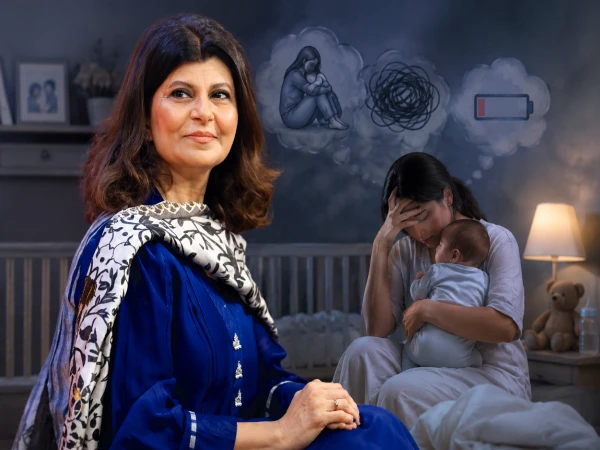
Senior Pakistani actress and film maker Rubina Ashraf has spoken about postpartum depression and the emotional challenges women may face during pregnancy and after giving birth.

Rubina Ashraf recently appeared as a guest on the television show Good Morning Pakistan where she discussed women’s mental health and the importance of emotional support during pregnancy and motherhood.

She said that in the past, mental health problems linked to pregnancy and childbirth were often not taken seriously.  Society usually treated childbirth as a normal responsibility of every woman without fully understanding how difficult the experience could be for some mothers.

The actress explained that pregnancy brings many physical changes to a woman’s body including changes in the skin weight and overall health.

Along with happiness these changes can sometimes cause stress anxiety and emotional pressure.

She added that a lack of proper care and support during this period may make a woman more vulnerable to serious emotional difficulties including postpartum depression.

Rubina also highlighted the importance of a husband’s love care and understanding during pregnancy and after childbirth.

She said that managing physical changes household responsibilities  and caring for a newborn can be challenging so emotional and practical support from a partner can make a big difference.

Her comments also highlight the need to take women’s mental health seriously and ensure that new mothers receive proper care understanding and support.

Similar Posts

  • Airplane IQ Puzzle

    Do you enjoy solving puzzles? If yes here is a fun brain teaser that will test your observation skills. Look carefully at the picture and try to figure out which person is poor. The image shows three people traveling on an airplane. One person is reading a newspaper a woman in the middle is holding a smartphone and another person is using a laptop. This is more than just a simple puzzle. It is designed as a small IQ test that checks how well you notice tiny details. Try to find the answer within 30 seconds. Take a close look before making your choice.  The clue is visible in the picture but you need sharp eyes to spot it. •Have you guessed the answer? If not the puzzle says the man reading the newspaper is the poor person. The clue is on the jacket resting on his lap. A label on the jacket suggests it is made from polyester which the puzzle presents as a cheap imitation leading to the conclusion that he is poor. Keep in mind that this is only the intended answer to the puzzle. In real life a person’s clothing or belongings do not determine whether they are wealthy or poor.

  • Vaping may be as harmful as smoking

    Smoking is well known to cause lung cancer heart disease and breathing problems.  However many people believe that vaping is a safer alternative. New scientific research suggests this belief may be misleading. Studies show that using e-cigarettes can also harm the body and may cause damage similar to that seen in cigarette smokers. Experts say switching from cigarettes to vaping should not be considered completely safe. Although e-cigarettes do not contain traditional tobacco they still expose the body to harmful substances. Research published in 2026 by the University of New South Wales along with findings from scientists at the University of Southern California found that vaping can damage the DNA in cells of the mouth and lungs. DNA is the body’s genetic blueprint. It controls how cells grow and function. When DNA is damaged the risk of serious diseases including cancer can increase. Researchers also found that sweet and fruit flavored vape products may contribute to DNA damage. People who use pod based vaping devices showed even higher levels of cell damage in the study. According to the scientists vaping may increase the risk of cancers of the mouth and lungs.  The research also found that DNA damage in people who vape was almost as severe as the damage seen in cigarette smokers. Although vaping and smoking work differently both can seriously affect health. Health experts advise people not to think of vaping as a harmless option. Every vaping session may damage important cells in the body. They recommend avoiding vaping altogether and raising awareness about its possible health risks.

  • The Triangle of Trust and Tension: Pakistan, Afghanistan, and India

    By Engr. Saqlain Abid Geography is destiny. A nation cannot choose its neighbours, but it can choose how to live with them. The strongest defence in any democracy is not perpetual conflict but sustained diplomacy, confidence-building measures, and peaceful negotiations. Pakistan and Afghanistan are two countries bound by centuries of shared history, religion, culture, and ethnic ties. Yet, what was once described as a brotherly relationship has gradually transformed into one defined by mistrust, accusations, and strategic competition. Today, India has emerged as the third player in this evolving regional triangle.   What exactly went wrong? How did decades of goodwill give way to blame games and border tensions? And why is India now finding greater strategic space in Afghanistan? These questions have become even more relevant following Amnesty International’s allegations regarding Pakistan’s reported airstrikes on the Omeed Rehabilitation Centre near Kabul on 14 March. The organisation questioned Pakistan’s justification for the operation, while Islamabad firmly rejected the allegations and maintained that its forces targeted legitimate security threats. The competing narratives deserve careful examination.   The first perspective is that of Afghanistan. Following the withdrawal of US forces in 2021, Pakistan welcomed the Taliban’s return to power. General Faiz Hameed, then ISI chief, was closely associated with the Doha process, while the government of Imran Khan projected Pakistan as a key mediator in Afghanistan’s political transition. Relations initially appeared warmer than they had been for years.   However, the atmosphere soon changed. One of the major turning points was the case of Sharifullah, an alleged ISIS-K commander. Pakistan argued that his arrest strengthened its claims regarding cross-border terrorism and militant networks operating from Afghan territory. The Taliban leadership rejected these accusations, insisting that Afghanistan should not be blamed for Pakistan’s internal security challenges.   Instead of responding through military escalation, Kabul gradually diversified its diplomatic and economic partnerships. Trade with India expanded while commerce with Pakistan declined. Afghanistan increasingly relied on Iran’s Chabahar Port and the India-built Zaranj–Delaram Highway to reduce dependence on Pakistani transit routes. Although these alternatives are longer and more expensive, Kabul appears willing to pay that price in pursuit of greater strategic autonomy. For the Taliban government, sovereignty has become closely linked with economic independence.   The controversy surrounding the reported strike on the Omeed Rehabilitation Centre further widened the trust deficit. Human rights organisations questioned Pakistan’s account of the operation, while Islamabad maintained that the target was linked to militant activity and defended its actions as part of its counterterrorism campaign. The differing claims remain disputed and continue to shape international perceptions.   Pakistan’s narrative is considerably different. Islamabad maintains that the resurgence of Tehreek-e-Taliban Pakistan (TTP) attacks represents one of its greatest national security challenges. Successive governments have argued that militant groups continue to exploit Afghan territory to launch attacks inside Pakistan. From Islamabad’s perspective, stronger military action became unavoidable because diplomatic engagement failed to produce sufficient cooperation.   The arrest of Sharifullah also carried broader geopolitical significance. Pakistan’s intelligence cooperation with the United States strengthened Islamabad’s engagement with Washington. At the same time, the government accelerated the repatriation of undocumented Afghan migrants, arguing that national security required stricter border management. Critics viewed these measures as increasing pressure on the Taliban government, while Pakistan defended them as sovereign decisions taken in the national interest.   Perhaps the greatest strategic miscalculation, however, was underestimating how quickly a trusted partner could seek new alliances. History shows that when friends become rivals, they often understand each other’s vulnerabilities better than long-standing adversaries.   India forms the third side of this regional triangle. Over the past two decades, New Delhi has invested billions of dollars in Afghanistan through reconstruction projects, infrastructure, education, and trade. As relations between Islamabad and Kabul have deteriorated, India has found greater diplomatic space to strengthen its presence. Development assistance, expanding trade, and improved connectivity have gradually transformed India into an increasingly influential partner for Afghanistan.   The result is a new regional reality. Pakistan views Afghanistan primarily through the lens of security. Afghanistan seeks strategic independence and diversified economic partnerships. India has capitalised on the growing mistrust by expanding its diplomatic and commercial footprint.   Geography cannot be changed, but policies can. Pakistan and Afghanistan will remain neighbours regardless of political differences. Continued confrontation will benefit neither country, while diplomacy, intelligence cooperation, and mutual respect remain the only sustainable path forward. The future of South Asia will depend not on military victories but on whether Islamabad, Kabul, and New Delhi choose cooperation over confrontation.

  • Poor sitting habits may harm your spine

    If you often suffer from back pain or muscle stiffness your sitting posture may be the hidden cause. The good news is that a few simple lifestyle changes can help improve your posture and reduce discomfort. •Why does poor posture happen? In today’s world many people spend hours using laptops computers and smartphones.  Sitting for long periods without moving can make muscles tight weak and unbalanced. Doctors say that constantly looking down at a phone or computer screen puts extra pressure on the neck and upper back. Over time this can lead to poor posture muscle weakness and pain. Poor posture can also develop because of injuries certain medical conditions genetics or jobs that require standing for long hours. •How poor posture affects your health Bad posture does more than cause temporary discomfort. It can lead to. •Neck shoulder and back pain •Muscle stiffness and tension •Reduced flexibility and movement •Weak muscles •Lower back pain •Extra pressure on the spine If ignored for a long time poor posture may increase the risk of spinal problems such as a herniated disc or sciatica. Simple ways to improve your posture The good news is that poor posture can often be corrected with regular practice and healthy habits. Stretch and exercise every day. •Avoid sitting for long hours without taking breaks. Limit unnecessary smartphone use especially if it makes you look down for long periods. Sit with your back straight and shoulders relaxed. Use a cushion to support your lower back while sitting. When standing keep your weight evenly balanced on both feet and avoid locking your knees. Lift heavy objects by bending your knees instead of your back. Choose a supportive pillow that keeps your neck and spine aligned during sleep. Sleep on a comfortable mattress that provides proper support. Adjust your car seat so you can comfortably reach the pedals while driving. On long drives stop every two hours to stretch your legs and move around. Making these small changes every day can improve your posture reduce pain and help protect your spine in the long run.

  • Poor condition of roads in Dasht

    I want to draw the attention of the concerned authorities to the poor condition of roads in Dasht. Many roads are broken and full of potholes. During the rainy season, they become muddy and difficult to use. The damaged roads cause traffic problems and accidents. Students, patients, farmers, and other people face great difficulties while travelling. Sometimes vehicles are also damaged because of the bad roads. I request the concerned authorities to take immediate action and repair the roads in Dasht. Good roads are necessary for the safety and development of the area. I hope that the authorities will pay attention to this serious problem.

  • The unforgettable legacy of Raja Mehdi Ali Khan

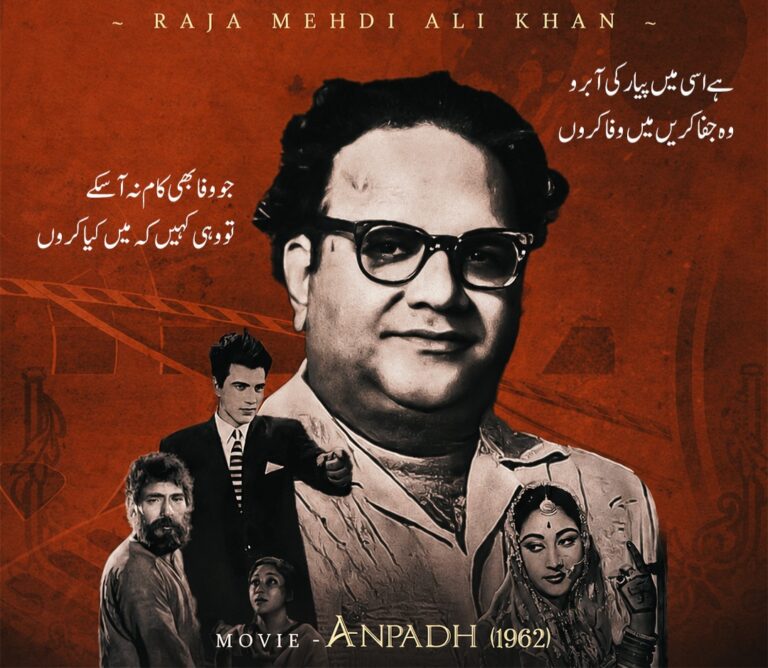
    Twentieth-century Urdu literature and Indian cinema was shaped by figures whose creativity crossed literary traditions and popular entertainment. Among these luminaries, Raja Mehdi Ali Khan stands out as a unique persona connecting high-art literary satire and immortal Bollywood melodies. This legend was born in 1915 in the historical town of Wazirabad. Khan was an observer of culture. He inherited a formidable poetic pedigree that caused him to be one of the most celebrated humorists and lyricists of his era. Raja Mehdi Ali Khan’s literary inclinations were virtually coded into his lineage. He was related to the renowned journalist and political figure Maulana Zafar Ali Khan. He was raised in an environment saturated with verse and socio-political commentary. Moreover, his mother was a recognized poetess in her own right. She taught him a deep reverence for language and rhythmic expression from an early age. This environment nurtured his inherent talent, allowing him to absorb classical Urdu poetic conventions while developing an understated wit that would define his future work. Before making a name for himself in the cinema, Khan began his journey in print journalism. He contributed prolifically to prominent periodicals and literary magazines of the era. The names included Monthly Alamgir, Weekly Khayyam, Tehzeeb-e-Niswan and Do Phool. His early journalistic writings allowed him to polish his observational skills. Whether analyzing social norms or painting witty portraits of everyday life, his prose stood out for its accessibility and warmth. Later, he transitioned into radio broadcasting. It’s considered a medium that further refined his sense of auditory storytelling and lyrical timing. He was driven by creative ambition. Later, Khan relocated to Bombay (now Mumbai) during a transformative era for Indian cinema. His entry into the film industry marked the beginning of a golden age for Hindi film music. He partnered with legendary music composers such as Madan Mohan. Khan penned lyrics that transcended simple movie themes, capturing profound emotional truths. His songs have proved to be timeless masterpieces, continuing to resonate across generations. Among his most iconic works are: hai isi mein pyaar ki aabru wo jafa karen main wafa karun jo wafa bhi kaam na aa sake to wahi kahen ki main kya karun Raja Mehdi Ali Khan, Anpadh (1962) His celebrated catalog includes evergreen classics. Lag Jaa Gale (Woh Kaun Thi?): Widely regarded as one of the greatest romantic ballads in Hindi cinema. Aapki Nazron Ne Samjha (Anpadh): A masterpiece of subtle expression and devotion. Jhumka Gira Re (Mera Saaya): A vibrant classic in popular culture. Tu Jahan Jahan Chalega (Mera Saaya): A hauntingly beautiful exploration of love and devotion. Agar Mujh Se Mohabbat Hai (Aap Ki Khaatir): A poignant reflection on romantic commitment. What set Raja Mehdi Ali Khan apart from many of his contemporaries was his dual identity.  Film audiences revered him for his deeply romantic and melancholic lyrics. On contrary, the literary world celebrated him as an exceptionally gifted humorist and satirist. Even amidst his demanding schedule in Bombay’s competitive cinematic landscape, Khan never abandoned his literary roots. His satirical essays and humorous poems were regularly featured in leading newspapers and journals across both India and Pakistan. His humor was rarely cynical. Instead, it offered a gentle, witty critique of human flaws, societal absurdities, and the complexities of modern living. Khan proved that high literary craft could flourish alongside popular music. Raja Mehdi Ali Khan passed away leaving behind a rich archive of literary contributions and cinematic songs that continue to be sung, reimagined, and loved today. His life journey from the quiet streets of Wazirabad to the recording studios of Bombay embodies the shared cultural heritage of the Indian subcontinent. His art remains vibrant and melodious whether delivered in a literary journal or sung by iconic playback singers.  

Leave a Reply

Your email address will not be published. Required fields are marked *