much peanut butter

How much peanut butter is good for your bones?

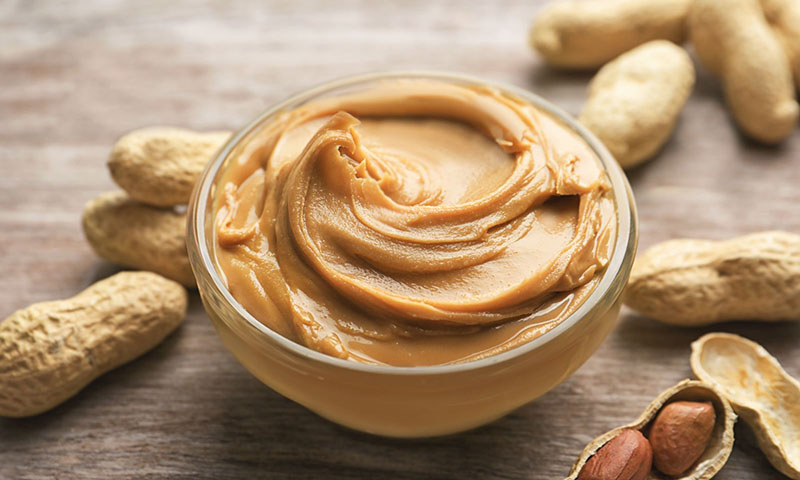
Peanut butter is more than just a tasty spread. Its creamy texture, protein and healthy nutrients make it a popular choice for snacks and smoothies. Surprisingly it may also support bone health.

Strong bones are important for movement, strength and overall quality of life. As we get older poor eating habits and a less active lifestyle can increase the risk of bone weakness and conditions such as osteoporosis.

Along with regular exercise getting the right nutrients from food can help keep bones healthy. Peanut butter can be one small part of a balanced diet.

Nutrients in peanut butter that support bones

Peanut butter contains several nutrients that may benefit bone health. Magnesium helps support bone development and strength. It also provides phosphorus, which is important for healthy bones and teeth.

Peanut butter also contains zinc a mineral that plays a role in tissue repair and vitamin B6, which supports normal metabolism and other body functions.

Another benefit is its protein content. Protein is important for building and maintaining bones and other body tissues.

However peanut butter is not a major source of calcium so it should not replace calcium rich foods such as milk, yogurt or other suitable alternatives.

How much peanut butter should you eat?

Peanut butter can be healthy but portion size matters. It is easy to eat more than planned because of its rich taste and creamy texture.

For most people, 1–2 tablespoons a day can be a reasonable amount depending on their overall diet and calorie needs.

Can too much peanut butter cause weight gain?

Peanut butter contains mostly unsaturated fats including monounsaturated and polyunsaturated fats.  These fats can be a healthier choice than some saturated fats.

However peanut butter is also high in calories. Eating large amounts regularly can add extra calories to your diet and may contribute to weight gain.

The right amount depends on your personal goal:

For maintaining weight Around 1–2 tablespoons may be enough.

For gaining weight:

A larger portion may help increase calorie intake. For weight loss Smaller portions can help control calories while still providing protein and healthy fats.

Tips

Peanut butter can be a nutritious addition to a balanced diet and may support bone health through nutrients such as magnesium, phosphorus, zinc vitamin B6 and protein.

Similar Posts

  • Human civilisation has always been scared of forgetting

    By Syed Tahir Rashdi A long time ago, before the first computer, the first library or even the first book, people thought memory was the most important thing for knowledge. Whole societies relied on it. People remembered laws and stories by heart. Passed them down to their children. To remember something was not just to recall facts it was to keep your identity, culture and history alive. A long time ago in ancient Greece, people started to worry about memory. In a book called *Phaedrus* a man named Socrates tells a story about a god named Theuth. Theuth invented writing. Thought it would make people wiser and help them remember more.. The king of Egypt, Thamus did not agree. He said that writing would actually make peoples memories weaker. People would start to rely on written words of trying to remember things themselves. They would think they know something just because they can read it. They would not really understand it. Course that is not what happened. Writing did not hurt society it changed it. Books became a way to store knowledge and share ideas with people all over the world. Socrates was worried about something that is still important today. The question now is not whether we remember things because of books. It is whether we remember anything all. Today we have information stored somewhere than ever before. Our phones remember our conversations. Computers store our photos forever. We can find answers to questions in seconds. Machines can summarise books. Help us find information fast. Never before has much information existed outside of our own minds. This is a change in how people relate to knowledge. A man named Marshall McLuhan said that every new technology is like an extension of our abilities. The wheel is like an extension of our feet. The telescope is like an extension of our eyes. By that logic our phones are like an extension of our memories. They help us remember things. The problem is obvious. As we get better at storing information outside of our minds we get worse at remembering things ourselves. We do not remember phone numbers because our phones do. We do not remember birthdays because our computers do. We do not remember how to get places because our phones tell us. We are not trying to remember things much as we used to. We are just looking them up. That small change might be one of the most important things that has happened to our minds in the past century. It is easy to see why we like to store information outside of our minds. Who would want to go to using paper maps or big books to find answers? Digital technology has made it easy for everyone to get information. We can find things out in seconds that used to take days. The question is not whether this is useful. It is whether it is changing our minds in some way. Some psychologists did a study in 2011. Found out something interesting. They found out that when people know they can find information easily they do not try to remember it much. They just remember where to find it. This is a deal. Our minds are changing from storing information to finding it. We are getting better at finding the path. Not the destination. This is not a habit it is how we think. Remembering things is not about storing facts it is about using them to make decisions to imagine things and to be creative. When we remember things we can connect them in ways and have new ideas. When we store information outside of our minds that changes. A man named Nicholas Carr said that digital technology is not just changing how we get information it is changing how we think. The internet is great at giving us answers. It is not so good at helping us really understand things. If we get used to getting answers we might not be as good at thinking deeply about things. This does not mean that technology is making us less smart. It means that our intelligence is changing. The problem is not that we do not know things. It is that we are too dependent on technology to remember them for us. A student might think that they can just look up answers and not really learn anything. A professional might rely much on reminders that they do not even try to remember things. Machines are getting better at remembering things for us. That might mean we do not have to try as hard. Slowly remembering things is becoming more like looking them up. Knowledge is becoming about getting access to information. Thinking is becoming more about getting things done. Technology has definitely helped us store information than ever before. The question is whether it is also making us less likely to try to remember things ourselves. Memory is not just about storing information. It is about how we experience life. A computer can store every document ever written. A machine can look up every photo ever taken.. They cannot turn experience into wisdom. Our memories are not just storage they are how we interpret things. We forget some things we remember others. We use them to understand ourselves. A writer named Jorge Luis Borges wrote a story about a man who could remember everything.. This gift was actually a curse. The man could not forget anything so he could not think about things in a way. He was trapped by his memory. Borges was saying that forgetting is not a thing it is actually necessary for thought. This is not about how we think as individuals. It is about how we learn and how we understand ourselves as a society. Education used to be about more than learning facts. It was about learning how to think. If we just store information outside of our minds education might just become about looking things up. The same

  • |

    Subjective aesthetics versus literary brilliance

    Litigation over artistic quality reveals more about the critic’s personal taste and ideological leanings than it does about the intrinsic value of the literature itself. A prominent Bangladeshi academic initiated a debate across literary circles when a short video clip went viral online. In this brief excerpt from a presentation delivered at a university literary festival, the scholar dismissed the acclaimed author Shahidul Zahir. He claimed that Zahir does not even qualify as a third-rate artist. He  labeled him instead as a third-class writer whose language is thoroughly uninteresting. He similarly critiqued another modern Bengali prose writer, Akhteruzzaman Elias. For this case, he dismissed his writing style as endlessly monotonous. This judgment raises critical questions about literary aesthetics and the metrics used to evaluate global literature. Does a critic’s subjective boredom justify reducing a writer’s work to a low rating? Analytically, the fiction of Shahidul Zahir demonstrates the exact qualities that define world-class literature. Shahidul Zahir was never a conventional storyteller who somehow aimed to comfort his audience. Rather than offering comfortable narratives, his work exposes uncomfortable truths beneath established historical accounts. His portrayal of wartime violence, political opportunism, and societal compromise during and after the 1971 Liberation War forces readers to confront disturbing realities. Zahir connects the grim details of local life with magical and surreal elements. He utilizes oral storytelling traditions. He also combined surreal metaphors with layered depictions of the human condition. His narratives have bizarre occurrences such as animals acting as caretakers or war collaborators feeding human flesh to animals appear surprisingly believable against the background of ordinary towns like Sirajganj or Old Dhaka. His surrealism reflects real-world atrocities that were often equally unimaginable far from being mere fantasy. The academic’s critique centered primarily on two claims. Firstly, Zahir’s writing is dull. Secondly, his portrayal of the 1971 war is historically inaccurate. However, a closer look at these claims exposes significant flaws in the critic’s premise. The critic in question strongly favors traditional, highly formal, Sanskritized prose (sadhu bhasha) and rejects everyday spoken dialect (cholito bhasha) for serious discourse. In contrast, Zahir’s prose relies on the living, informal, and at times raw language spoken by everyday people. Therefore, rejecting an author because their prose reflects the authentic cadence of public speech reveals an elitist preference rather than an objective literary standard. The scholar accused Zahir’s acclaimed novella Jibon O Rajnoitik Bastobota (Life and Political Reality) of presenting stereotypical representations. He further pointed the supposed depiction of war collaborators wearing skull caps. Yet, nowhere in the actual text does such a detail exist. The critic appeared to project his own assumptions onto the text rather than reading what was actually written. Zahir’s novella accurately captures the painful political reality of post-liberation Bangladesh, where former wartime collaborators were gradually integrated back into mainstream power structures. Literary scholars often define world literature as creative work that responds to the global dynamics of modern capitalism and political change. Zahir’s novels illustrate how global economic forces interact unevenly with local feudal structures. In his masterpiece Shei Raate Purnima Chhilo (It Was Full Moon That Night), Zahir explores the rise of a powerful rural leader under state-sponsored political reform. The narrative illustrates how modern capitalist development mixes with lingering feudal mentalities. This mentality then creates a system where local elites hold unchecked power. Zahir constructs a portrait of a society caught between tradition and modern governance. Furthermore, Zahir’s treatment of the 1971 war connects local experiences with international geopolitics. In his stories, wartime memories constantly surface like fresh grass breaking through soil. His words speak about how national liberation was simultaneously a local struggle for survival and an event influenced by global Cold War tensions. The argument that a nation must produce literature directly accessible or marketed to Western readers in order to be considered world-class relies on a flawed premise. Global literary status should not depend solely on English translation or commercial visibility. Countless profound authors around the globe write within their local contexts. Such marvelous authors produce works that match the thematic depth of international figures like Franz Kafka or Gabriel García Márquez. As a matter of fact, dismissing Shahidul Zahir as third-class overlooks the artistic, historical, and linguistic power of his work. His fiction stands as an extraordinary accomplishment in modern literature. He is the one that challenges, provokes, and immortalizes the complex human experience far beyond the boundaries of narrow critique.  

  • Hair dye after Cancer treatment

    For many cancer survivors seeing their hair grow back is more than a cosmetic change. It is a sign of recovery and a return to normal life. As new hair appears many people want to cover gray hair or try a new color. However health experts say it is important not to rush into using hair dye. Chemotherapy and radiation are designed to destroy fast growing cancer cells but they also affect healthy hair follicles. This is why many patients lose their hair during treatment. When hair grows back it is often thinner softer, drier and more sensitive than before. The scalp may also remain delicate for several months. Doctors warn that using permanent hair dye too soon after treatment can irritate the scalp cause allergic reactions and damage new hair. It may also slow healthy hair growth while the scalp is still healing. Several studies have looked at the possible risks of hair dye. A large study by the US National Institute of Environmental Health Sciences involving more than 46,000 women found that frequent use of permanent hair dye and chemical hair straighteners was linked to a slightly higher risk of certain types of breast cancer. Another long term study by the Harvard T.H. Chan School of Public Health, which followed more than 117,000 women over 36 years found that hair dye did not increase the risk of most cancers. However long term use of permanent dyes was linked to a small increase in the risk of some types of breast skin and ovarian cancers. Experts advise cancer survivors to carefully read the ingredients before buying any hair dye. Chemicals such as PPD (para-phenylenediamine), ammonia, hydrogen peroxide parabens, and phthalates may be harmful to sensitive skin and newly grown hair. Most doctors recommend waiting at least six months after completing chemotherapy before using permanent hair dye. This gives the scalp and hair enough time to recover. Patients who had scalp cooling or radiation to the head should only use hair dye after getting approval from their doctor. During the first six months after treatment experts suggest avoiding chemical hair dyes and keeping the scalp well moisturized.  Even after six months patients should speak with their oncologist before coloring their hair. Safer options include pure henna or natural herbal dyes that do not contain added chemicals. Ammonia free and peroxide-free semi permanent dyes may also be suitable.  Temporary root powders and color mascaras are another option because they wash out with shampoo. Experts also recommend doing a patch test 48 hours before using any hair color to check for allergies or skin irritation. Whenever possible choose coloring methods that reduce direct contact between the dye and the scalp. Doctors say that caring for your hair again after cancer treatment is an important step in recovery. However taking a careful approach choosing safer products and speaking with your doctor first can help protect your hair and scalp while they continue to heal.

  • Thieves cook 14 egg omelet before robbery

    In a strange burglary case from India’s Rajasthan state thieves surprised police by stopping to cook and eat a 14 egg omelet before stealing valuables from a house. According to Indian media reports the burglars broke into an empty home and stole an LED TV cash and jewelry worth thousands of dollars. Before leaving they went into the kitchen cooked a large omelet using 14 eggs and ate it. Police said the house belongs to Harjit Singh who was in Mumbai with his family for cancer treatment when the burglary happened. The thieves searched the house and left many rooms in a mess before escaping with the stolen items. Officers reached the scene after receiving a report and started an investigation. Since the family is still in Mumbai police have not yet confirmed the full list of stolen items or the total financial loss. A police official added that the neighborhood had a private security guard but the thieves managed to enter the house without being caught.

  • Health benefits of eating papaya during monsoon

    Health benefits of eating papaya during monsoon By Tayyba Nazir     The monsoon season brings relief from the heat but it can also increase the risk of infections and digestive problems.   Health experts say that eating nutritious foods can help the body stay strong. Papaya is one fruit that can be a healthy addition to the diet during rainy weather.     Rich in vitamins fiber water and natural enzymes, papaya may support digestion immunity heart health and skin health.     Supports immunity and digestion During the rainy season some people may become more likely to develop colds flu or other seasonal infections.   Papaya contains vitamins A and C which support the normal function of the immune system.     Papaya also contains an enzyme called papain which helps break down proteins and may support digestion.   Its fiber and water content can also help keep the digestive system working properly.     May help with constipation Papaya is rich in fiber and water making it a useful fruit for people who struggle with constipation.   Eating enough fiber and drinking plenty of water can help support regular bowel movements.     What about dengue? Dengue cases can increase during the monsoon because mosquitoes become more common.   Papaya leaves are sometimes promoted as a way to increase platelet levels but there is not enough strong evidence to consider papaya or papaya leaves a treatment for dengue.     People with dengue should follow their doctor’s advice and should not rely on papaya as a replacement for proper medical care.     May support weight and heart health Papaya is relatively low in calories and contains fiber which can help you feel full for longer. This may make it a useful choice for people trying to maintain a healthy weight.     It also provides nutrients such as potassium and fiber that can support overall heart health as part of a balanced diet.   Good for skin and eyes Papaya contains antioxidants and nutrients such as vitamins A and C which can support healthy skin.   Its antioxidants may also help protect cells from damage caused by free radicals. The fruit also contains carotenoids such as beta-carotene lutein and zeaxanthin which are linked to eye health.     Eat It in Moderation Papaya is a nutritious fruit and can be part of a healthy monsoon diet.   However no single food can prevent diseases or replace medical treatment. It is best to eat papaya as part of a balanced diet and consult a doctor before making major dietary changes if you have a medical condition.

  • World’s tallest bridge has a giant waterfall

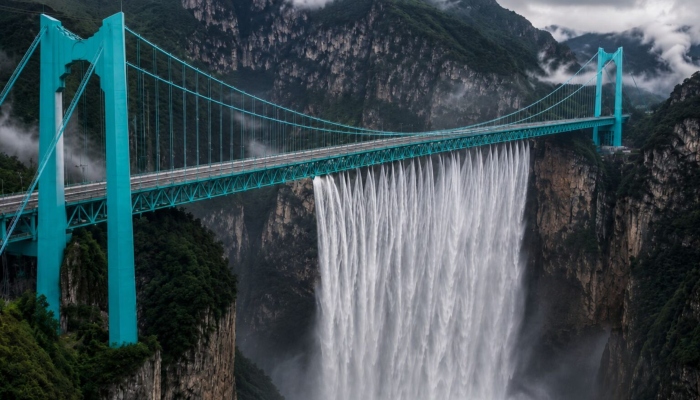
    China has completed many incredible engineering projects in recent years but the Huajiang Grand Canyon Bridge stands out as one of its most amazing achievements. If you’re afraid of heights crossing this bridge might not be easy. It is built 625 meters (2,051 feet) above the ground making it the tallest bridge in the world. It opened to the public in September 2025. However its height is not the only reason it attracts attention. The bridge also features a 300 meter long artificial waterfall creating a spectacular view for visitors. At night a laser lighting system makes the waterfall even more impressive. Chinese officials designed the bridge as more than just a road. It is also a tourist attraction with glass walkways cafes inside the bridge towers and adventure activities such as bungee jumping. According to local authorities thousands of tourists visit the bridge every day. The bridge was also recognized by Time which ranked it as the No. 1 place to visit in 2026. Located in Guizhou the bridge was built to make travel faster in the province’s mountainous landscape. Trips that once took about two hours can now be completed in just one minute.  The steel bridge is 9,482 feet long. Construction began in January 2022 and it was completed and opened in September 2025. Around 20,000 tons of steel were used to build it roughly the same amount of steel found in three Eiffel Towers.

Leave a Reply

Your email address will not be published. Required fields are marked *