
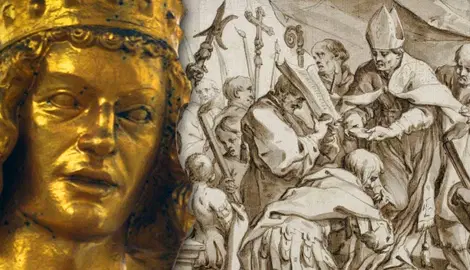
otto great created

How Otto the Great created an Empire from the ashes of chaos

In the tenth century, Central Europe was facing a state of political fragmentation and relentless conflict. This happened following the collapse of Charlemagne’s realm through the Treaty of Verdun in 843. Thus, the region split into warring territories. East Francia, the lands that would later form medieval Germany, was divided among powerful regional dukes who frequently clashed for supremacy. Amidst, a Saxon ruler emerged whose ambition, military prowess, and diplomatic intelligence changed a shattering kingdom into the Holy Roman Empire. He was Otto I! When King Henry I passed away in 936, he broke traditional Carolingian customs. He left the entire East Francian kingdom to a single heir: twenty-four-year-old son, Otto. Otto was crowned at Charlemagne’s ancient seat in Aachen. His reign began with a show of unity from the prominent dukes. However, that outward display of loyalty quickly dissolved into internal unrest.

Otto’s early years on the throne were defined by bitter revolts. Rival nobles resented the monarchy’s growing authority. Otto’s own family members turned against him. His half-brother Thankmar and younger brother Henry repeatedly joined rebel factions. To tighten his grip on the realm, Otto appointed close relatives to head the kingdom’s core duchies. The names included Swabia, Bavaria, and Lotharingia. Yet this strategy proved double-edged. Familial rivalries simply migrated to the highest seats of power. The most dangerous challenge arose in 953 when Otto’s eldest son and heir, Liudolf, launched an open rebellion. Fearing that Otto’s second marriage to the Italian princess Adelheid would compromise his succession. Therefore, Liudolf rallied dissatisfied German lords and ousted royal loyalists across multiple regions.

As civil war threatened to tear the kingdom apart, an external threat dramatically altered the course of history. In 954, nomadic Magyar raiders from the Eurasian steppes swept deep into East Francia. When rebel forces collaborated with the invaders, public sentiment shifted in Otto’s favor. The German nobility reconciled with their king rallied by a shared threat.  In August 955, Otto confronted the Magyar army at the Battle of Lechfeld near Augsburg. His victory was overwhelming and decisive. By crushing the invaders, Otto permanently ended nomadic incursions into Western Europe and solidified his reputation as the hero of Christendom. Internal rebellions vanished almost overnight. This victory gave Otto the absolute authority he needed to look southward toward Rome. Otto understood that true imperial legitimacy required papal endorsement. He had already secured the crown of Lombardy through his marriage to Adelheid. Otto now marched into Italy in 961 after Pope John XII requested military assistance against rival Italian lords.

On February 2, 962, Pope John XII crowned Otto emperor in Rome. This occasion effectively birthed what historians consider the Holy Roman Empire. A dynamic entity had united German and Italian territories under a single imperial crown. Otto established firm oversight over papal elections. He negotiated a landmark diplomatic treaty with the Byzantine Empire, and secured his dynasty’s future before passing away in 973. Otto transformed a chaotic collection of duchies into a medieval superpower that shaped European history for centuries.


Similar Posts

  • |

    Walking through time: A personal journey inside Na…

    The rain had just stopped when I reached Lahore’s National History Museum. The roads were quieter than usual, the air felt fresh and, for the first time in weeks, I wasn’t in a hurry. I had postponed this visit for years, ever since a brief stop during my internship at the Lahore Museum left me wishing for more time. This Sunday, I finally had it. I have also realised something over the past few weeks. Waiting for friends before exploring new places often means never going at all. So I decided to spend the afternoon on my own, following nothing except curiosity. As I entered the museum, Floor Supervisor Tabish welcomed me and arranged a guided tour with Muhammad Shamsher, a PhD scholar in History who also serves as one of NHM’s guides. His explanations never sounded like a lecture. Instead, he connected historical events with the people behind them, making every gallery feel like part of one continuing story. Growing up, I believed museums were places where objects sat behind glass while visitors quietly read information panels. That idea came from childhood visits to museums in Islamabad, Taxila and Harappa, and later from my internship at Lahore Museum. The National History Museum challenged that idea completely. Through digital displays, sound, projection and interactive exhibits, history became something to experience rather than simply observe. Every gallery encouraged visitors to slow down and become part of the story unfolding around them. One exhibit that caught my attention focused on the making of Minar-e-Pakistan. Like many Pakistanis, I had always admired the monument without knowing much about the person who designed it. The museum introduced architect Nasreddin Murat-Khan and displayed photographs that offered a glimpse into the creative process behind one of Pakistan’s most recognisable landmarks. It reminded me how often we celebrate monuments while forgetting the people who imagined them. The journey then moved towards Partition, where history became deeply personal. The restored railway carriage, once part of the North Western Railway, stood quietly inside the gallery. Visitors could step inside and experience a virtual reality presentation recreating the migration of 1947. I had watched countless documentaries and films about Partition, but sitting inside that carriage created an entirely different feeling. The sounds, voices and uncertainty surrounding the experience made history feel much closer than any textbook ever could. The museum then shifted from the birth of Pakistan to the challenge of building a new country. One gallery recreated the early government offices established after independence. I found myself studying old files, furniture and official records, imagining the enormous responsibility carried by those tasked with running a newly created nation. Nearby, early Pakistani passports were displayed inside glass cases. Different in design from today’s passports, they represented the same hope of a country beginning to define its identity. Another section I found especially engaging was Camera from the Past. Visitors could stand before a vintage-style camera and have their photograph taken, creating a small connection between the present and the past. The gallery also highlighted photographer Aziz Ahmed Azmi, whose images documented Pakistan’s early years. Looking at his work, I realised that photographs often become history long after the moment they capture has passed. Perhaps the gallery where I spent the most time was Popular Culture. Having studied Mass Communication with a specialisation in Theatre, Film and Television and continuing to work in journalism, I naturally found myself drawn towards the colourful Lollywood posters and displays celebrating Pakistan’s cinematic heritage. Reading about Azra, the country’s first colour film, and Zinda Laash, Pakistan’s first horror film, reminded me how rich our film history is, even if many younger audiences know little about it today. Before leaving, I also explored Husn-e-Hunar, an exhibition celebrating Pakistan’s traditional craftsmanship. Alongside literature, music and cultural displays, it served as a reminder that a nation’s identity is shaped not only by political events but also by its artists, craftsmen and storytellers. When I stepped back outside, I realised I had spent far longer inside the museum than I had planned. I didn’t leave with pages of notes or dozens of photographs. Instead, I left with a greater appreciation for how history can be presented when museums invite visitors to participate rather than simply observe. The National History Museum doesn’t just preserve Pakistan’s past. It encourages visitors to pause, ask questions and discover the stories that continue to shape the country today.

  • Many smokers still miss major health risks

    A new study has found that public understanding of the health risks of smoking has improved only slightly over the past 20 years. Researchers studied more than 240,000 smokers from 46 countries. Most participants knew that smoking can cause lung cancer.  However far fewer were aware that smoking can also greatly increase the risk of heart disease heart attacks and strokes. Gaps in public awareness The study also found that many smokers do not fully understand the dangers of secondhand smoke.  They may not know that breathing in someone else’s cigarette smoke can also increase the risk of heart disease heart attacks and strokes. The research was published in the journal BMJ Open. Researchers said that despite health warnings on cigarette packs tobacco control policies and years of public awareness campaigns important gaps in knowledge still remain. Heart risks often overlooked Lead author Janet Chung Hall, a scientist with the University of Waterloo’s International Tobacco Control Policy Evaluation Project said the lack of awareness about the serious effects of smoking and secondhand smoke is concerning. Experts estimate that smoking related heart and blood vessel diseases cause more than two million deaths worldwide every year. The researchers say stronger public health campaigns are needed to help people understand that smoking does not only damage the lungs. It can also seriously affect the heart and blood vessels. Better awareness of these risks could encourage more smokers to quit and help reduce the harmful effects of tobacco on both smokers and people around them.

  • Some medicines go bad after opening

    Many people check the expiry date on a medicine bottle or box and assume it is safe to use until that date. However health experts say this is not always true.  Some medicines start losing their effectiveness or become unsafe after they are opened even if the printed expiry date is still months away. It is common for people to use a cough syrup or eye drops once put them back in the cupboard and use them again weeks or months later after checking only the expiry date. Doctors say this can be risky because some medicines do not stay safe for long once opened. When a medicine bottle tube or dropper is opened air moisture and germs can get inside. Over time repeated opening can reduce the medicine’s protection against bacteria increasing the risk of contamination. If a syrup changes color or smell a cream separates or tablets become soft or crumbly they should not be used. Many people believe that every medicine should be thrown away one month after opening but experts say this is not true. According to Dr. Sanjay K. Jain, Head of Pediatrics and Neonatology in New Delhi each medicine has different storage and usage rules. He explains that common syrups such as cough syrup paracetamol syrup and vitamin syrup can usually be used until their expiry date if they are stored properly and show no changes in color smell or appearance. Tablets and capsules also remain safe until their expiry date in many cases especially if they stay in their original blister packs and are stored according to the instructions. However some medicines have a much shorter life after opening.  Antibiotic syrups that come as powder and need water before use should usually be thrown away after 7 to 14 days even if some medicine is left. If the syrup changes color or particles appear inside the bottle it should be discarded immediately. Eye drops also need extra care. Most should be used within 28 days after opening because the tip of the bottle can collect germs each time it is used. Insulin and some injectable medicines also have special storage rules and may only remain safe for a limited time after opening. Doctors advise reading the label or package instructions carefully before using any medicine. This is especially important for eye drops insulin liquid antibiotics and medicines that need refrigeration. It is also a good idea to check medicines stored at home from time to time. If you are unsure whether a medicine is still safe ask a doctor or pharmacist instead of taking the risk. Health experts say that for some medicines the most important date is not the expiry date but the day the bottle or package was first opened. Writing the opening date on the bottle can help you know when it is time to throw it away. If you ever have doubts about a medicine’s safety it is better to discard it than risk your health.

  • |

    Dubai Airport introduces passport-free AI immigration system

    If you want to travel abroad, you usually need considerable time at the airport for passport checks, identity verification and other procedures. Imagine being able to board your flight without showing your passport, identity documents or ticket. It would save a lot of time. It may sound unbelievable but this has become possible at an airport in a Muslim country due to Artificial Intelligence (AI) technology. At Dubai Airport, AI technology helps passengers complete immigration procedures at high speed. The new system was first introduced in September 2025 for passengers boarding flights. However, now immigration procedures have also been made faster for passengers arriving from other countries at Dubai Airport. The new system uses AI, biometric cameras and flight data to complete the verification of passengers and their luggage within seconds. This technology allows up to 10 passengers to pass through border control simultaneously. Passengers walking through the red-carpeted Terminal 3 no longer need to show travel documents or stop for manual checks. They only need to complete registration before arriving at Dubai Airport so that their passport details and facial images can be identified. The system completes passenger clearance in just 3.4 seconds. According to Dubai Airports CEO Paul Griffiths, the airport has invested in camera technology allowing passengers to enter or leave the country without carrying a passport, passing through gate readers or facing difficulties during the process. He further stated that the new technology is currently being tested on first-class passengers and will gradually be made available to all passengers.

  • Pakistan’s Next Strategic Advantage: From Labour Mobility to Global Talent

    By Tahseen Ullah  For decades, labour migration in Pakistan has largely been viewed as a response to unemployment and poverty. While this perspective has served its purpose, it no longer reflects the realities of today’s global economy. In the twenty-first century, labour mobility has become far more than an economic necessity—it is a strategic investment in human capital, national competitiveness and economic diplomacy. Countries that can produce skilled, certified and globally competitive workers will hold a distinct advantage in an increasingly interconnected labour market. As ageing populations, declining fertility rates and persistent labour shortages reshape developed economies, demand for skilled workers is rising across Europe, East Asia and other advanced markets. Pakistan, with one of the world’s youngest populations, is well positioned to seize this opportunity. The real challenge is not whether Pakistan has enough young people willing to work abroad, but whether it can equip them with internationally recognised skills, qualifications, language proficiency and professional competencies that meet evolving global labour market demands. Pakistan’s labour migration journey began with the establishment of the Bureau of Emigration and Overseas Employment in 1971, following the Gulf oil boom. Since then, more than 15 million Pakistanis have migrated through regular channels, contributing significantly to infrastructure, healthcare, construction, transport and service sectors worldwide while improving the livelihoods of millions of families back home. Today, overseas employment remains one of Pakistan’s most important economic assets. According to BEOE, 862,625 Pakistanis migrated for employment in 2023, followed by 725,672 in 2024 and 762,499 in 2025, with early trends indicating sustained international demand in 2026. Meanwhile, the Pakistan Migration Report 2025 and the State Bank of Pakistan estimate workers’ remittances at approximately US$38.3 billion in FY2024–25, representing nearly 9.34 percent of GDP. These remittances strengthen foreign exchange reserves, reduce poverty and support macroeconomic stability. Yet labour migration has rarely been treated as a strategic pillar of Pakistan’s long-term economic planning. The global labour market is undergoing profound change. According to the World Economic Forum’s Future of Jobs Report 2025, demographic shifts, technological advances and the green transition will create millions of new employment opportunities over the coming decade. Healthcare professionals, engineers, IT specialists, skilled technicians, renewable energy workers, construction professionals and caregivers are expected to remain in particularly high demand. Pakistan possesses a valuable demographic dividend, with nearly two-thirds of its population under the age of 30. However, this advantage will only translate into economic gains through sustained investment in education, Technical and Vocational Education and Training (TVET), international certification, digital skills and language training. The challenge is clear. The Pakistan Migration Report 2025 shows that nearly two-thirds of Pakistani migrant workers remain low-skilled or unskilled. While their contribution is invaluable, low-skilled employment often results in lower wages, limited career progression and greater vulnerability to labour market shocks. In contrast, highly skilled migrants generally access better jobs, stronger labour protections and significantly higher earnings. Pakistan must therefore move beyond a traditional labour export model towards a human capital export strategy. Success should no longer be measured simply by the number of workers leaving the country, but by the quality, productivity and global competitiveness of its workforce. Achieving this transformation requires comprehensive reforms. TVET institutions must align training with international occupational standards and labour market needs. Language education in German, Japanese, Korean and Italian, alongside digital literacy, workplace ethics and intercultural communication, should become integral components of workforce development. Market diversification is equally important. While Gulf Cooperation Council countries will remain Pakistan’s primary labour destinations, excessive dependence on one region exposes the country to geopolitical uncertainty and labour market fluctuations. Pakistan should actively expand regular labour mobility partnerships with Europe, Japan, South Korea, Australia and Canada, where structural labour shortages continue to grow. Government-to-government labour mobility agreements should become a strategic priority. Such partnerships can enhance transparency, reduce recruitment costs, improve worker protection and strengthen employer confidence in Pakistani talent. Simultaneously, Pakistan should pursue mutual recognition of qualifications and internationally accepted skills certification to facilitate smoother labour market integration. Institutional coordination will also be essential. The Ministry of Overseas Pakistanis and Human Resource Development, together with the NAVTTC, provincial TEVTAs, Overseas Employment Promoters, the Ministry of Foreign Affairs and Pakistan’s overseas missions, should implement an integrated national labour mobility framework supported by labour market intelligence, digital recruitment platforms and evidence-based policymaking. Pakistan can draw valuable lessons from the Philippines, whose migration governance combines ethical recruitment, mandatory pre-departure orientation, comprehensive worker welfare and strong overseas support systems. Adapting these practices would strengthen Pakistan’s reputation as a reliable source of skilled and protected migrant workers. At the same time, addressing irregular migration must remain a national priority. Preventing dangerous migration routes requires expanding legal migration opportunities, strengthening career counselling, improving public awareness, dismantling human smuggling networks and ensuring aspiring migrants have access to reliable information and affordable recruitment services. Labour migration should no longer be viewed solely as a means of reducing unemployment or increasing remittances. It should be recognised as a cornerstone of Pakistan’s economic diplomacy, human capital development and long-term growth strategy. The countries that will lead the future of global labour mobility will not necessarily be those with the largest populations, but those that invest in producing highly skilled, internationally certified and globally competitive talent. Pakistan has already demonstrated its ability to contribute to the global workforce. The next step is to move beyond exporting labour to exporting talent. By investing in skills, strengthening institutions, diversifying labour markets and promoting ethical, well-governed migration, Pakistan can transform its demographic dividend into one of its greatest strategic advantages. The world is searching for talent. Pakistan has the youth. What it now needs is the vision to turn that potential into global human capital leadership. Tahseen Ullah is a development and migration sector practitioner specializing in labour mobility, migration governance, education and child protection. He can be reached at tahseenanthro@gmail.com

  • |

    The evolution of the modern literary hero

    For millennia, the literary hero was defined by extraordinary grandiosity. From Gilgamesh navigating epic wildernesses to Achilles demanding battlefield glory, ancient narrative traditions favored figures of superhuman strength, divine lineage, and absolute moral certainty. These classic archetypes reflected societies that sought order in chaos through idealized figures who conquered external monsters and conquered impossible odds. Yet, as civilization evolved, so too did our definition of heroism. The story of global literature is, in many ways, the gradual dismantling of the perfect hero in favor of someone far more recognizable: ourselves. The shift began in earnest during the European Renaissance and accelerated through the rise of the novel in the eighteenth and nineteenth centuries. Readers began turning away from mythic kings and gods, seeking stories that reflected the complex realities of ordinary life. Authors like Cervantes with Don Quixote poked affectionate fun at chivalric romance, replacing invincible knights with well-meaning, delusional dreamers. By the nineteenth and early twentieth centuries, writers like George Eliot, Fyodor Dostoevsky, and James Joyce completely reshaped the landscape. Heroism moved inward. The primary battleground was no longer a blood-soaked field of armor. It’s transformed into the unseen terrain of human conscience, social expectation, and psychological angst. In modern and contemporary literature, the classical hero has largely given way to the complex protagonist or antihero. Today’s readers are naturally suspicious of flawless saviors. We recognize that perfection in storytelling is flat, predictable, and fundamentally false. Instead, modern narrative arcs celebrate figures characterized by vulnerability, moral ambiguity, and deep personal flaws. Characters like Jay Gatsby, Arthur Pendelton, or Holden Caulfield resonate not because they always make noble choices, but because their struggles with identity, grief, and societal pressure mirror our own daily conflicts. Moreover, modern literature has democratized who gets to be a hero. Where ancient myths strictly reserved heroism for powerful men of noble birth, contemporary fiction centers voices that were historically marginalized or silenced. Today’s protagonists reflect diverse racial, economic, gender, and neurodivergent experiences. Heroism in the modern era is rarely about wielding a magical sword to slay a dragon; it is about surviving systemic pressure, demonstrating radical empathy, reclaiming identity, or simply deciding to get out of bed and keep going in an unpredictable world. This historical transformation underscores a profound truth about human nature. We no longer look to literature for godlike ideals to worship from afar. Instead, we look into the literary mirror to see our own fractures, uncertainties, and quiet triumphs validated on the page. The modern literary hero reminds us that courage does not require perfection. Rather, it requires the willingness to remain human despite everything.  

Leave a Reply

Your email address will not be published. Required fields are marked *