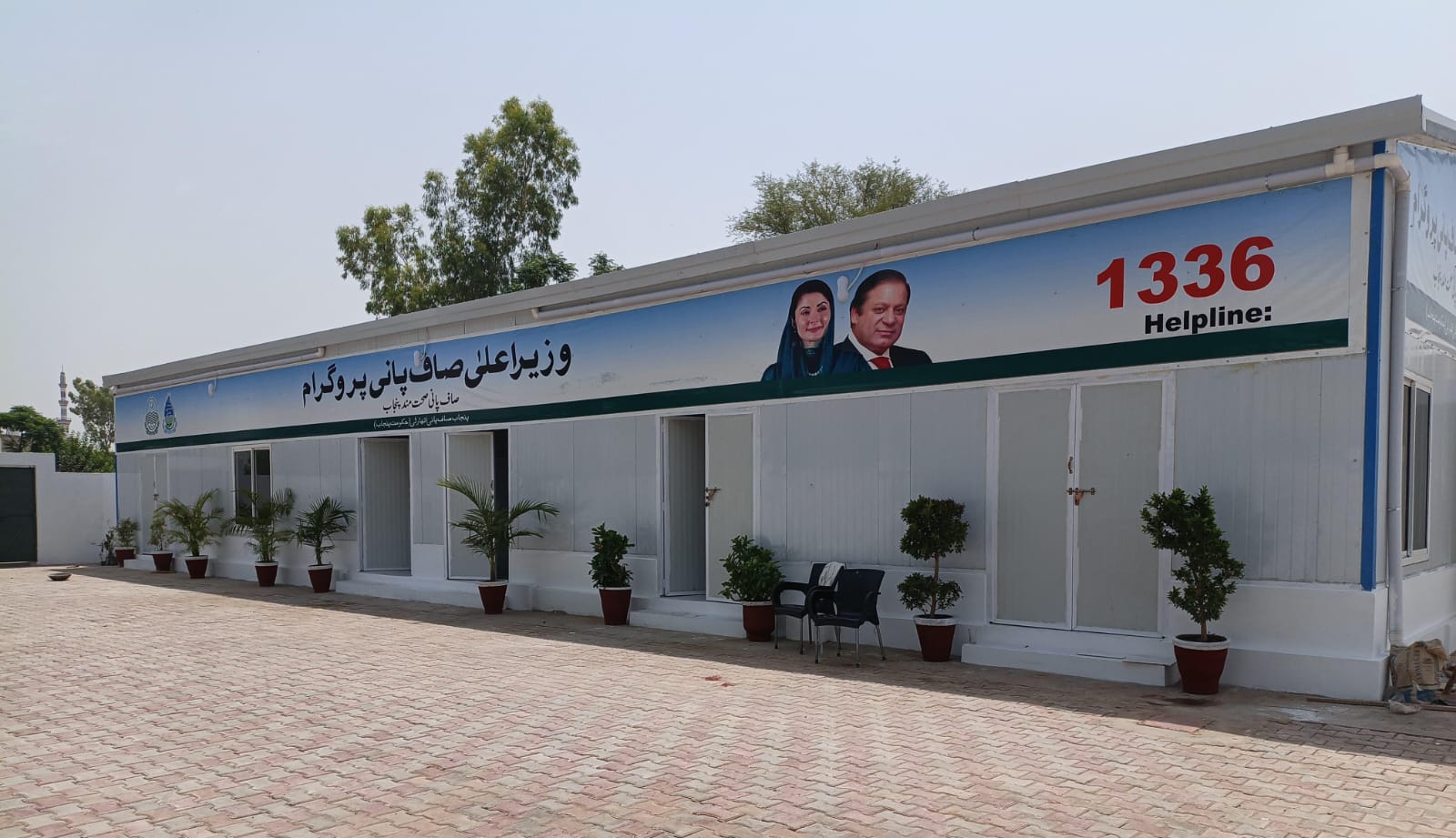
punjab clean water

Punjab Clean Water Program

By Saif Awan


Water is a tremendous blessing—a truth best understood by those for whom it remains a rare commodity even in this modern era. Across Pakistan, including several regions in Punjab, safe drinking water is still inaccessible to many. Local residents are often forced to travel miles just to fulfill their basic water needs. Even in Karachi, the country’s economic hub, clean drinking water remains scarce. Access to clean water is a fundamental necessity, fully appreciated only by those who yearn for it or those who truly grasp its importance.

Among basic amenities, safe drinking water holds the utmost priority. Clean water directly impacts not only human health but also education, the economy, the environment, and the overall quality of life.

In Punjab, several regions still lack access to safe drinking water. Settlement clusters in Southern Punjab, Cholistan, Thal, and the foothills of Koh-e-Suleman have historically faced a severe water crisis. For decades, millions of residents in these areas have been forced to consume groundwater that contains levels of salts, arsenic, fluoride, and other hazardous contaminants far exceeding international safety limits. Consequently, gastrointestinal, liver, kidney, skin, and bone diseases are widespread, while children’s physical development is severely compromised.

To ensure the public has access to safe, high-quality drinking water, Chief Minister of Punjab Maryam Nawaz has launched the **”Chief Minister Clean Water Program.”** The Punjab government has allocated PKR 8 billion for this initiative in the current fiscal year’s budget. Under this program, 5,600 water filtration plants are being installed across various regions of Punjab. All these filtration plants will undergo digital geo-tagging to facilitate continuous performance evaluation and real-time monitoring.

This project is far more than a routine development scheme; it is a vital public health, social welfare, and human dignity initiative aimed at bringing clean water to regions that have lacked this basic facility for years.

In several districts of Punjab, poor groundwater quality has been a critical concern for decades. High levels of Total Dissolved Solids (TDS), arsenic, fluoride, and nitrates not only affect the taste of water but also inflict long-term adverse health effects.

In the first phase of the Chief Minister Clean Water Program, areas facing the most acute water shortages were selected, specifically in Khushab, Dera Ghazi Khan, Rahim Yar Khan, and Bahawalnagar. State-of-the-art water bottling plants have been established in these districts, where water undergoes multi-stage purification in accordance with international standards. This purified water is then filled into 19-liter bottles and distributed to citizens free of cost. This initiative is especially transformative for families who previously had to travel several kilometers daily to fetch water or were forced to consume contaminated water.

The Punjab Saaf Pani Authority has deployed cutting-edge, internationally imported machinery for the project. Each plant features an advanced multi-stage purification system combined with rigorous laboratory testing to ensure that every drop delivered meets World Health Organization (WHO) standards. A single plant has the capacity to fill approximately 150 bottles per hour. Operating for just ten hours a day, one plant can cater to thousands of families daily. Alongside this, an advanced management system has been established to monitor plant efficiency, water quality, and the supply chain to ensure an uninterrupted supply of clean water to citizens.

A standout feature of this program is that the water bottling plants are powered by **Solar Energy**. This initiative will significantly reduce electricity costs while contributing to environmental conservation, carbon footprint reduction, and the realization of global Sustainable Development Goals (SDGs). Consequently, experts regard this project not merely as a water delivery scheme, but as a comprehensive strategy integrating health, environmental protection, and sustainable development.

Another key aspect of the initiative is its tailored design to accommodate elderly citizens, women, and persons with disabilities who cannot carry or fetch water from distant sources. Large water bottles will be delivered to designated distribution points, allowing residents to collect clean water easily. Additional distribution centers will be established in proportion to population density in each district to maximize public benefit.

The selection of the four initial districts—Dera Ghazi Khan, Khushab, Rahim Yar Khan, and Bahawalnagar—was not coincidental, but based on scientific and technical assessments. Groundwater in these regions has long been deemed unfit for human consumption. In many areas, TDS levels far exceed global standards, while the presence of hazardous elements such as arsenic, fluoride, and nitrates remains a constant concern.

The Chief Minister Clean Water Program is projected to benefit over 29 million citizens in the coming years. Initial results have been highly encouraging, and the government plans to phase this model into other districts, ensuring every citizen across the province gains access to safe, quality drinking water.

If the project maintains its current momentum and standard, it will evolve from a government scheme into a benchmark model for public health, social welfare, and sustainable development in Punjab.

Chief Minister Maryam Nawaz’s “Chief Minister Clean Water Program” is a direct effort to translate this vision into reality. By delivering quality drinking water to millions in remote and underdeveloped areas, its impact will extend well beyond healthcare to encompass education, the economy, the environment, and overall living standards.

The true success of any public project lies not in its announcement, but in its long-term outcomes. If the program continues to maintain transparency, quality, and steady expansion, it holds the potential to become a role model for safe water delivery across Punjab and all of Pakistan.

If every drop of clean water protects a family from illness, enables a child to pursue an education in good health, relieves a mother from the grueling task of fetching water from afar, and affords an elderly person a dignified life—then this is not merely a development project, but the beginning of a genuine transformation in human lives.

Similar Posts

  • Favoritism in Schools

    Hani Rasheed Through the pages of your esteemed newspaper, I wish to draw attention to the growing problem of favoritism in schools. Education is meant to provide equal opportunities to every student, but favoritism is destroying the spirit of fairness and merit. In many schools, some students receive special attention and better opportunities because of their personal connections or background. Meanwhile, hardworking and deserving students are often ignored. This creates disappointment among students and damages their confidence. Favoritism also teaches young people a dangerous lesson: that success depends on connections rather than hard work and talent. If this issue is not addressed, it will negatively affect the future of our education system. The authorities must take strict action against favoritism and ensure equal treatment for every student. Teachers and school administrations should promote merit, justice and fairness. I hope your newspaper will highlight this important issue and urge the authorities to take immediate steps to end favoritism in schools

  • Sindh lab flags faulty syringes

    Sindh Drug Testing Laboratory (SDTL) has declared two samples of auto disable syringes as substandard after they failed quality testing. According to media reports the tested 5 ml and 3 ml auto disable syringes did not meet the required standards.  During testing the auto disable safety feature failed to work properly meaning the syringes did not lock after use as expected. Because of this both samples were declared substandard under the Medical Devices Rules 2017. SDTL Director General Adnan Rizvi said the syringes were manufactured by a pharmaceutical company in Khyber Pakhtunkhwa. He added that both the auto disable and reuse prevention features failed during testing. The laboratory also found that the syringes automatic safety system was not effective. The test reports have been sent to the Drug Inspector Karachi East and the Secretary of the Quality Control Board for further action. Health experts warn that substandard auto disable syringes can increase the risk of unsafe injections and may put patients safety at risk.

  • Rewriting the history of early universe

    For centuries, human understanding of the universe was limited to the narrow band of visible light that reaches our eyes. We gazed through glass lenses at distant stars and planetary bodies. We suddenly assumed that what we saw was the complete picture of existence. However, the modern era of observational astronomy is proving that the vast majority of cosmic history has been hidden in plain sight. The history is obscured by dense cosmic dust clouds and rendered invisible to standard optical instruments. Today, scientists are piercing through these ancient barriers, effectively looking back in time to the very dawn of creation. The core of this astronomical revolution lies in how light travels across cosmic distances. As the universe expands, light emitted by the earliest stars and galaxies stretches out. Over billions of years, visible light waves elongate into invisible infrared wavelengths. It’s a phenomenon known to astrophysicists as redshift. To traditional telescopes, these primordial structures appear as empty voids of black space. However, advanced infrared technology allows researchers to detect the heat signatures and stretched light of these ancient entities. They’re now capturing photons that began their journey over thirteen billion years ago. Recent data gathered from these cutting-edge observatories has shattered long-held scientific assumptions. Previously, mainstream astrophysical models suggested that the early universe was a disorganized environment where galaxies took several billion years to unite into orderly structures. Yet, newly analyzed images reveal fully formed, structured spiral galaxies operating merely a few hundred million years after the Big Bang. These massive cosmic bodies, with billions of bright stars, existed far earlier than existing theoretical frameworks predicted. The discovery has forced cosmologists to reconsider how cosmic matter gathered and condensed during the universe’s formative epochs. Infrared observation is providing unprecedented insight into the life cycles of stars and the creation of essential elements. Dense interstellar clouds or stellar nurseries are so choked with cosmic dust that light from developing protostars cannot escape. Infrared instruments can look directly into these opaque cradles. Therefore, revealing the exact thermodynamic processes that trigger the birth of new solar systems. Scientists can now track how heavy elements such as carbon, oxygen, and iron are synthesized in the cores of giant stars. They can find out how heavy elements subsequently dispersed across space when those stars explode in supernovae. The implications of these discoveries extend far beyond theoretical physics. They touch upon fundamental questions about the origins of life itself. Astronomers are evaluating whether the ingredients for life are common throughout the Milky Way and beyond. All by tracing the distribution of organic molecules and water vapor within dust clouds around infant star systems. As technology advances, data continues to pour in from space. Humanity stands on the precipice of a new paradigm in space exploration. The ability to peer through cosmic dust and decode the earliest moments of light does not just illuminate distant galaxies. It also offers a clearer understanding of the universal processes that ultimately led to the formation of our own planet. The invisible cosmos is finally making itself known, proving that the night sky holds far more history than we ever imagined.  

  • Immature Minds Need Nourishment, Not Punishment

    By Tuba Khan A nation’s commitment to justice is not judged by the way it treats its powerful citizens, but the way it treats its vulnerable members of society. One of the most fragile creations of God are the children who need love and care, but when they are punished for their mistakes, abused or exploited for their mischievous acts and left unheard in their hour of need, they tend to become juvenile delinquents. They require guidance and encouragement to learn from their mistakes, so that they can grow into responsible and confident individuals. But unfortunately, in Pakistan, children are the most neglected group in terms of justice. Though Pakistan has juvenile justice laws and is a signatory to several international commitments. However, it fails to honor these obligations. According to the KidsRights Index 2020, Pakistan ranks 147th out of 182 nations in access to justice for children. Juvenile delinquency is not inherent; rather, it is often fueled by social, familial, psychological and environmental conditions. Children being observant and curious by nature are highly adaptable to their surroundings. Family, mentors and the community instill values in a child, shaping children’s behavior. However, factors that lead to juvenile delinquency include parental conflicts or separation, peer pressure, exposure to negative, aggressive and violent environments, deprivation of education, financial resources, affection and other basic necessities, impaired cognitive development, poor reasoning skills and psychological issues, such as impulsiveness, antisocial traits and mental disorders. Moreover, drug addiction, access to harmful content on social media, the dark web and illegal means also exacerbate the growing evil of youth delinquency. Together, these factors shape a child’s social and moral development and provoke delinquent behavior. The United Nations Convention on the Rights of the Child (CRC) defines a child as one under the age of eighteen. Below this age, children should not be treated with brutality or strict laws. Critics often argue that crime is crime whether it is committed by a child or an adult. However, the philosophy of juvenile justice acknowledges that cognitive development is not yet mature and children have an immense capacity for rehabilitation. A study indicates that the children between 16 and 18 years of age are more likely to commit offences as compared to the younger ones There is always hope for and from every child. Recognizing these realities, the global community embraced a child-centered approach to juvenile justice and adopted basic principles to deal with young offenders. First, it must be made clear that when a child comes into conflict with the law, alternatives should be offered instead of processing him/her through the formal justice system. Second, there needs to be an exclusive juvenile justice system. Third, during the investigation, a juvenile should not be kept in a regular police station and the judicial process needs to be quick. Lastly, it must be ensured that the state gives a message to juveniles that it believes in their potential for reform. International laws promote the reintegration of children into society, but sadly, this approach is missing in the juvenile justice system of Pakistan. Punjab has only two Borstal Institutes & Juvenile Jails at Bahawalpur and Faisalabad, while Sindh has five Youthful Offenders Industrial Schools in Karachi, Hyderabad, Sukkur, Larkana and Dadu, although the facility in Dadu is non-operational. The KPK has one Borstal in Bannu, whereas Balochistan does not have even a single functional Borstal Institute or juvenile jail. This lack of physical infrastructure causes a considerable number of juveniles to be imprisoned in regular prisons. Placing children in such an overcrowded environment exposes them in proximity to criminals and causes psychological distress, which undermines the rehabilitation capacity of prisoners. No less troubling is the lack of juvenile courts across the country. As a result, most children have continued to go through regular courts that cannot cater to their developmental needs. A joint report by UNICEF and the Commissioner for Children’s Complaint Office of Pakistan has found that as of November 2023, 81% of the total juvenile offenders in Punjab were detained in ordinary jails, and only 144 prisoners were housed in Borstal Institutes. In January 2026, Punjab Prison Department released a report, according to which there are 718 juvenile prisoners in Punjab, while the total capacity is 658 prisoners. The shortage of juvenile institutions further highlights the flaws in the juvenile justice system of Pakistan. It is the state’s responsibility to transform vulnerable children into responsible citizens. Therefore, the Government of Pakistan must move beyond merely passing laws that remain largely unimplemented and instead take concrete and pragmatic steps. The country should develop an implementation plan for the juvenile justice system, allocate adequate financial resources, strengthen the diversion mechanism to resolve minor juvenile cases outside the formal justice system, establish child-friendly rehabilitation centers that promote a sense of responsibility towards society, develop specialized juvenile police units to replace the use of police lock-ups for children, protect juveniles from torture and capital punishment while in detention, recruit trained staff, address the root causes of juvenile delinquency, such as poverty, illiteracy, unemployment, unsafe neighborhoods and the growing number of street children through social welfare programs and introduce a real-time Prison Management Information System (PMIS) to monitor juvenile offenders and support evidence-based decision-making. Every child lost to crime symbolizes not merely an individual failure but a social breakdown and failure of state governance. Invest in the rehabilitation of juvenile offenders to build a safer and stable Pakistan tomorrow. Immature minds need nourishment, not punishment.

  • Which plane seat is safest?

    Many people choose to travel by air because it is fast comfortable and one of the safest ways to get from one place to another.  However when an airplane accident happens many passengers wonder. Is there a seat that offers a better chance of survival? The good news is that air travel remains far safer than traveling by road or rail. Although plane crashes often receive worldwide attention because they are rare and serious the number of deaths from aviation accidents is much lower than from road accidents. According to global aviation safety data flying has one of the lowest accident and death rates of any form of transportation. Is there a safest seat? There is no seat that can guarantee survival in every accident.  Aviation experts say the outcome depends on many factors including the type of crash the speed of the aircraft and where the impact occurs. However studies of past accidents suggest that some seats may provide a slightly better chance of survival in certain situations. What research shows A review of airplane crashes over 35 years found that middle seats in the rear section of the aircraft had the lowest death rate, around 28%.  By comparison seats in the middle section of the plane had a higher death rate. Another study by Popular Mechanics which examined crashes between 1971 and 2005 found that passengers sitting in the back of the plane were up to 40% more likely to survive than those sitting closer to the front. Why the back may be safer Aviation experts explain that the front of the aircraft often absorbs the first impact during some types of crashes.  Because of this passengers seated in the rear may have a better chance of surviving in certain accidents. The back of the aircraft is also closer to the rear emergency exits which may help passengers leave the plane more quickly if an evacuation is needed. But every crash is different Experts also warn that there is no “perfect” seat. Some crashes affect the rear of the aircraft first while others damage the front or middle section. In accidents involving mountains the ocean or explosions survival may depend more on the nature of the crash than on where a passenger is sitting. For example if a plane crashes into a mountain or falls into the sea the chances of survival are often very low regardless of seat location. Emergency exit seats can help Passengers sitting near emergency exits may be able to leave the aircraft faster after a crash provided the exits remain usable.  Quick evacuation is often an important factor in survival. What Aviation Authorities Say The US Federal Aviation Administration (FAA) says no part of an airplane is officially considered safer than another. Survival depends on many factors, including the type of accident the force of the impact fire and how quickly passengers can evacuate. Research suggests that seats near the back of the aircraft especially the middle seats in the rear section may offer a slightly better chance of survival in some crashes. However no seat can guarantee safety. The most important thing passengers can do is wear their seat belt listen to the safety briefing and follow the cabin crew’s instructions.  These simple steps can make a big difference in an emergency.

  • Why you crave fried foods

    Have you ever finished a full meal but still wanted to eat fries samosas fried chicken, or pakoras? Many people think it is simply a lack of self control but scientists say there is much more to it. Research suggests that our brain taste buds and eating habits all work together to make fried foods hard to resist. When food is fried its texture smell and flavor change.  According to research from the University of São Paulo in Brazil, frying removes water from food making the outside crispy and crunchy. At the same time proteins and starches change through a process called the Maillard reaction which gives fried foods their golden color rich aroma and delicious taste. Scientists say the brain also plays an important role.  A study published in Nature Reviews Neuroscience found that eating favorite foods activates the brain’s dopamine system. Dopamine is not just linked to pleasure it also helps the brain remember enjoyable experiences and encourages us to repeat them. This is why the smell or sight of French fries samosas or fried chicken can make you want to eat them even if you are not hungry. Experts also say that craving fried foods does not usually mean your body is missing a specific nutrient. These cravings are more often influenced by habits tempting smells emotions memories and the foods around you. Does this mean fried food is bad for your health? •Not necessarily Eating fried foods occasionally is generally not a problem.  However making them a regular part of your diet may increase health risks. In a large study by researchers at the Harvard T.H. Chan School of Public Health more than 110,000 adults were followed for over 20 years. People who ate fried foods seven or more times a week had a higher risk of developing type 2 diabetes and a slightly higher risk of heart disease than those who ate fried foods less than once a week. Researchers believe that weight gain high blood pressure, and unhealthy cholesterol levels may partly explain this increased risk. Experts do not recommend giving up fried foods completely. Instead they suggest eating balanced meals avoiding skipping meals and enjoying fried foods only in moderation. This approach may help reduce cravings while supporting better overall health. Scientists say the attraction of fried food comes from a powerful combination of crispy texture rich flavor tempting smell and the brain’s memory of enjoyable eating experiences. That’s why even after a full meal one hot and crispy bite can still be hard to resist.

Leave a Reply

Your email address will not be published. Required fields are marked *