400 cyberattacks pakistan

400+ cyberattacks on Pakistan foiled this year, DG cyber team

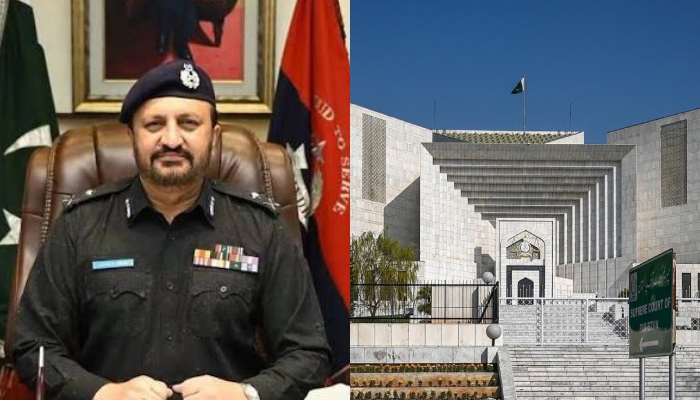
Islamabad: Director General of Pakistan’s National Cyber Emergency Response Team, Dr. Haider Abbas has revealed that more than 400 cyberattacks were launched against Pakistan this year. However, he said that all of the attacks were successfully thwarted in time.

Dr. Abbas emphasized the need for a strong National Cyber Security Authority suggesting that it should operate under the direct supervision of the Prime Minister.

In an interview, he discussed Pakistan’s growing cybersecurity challenges and the increasing threat of state-sponsored cyberattacks. He proposed the establishment of a powerful National Cyber Security Authority headed by the Prime Minister to strengthen the country’s cyber defense.

He added that such an authority should be responsible for managing cybersecurity across the country and would be able to operate more effectively under the Prime Minister’s leadership.

Similar Posts

  • | |

    Hepatitis screening made mandatory for Islamabad e…

    The federal government has decided to launch mandatory hepatitis screening for all government employees in Islamabad. Employees working in federal ministries will also be required to undergo screening. The move is part of the government’s efforts to detect hepatitis cases at an early stage and provide timely treatment. According to sources in the Ministry of Health, the screening will be conducted under the Prime Minister’s Hepatitis Programme. The programme aims to identify people infected with hepatitis and connect them with free diagnostic and treatment facilities. Employees who test positive during the initial screening will be referred for a PCR test. The PCR test will be provided free of cost under the programme. The government will also provide free medicines to patients after completion of the PCR testing process. The initiative is intended to reduce the financial burden on patients and ensure that those diagnosed with hepatitis receive proper treatment. The Prime Minister’s Hepatitis Programme has a total allocation of Rs67 billion. The funds will be used for screening, diagnostic tests, treatment and other measures aimed at controlling the spread of hepatitis. Free hepatitis screening is already being conducted at different locations across Islamabad. The government plans to expand the screening process to federal government employees as part of the wider programme. Sources said more than 50,000 hepatitis screening kits have already been purchased. The kits will be used to screen employees and identify suspected cases. Machinery for PCR testing has also been installed at the National Institutes of Health in Islamabad. The facility will help process tests for people who are found positive during the initial screening. Health authorities are focusing on early diagnosis because many hepatitis patients may not show clear symptoms in the initial stages. Regular screening can help identify infections before they cause serious health complications. The mandatory screening of government employees is therefore being seen as an important step in strengthening hepatitis prevention and treatment efforts in the federal capital.

  • | |

    New petrol and diesel prices announced for August …

    The federal government has announced a slight reduction in the prices of petrol and high-speed diesel, issuing a fresh notification through the Ministry of Energy (Petroleum Division). The revised fuel prices will come into effect from August 1, 2026, and will remain applicable until August 3, 2026. According to the official notification, the Oil and Gas Regulatory Authority (OGRA) determined the new petroleum product prices under the pricing mechanism approved by the federal government. The latest revision provides modest relief to consumers amid fluctuating international oil prices. Under the new rates, the price of petrol has been reduced by 12 paisa per litre, bringing the new price to Rs. 336.03 per litre. Previously, petrol was being sold at Rs. 336.15 per litre. Similarly, the price of high-speed diesel (HSD) has been cut by 66 paisa per litre. The revised price has been set at Rs. 392.38 per litre, compared with the previous rate of Rs. 393.04 per litre. Although the reductions are relatively small, they reflect the government’s periodic review of petroleum prices based on recommendations from OGRA and prevailing market conditions. Fuel prices in Pakistan are reviewed regularly, taking into account changes in international crude oil prices, exchange rate fluctuations, and applicable taxes and levies. Petrol is widely used by private vehicles, motorcycles, and small transport operators, while high-speed diesel is the primary fuel for heavy transport, agriculture, and industrial machinery. Any change in fuel prices can have a direct impact on transportation costs, inflation, and the prices of essential goods. The Ministry of Energy stated that the revised prices have been implemented in accordance with the government’s petroleum pricing policy. Consumers across the country will pay the new rates at fuel stations from August 1. The latest price adjustment comes as authorities continue to monitor global energy markets and domestic economic conditions. Future revisions will depend on international oil price trends, currency movements, and recommendations made by OGRA under the government’s approved pricing mechanism.

  • 20-kanal government land deal faces Parliament scrutiny

    Islamabad: A long running agreement involving government land, a private training institute and millions of rupees came under intense scrutiny as lawmakers questioned the terms of the Hazza Institute of Technology arrangement during a meeting of the National Assembly Standing Committee on Federal Education and Professional Training. Members raised serious questions over how a private institute continued operating on government provided land, why the agreement was extended for another 15 years and whether public interest was fully protected in the deal. The committee was informed that around 20 kanals of land were provided to Hazza Institute under a Public Private Partnership model, but lawmakers questioned whether the government was receiving proper benefits from the arrangement. The issue was discussed during the 25th meeting of the committee after members raised concerns about repeated projects being given to the same institute and questioned whether Hazza had received special preference over other organisations. The Executive Director of the National Vocational and Technical Training Commission (NAVTTC), Muhammad Amir Jan, rejected allegations of favouritism and said no institution was being supported unfairly. He told the committee that decisions regarding Hazza were made by previous administrations and that he was responsible for dealing with the existing agreement according to government rules. According to the briefing, the Hazza Institute project started in 2010 under a Public Private Partnership model. A Saudi Arabia based training company along with its local partner was selected after a process at that time. Under the original plan, the government was supposed to provide land and invest Rs 340 million through the Workers Welfare Fund. Officials informed the committee that while the land was provided, the planned investment was not released. The agreement was later rewritten in 2018 by the National Training Bureau, which transferred responsibilities to NAVTTC. The new arrangement continued for 15 years starting from 2018 and would remain effective until 2033. During the meeting, members questioned why the government did not take action earlier to review or end the agreement. The committee members asked for details of the agreement and questioned why a private organisation was allowed to continue using government property without clear financial benefits for the state. NAVTTC officials explained that the agreement was legally valid and the institute was considered an authorised occupant under the existing contract. However, the Executive Director admitted that some terms of the agreement were one sided and needed to be reviewed. He informed the committee that under the agreement, the government had limited powers to remove the institute before the completion period. Officials said efforts were now underway to renegotiate the terms and ensure that the government receives proper value from the land the institute is using. The committee was informed that NAVTTC had already taken back around 4,000 square feet of built up space from the total area for establishing a NAVTTC incubation centre. The official said the total built up area was around 20,000 square feet and explained that under the Built Operate Transfer model, ownership would eventually return to the government after the agreement period ends. The financial side of the matter also came under discussion. Officials informed the committee that Hazza was linked with an overseas training programme and was expected to train thousands of young Pakistanis for foreign employment opportunities. The committee was told that the institute was involved in a programme targeting 4,000 trainees, out of which 780 had already completed training and moved forward. The Executive Director stated that no additional funds would be released unless the programme produced results and overseas employment targets were achieved. He also informed the committee that disputes and complaints involving Hazza had reached different forums, including government platforms, with competing groups filing complaints against each other. Members demanded greater transparency and said that government land and public resources must be managed in a way that protects national interest. The committee also questioned the extension of the agreement period, noting that the original partnership documents from 2010 and 2011 had different timelines. Officials explained that the agreement was revalidated in 2018, restarting the 15 year period from that year. The committee directed NAVTTC to review the matter carefully and provide a progress report after two months. Chairperson Mahtab Akbar Rashdi said the committee wanted practical action and clear decisions rather than further delays. She stressed that while investment made by private partners should be considered, government interests and accountability must remain the priority.

  • | | |

    AJK violence won’t derail democracy: DG ISPR

    Pakistan’s military has defended the state’s handling of unrest in Azad Jammu and Kashmir (AJK) and the security situation in Balochistan, saying the government is exercising restraint while remaining committed to constitutional governance, counterterrorism efforts and national stability. Addressing a detailed press conference on Friday, Director General of Inter-Services Public Relations (ISPR) Lieutenant General Ahmed Sharif Chaudhry said political issues should be resolved through democratic and constitutional means, while security challenges require strong governance and public support. State urges constitutional path in AJK The military spokesperson said the state had acted with restraint in dealing with recent unrest in AJK, adding that the electoral process would continue without disruption. He stressed that the will of the people should be reflected through democratic institutions and that all individuals would be held accountable under the Constitution and the law. He said Pakistan remained committed to its long-standing position on Kashmir, describing the region as central to the country’s national policy. He also rejected claims that the Pakistan Army was an occupying force in AJK, saying security matters in the region were being handled by the AJK government, police and civilian law enforcement agencies. The DG ISPR alleged that India was attempting to fuel instability inside Pakistan through proxy campaigns and misinformation, while reaffirming Pakistan’s support for the Kashmiri people’s right to self-determination under United Nations resolutions. Good governance key to national security Responding to questions about governance reforms, the military spokesperson said effective administration was essential for ensuring peace and long-term stability. He noted that Pakistan’s rapidly growing population required a review of administrative structures and said reforms should be debated and implemented through constitutional and democratic processes. He said an administrative reset could be considered if it helped improve governance, but emphasized that any changes must reflect the will of the people and remain within the legal framework. Referring to the National Action Plan, he said most of its objectives—including countering extremist narratives, stopping terror financing, improving institutional capacity and tackling smuggling—depended on strong governance rather than military action alone. Security operations intensify against terrorism The DG ISPR said security forces had significantly increased intelligence-based operations across the country during 2026, conducting thousands of operations aimed at dismantling terrorist networks. According to him, more than 2,000 militants had been killed this year, while hundreds of security personnel and civilians had embraced martyrdom. He said the majority of recent suicide bombers were Afghan nationals and accused militant groups linked to the Afghan Taliban of supporting cross-border terrorism against Pakistan. He maintained that the rise in security incidents reflected a more aggressive counterterrorism strategy, with intelligence-led operations forcing militants into direct confrontation with security forces. Balochistan challenges linked to governance and propaganda Discussing Balochistan, the military spokesperson said the province’s security challenges stemmed from a combination of militancy, organized crime, entrenched elite interests and external interference. He argued that some influential groups resisted reforms to preserve their political and economic influence, while terrorist organizations exploited local grievances through propaganda. He highlighted ongoing development projects, including investments in education, healthcare, transport infrastructure and Gwadar’s development, saying the government had allocated substantial resources to the province. He also referred to data from the Commission of Inquiry on Enforced Disappearances, stating that most reported cases had already been resolved while investigations into the remaining cases were continuing.

  • | |

    Citizen named Quaid-e-Azam told to appear before N…

    PESHAWAR: The Peshawar High Court has directed a citizen named Quaid-e-Azam to appear before the National Database and Registration Authority (NADRA) Board after his Computerised National Identity Card (CNIC) was blocked. The matter came before the court after the citizen challenged the blocking of his CNIC through a petition. A division bench comprising Justice Waqar Ahmed and Justice Inamullah Khan heard the case. During the proceedings, the petitioner’s lawyer told the court that his client was a businessman. He said the citizen’s CNIC had been blocked and requested the court to intervene in the matter. The lawyer sought relief against the action taken against his client. He maintained that the blocking of the identity card had affected the citizen and required judicial consideration. A NADRA representative also appeared before the court. The Director Legal of NADRA informed the bench that the CNIC had not been blocked without reason. He said the authority had found the petitioner’s identity record suspicious. According to NADRA, the issue required further verification of the citizen’s record and identity documents. After hearing both sides, the court did not immediately order the restoration of the CNIC. Instead, the bench directed the petitioner to appear before the NADRA Board. The court’s direction means that the petitioner will have an opportunity to present his position before the relevant authority. NADRA will then examine the matter in accordance with its verification process. The case highlights the importance of accurate identity records and the procedures followed when questions arise over a citizen’s documentation. The court’s order also provides a formal channel for the petitioner to address the concerns raised by NADRA

  • |

    Three Pakistanis killed in Houthi attack on Red Sea commercial vessel

    At least three Pakistani nationals were killed and another sustained injuries after Houthi forces attacked a commercial vessel in the Red Sea, according to Deputy Prime Minister and Foreign Minister Ishaq Dar. The incident has raised fresh concerns over the safety of Pakistani nationals working aboard commercial ships and the wider security of one of the world’s most important maritime trade routes. Dar confirmed the deaths on Wednesday and strongly condemned the attack, saying that targeting a civilian commercial vessel posed a serious threat to maritime security and international navigation. In a statement posted on X, the deputy prime minister said Pakistan rejected attacks on non-combatant commercial shipping, warning that such incidents put innocent lives at risk and amounted to a violation of international law. He said attacks of this nature could also disrupt freedom of navigation and create further risks for international trade passing through the Red Sea. Pakistan contacts Saudi, Yemen authorities Dar said the Pakistani government was coordinating with Saudi authorities and the internationally recognised government of Yemen to establish further details surrounding the attack. He also instructed the Pakistani embassy in Riyadh to remain in close contact with the relevant authorities and take all necessary steps regarding the deceased Pakistani nationals. The embassy has been directed to facilitate the recovery and repatriation of the victims’ remains to Pakistan, while efforts are also underway to ensure that the injured Pakistani receives all possible assistance. The foreign minister said Islamabad was closely monitoring developments and would maintain contact with the concerned authorities as more information emerged. Islamabad raises concern over Red Sea security Pakistan has repeatedly expressed concern over attacks and threats against commercial shipping in the Red Sea, particularly amid growing instability across the Middle East. On July 22, the Foreign Office warned that continued threats to maritime traffic could undermine freedom of navigation, weaken the rules-based international maritime order and disrupt global commerce. The following day, Pakistan and Saudi Arabia agreed to strengthen coordination aimed at supporting regional peace and security and ensuring the continued movement of legitimate commercial shipping through the Red Sea. The understanding was reached during a telephone conversation between Prime Minister Shehbaz Sharif and Saudi Crown Prince and Prime Minister Mohammed bin Salman. During the conversation, Sharif strongly condemned Houthi attacks targeting Saudi oil tankers operating in the Red Sea and reiterated Pakistan’s concerns over the potential consequences for regional stability and international trade. Makkah defence pact adds regional dimension The latest attack also comes against the backdrop of growing security cooperation between Pakistan, Saudi Arabia and Turkiye. The three countries recently signed the Makkah Joint Defence Agreement, establishing a collective security arrangement under which an armed attack against one member would be treated as an attack against all three. Dar has described the agreement as defensive in character, stressing that its objective is to contribute to peace, stability and prosperity rather than escalate regional tensions. Naqvi visits Iran amid diplomatic efforts The latest Red Sea incident occurred as Pakistan stepped up diplomatic efforts to reduce tensions in the wider Middle East. Interior Minister Mohsin Naqvi is currently in Iran, where he held meetings with Iranian President Masoud Pezeshkian and Foreign Minister Abbas Araghchi. During his meeting with Pezeshkian, Naqvi conveyed a special message from Prime Minister Shehbaz Sharif and Chief of Defence Forces and Chief of Army Staff Field Marshal Asim Munir, according to sources. Sources said Naqvi also briefed the Iranian president about the Makkah Joint Defence Agreement and discussed regional security developments. Pakistan and Qatar have been involved in diplomatic efforts to help de-escalate the conflict, which has resulted in thousands of deaths, particularly in Iran and Lebanon, following US and Israeli attacks on Iran on February 28. Shipping attacks fuel fears over global trade The latest violence comes as tensions surrounding critical maritime routes remain elevated. The United States and Houthi forces reported separate attacks involving shipping on Tuesday, adding to concerns that diplomatic efforts to end the broader Middle East conflict could face further obstacles. The Gulf of Oman and the Red Sea are strategically important waterways, with the Strait of Hormuz and the Red Sea serving as major routes for global energy and commercial shipments. Any prolonged disruption to these routes could increase transportation costs, affect energy markets and create further pressure on international supply chains. Iran has reiterated that the Strait of Hormuz will remain closed unless Washington accepts its conditions, adding to uncertainty surrounding the future of maritime traffic through the strategically vital waterway. Despite the worsening security environment, Defence Minister Khawaja Asif said on Tuesday that the United States and Iran were moving closer to a possible agreement. Speaking to Bloomberg News, Asif said recent developments suggested that negotiations could again be moving in the direction of a peace arrangement. Qatar, which has also been involved in mediation efforts, has said discussions concerning the management of maritime traffic through the Strait of Hormuz had reached an advanced stage.

Leave a Reply

Your email address will not be published. Required fields are marked *