qalibaf accuses trump
| |

Qalibaf accuses Trump of using “Theater Diplomacy” on Iran


Iranian Parliament Speaker and the country’s chief negotiator, Mohammad Bagher Qalibaf, has accused U.S. President Donald Trump of engaging in what he described as “theater diplomacy,” saying Washington continues to send mixed signals by alternating between military threats and calls for negotiations.

In a statement posted on social media platform X, Qalibaf criticized Trump’s recent rhetoric, saying the U.S. administration repeatedly announces the possibility of major military action before stepping back and expressing interest in diplomatic talks.

“First they say a major attack is coming, then they say they want negotiations. This cycle of theater diplomacy continues,” Qalibaf wrote.

He argued that Washington keeps shifting its position between military pressure and diplomatic engagement, creating uncertainty rather than building trust. According to Qalibaf, the repeated use of threats, broken promises, and what he called “false narratives” has failed to pressure Iran into changing its stance.

“The strategy of intimidation has not worked,” he said. “It is time to accept the realities, honor commitments, and replace political theater with serious and responsible diplomacy.”

Qalibaf’s remarks came after President Trump claimed that he had canceled plans for a large-scale military strike against Iran. Trump said Iran and several countries in the region had urged the United States to avoid military action, adding that diplomatic progress was within reach.

The U.S. president also claimed that ongoing negotiations could lead to a temporary agreement involving the United States, Iran, and Oman. He said such a deal would reopen the Strait of Hormuz without delay and eliminate what he described as the Iranian nuclear threat.

The exchange highlights the sharp differences between Tehran and Washington as both sides continue to send conflicting messages about diplomacy and the possibility of easing tensions in the region. While U.S. officials speak of negotiations and a potential agreement, Iranian leaders remain skeptical, arguing that meaningful progress will require the United States to move beyond threats and fulfill its commitments.

Similar Posts

  • | | | |

    Trump says Hormuz reopening near, warns Iran of consequences

    US President Donald Trump has said the Strait of Hormuz could reopen “very soon” as diplomatic efforts with Iran continue, while warning that Tehran would face a strong military response if negotiations fail. Speaking during an interview with Fox News, Trump expressed optimism about the ongoing talks, saying discussions had made significant progress. He claimed Iranian representatives had requested negotiations at a time when the United States was preparing for a large-scale military operation. According to Trump, Washington agreed to engage in dialogue after receiving signals from Tehran that it was willing to negotiate. He stressed that the United States remains committed to preventing Iran from acquiring nuclear weapons and said abandoning the talks would have serious consequences. The US president said negotiators spent the entire day in discussions and described the atmosphere as positive. He added that a successful agreement could help restore normal shipping through the Strait of Hormuz, one of the world’s most important energy routes. Trump also suggested that reopening the strategic waterway would ease pressure on global energy markets. He said lower oil prices could eventually translate into cheaper fuel costs for consumers and urged energy companies to reduce gasoline prices if market conditions improve. Speaking later to reporters in California, Trump said developments with Iran were moving in the right direction and indicated that greater clarity on the negotiations could emerge within the next 48 hours. Diplomatic efforts are reportedly being supported by regional mediators, including Oman and Qatar. Discussions are focused on restoring safe maritime navigation through the Strait of Hormuz while reducing tensions between Washington and Tehran. However, Iranian officials have maintained that progress depends on an end to US threats and continued respect for Iran’s sovereignty. The Strait of Hormuz is a vital global shipping lane through which a significant share of the world’s oil and liquefied natural gas exports passes. Any disruption to traffic through the waterway has immediate consequences for international energy markets and global trade. Financial markets reacted positively to reports of progress in the negotiations. Oil prices declined while Asian stock markets advanced on expectations that a diplomatic breakthrough could reduce regional tensions and restore uninterrupted shipping. Meanwhile, reports from Israel indicated growing concern over Washington’s diplomatic approach. Some Israeli officials reportedly believe the United States is prioritising a negotiated settlement with Iran, although no official Israeli government statement has confirmed those claims.

  • |

    Syria rejects Israel’s claim over airbase strike

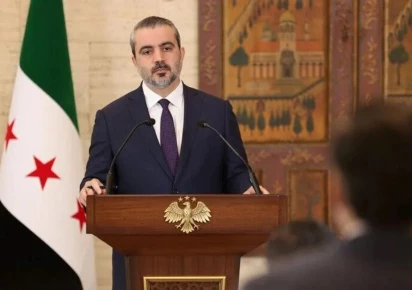
    Syria has rejected Israel’s explanation for an airstrike on a military airbase in northern Syria, saying there were no plans to establish a Turkish military base or permanent Turkish presence at the facility. Syrian Foreign Minister Asaad al-Shaibani said Damascus had informed Israeli officials about the nature of the work being carried out at Abu al-Duhur airbase before the attack. According to Syrian officials, the facility was being repaired and prepared for use by the Syrian Air Force. The work was focused on restoring runways and infrastructure damaged during Syria’s civil war. Israel carried out at least eight strikes on the airbase early Tuesday, hitting runways and hangars. The attacks reportedly damaged recently repaired sections of the facility. No casualties were reported. Israeli officials said the operation was aimed at preventing what they described as a Turkish military buildup at the site. Israeli Prime Minister Benjamin Netanyahu also said Syria had previously been warned against allowing a Turkish military presence at the base. Al-Shaibani strongly disputed that account. He said the airbase was largely empty and had not yet become fully operational. “There was no Turkish military buildup at the base,” the Syrian foreign minister said, arguing that the situation on the ground did not support Israel’s justification for the strike. He acknowledged that Turkish military officers had visited the facility shortly before the attack. However, he described the visit as part of broader military cooperation between Syria and Türkiye, including training and the exchange of expertise. Al-Shaibani said Syria had also developed military cooperation with countries including Saudi Arabia, Jordan, Qatar and Russia as it works to rebuild its institutions. He stressed that Syria is a sovereign country and has the right to establish partnerships with other states. The Syrian minister also said Syrian and Israeli officials had remained in contact before the airstrike. Damascus had reportedly explained that the facility would remain under Syrian control and that no permanent Turkish deployment was planned. Following the attack, Syria contacted the United States and other countries to protest the strike and seek measures to prevent similar incidents. Al-Shaibani said Damascus had warned Washington about what it described as Israel’s increasingly aggressive policies toward Syria. He also called for respect for Syrian sovereignty and warned against turning Syrian territory into a battleground for wider regional disputes. Despite the latest escalation, Damascus said it remained open to negotiations with Israel aimed at reducing tensions along their border. Al-Shaibani said Syria and Israel had previously spent months negotiating a security arrangement through US mediation. According to him, the two sides had made substantial progress and reached an understanding on paper, but Israel later failed to implement the agreed framework. The Syrian foreign minister said future negotiations could resume if there was genuine political will. He maintained that any security arrangement must address the concerns of both sides while respecting Syria’s sovereignty. Meanwhile, Türkiye has strongly backed Syria following the Israeli strike. Turkish Communications Director Burhanettin Duran criticised Netanyahu’s statements about Türkiye and accused the Israeli leadership of using threats against regional countries to divert attention from its own policies. Duran said Türkiye would continue supporting Syria and other countries seeking peaceful solutions to regional conflicts. He argued that Israel’s military actions in Gaza, Syria and Lebanon had contributed to growing instability across the region. He also said Ankara opposed policies that could widen the conflict. Duran stressed that Türkiye’s objective was to reduce bloodshed and promote peace, with the Palestinian issue and the situation in Gaza remaining among its key concerns.

  • | |

    Egypt confirms drone strike behind blaze at two ga…

    A drone strike caused the fire that engulfed two gas vessels at Egypt’s Mediterranean port of Damietta, the Egyptian cabinet confirmed Thursday, ending speculation over whether the blaze that broke out a day earlier was an accident or an attack. No group has claimed responsibility for the strike, which occurred close to the Suez Canal, now serving as the last safe route for Saudi oil shipments reaching global markets. Egyptian authorities said they are continuing their investigation and taking steps to safeguard national security. British maritime security firm Ambrey said Wednesday that a drone had struck a US owned gas storage tanker at the port, an early assessment that raised fears the wider regional conflict could spread further. Three trading sources familiar with the incident said the drone hit the floating storage vessel Energos Winter, sparking a fire that then spread to a second ship, Gaslog Salem. According to maritime risk group Vanguard, the Energos Winter was struck on its starboard side, and the resulting fire was later extinguished. Egypt’s petroleum ministry said firefighting and security teams responded immediately and that the incident caused no injuries or fatalities. Petroleum Minister Karim Badawi traveled to the port to personally oversee the emergency response, according to the ministry. The strike came shortly after Iran launched a missile attack targeting US forces in Jordan, prompting Washington and Saudi Arabia to carry out strikes against Iran backed paramilitary groups in Iraq. President Donald Trump warned of retaliation against Iran, while Yemen’s Houthi movement declared a naval blockade against Saudi Arabia, marking what appears to be the widest expansion of the conflict since the United States and Israel began bombing Iran in February. The Energos Winter is a floating storage and regasification unit owned by the US based firm Energos Infrastructure. Its technical, safety and commercial operations are managed by Wilhelmsen Ship Management, a Singapore based subsidiary of the Norwegian company Wilhelmsen Group. In a first for the five month war, Saudi Arabia publicly joined US forces in striking Iran aligned groups in eastern Iraq on Wednesday, responding to drone attacks on Saudi oil facilities that were launched from Iraqi territory. Following the joint operation, Saudi Arabia’s defense minister met with US Vice President JD Vance in Washington to urge the Trump administration against further escalation, according to two people familiar with the meeting. The conflict began in February when the United States and Israel launched a bombing campaign against Iran that Trump initially said would last only a few weeks. A temporary ceasefire reached in June collapsed amid renewed fighting centered on the Strait of Hormuz, a critical waterway that Iran now claims to control. The latest strikes in Iraq and Egypt threaten to pull additional countries into the conflict, coming after Yemen’s Houthi forces declared a naval blockade on Saudi Arabia last week, putting the alternative Red Sea shipping route for Saudi oil bound for Asia at risk. Attacks on vessels by Houthi fighters have already prompted London’s marine insurance market to expand its high risk zone in the Red Sea to cover a larger stretch of coastline near Saudi ports. Trump said the United States would respond forcefully to Iran’s missile attack on American forces, while maintaining that Washington remains open to a negotiated peace deal to end a war that has unsettled global energy and financial markets. Oil prices jumped more than eight percent on Wednesday before easing slightly on Thursday amid volatile trading, with benchmark Brent crude hovering just under 90 dollars a barrel. Iran said Wednesday that it had struck three tankers attempting to pass through the Strait of Hormuz along what it called an unauthorized route. Even so, a QatarEnergy controlled liquefied natural gas tanker exited the strait overnight, the first such vessel tracked leaving the waterway since July 11. Iran’s semi official Fars news agency reported that Tehran had specifically authorized the tanker’s passage. Oman has presented Iran with a Gulf backed proposal to manage traffic through the Strait of Hormuz, including a system of voluntary usage fees, according to sources familiar with the talks. Iran rejected that proposal on Wednesday, though foreign ministry spokesperson Esmaeil Baghaei said discussions with Oman over the strait’s management are continuing, according to the semi official ILNA news agency. Separately, sources familiar with the matter said Iran is expected to receive its first shipment within weeks of up to 400 Chinese made shoulder fired air defense missile launchers, part of an effort to shore up gaps in its ability to protect military sites and strategic infrastructure exposed during the war. Iran’s foreign ministry did not immediately respond to a request for comment, while China’s foreign ministry denied the report. The expanding pattern of strikes across Iraq, Egypt and the Red Sea underscores how a conflict initially centered on Iran has increasingly drawn in neighboring states and global shipping lanes, complicating efforts by mediators to contain the fighting before it further disrupts international energy markets.

  • Global humanitarian crisis

    Across multiple war zones around the globe, military hostilities and direct attacks on aid workers are pushing millions of civilians to the brink. Frontline personnel operating in Ukraine, the Middle East and Sudan are struggling to deliver basic survival services under increasingly perilous conditions. Strikes on Essential Infrastructure and Relief Assets in Ukraine Violence across Ukraine continues to inflict heavy civilian casualties. It claimed lives and injuring children across nine major regions, including Kyiv, Kharkiv, Odesa and Zaporizhzhia. The intense shelling has directly hindered humanitarian operations beyond damaging residential neighborhoods and essential municipal utilities. A recent strike in the city of Dnipro destroyed a primary World Health Organization (WHO) supply warehouse. The attack wiped out crucial medical inventory earmarked for frontline healthcare facilities. Meanwhile, emergency personnel in the Kherson region reported damage to a civilian evacuation transport and a direct hit on a World Food Programme (WFP) partner truck carrying essential food supplies. Despite these continuous risks, relief organizations remain active on the ground, delivering immediate trauma care, psychological support, and essential survival provisions to impacted communities. Rising Hostilities and Explosive Hazards Across the Middle East The security landscape in southern Lebanon and Gaza remains extremely volatile. Peacekeepers with the UN Interim Force in Lebanon (UNIFIL) monitored hundreds of artillery rounds and dozens of airspace incursions by Israeli forces over a single weekend. Direct fire incidents were recorded near UN observer positions in Meiss ej Jebel, alongside sightings of naval activity along the coast. Crucially, peacekeepers are working to clear hazardous remnants of war, having uncovered loaded rocket launchers, unexploded shells, and improvised explosive devices scattered across southern villages. In Gaza, ongoing military activity continues to imperil non-combatants and expand basic survival needs. Unexploded ordnance represents one of the most severe long-term dangers to returning residents and reconstruction crews. Specialist teams have identified and marked more than 1,000 explosive items across the Gaza Strip since late 2023. These clearance operations are vital for allowing workers to clear heavy rubble, restore water infrastructure, and safely access damaged facilities. To prevent further civilian casualties, mine safety specialists conducted targeted educational workshops reaching over 63,000 individuals in the past month alone. Sudan’s Escalating Displacement and Extreme Budget Drought In Africa, Sudan’s protracted conflict is driving mass displacement while relief budgets rapidly dry up. Severe insecurity around El Obeid in North Kordofan State has uprooted thousands of residents seeking sanctuary, forcing aid agencies to scramble to supply two million liters of drinkable water to roughly 133,000 displaced individuals facing acute shortages. Further west, intense fighting in the Sirba locality of West Darfur displaced around 18,000 civilians in a single week, sending thousands fleeing across the border into neighboring Chad. Compounding the human toll is a crippling financial deficit. The global humanitarian appeal for Sudan remains underfunded at just 41 percent, having received only $1.2 billion of the required $2.9 billion. This severe shortage has already forced the closure of multiple health centers in Central Darfur, leaving an estimated 75,000 displaced people completely cut off from basic healthcare services. Growing Risks of Regional Spillover in Yemen   The fragile stability in Yemen is also facing its most precarious moment since the 2022 truce. UN Envoy Hans Grundberg warned that recent escalations risk dragging the nation into a broader regional conflict, erasing years of diplomatic progress. Relief agencies emphasize that without immediate de-escalation, sustained diplomacy, and dedicated financial backing from international donors, global humanitarian networks will remain severely stretched, leaving millions of vulnerable civilians without access to life-saving assistance.

  • |

    PNS Taimur rescues 19 fishermen in Arabian Sea

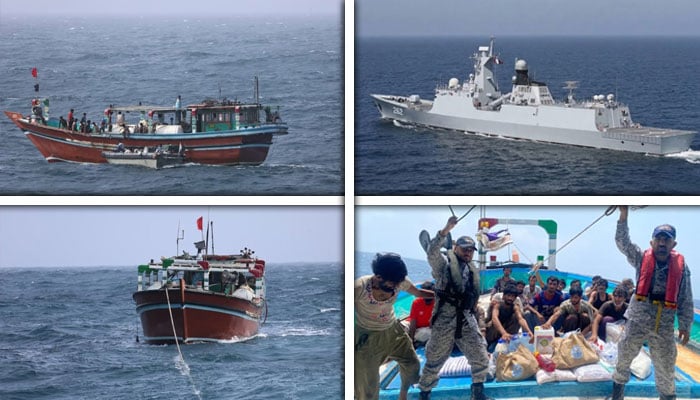
    The Pakistan Navy successfully rescued 19 fishermen stranded in the northern Arabian Sea after their fishing boat developed an engine failure, officials said. Pakistan Navy ship PNS Taimur carried out the rescue operation after the fishing vessel became stranded around 120 nautical miles south of Gwadar. The boat was carrying 19 people, including 11 Pakistani nationals and eight Iranian citizens. The Joint Maritime Information Coordination Centre (JMICC) contacted the Pakistan Navy and requested assistance after the vessel ran into trouble at sea. In response, PNS Taimur launched a search and rescue operation and reached the stranded fishermen. Pakistan Navy personnel provided the fishermen with essential supplies, including food and drinking water, while also offering medical assistance to those on board. The naval crew then helped move the fishing boat safely towards the coast, ensuring that all 19 individuals reached safety. The successful operation highlights the Pakistan Navy’s role in protecting lives at sea and responding swiftly to maritime emergencies in the region. The rescue also reflects the Navy’s commitment to fulfilling its humanitarian responsibilities and supporting fishermen facing difficulties in challenging conditions. President Asif Ali Zardari praised the Pakistan Navy for safely rescuing the stranded fishermen and commended the personnel involved in the operation. The president said the safe rescue of both Pakistani and Iranian nationals demonstrated the Pakistan Navy’s high level of professionalism and operational capability. He also described the mission as a clear example of the Navy’s commitment to protecting human lives at sea and fulfilling its national and international responsibilities. The rescue operation also underscored the importance of coordinated maritime response efforts, with the JMICC and Pakistan Navy working together to provide timely assistance to the distressed fishing crew.

Leave a Reply

Your email address will not be published. Required fields are marked *