top energy firms

Top Energy Firms Line Up Bids for BP’s Prized Egypt Gas Portfolio

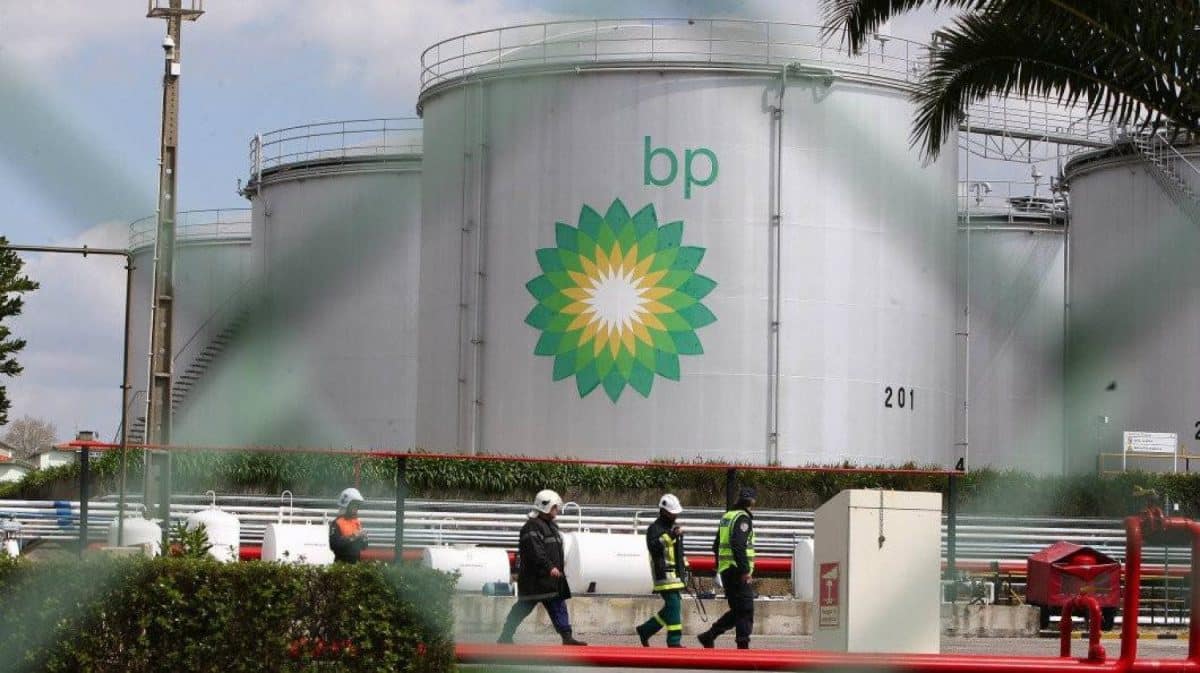
LONDON – Major energy companies are preparing to submit bids this week for BP’s offshore natural gas assets in Egypt. The British oil giant is selling parts of its West Nile Delta operations to reduce debt and simplify its global business under new leadership. This high-stakes sale happens right as Egypt faces a tough energy shortage and rising local demand.

Several global energy groups are closely eyeing the Mediterranean Sea. Companies like Dragon Oil, Carlyle Group, Energean, and Artemis Energy are currently preparing their offers. These final bids are expected by the end of this week, according to sources familiar with the sale.

BP has been a massive player in the Egyptian energy sector for over six decades. In fact, the company produces about 60 percent of the country’s natural gas through various joint ventures and directly operated fields. Over the years, BP has poured more than $35 billion into the Egyptian economy.

Key Takeaways

  • Bidding War: Top firms like Carlyle Group and Dragon Oil are submitting bids for BP’s West Nile Delta gas assets this week.
  • Strategic Shift: BP is selling these assets to cut debt and simplify its operations under the direction of new CEO Meg O’Neill.
  • Local Impact: The sale occurs as Egypt struggles to meet domestic energy demand, leading to expensive natural gas imports.

Why BP Is Selling Its Prized Gas Assets

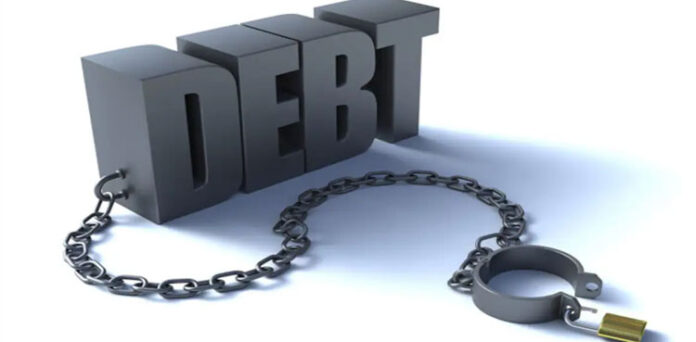
The decision to sell comes directly from the top. Under the guidance of new CEO Meg O’Neill, BP is aggressively restructuring its global business. The main goal is to cut the company’s debt and refocus its energy on highly profitable core projects.

This move follows a period of financial strain and some missteps in the renewable energy sector. By selling off these Egyptian gas assets, BP hopes to streamline its portfolio. A leaner business model will allow the British oil major to improve its overall returns.

Despite its long history in the country, BP has seen a recent drop in local output. Last year, the company produced 518 million cubic feet of natural gas per day in Egypt. That number represents a drop of about 40 percent from 2024, and a nearly 60 percent drop from 2023 levels.

The Bidders and the Bidding Process

The West Nile Delta development is a very attractive target for energy investors. It includes five major gas fields located across offshore concession blocks in the Mediterranean. Because of this, several big names have stepped forward to compete.

The Carlyle Group, an American investment giant, is a leading contender in this ongoing race. They are joined by Dubai-based Dragon Oil, alongside Energean and Artemis Energy. Each of these groups sees huge potential in taking over BP’s established infrastructure.

So far, the companies involved have chosen to stay quiet. BP and the Carlyle Group both recently declined to comment on the ongoing sale process. Energean, Artemis, and Dragon Oil also did not immediately respond to questions from the press. You can read more about the early stages of this process in an Offshore Engineer report.

Will This Impact Egypt’s Energy Crisis?

This massive business deal is unfolding at a very difficult time for Egypt. The country’s local energy production has struggled badly to keep pace with growing demand. At the same time, global natural gas markets remain tight and expensive due to ongoing regional conflicts.

Because local production is falling, Egypt is now forced to buy fuel from overseas. The country is currently in talks with other energy majors to buy monthly shipments of liquefied natural gas. These expensive imports are putting heavy pressure on the national budget.

To learn more about BP’s historical operations in the country, you can view the official BP Egypt overview. Whoever wins this bidding war will take on a vital role in keeping Egypt’s lights on.

The energy industry will be watching very closely as the week ends. A successful sale will bring fresh cash to BP, helping the company achieve its financial goals. For the buyer, it offers a ready-made entry into a massive, resource-rich market.

However, no final decisions have been completely locked in yet. The final price tag and the exact terms of the agreement are still being kept secret. Market experts believe we will learn more details once the final bids are officially submitted.

Regardless of the winner, the Egyptian government will want guarantees of stable production. The country urgently needs a reliable supply of natural gas from its own waters. The new operator must be ready to invest heavily to turn the recent production declines around.

Trending News:

Thailand Relaunches Gasohol E20 to Fight Rising Energy Costs

Thailand Data Centers: Choosing Green Power Over Natural Gas
 

Similar Posts

  • | | |

    Govt raises fuel prices as petrol pump strike thre…

    The federal government has increased the prices of petrol and high-speed diesel, while petrol pump owners have announced a nationwide strike after failing to reach an agreement with the government over the newly introduced daily fuel pricing system. Under the latest notification, the price of high-speed diesel (HSD) has increased by Rs7.15 per litre, rising from Rs360.06 to Rs367.21. The price of petrol has also been increased by Rs4.93 per litre, taking it from Rs315.80 to Rs320.73. The revised prices came into effect on July 22. The increase follows the government’s decision to replace the previous fortnightly fuel price adjustment system with a daily pricing mechanism. Under the new policy, petroleum prices can now change every day depending on international oil prices and fluctuations in the exchange rate. The new pricing mechanism has been strongly opposed by petrol pump owners and fuel dealers. They argue that daily price revisions are difficult to implement and create financial uncertainty for retailers across the country. After negotiations with government officials failed, the All Pakistan Petrol Pumps Owners Association (APPPOA) announced an indefinite nationwide strike beginning at midnight on Wednesday. The association said petrol pumps across Pakistan would remain closed until the government accepts its demands. Association leaders said discussions with the Petroleum Ministry failed to resolve major issues, including dealer profit margins and the implementation of daily fuel pricing. They insisted that the current system is not practical for petrol station operators and would create serious operational challenges. The Petroleum Retailers Association has also expressed support for the strike, raising concerns about possible disruptions in fuel supplies if the dispute continues. Meanwhile, the All Pakistan Petroleum Dealers Association (PPDA) is expected to decide whether it will formally join the protest. The association has called a meeting of its executive committee to discuss the situation and determine its future course of action. PPDA officials said they had already shared their concerns with the Oil and Gas Regulatory Authority (OGRA). According to the association, the regulator requested additional time to present the dealers’ concerns to the government before any final decision is made. Fuel dealers believe daily price changes make it difficult to manage inventories, update fuel prices, and maintain smooth business operations. They argue that the previous fortnightly pricing system provided greater stability and reduced uncertainty for both retailers and consumers. The government, however, maintains that the daily pricing mechanism will ensure that domestic fuel prices more closely reflect changes in global oil markets. Officials believe the new system will improve transparency and allow quicker adjustments to international price movements.

  • |

    KP cabinet approves tax exemptions for merged districts, Malakand

    PESHAWAR: The Khyber Pakhtunkhwa government has approved a package of measures aimed at providing tax relief to businesses and industries operating in the province’s merged tribal districts and Malakand Division, while also expanding welfare and education initiatives. According to Khyber Pakhtunkhwa Information Minister Shafiullah Jan, the provincial cabinet has endorsed exemptions from certain provincial taxes for service providers and industries operating in areas previously covered by the Federally Administered Tribal Areas (FATA), Provincially Administered Tribal Areas (PATA) and Malakand Division. Under the decision, service providers operating in the former FATA, PATA and Malakand areas will be exempted from provincial sales tax on services. Industries established in these regions will also receive relief from withholding sales tax. The government said the tax measures were intended to encourage investment, facilitate businesses and support economic activity in areas that have historically faced developmental and infrastructure challenges. Ehsaas Nawaz funding increased The cabinet also approved a significant increase in the financial allocation for the Ehsaas Nawaz programme. According to the information minister, the programme’s funding has been raised from Rs3 billion to Rs5 billion. The increase is expected to provide additional financial support under the government’s welfare initiatives and expand the programme’s reach among deserving segments of the population. Ashra Rahmat Lil-Aalameen programme approved The provincial cabinet also approved arrangements for observing Ashra Rahmat Lil-Aalameen (PBUH) across Khyber Pakhtunkhwa. The celebrations will formally begin from the first day of Rabi-ul-Awwal, with the cabinet approving a schedule for programmes to be organised across the province. The initiative is expected to include a range of activities aimed at highlighting the teachings, life and message of the Holy Prophet Muhammad (PBUH). Education sector measures Several decisions concerning education were also approved during the cabinet meeting. The provincial government sanctioned funds for schools and colleges in various districts to address educational requirements and improve facilities. The cabinet also approved a system for providing textbooks according to the semester system up to Grade 5. In another major education-related decision, the cabinet approved the provision of 100 percent free textbooks for students from Grade 9 to Grade 12. The measures are aimed at reducing the financial burden on students and their families while improving access to educational resources, particularly for students enrolled in government institutions. Public-private partnership legislation The cabinet further approved the Khyber Pakhtunkhwa Public Private Partnership Authority Bill 2026 for enactment. The proposed legislation is intended to establish a formal framework for public-private partnerships in the province and facilitate greater participation of the private sector in development projects. The government believes stronger public-private cooperation can help mobilise investment, improve service delivery and accelerate infrastructure development across Khyber Pakhtunkhwa.

  • |

    Power sector circular debt rises by Rs364 billion in FY2025-26

    ISLAMABAD: Pakistan’s power sector circular debt increased by Rs364 billion during fiscal year 2025-26, highlighting persistent weaknesses in the electricity supply chain despite substantial government subsidies and efforts to contain the buildup of unpaid liabilities. According to the circular debt report for June 2026, the increase was significantly higher than the previous year, when the debt had risen by around Rs45 billion. The latest increase represents a surge of roughly 709% year-on-year in the annual flow of circular debt. The Power Division has not yet formally uploaded the one-page circular debt report for June 2026 on its official website. The latest figures indicate that structural problems, including distribution company inefficiencies, weak bill recovery, payment disputes and delays in tariff adjustments, continue to generate fresh liabilities in the power sector. The development comes despite the government’s efforts to contain the debt through budgetary support and subsidies. IMF target and government commitments The International Monetary Fund (IMF) had permitted Pakistan to record up to Rs400 billion in circular debt flow during the year, while simultaneously requiring the government to take measures to prevent the accumulation of new liabilities and eventually bring the flow down to zero. Under the IMF programme, the government has been relying on tariff adjustments, subsidy rationalisation and other reforms to improve the financial health of the electricity sector. However, the latest increase suggests that governance and operational problems remain a major obstacle to achieving a sustainable reduction in circular debt. The government provided approximately Rs302 billion in subsidies aimed at supporting the power sector and reducing the debt burden. However, the amount was insufficient to maintain the circular debt stock at the level of Rs1.614 trillion recorded at the end of June 2025. As a result, the debt stock recorded a net increase of around Rs61 billion during the year. The Power Division had earlier stated that the federal government allocated Rs893 billion for the power sector in the FY2025-26 budget. However, around Rs98 billion of the allocated amount was not released, affecting the government’s ability to reduce the outstanding liabilities. A Power Division spokesperson said that if the entire budgeted allocation had been released, the circular debt stock could have fallen further to around Rs1.577 trillion. The funding shortfall, according to the official, contributed to the Rs61 billion increase recorded during the year. Distribution companies remain a major source of losses Inefficiencies within power distribution companies continued to be one of the biggest contributors to the accumulation of circular debt. The government incurred approximately Rs262 billion in losses during FY2025-26 because of inefficiencies in distribution companies. The amount was only around Rs3 billion lower than the previous year, indicating that little progress has been made in addressing operational weaknesses. Another Rs64 billion was added to the circular debt because of lower electricity bill recoveries. Although significant, this amount was around 51% lower than the corresponding figure recorded in the preceding year. The figures underline the financial pressure created by electricity theft, transmission and distribution losses, weak collection systems and inadequate enforcement against non-paying consumers. Privatisation of distribution companies The government has initiated the process of privatising three relatively profitable distribution companies — Faisalabad Electric Supply Company, Gujranwala Electric Power Company and Islamabad Electric Supply Company. However, the proposed privatisation is not expected to immediately resolve the broader circular debt problem because a substantial portion of sector losses originates from other distribution entities. Earlier, the government had considered a model under which profitable distribution companies would be combined with loss-making entities before privatisation. The plan, however, was subsequently abandoned in favour of offering comparatively stronger companies separately. Experts have repeatedly argued that privatisation alone cannot eliminate circular debt unless the underlying issues of electricity theft, poor recoveries, governance and operational losses are addressed across the entire distribution network. K-Electric dispute adds to debt Payment disputes with K-Electric also contributed substantially to the increase. According to the report, approximately Rs194 billion was added to the circular debt because of non-payments by K-Electric. The company’s outstanding payments are linked to a dispute concerning the delayed finalisation of its multi-year tariff by the National Electric Power Regulatory Authority. The prolonged disagreement has created financial pressure throughout the power supply chain, adding to the accumulation of unpaid liabilities. In addition, around Rs75 billion was added to the circular debt because of delays in tariff adjustments. The government, meanwhile, made payments of approximately Rs129 billion against principal loans of the power sector. Without these payments, the annual circular debt flow could have exceeded Rs600 billion, according to the figures. The Power Division also benefited from a reduction of around Rs98 billion in the circular debt flow because of subsidy payments. Interest payments add further pressure Interest charges also contributed to the accumulation of liabilities, adding around Rs14 billion to the circular debt during the fiscal year. These financing costs ultimately increase the burden on consumers because the cost of servicing the sector’s outstanding liabilities is recovered through electricity bills. Consumer groups have frequently criticised the practice, arguing that households and businesses that regularly pay their electricity bills are effectively being charged for inefficiencies, theft and non-payment elsewhere in the system. Subsidies and burden on consumers The government’s continued reliance on subsidies has helped prevent an even larger accumulation of circular debt, but it has also placed pressure on the national budget. The power sector received hundreds of billions of rupees in subsidies during the year, while the government simultaneously pursued tariff increases and other measures intended to improve cost recovery. The contrast has raised questions about whether existing policies are addressing the underlying causes of circular debt or merely shifting the burden between consumers, the federal budget and power-sector entities. The government has also been under pressure to address similar financial problems in the gas sector. Although no comparable subsidy was provided for the gas sector, the authorities were expected to prevent a further increase in its circular debt. The government reportedly refrained from passing the full reduction in gas prices on

  • | | |

    Petrol up Rs6.39, diesel Rs7.83

    The federal government has announced an increase in the prices of major petroleum products, including petrol, high-speed diesel and kerosene oil. The revised prices came into effect from today and will remain applicable for one day, according to official notifications. The Oil and Gas Regulatory Authority (OGRA) issued a notification confirming the increase in fuel prices. The revised rates were also endorsed through a separate notification issued by the Petroleum Division. Under the new pricing structure, the price of petrol has been increased by Rs6.39 per litre. Following the increase, the new retail price of petrol has been fixed at Rs327.12 per litre. The price of high-speed diesel (HSD) has also been revised upward. It has been increased by Rs7.83 per litre, taking the new price to Rs375.04 per litre. The government has also raised the price of kerosene oil by Rs7.80 per litre. The new price has been set at Rs297.17 per litre. The revised fuel prices became effective immediately after the issuance of the official notifications. According to the government, these rates will remain in force for one day only. The increase is expected to affect transportation costs and fuel expenses for consumers during the period in which the revised prices remain applicable. Petrol is widely used by private vehicles and motorcycles, while high-speed diesel is consumed by heavy transport vehicles, public transport, agriculture and industrial sectors. Kerosene oil is commonly used in remote areas for cooking and heating purposes.

  • How 3D Virtual Shopping Company Can Enhance Customer Experience

    There is just one drawback to online purchasing. Customers cannot physically touch or examine a product. Thus, a 3D virtual shopping company addresses this issue by providing actual 3D images. Customers move around the virtual store, examining items from all angles. In 2026, the worldwide market for 3D e-commerce was estimated at $10.54 billion, with […]

  • |

    Pakistan enlists top global banks for sovereign de…

    The federal government has appointed three consortiums of leading international banks to manage Pakistan’s future sovereign debt issuances under its Global Medium-Term Note (GMTN) and international Sukuk programmes. The move is part of the government’s broader strategy to regain access to international capital markets and strengthen external financing. The Ministry of Finance announced the appointments on Tuesday. Officials said the banks were selected through a competitive and transparent procurement process carried out under pre-defined financial and technical criteria. The selected consortiums will provide advisory and financial services for Pakistan’s future issuance of conventional Eurobonds, Islamic Sukuk and rupee-denominated bonds settled in US dollars. The Eurobond consortium includes Standard Chartered Bank, Citibank, Deutsche Bank AG, Emirates NBD Capital and MUFG Securities Asia Limited. The international Sukuk consortium consists of Standard Chartered Bank, Dubai Islamic Bank PJSC, Citibank, Emirates NBD Capital and Mashreq Bank PSC. The consortium for rupee-denominated, US dollar-settled bonds includes Standard Chartered Bank, Citibank and Deutsche Bank AG. The Finance Ministry said the appointments will remain valid for three years. During this period, the consortiums will support Pakistan’s sovereign borrowing programme through both conventional and Islamic financing instruments. Officials said any future debt issuance will take place after the completion of all required legal documentation, regulatory approvals and market-related formalities. Finance Minister Muhammad Aurangzeb, who is currently visiting Washington, DC, held a virtual meeting with senior executives of the selected banks. The meeting marked the beginning of the government’s strategic partnership with the international financial institutions. The ministry said the inclusion of MUFG Securities Asia Limited and Mashreq Bank has expanded Pakistan’s engagement with leading global financial institutions and is expected to attract a wider range of international investors. According to the ministry, recent improvements in Pakistan’s economic indicators have strengthened investor confidence. Officials pointed to fiscal consolidation, stronger external financial buffers, progress on structural reforms and narrowing sovereign credit spreads as key factors supporting the country’s planned return to international debt markets.

Leave a Reply

Your email address will not be published. Required fields are marked *