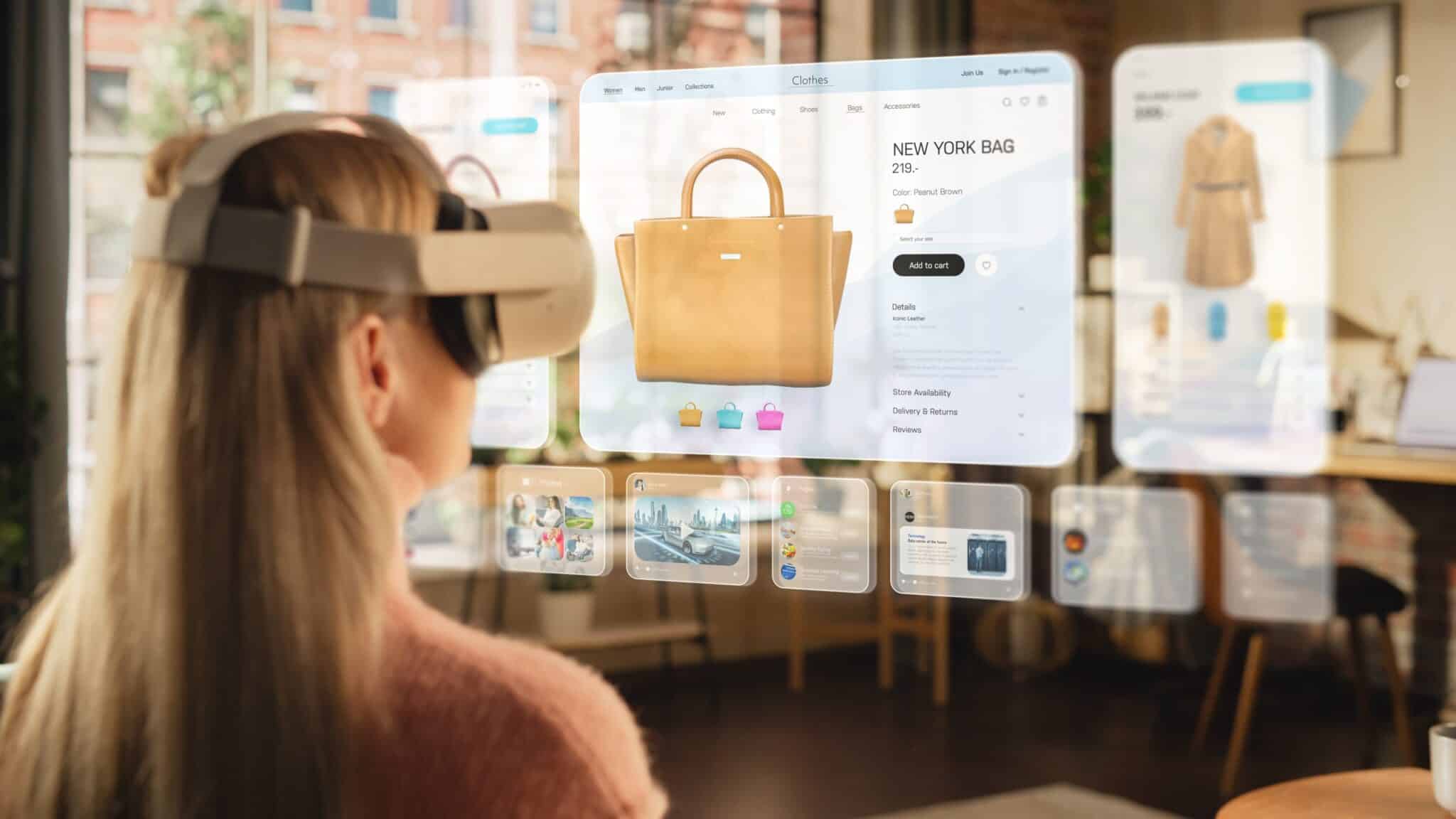
How 3D Virtual Shopping Company Can Enhance Customer Experience
There is just one drawback to online purchasing. Customers cannot physically touch or examine a product. Thus, a 3D virtual shopping company addresses this issue by providing actual 3D images. Customers move around the virtual store, examining items from all angles. In 2026, the worldwide market for 3D e-commerce was estimated at $10.54 billion, with an annual growth rate of 23.3 percent through 2030.
Due to this change, businesses have made it a standard feature of their websites to incorporate 3D stores. Earlier, the old-fashioned online stores used two-dimensional pictures and brief descriptions. But now customers require much more than that before they start trusting the brands. This blog post explains what these stores do, how they function, and which platform suits which requirements.
What Is a 3D Virtual Shopping Company?
A 3D virtual shopping company develops online stores in three-dimensional form rather than using pictures. Customers browse the store similarly to an actual one. They can pick objects up, turn them around, and view them in close-up. It is one of the main services offered by a virtual store development company. For example, a customer can see how the stitching and grip of a shoe work and the shade of its color at a glance.
Almost all of the projects involve virtual reality shopping solutions for customers with headsets. Some other projects remain browser-based only. It is necessary to develop two versions of the project at once to become a reliable virtual stores development company. Due to the various devices used, the website should function properly on all of them. Therefore, developers should not sacrifice image quality because of a large file size.
Common Mistakes Brands Make
Most brands enter the building stage without any proper planning. Therefore, they put in too many details at once, which makes the page loading slow and scares away customers. A 3D virtual shopping company should do tests of speed before trying to add more visuals to its site. Another mistake is neglecting mobile testing because the majority of buyers first look through their phones and not through desktops.
The wrong lighting can be the reason for distrust of the online store very quickly. If the goods are not presented pleasantly or look artificial, customers lose confidence in the site as a whole. Moreover, brands may copy an existing template and not use the one that corresponds to their own product catalog and design. A virtual store development company should always build around the brand’s own products.
What Does a 3D Virtual Store Cost?
The cost varies depending on the scope and not just the technology utilized. The product viewer is considerably cheaper compared to the walkthrough store. For smaller companies, the first step is to create a single 3D product page. This will keep initial expenses low while evaluating customer reaction. Therefore, it is usually considered a stepping stone, not the final result. Costs also vary according to the number of products required to have 3D images and the complexity of these models.
More complex projects require more expensive components like customized scenes, product catalogs, and backend connections. Nonetheless, the cost is repaid by reduced return rates and more time spent at the website. A virtual stores development company will help brands to decide where to invest first. Since the major benefits are derived from high-traffic products, companies should consider working on their bestsellers first.
How to Build and Measure a Virtual Store
Building a working virtual store follows a clear path. Here is how most projects move from idea to launch.
Define the Goal First
Decide if the store targets web, mobile, or VR headsets before building anything, since this choice shapes every decision that follows, from tools to the overall timeline. Skipping this step early often causes rework and delays later on.
Scanning and Modeling Products
Create accurate 3D versions of real items using scans or manual modeling, since accuracy here matters most for texture, proportion, and color. Poor scans at this stage carry errors into every later step of the build.
Designing the Store Layout
Build aisles, shelves, or rooms that match the brand’s own identity, since a good layout should never feel like a copy-paste template. It should reflect the catalog’s own scale, texture, and detail needs from the start.
Adding Interaction and Backend Connections
Let users click, rotate, zoom, and add items to cart, then link payment, stock, and shipping systems so checkout works smoothly. Both pieces should be tested together, not built in isolation from each other.
Testing, Launching, and Tracking Data
Check load speed on phones, laptops, and headsets before going live, then measure time spent, clicks, and sales once the store is live. This data should guide the next round of improvements going forward.
On top of that, most teams run a small pilot before a full launch. This means testing the store with a few products first. Since early feedback catches problems fast, brands save both time and cost before rolling out the full catalog.
How to Measure a Virtual Store’s Success
Rather than monitor how long buyers stay on individual pages, it is necessary to measure how much time they spend in the store itself. A long time spent shows buyer confidence in the presented visuals. Buyer behavior analysis through paths clicked also makes clear which parts of the store are ignored.
Shopping cart addition and return rate prove the effectiveness of virtual try-ons most effectively. A reduction in return rate indicates that buyers are satisfied with 3D visualizations. Load speed should not be overlooked, since a lagging store will lose its visitors regardless of design quality.
How Virtual Stores Boost the Customer Experience
Building trust happens quickly for buyers with high-quality details, since 3D visualization eliminates the doubts associated with flat images. Buyers verify stitching, proportions, and colors before adding anything to the cart. Engagement also grows dramatically, as buyers explore a 3D world rather than moving to the next page.
Customers stay in a virtual reality store longer than on regular web pages, much like a physical store. This leads to higher customer interest and fewer abandoned carts, though none of this happens without proper implementation and real buyer testing.
Why Brands Are Choosing Virtual Stores?
Products are frequently returned by buyers owing to hidden defects in pictures, and viewing in 3D solves this problem. Buyers know the true dimensions, colors, and textures of goods before ordering. A virtual reality store also holds people’s attention longer than a website, resulting in increased sales.
Furniture makers, clothing designers, and auto producers currently lead this process. Furniture brands let people place a 3D sofa in their own living room using a phone camera, while virtual stores overall save on rental fees, employees, and inventory.
What Comes Next for Virtual Shopping?
AI is increasingly having an influence in this area quickly. Hence, most platforms provide AI-powered product recommendations within the 3D store. It implies that while exploring the store, the buyer will be presented with items that suit their tastes. In addition, live shopping is gradually becoming incorporated in the 3D environment. Thus, it allows the host to walk with a buyer in the store. This combination of live video and navigation within 3D space gets more attention from young buyers due to their experience with gaming applications.
Besides, improved connection speeds allow for a more detailed implementation of 3D stores in mobile phones. Thanks to this, when the 5G connection becomes widely available, a 3D virtual shopping company will be able to offer more details without increasing the loading times. Consequently, the difference between the virtual and physical store continues to decrease every year.
Industries Using Virtual Reality Shopping
Real Estate and Automotive
Real estate companies create 3D walkthroughs of empty houses with furniture already placed inside, while automobile brands offer customers the chance to sit in a car that has not been created yet. Both industries use this to build buyer confidence early.
Fashion and Cosmetics
Fashion brands create virtual fitting rooms, which means there are no wrong-sized orders sent to the warehouse, and shipping costs are saved. Cosmetics brands apply this same technology to help buyers color-match products before ordering.
Jewelry and Electronics
Jewelry brands use close-up 3D visualization to demonstrate the shine and cut of a product, while electronics brands use this technology to show device details such as ports. Both rely on detail-heavy visuals to build buyer trust.
Grocery and Museums
Grocery brands try out the idea of 3D aisles for online orders, and museums create virtual tours so visitors can explore exhibitions from home. Nevertheless, the underlying principle remains the same across any sector.
How a Virtual Store Is Tailored to Each Brand
A 3D virtual shopping company does not build the same store twice. So, a fashion label needs a different layout than an electronics brand, since each catalog has its own scale, texture, and detail needs. A good build stays focused on real buyer needs and clear results rather than fixed templates.
The process starts with the brand’s own goals, not a copy-paste layout. Each project also goes through load-time testing before launch. So, when a virtual store development company builds something that actually converts visitors into buyers, the process has to start with a clear goal, not just a flashy demo.
How Does a Virtual Shop Work?
The online shop operates by means of 3D engines, which provide rendering of objects in real-time. Designers scan and create 3D models of goods, then the models get put into a digital room styled to the brand. The shop is integrated with regular e-commerce tools, so checkout remains the same.
Lighting and camera settings are critical, since an incorrectly illuminated 3D model will reveal its artificial nature immediately. Performance issues matter too; the longer the loading time, the fewer customers stay, so files get compressed, and speed is checked before launch.
What Platform Is Best for a Virtual Shop?
No single platform wins every case. The right choice depends on budget, device target, and how deep the store needs to go.
| Platform | Best For | Setup Effort |
|---|---|---|
| Unity (WebGL) | Rich interactive stores, cross-device builds | Medium to High |
| Unreal Engine | Photoreal detail, large flagship stores | High |
| Three.js / Babylon.js | Lightweight browser-only stores | Medium |
| Shopify 3D Apps | Small brands adding 3D product views | Low |
| 8th Wall | Web-based AR try-on features | Medium |
Hence, for a smaller brand, a Shopify plug-in is selected. For a bigger brand aiming for full virtual reality shopping, Unity or Unreal is preferred. For example, Three.js is chosen by a brand that only requires a simple product viewer. But Unity is selected for a larger flagship store because it can easily process complicated scenes.
As there is no single platform that is suitable in every situation, it becomes necessary to select a starting point from the perspective of the user’s device. Another aspect that a 3D virtual shopping company considers at an early stage is cost. Open source web libraries have lower licensing costs but require more programming effort.
Conclusion
By transforming a static site into an environment where the user is able to move around, a 3D virtual shopping company helps buyers feel more certain when clicking “buy.” Therefore, it means more than a mere change in design. This is proved by market data, since there is continuous growth in the number of companies developing 3D e-commerce. Nevertheless, it is vital to choose the right platform and team to get results.
Nowadays, users want to be sure about their choice, so they require viewing and rotating items prior to buying anything. Thus, brands that ignore this trend risk losing buyers to competitors who have already adopted 3D technology. Therefore, when a client decides to build a 3D viewer or a full virtual reality store, the process should start with a clear goal and the right team.
Trending News:
Thailand’s 5.6 Trillion Baht High-Speed Digital Revolution
Inside Thailand’s $50 Billion Tourism Empire and the Hidden Economy
Customer Experience in Thailand: Why It Must Come First