slashes visas chinese

U.S. Slashes F-1 Visas for Chinese Students By Nearly 50 Percent

WASHINGTON, D.C. – The landscape of American higher education is undergoing a quiet but massive transformation. Recent data shows that the United States has sharply reduced the issuance of F-1 academic visas for Chinese students. This shift comes as federal authorities implement stricter vetting procedures and national security checks.

University campuses, which have long relied on international tuition dollars and global research talent, are now feeling the impact. Lawmakers and immigration experts point to changing political priorities as the main driver behind these sweeping policy changes.

Key Takeaways

  • Significant Reductions: F-1 student visa issuances for Chinese nationals saw a decline of nearly 50 percent during peak processing months compared to historical averages.
  • Heightened Security: The U.S. Department of State has increased scrutiny, focusing heavily on background checks, social media history, and potential ties to critical technology sectors.
  • Broader Economic Impacts: Reduced international enrollment directly influences university budgets, local campus economies, and the post-graduation labor pipeline.

According to a comprehensive report published by the Center for Immigration Studies, the drop in student visas is unprecedented. Analysts compared data from peak summer application windows and found that approvals for Chinese applicants fell by roughly 46 percent compared to previous multi-year averages.

This downward trend reflects a broader effort by federal agencies to re-evaluate who receives entry permissions. For years, China remained one of the leading countries of origin for foreign scholars attending American universities. Now, shifting geopolitical tensions are rewriting how admissions and immigration intersect.

Why Washington Is Tightening Restrictions on F-1 Academic Visas

National security concerns sit at the heart of these new visa limitations. Government officials argue that tighter controls are necessary to protect sensitive research and advanced technologies. Fields like artificial intelligence, biotechnology, and aerospace engineering face particular scrutiny.

Furthermore, the [suspicious link removed] has expanded social media vetting and background investigations for applicants coming from mainland China and Hong Kong. Officials want to ensure that individuals entering the country do not pose risks regarding intellectual property theft or foreign state influence. While proponents view this as a necessary step for defense, critics worry about the broader message it sends to global academic communities.

American colleges and universities depend heavily on international students to balance their financial books. Many institutions charge full out-of-state or international tuition rates, which help subsidize programs for domestic students. When visa numbers drop, university administrators often face sudden budget shortfalls.

Beyond tuition, graduate programs rely on international scholars to fill vital research and teaching assistant roles. Laboratories in science and technology departments are already noticing fewer applicants for open positions. Without a steady stream of global talent, some academic departments fear a slowdown in innovation and research output.

What This Means for Post-Graduation Work Programs

The decline in F-1 visas also threatens the pipeline for the Optional Practical Training program, commonly known as OPT. This program allows international graduates to work in the United States for a limited time after completing their degrees. Chinese and Indian nationals make up a significant majority of OPT participants, particularly in STEM fields.

Business groups and technology companies have traditionally supported these programs to recruit skilled labor. However, stricter federal oversight and proposed fees are creating new hurdles for employers. Companies that rely on international graduates may soon need to look elsewhere for entry-level talent.

As the United States tightens its borders, other English-speaking nations are welcoming displaced international students. Universities in the United Kingdom, Canada, and Australia are actively marketing themselves to students who might otherwise have chosen American institutions.

For prospective students in China, the decision to study abroad has become far more complex. Families must now weigh the prestige of an American degree against the reality of difficult visa interviews, changing regulations, and potential social friction. Ultimately, this shift marks the end of an era of open-door international recruitment for U.S. higher education.

Trending News:

China Unveils Sweeping Border Rules That Spark Global Debate

Chiang Mai Street Brawl!! Chinese Tourists and Local Clash on Tha Phae Road

 

Similar Posts

  • |

    Indian Software engineer allegedly beaten to death by in-laws over domestic dispute

      A 31-year-old software engineer was allegedly beaten to death by his in-laws following a domestic dispute at his home in India, according to allegations made by his family. The deceased, identified as Viney Gupta had been married to a woman named Rekha for around three and a half years. Rekha is a housewife, and the couple had twin children—a son and a daughter. Viney worked as a software engineer in Noida and reportedly earned more than Rs6 million annually. According to Viney’s mother, the incident began with an argument between the couple over giving medicine to one of their children. The disagreement reportedly escalated after Viney raised his voice, causing Rekha to become angry. Following the heated exchange, she allegedly left the house and returned around 10 minutes later accompanied by members of her family. Viney’s family alleged that Rekha arrived with her two brothers, sister-in-law, father, uncle and another man. They claimed that the group entered the house and began assaulting Viney. The family further alleged that Viney’s mother was away at the time the alleged attack began, as she had gone to arrange water and tea for the visitors. According to the allegations, the attackers repeatedly assaulted Viney, strangled him and struck him on the chest with their hands and feet. His family members said they attempted to intervene and save him, but the alleged assault continued. Viney’s father said that the couple had been experiencing disagreements over minor issues for some time. The family had reportedly hoped that the problems could be resolved through discussion and reconciliation. However, he alleged that the situation eventually escalated into violence, resulting in Viney’s death. The deceased’s family has alleged that Rekha and six to seven other people were involved in the incident. They have also accused the suspects of conspiring to kill Viney. Police have arrested four suspects in connection with the case. Those arrested reportedly include Viney’s wife Rekha, her two brothers and another accused person. The investigation into the circumstances surrounding Viney’s death is continuing. Police are expected to question the arrested suspects and examine the allegations made by both sides to determine what led to the fatal confrontation. The case has drawn attention to the escalation of domestic disputes into serious violence, while the exact circumstances surrounding Viney’s death will be established through the ongoing police investigation.

  • |

    19 dead as 49,000 rush Spain’s Ceuta border

    Spain and Morocco have strengthened security along the border of the Spanish enclave of Ceuta after an unprecedented surge saw around 49,000 migrants cross by land and sea within a single day, triggering a humanitarian and political crisis. Authorities from both countries reinforced border fences and increased security deployments on Friday, effectively halting further mass crossings. Moroccan security forces used water cannons to disperse crowds attempting to reach the enclave, while damaged vehicles and signs of violent clashes were visible near the border. Spanish officials confirmed that at least 19 bodies were recovered from the waters during the chaotic crossings, raising concerns over the growing human cost of irregular migration. Prime Minister Pedro Sánchez was expected to visit Ceuta alongside Interior Minister Fernando Grande-Marlaska to assess the situation and oversee the government’s response. Ceuta, a Spanish territory on Morocco’s northern coast, represents one of the European Union’s only land borders with Africa. While the enclave has experienced migration waves in the past, officials described the latest influx as the largest recorded in recent years. Spain’s government said migrants who entered the enclave illegally would be returned in accordance with Spanish law while respecting recent court rulings and international human rights obligations. Officials believe the sudden increase in crossings may have been influenced by a recent Spanish Supreme Court ruling that placed new limits on the immediate return of migrants intercepted while attempting to reach Ceuta and the nearby enclave of Melilla. On the Moroccan side, thousands of migrants gathered near the border town of Fnideq despite heavy security. Many searched for alternative routes after official crossing points were sealed, while others attempted to reach Ceuta by swimming along the coastline. The crowds included men, women, and children from Morocco as well as several Sub-Saharan African countries. The crisis has sparked political tensions across Europe. Italian Prime Minister Giorgia Meloni warned that Italy could consider extraordinary measures, including suspending participation in the Schengen border-free travel system with Spain, if migration pressures continue to escalate. Italy also criticized Spain’s immigration policies, arguing that recent measures to regularize the status of hundreds of thousands of undocumented migrants could encourage further irregular migration. Spain rejected the criticism, insisting that migration requires a coordinated European response based on solidarity rather than political rhetoric. Spanish officials stressed that migrants contribute to the country’s economy while reaffirming their commitment to tackling illegal border crossings.

  • |

    Bangladesh hints at joining Pakistan-Saudi-Türkiy…

    DHAKA: Bangladesh has signalled that it could consider joining the emerging economic or defence framework involving Pakistan, Saudi Arabia and Türkiye, opening a potentially significant new chapter in regional diplomacy and security cooperation. Bangladesh Prime Minister’s Foreign Affairs Adviser Humayun Kabir said Dhaka was taking a positive view of the possibility of becoming part of a framework involving the three countries. His comments come only weeks after Pakistan, Saudi Arabia and Türkiye signed the Makkah Joint Defence Agreement. The agreement, signed in Makkah on Aug 7, commits the three countries to strengthening collective security and defence cooperation. It also states that an armed attack against any one of the three signatories would be regarded as an attack against all three. Kabir, speaking to Bangladesh’s state news agency, indicated that Dhaka would examine the idea through the lens of its own national interests and the rapidly changing global economic and trade environment. “The government is following a Bangladesh First policy,” Kabir said, according to reports, stressing that national interests remain at the centre of Dhaka’s foreign policy. The remarks are particularly noteworthy because Bangladesh has recently been working to strengthen practical ties with Pakistan. Kabir said the two countries were seeking greater cooperation in trade and people-to-people contacts, suggesting that economic engagement could form an important part of the relationship. For Pakistan, Bangladesh’s interest could give the Makkah framework a wider South Asian dimension. For Saudi Arabia and Türkiye, Dhaka’s possible participation could also expand the reach of an arrangement that the signatories have described as defensive rather than directed against any particular country. Turkish President Recep Tayyip Erdogan has said the agreement is open to other friendly countries seeking peace, prosperity and stability in the region. Turkish officials have also stressed that the pact does not identify a common enemy and is intended to strengthen defence cooperation and collective deterrence. Bangladesh’s possible move comes as Dhaka is also deepening its relationship with Saudi Arabia. Kabir said Prime Minister Tarique Rahman is expected to visit Saudi Arabia following an invitation from Crown Prince Mohammed bin Salman. The visit could provide an opportunity for discussions on economic cooperation, regional security and Bangladesh’s possible role in broader regional frameworks. For now, Dhaka has not announced any formal decision to join the defence agreement. But its positive signal is already attracting attention, particularly because Bangladesh’s participation could reshape the strategic picture across South Asia and the wider Muslim world. The next step will likely depend on how Dhaka assesses the proposed framework against its national interests, economic priorities and wider foreign-policy objectives.

  • |

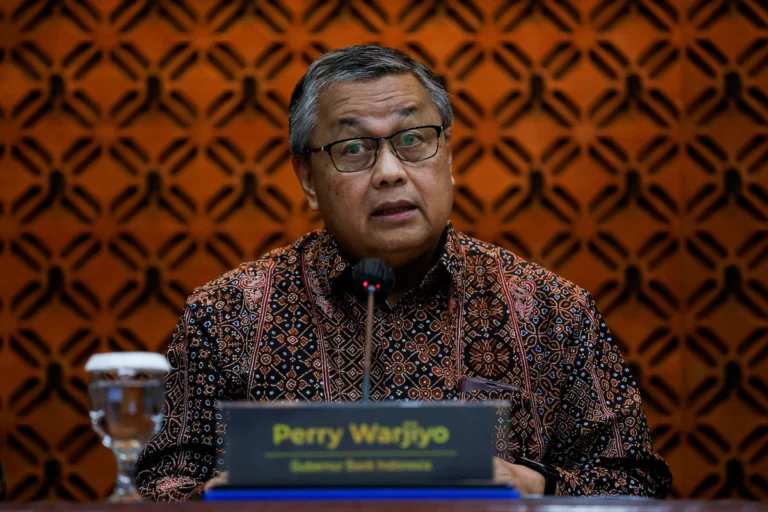
    Indonesia central bank chief resigns suddenly

    JAKARTA: Indonesia’s central bank governor Perry Warjiyo has unexpectedly stepped down, raising concerns among investors about the future independence of monetary policy and the stability of financial markets. President Prabowo Subianto accepted Warjiyo’s resignation on Monday. The government said the governor resigned for personal reasons. Destry Damayanti, a senior deputy governor at Bank Indonesia (BI), has been appointed interim governor. She has pledged to maintain continuity and ensure that the central bank continues carrying out its responsibilities. The surprise resignation came at a sensitive time for Indonesia’s economy. Bank Indonesia has faced growing pressure to support the government’s ambitious economic growth plans. The Indonesian rupiah has also faced significant pressure. It fell to a record low in June amid concerns over fiscal management and the independence of the central bank. Following news of Warjiyo’s departure, the rupiah weakened further. It fell as much as 0.36% to around 18,000 against the US dollar. Indonesia’s main stock index also moved between gains and losses during volatile trading. Analysts warned that the sudden leadership change could unsettle investors. Some economists said concerns could increase if the next permanent governor is seen as closely aligned with the government. They stressed that Bank Indonesia’s independence is important for maintaining investor confidence and stable monetary policy. Warjiyo submitted his resignation to the president on Saturday. Officials did not provide further details about his personal reasons. Warjiyo has spent decades at Bank Indonesia. He joined the institution in 1984 and was appointed governor for the first time in 2018. He was reappointed in 2023 for another five-year term. The appointment of his permanent successor will require both presidential and parliamentary approval. The president will nominate a candidate, who will then face a parliamentary suitability review before a final decision is made. The government has not yet submitted a permanent nomination. Officials have urged investors and other market participants to remain calm during the transition. They said the selection process would be conducted transparently and would not interfere with monetary policy or financial stability. Destry said the central bank would continue working to maintain rupiah stability and protect the country’s financial system. The leadership change comes after Indonesia introduced legislative changes affecting the central bank and other independent financial regulators. The new framework gives lawmakers greater authority to issue binding recommendations to these institutions. The changes have already raised questions about the level of Bank Indonesia’s independence. Credit rating agencies have also been monitoring developments surrounding the central bank’s mandate. Moody’s and Fitch previously highlighted concerns about changes to the institution’s role when they revised Indonesia’s credit outlook to negative. S&P Global Ratings, however, maintained a stable outlook this month. It said Bank Indonesia had maintained operational independence broadly comparable with other central banks in the region. Bank Indonesia has recently taken measures to support the rupiah and attract foreign investment. It unexpectedly kept interest rates unchanged last week while introducing new incentives aimed at encouraging capital inflows. The central bank had previously raised interest rates by a total of 100 basis points since May to support the currency. The latest resignation adds another layer of uncertainty for investors as the government seeks faster economic growth. Markets will now closely watch the selection of Warjiyo’s permanent successor. Investors are expected to assess whether the new leadership can maintain monetary stability while responding to the government’s economic priorities.

  • |

    Sri Lanka prepares for drought and flood risks linked to El Nino

    Sri Lanka is preparing for a prolonged period of extreme weather as authorities warn that the return of the El Nino climate pattern could bring a severe drought followed by widespread flooding later this year. The government has begun taking precautionary measures to protect water supplies, agriculture, and vulnerable communities as changing weather conditions threaten to affect millions of people across the island. Environment Minister Dhammika Patabendi said the country is expected to face a significant dry spell lasting until the end of September. Officials are closely monitoring irrigation systems and drinking water reserves to ensure supplies remain available during the expected drought. The government has also urged the public to use water carefully, warning that shortages could develop over the coming months if dry conditions continue. Scientists have linked the increasing frequency and intensity of extreme weather events to climate change. They say El Nino, a natural climate pattern caused by warmer than normal sea surface temperatures in the central and eastern Pacific Ocean, disrupts global rainfall and wind patterns. These changes often bring drought to some regions while causing heavy rainfall and flooding in others. Sri Lankan authorities expect the current dry period to be followed by a stronger than usual northeast monsoon beginning in October. The minister warned that the seasonal rains could trigger widespread flooding in many parts of the country, creating additional risks for communities already dealing with water shortages. To reduce the impact on agriculture, the government has advised farmers to begin the main rice planting season about two weeks earlier than usual. Officials believe an earlier start to cultivation will allow crops to develop before heavy rainfall increases the risk of flooding. Authorities are also planning improved flood management measures to help protect farmland and reduce damage to the country’s most important food crop. The government has not yet released an estimate of the possible economic losses from this year’s El Nino conditions. However, a special ministerial task force has been established to coordinate preparations, manage emergency responses, and reduce the impact on agriculture, water resources, and public infrastructure. Officials said Sri Lanka’s hydroelectric reservoirs are currently operating at around 57 percent capacity. To conserve water, authorities plan to rely more heavily on solar power during daylight hours, reducing pressure on hydroelectric facilities and preserving reservoir levels for essential needs. Experts have also warned that intense rainfall later in the year could trigger landslides in the country’s mountainous regions. Many of these areas remain vulnerable after suffering significant damage during Cyclone Ditwah in November, when heavy rain caused widespread destruction across the island. Cyclone Ditwah affected nearly every part of Sri Lanka and left a lasting impact on the country’s population of around 22 million people. Nearly 650 people lost their lives during the disaster, while roads, bridges, public buildings, and other infrastructure suffered extensive damage. The World Bank estimated that infrastructure losses alone reached about 4.1 billion dollars, making it one of the country’s most costly natural disasters in recent years. With another period of extreme weather approaching, the government says early preparation will be essential to reduce risks and protect lives. Authorities are continuing to monitor weather forecasts while encouraging communities to conserve water, prepare for possible floods, and follow official guidance throughout the changing weather conditions. The coming months are expected to test Sri Lanka’s disaster response systems once again as the country faces the combined challenges of drought, flooding, and the broader effects of climate change.

  • |

    North Korea’s fake remote workers rake in $800m a year

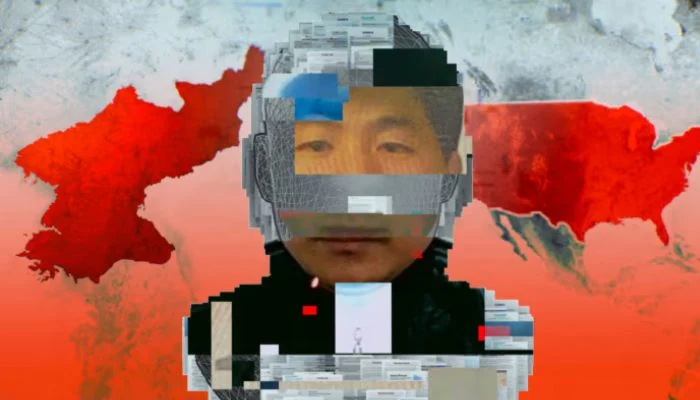
    North Korean operatives have quietly built a hidden workforce inside American companies. They are using stolen identities, AI tools and fake profiles to secure remote jobs. The money earned through this scheme is funneled straight back to North Korea. Investigators say it could be channeling millions of dollars annually to Kim Jong Un’s regime. A new investigation pieced together leaked data, interviews and previously unseen videos to expose how the operation actually works. The findings offer a rare, detailed look at how Pyongyang’s undercover workers get recruited and placed. According to the investigation, a single tracked operative applied to more than 1,000 companies in just three months. That volume points to a highly organized, large-scale effort rather than isolated cases. Investigators also found that AI tools played a direct role in helping operatives write convincing cover letters and resumes. Screen recordings reportedly captured workers reading answers straight from ChatGPT during live hiring interviews. North Korea’s IT operatives typically rely on stolen American identities to pass candidate screening and background checks. Many are said to juggle multiple jobs simultaneously, all operating under the same stolen name. Some of these workers reportedly earn as much as $300,000 a year through these remote positions. The US Treasury Department has found that up to 90% of those earnings get funneled directly back to the regime. Officials estimate the overall operation generates as much as $800 million annually for North Korea. That scale has made it one of the more lucrative sanctions-evasion schemes uncovered in recent years. Investigators traced the flow of funds through a wider network involving North Korean IT workers and affiliated cybercriminals. That trail eventually led to a company being sanctioned by the US, reportedly tied to Pyongyang’s broader defence development program. The findings highlight how North Korea has adapted its sanctions-evasion tactics for the remote work era. By blending stolen identities with AI-assisted job applications, the regime has found a modern, low-visibility way to bypass international restrictions on its economy. As remote hiring becomes more common globally, cases like this are raising fresh questions about how companies verify who they’re actually hiring.

Leave a Reply

Your email address will not be published. Required fields are marked *