bangladesh hints joining
|

Bangladesh hints at joining Pakistan-Saudi-Türkiy…

DHAKA: Bangladesh has signalled that it could consider joining the emerging economic or defence framework involving Pakistan, Saudi Arabia and Türkiye, opening a potentially significant new chapter in regional diplomacy and security cooperation.

Bangladesh Prime Minister’s Foreign Affairs Adviser Humayun Kabir said Dhaka was taking a positive view of the possibility of becoming part of a framework involving the three countries. His comments come only weeks after Pakistan, Saudi Arabia and Türkiye signed the Makkah Joint Defence Agreement.

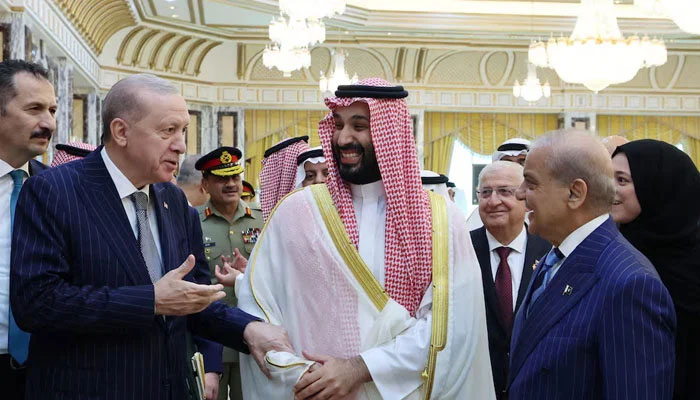
The agreement, signed in Makkah on Aug 7, commits the three countries to strengthening collective security and defence cooperation. It also states that an armed attack against any one of the three signatories would be regarded as an attack against all three.

Kabir, speaking to Bangladesh’s state news agency, indicated that Dhaka would examine the idea through the lens of its own national interests and the rapidly changing global economic and trade environment.

“The government is following a Bangladesh First policy,” Kabir said, according to reports, stressing that national interests remain at the centre of Dhaka’s foreign policy.

The remarks are particularly noteworthy because Bangladesh has recently been working to strengthen practical ties with Pakistan. Kabir said the two countries were seeking greater cooperation in trade and people-to-people contacts, suggesting that economic engagement could form an important part of the relationship.

For Pakistan, Bangladesh’s interest could give the Makkah framework a wider South Asian dimension. For Saudi Arabia and Türkiye, Dhaka’s possible participation could also expand the reach of an arrangement that the signatories have described as defensive rather than directed against any particular country.

Turkish President Recep Tayyip Erdogan has said the agreement is open to other friendly countries seeking peace, prosperity and stability in the region. Turkish officials have also stressed that the pact does not identify a common enemy and is intended to strengthen defence cooperation and collective deterrence.

Bangladesh’s possible move comes as Dhaka is also deepening its relationship with Saudi Arabia. Kabir said Prime Minister Tarique Rahman is expected to visit Saudi Arabia following an invitation from Crown Prince Mohammed bin Salman.

The visit could provide an opportunity for discussions on economic cooperation, regional security and Bangladesh’s possible role in broader regional frameworks.

For now, Dhaka has not announced any formal decision to join the defence agreement. But its positive signal is already attracting attention, particularly because Bangladesh’s participation could reshape the strategic picture across South Asia and the wider Muslim world.

The next step will likely depend on how Dhaka assesses the proposed framework against its national interests, economic priorities and wider foreign-policy objectives.

Similar Posts

  • | |

    Denise Richards calls for honesty about cosmetic p…

    Denise Richards is speaking openly about cosmetic procedures, saying what frustrates her most is when celebrities and influencers deny having work done while promoting unrealistic beauty standards. The actress believes there is nothing wrong with choosing plastic surgery, but she feels people should be honest about it. Richards discussed the topic during the August 3 episode of the Dumb Blonde podcast, hosted by Bunnie Xo, the wife of country star Jelly Roll. The two women reflected on their own cosmetic procedures and shared why transparency matters, especially for younger generations who often compare themselves to celebrities online.  During the conversation, Bunnie Xo passionately criticized public figures who claim their youthful appearance comes only from skincare products or healthy habits. Richards agreed, saying she dislikes when people refuse to admit they have had cosmetic work while allowing others to believe their results are completely natural. She explained that such claims create unrealistic expectations for women and girls who may feel pressured to look the same.  Richards also opened up about her own experience with plastic surgery, revealing that she underwent a facelift after initially considering only a neck lift. Following discussions with a trusted friend and consultation with facial plastic surgeon Dr. Ben Talei, she decided a full procedure would create a more balanced result. The surgery included a facelift, neck lift, brow lift, eyelid surgery, lip lift and fat grafting.  The 55-year-old actress admitted she was terrified before going through with the operation because she has spent decades in the public eye. She knew people would notice the changes, making it impossible to hide the procedure. However, she now describes it as one of the best decisions she has made for herself, saying the goal was never to look like someone else but simply to restore the features she felt had changed with age.  Richards has long been candid about cosmetic enhancements. She previously spoke about getting breast implants at a young age and later needing revision surgery. She said she prefers openness over secrecy because it helps reduce the pressure placed on women to achieve impossible beauty standards without assistance.  Throughout the interview, Richards stressed that every woman should have the freedom to make personal choices about her appearance without fear of judgment. Whether someone decides to age naturally or undergo cosmetic procedures, she believes the decision should be respected. For Richards, the real issue is not plastic surgery itself but the dishonesty surrounding it. By sharing her own journey, she hopes to encourage more realistic conversations about beauty, aging and self-confidence while reminding people that authenticity is just as important as appearance. 

  • | |

    US revokes over 600 visas in crackdown on birth to…

    The United States has revoked more than 600 visas from foreign nationals over the past month as part of a sweeping campaign against birth tourism operations, the State Department announced Wednesday. Secretary of State Marco Rubio said on social media that American citizenship is not for sale, accusing criminal organizations of profiting by coaching foreign nationals to defraud the visa system and forge documents in order to secure citizenship for their children. He said these networks have systematically exploited weaknesses in US immigration law for financial gain. The State Department recently launched a dedicated Birth Tourism Prevention Task Force tasked with identifying and dismantling these networks. Rubio said the unit will continue reviewing the activities of visa holders to put an end to what he called a heinous abuse of national law, and said the department intends to use every tool available to dismantle birth tourism networks and protect the integrity of American citizenship. The crackdown follows an executive order President Donald Trump signed on August 6 that describes birth tourism as a calculated exploitation of immigration policy and casts it as a threat to national security. The order gives the State Department and the Department of Homeland Security authority to permanently bar entry and revoke documentation for individuals found to be facilitating these schemes. Trump signed two executive orders on August 6 in a narrower attempt to limit birthright citizenship, again testing a constitutional provision even after the Supreme Court rejected an earlier version of his effort. Curbing birthright citizenship has remained one of the central goals of Trump’s broader immigration crackdown, with the White House specifically targeting birth tourism, in which pregnant foreign nationals travel to the United States specifically to give birth on American soil. Following the Supreme Court setback on June 30, Trump initially urged Congress to pass legislation addressing the issue before ultimately turning to executive orders instead, a route that allows the administration to set policy directly but carries less legal weight than legislation passed by Congress.

  • | |

    Governor signals PPP’s shift to opposition polit…

    Governor of Punjab Sardar Saleem Haider Khan has said that those who had been supporting the Pakistan Muslim League-Nawaz (PML-N) government in implementing its policies and defending its decisions had reached the limits of their endurance. Speaking to a delegation of the Pakistan English Media Association (PEMA) at the Governor’s House on Monday, he said the Pakistan Peoples Party (PPP) had now assumed the role of an opposition party and would continue to function as a genuine opposition until the next general elections, scheduled for 2029. PEMA Chairman Zulqernain Tahir and President Rameez Khan led the delegation, which also included Secretary General Ali Raza and members Mubashir Bokhari, Babar Dogar, Shahar Bano, Mubashar Hassan, Faisal Ali Ghumman and Samiullah Randhwa. He made it clear that the PPP would not return to the present coalition arrangement following the Azad Jammu and Kashmir (AJK) elections and would instead play the role of an effective opposition, particularly in Punjab. Mr Khan said the PPP had never favoured coalition governments as a means of running the country, even during the previous parliamentary term. Although the party was widely regarded as an ally of the PML-N-led government, he said it was, in practice, steadily moving into opposition. He maintained that those backing the present government appeared increasingly powerless in the face of poor governance and allegations of corruption. Responding to a question, the PPP leader said internal differences within the party had been resolved to enable it to function as a more effective opposition. Mr Khan also dismissed speculation over a power-sharing arrangement at the federal level, saying there was no written agreement under which Prime Minister Shehbaz Sharif would serve for two and a half years before handing over office to Bilawal Bhutto Zardari for the remainder of the term. He said there could be no disagreement that the people of Pakistan were grappling with rising unemployment and persistent inflation. The PPP, he added, would continue to raise these issues publicly to mobilise support while also exerting political pressure on the PML-N government to improve its performance and deliver meaningful relief to the public.

  • | |

    OIC welcomes ‘historic’ Saudi-Pakistan-Türkiy…

    The Organisation of Islamic Cooperation (OIC) has welcomed the joint defence agreement signed by Saudi Arabia, Pakistan and Türkiye, calling it an important strategic step toward strengthening regional security and stability. OIC Secretary-General Hissein Brahim Taha expressed strong appreciation for the agreement, describing it as a significant development that reflects the three countries’ commitment to closer cooperation. In a statement, the OIC said the agreement could serve as an important pillar for promoting security and stability in the region and across the wider Muslim world. The organisation also highlighted the pact’s potential to strengthen coordination among its member states in response to growing security challenges. Taha praised the leadership and efforts of Saudi Arabia, Pakistan and Türkiye, saying the agreement demonstrated their shared determination to enhance collective security and constructive partnerships. The OIC secretary-general also expressed hope that the new arrangement would contribute to peace, stability and prosperity in the region and beyond. The agreement was signed on Friday during a trilateral summit in Makkah, bringing together the leadership of the three countries. Prime Minister Shehbaz Sharif, Saudi Crown Prince Mohammed bin Salman and Turkish President Recep Tayyip Erdogan signed the pact at the Al-Safa Palace during the summit. Under the agreement, the three countries have committed to strengthening collective security and expanding defence cooperation. The pact has also been presented as part of broader efforts to promote peace and stability. The agreement comes amid growing security concerns across the region, making closer coordination between major Muslim countries particularly significant. The OIC’s endorsement gives the agreement additional diplomatic weight and underlines the organisation’s support for greater cooperation among its member states. With Saudi Arabia, Pakistan and Türkiye seeking deeper strategic ties, the new defence framework could become an important platform for future cooperation in security and defence, while its broader impact on regional stability will be closely watched.

  • | | |

    Drone attack damages oil tanker in Strait of Hormuz

    A drone attack targeted an oil tanker in the Strait of Hormuz, causing minor damage to the vessel but leaving all members of the crew safe, according to the United Kingdom Maritime Trade Operations (UKMTO). The maritime security agency said the incident took place as the tanker was navigating the strategically important waterway. The drone strike caused limited damage to the vessel, but authorities reported no casualties or injuries among the crew. UKMTO also said the incident did not result in any environmental damage. There were no reports of an oil spill, leakage or other pollution following the attack, easing concerns about a possible impact on the marine environment. The Strait of Hormuz remains one of the world’s most important shipping routes, particularly for global energy supplies. Large volumes of crude oil and petroleum products pass through the narrow waterway every day, linking major oil-producing countries in the Gulf with international markets. The latest attack has once again highlighted security concerns surrounding commercial shipping in the region. Any disruption or attack involving an oil tanker in the Strait of Hormuz can raise concerns about the safety of maritime traffic, insurance costs and the uninterrupted movement of energy supplies. Authorities continue to monitor the situation and advise commercial vessels operating in the area to remain alert to potential security threats.

  • | |

    Mufti Jana Mir killed in targeted blast in Wana

    Mufti Jana Mir was killed in a targeted explosion near Rustam Bazaar in Wana, the main town of Lower South Waziristan, on Monday, according to police officials. The blast occurred close to Rustam Bazaar, where unidentified attackers had allegedly planted explosive material on the ground floor of a building. The device exploded as Mufti Jan Mir passed through the area, killing him on the spot. Deputy Superintendent of Police (DSP) said the attack appeared to be a planned assassination. He confirmed that investigators believe the explosives had been installed in advance to specifically target Mufti Jana Mir. Police and security personnel rushed to the scene immediately after the explosion. The area was cordoned off, while bomb disposal and forensic teams collected evidence from the blast site. Officials said all available evidence has been secured and a detailed investigation is underway to identify those responsible and determine the circumstances surrounding the attack. Authorities have not yet claimed responsibility for the bombing, and no arrests have been announced. Security has been increased in and around Wana as investigators continue their inquiry. Mufti Jana Mir was widely respected for his efforts to promote peace and social harmony in South Waziristan. He regularly participated in peace initiatives and remained actively involved in campaigns aimed at improving law and order in the region. He was also a regular speaker at the National Peace Jirga, where he called for unity, dialogue and lasting peace. Community members regarded him as an influential religious figure who consistently encouraged peaceful coexistence and opposed violence.

Leave a Reply

Your email address will not be published. Required fields are marked *