thailand halves visafree

Thailand Halves Visa-free Stay To 30 Days

BANGKOK, Thailand — The Thai cabinet has approved a comprehensive overhaul of the nation’s tourist visa policies, halving the visa-free stay period to 30 days for most eligible nations and removing several countries from the scheme. Simultaneously, the government has granted new, extended entry privileges to specific nationalities, including India, in a strategic move to revitalize the tourism sector while addressing national security concerns.

Thai Tourism Operators Urge Government To Revise Indian Visa Policy

According to Deputy Government Spokeswoman Ploythalay Laksameesaengchan, ministers resolved to revoke the previously established 60-day visa-free period that applied to 93 countries. The cabinet determined that the extended duration was being exploited in ways that violated immigration laws and posed potential risks to national security. Under the newly approved arrangement, the standard visa-free period will be reduced to 30 days and will apply to visitors from 59 countries.

A key component of the revised policy is the introduction of enhanced visa privileges for six specific nations: Bulgaria, Croatia, Cyprus, India, Malta, and the Maldives. Furthermore, the resolution ensures equal visa privileges for all 27 member countries of the European Union. For Indian tourists, the new policy replaces the recent visa-on-arrival requirement with a 30-day visa-free stay. This adjustment is a direct response to a sharp decline of nearly 20 percent in Indian tourist arrivals following the previous policy change. Tourism and Sports Minister Surasak Phancharoenworakul noted that Indian visitors typically stay in Thailand for an average of only 7.2 days per trip, making the streamlined 30-day visa-free entry a highly effective tool to encourage travel without compromising regulatory oversight.

The cabinet also established tailored entry conditions for other regions. Visitors from the Seychelles and Mauritius will now be eligible for a 15-day visa-free stay, while nationals of Azerbaijan, Belarus, and Serbia will be granted visa-on-arrival privileges.

To ensure a smooth transition, the government confirmed that the visa revisions will become effective 15 days after their official publication in the Royal Gazette. Foreign nationals who legally entered Thailand before the new rules take effect will be permitted to remain in the country for the full duration of their originally granted permission, ensuring no disruption for current visitors.

Alongside these structural changes to visa durations, security agencies are set to significantly strengthen the Thailand Digital Arrival Card (TDAC) system. This technological upgrade is designed to improve background screening capabilities and enable more effective monitoring of foreign arrivals through enhanced data sharing among various government agencies, thereby balancing tourist convenience with rigorous border security.

Thailand Ends 60-day Visa-free Scheme For 93 Countries

The policy shift underscores the Thai government’s ongoing effort to calibrate its immigration framework, aiming to stimulate economic growth through tourism while maintaining strict oversight to prevent the abuse of entry privileges.

-Thailand News (TN)

Similar Posts

  • Cambodia Protests Pm Anutin’s Border Visit, Citing Sovereignty Violation

    BANGKOK, Thailand – Cambodia has formally protested Prime Minister Anutin Charnvirakul’s recent visit to a border area in Ubon Ratchathani province, describing it as an unauthorised entry into Cambodian territory and a serious violation of its sovereignty. The Cambodian Ministry of Foreign Affairs stated that the visit on August 23 was a deliberate attempt to […]

  • | | |

    Govt increases petrol by Rs1.63, diesel by Rs1.55

    The government on Tuesday increased the price of petrol by Rs1.63 and high-speed diesel (HSD) by Rs1.55 per litre, passing on the impact of fluctuating global oil prices following renewed hostilities in the Persian Gulf. Following the changes, the price of petrol stands at Rs335.81 per litre, while HSD is now priced at Rs388.38 per litre. The government is charging a total of Rs110 per litre in taxes and duties on petrol and Rs96 on diesel. The Petroleum Division’s notification said the new prices would be applicable for July 29 (Wednesday). The diesel price has come down from a peak of Rs520.35 recorded on April 3, after beginning its upward trajectory from Rs281 per litre when the US-Iran war broke out on February 28. Similarly, petrol had peaked at Rs458.41 on April 3 after rising from Rs266 in the first week of March. Earlier, Petroleum Minister Ali Pervaiz Malik announced that fuel prices would now be fixed on a daily basis due to fluctuations in international market prices. The government had been announcing weekly revisions since early March, alongside conservation measures amid possible oil supply disruptions due to the ongoing Middle East conflict. In April, the federal government also announced targeted relief measures to provide subsidised fuel. The petroleum minister stated that the cabinet and prime minister had decided to give the Oil and Gas Regulatory Authority (OGRA) the responsibility of deciding fuel prices daily based on international market trends. The daily pricing decision was rejected by the All Pakistan Dealers Association, which said it would consider a protest plan this week. Petrol is mainly used in private transport, small vehicles, rickshaws and two-wheelers, and changes in its price affect the middle and lower-middle classes. Similarly, diesel price changes impact the public at large, as it is primarily used in the heavy transport sector, power plants and large generators. Petrol and HSD are the major revenue earners, with monthly sales of about 700,000 to 800,000 tonnes, compared to just 10,000 tonnes of monthly demand for kerosene.

  • | |

    Karachi hospitals face fire safety gaps after PIMS…

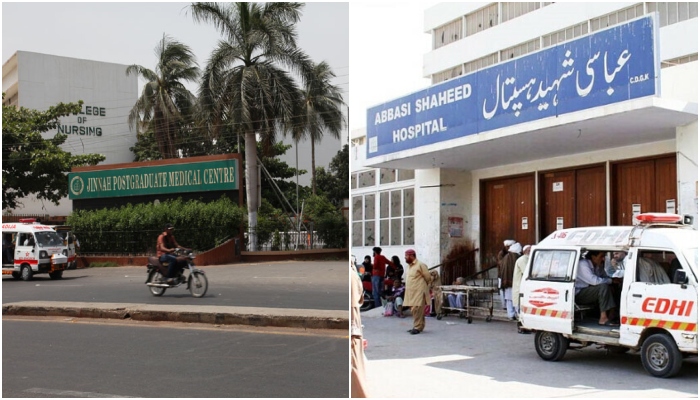
    KARACHI: Serious shortcomings in fire safety arrangements have been reported at major government hospitals in Karachi following the deadly fire at the Pakistan Institute of Medical Sciences (PIMS) in Islamabad, where newborns lost their lives. Hospital sources said several major public healthcare facilities in Karachi lack functional fire alarm systems and adequate emergency preparedness, raising concerns about the safety of thousands of patients and healthcare workers. At Abbasi Shaheed Hospital, operated by the Karachi Metropolitan Corporation (KMC), only 13 fire extinguishers are reportedly available across the facility. Sources said hospital staff have also not received regular fire safety training or participated in proper fire drills. The hospital reportedly does not have a fire alarm system or a designated emergency exit route. The situation is particularly concerning because hundreds of patients visit the emergency department every day, while more than 1,000 patients reportedly attend the outpatient department (OPD). Abbasi Shaheed Hospital has two generators, with one reportedly kept as a backup power source. The hospital’s Medical Superintendent said authorities were taking further steps to improve the fire safety system and address existing shortcomings. At Jinnah Postgraduate Medical Centre (JPMC), fire extinguishers are available in the wards, but hospital sources said several of them are not functional. Sources further said the last fire drill at the hospital was conducted in 2017. The hospital also reportedly lacks an installed fire alarm system. JPMC’s Joint Executive Director said a dedicated firefighting team needs to be established at the hospital. He said each ward has a fire extinguisher, while further training for staff is also required. He added that the hospital administration would write to the Sindh government seeking additional fire safety training for employees. Meanwhile, Civil Hospital Karachi has around 180 fire extinguishers distributed among its wards. However, sources said the overall fire safety arrangements at the hospital also fall short of ideal standards. The revelations have raised concerns about the preparedness of major public hospitals in Karachi to deal with fires and other emergencies. Large government hospitals handle thousands of patients, attendants and healthcare workers every day. In the event of a fire, the absence of functional alarms, clearly marked emergency exits, regular drills and trained response teams could make evacuation difficult and increase the risk to human lives. The situation has come under renewed scrutiny after the PIMS tragedy in Islamabad, prompting calls for immediate inspections of fire safety systems at hospitals across the country. Experts and hospital officials have stressed the need for regular fire drills, functioning extinguishers, alarm systems, emergency exits and trained firefighting teams.

  • | |

    Billie Eilish leaves music behind for bold new Hol…

    Billie Eilish is proving that her creative journey extends far beyond music. The Grammy and Academy Award-winning singer has officially stepped into the world of feature films, and the first photos from the set of The Bell Jar have left fans doing a double take. Known for her signature oversized outfits and edgy style, Eilish appears almost unrecognizable as she transforms into Esther Greenwood, the troubled yet ambitious writer at the heart of Sylvia Plath’s classic novel.  The newly released set images showcase a dramatic makeover. Eilish sports auburn brown hair styled in a polished 1950s fashion, bold red lipstick, pearl earrings, and elegant vintage-inspired clothing. The striking look is a complete departure from the singer’s everyday appearance, highlighting her commitment to bringing the beloved literary character to life. Fans have praised the transformation, calling it one of the most surprising celebrity makeovers of the year.  Directed and adapted by Academy Award-winning filmmaker Sarah Polley, The Bell Jar marks Eilish’s first leading role in a feature film. The story follows Esther Greenwood, a young aspiring writer navigating ambition, identity, and personal struggles in the 1950s. Widely regarded as Sylvia Plath’s most famous work, the novel remains one of literature’s most influential coming-of-age stories. The film also stars Carey Mulligan as Esther’s mother, adding even more star power to the highly anticipated adaptation.  Although this is Eilish’s feature film debut, she is no stranger to acting. She previously appeared in the television series Swarm, where she surprised audiences with her performance. However, The Bell Jar represents her biggest acting challenge to date, placing her at the center of an emotionally demanding story that has captivated readers for decades.  For Eilish, this project signals an exciting new chapter in an already remarkable career. After dominating the music industry with chart-topping albums, multiple Grammy Awards, and two Oscars for Best Original Song, she is now exploring a different form of storytelling. While fans eagerly await her next musical release, many are equally excited to see whether she can achieve the same success on the big screen. Filming is currently underway in Toronto, and while an official release date has not yet been announced, the early images have already generated significant buzz. If her striking transformation is any indication, Billie Eilish’s Hollywood journey is off to an unforgettable start. 

  • | |

    Police record fiancée’s statement in Mir Ra…

    Police have made fresh progress in the investigation into the murder of 25-year-old Mir Raza, whose body was found in Karachi’s Gulistan-e-Jauhar area. Investigators have recorded the statement of his fiancée and uncovered new details about his movements before his death. According to the investigation, Mir Raza left his home at approximately 4:02am on July 28. Before leaving, he reportedly left behind several personal belongings, including his wallet, house keys, and smartwatch. Police said he also transferred some money to his parents’ bank account before departing. Investigators have obtained more than 100 CCTV recordings from different locations and are reviewing the footage to trace Mir Raza’s final movements and identify any suspects or suspicious activity. Police also recorded the statement of Mir Raza’s fiancée as part of the investigation. She told investigators that he had not shared any concerns, fears, or personal problems with her before leaving home. She added that she repeatedly tried to contact him by phone on the morning of July 28 but received no response. According to the post-mortem report, Mir Raza died after suffering a gunshot wound to the chest, with excessive blood loss identified as the cause of death. Police recently recovered Mir Raza’s mobile phone from a location near the crime scene. The device has been sent for forensic examination to help investigators retrieve digital evidence and establish the circumstances leading to the killing. The investigation remains underway, with police examining CCTV footage, forensic evidence, and witness statements as they continue efforts to determine the motive behind the murder and identify those responsible.

  • | |

    Six members of one family killed in Israeli strike…

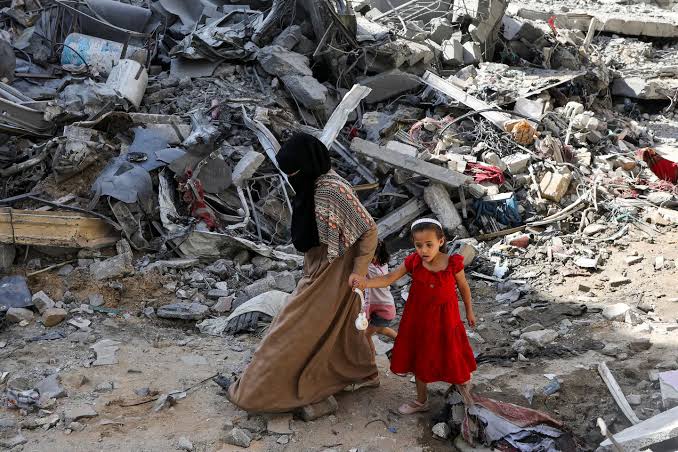
    An Israeli airstrike killed a father, his wife and their four children in Gaza City on Tuesday, setting their home on fire, according to health officials, in the latest deadly incident since a US backed ceasefire took hold more than nine months ago. Medics said the strike hit the family’s house in the Sabra neighborhood, killing Firas Al Masri, his wife Salsabeel, their three daughters and their son. The Israeli military confirmed carrying out the strike, saying it had targeted a Hamas militant and that it was still assessing the outcome of the attack. A video obtained by a news agency showed rescue workers battling fires inside the house and carrying out bodies wrapped in white shrouds. Masri’s father, Abu Yusuf Al Masri, said the explosion occurred while the family slept, describing his grief over the loss of his son, daughter in law and grandchildren. He said rescuers could not save the children and grandchildren from the flames and destruction, and that around five or six people died, most of them women and children, without warning and without mercy. Standing outside the family home, he said no place in Gaza offers relative calm or safety anymore. Heavy toll since October The Israeli military said it carried out four separate strikes since Friday that killed four militants from Hamas and Islamic Jihad, three of whom it said had taken part in the October 7, 2023, attack on Israel that triggered the war and involved the seizure of Israeli hostages. Later Tuesday, two additional Israeli airstrikes hit a vehicle in central Gaza and an association building in Gaza City, killing at least six more people and wounding others, according to Palestinian medics, bringing Tuesday’s overall death toll to 12. The Israeli military did not immediately comment on either of these later strikes. These latest deaths add to a toll exceeding 1,160 Palestinians, most of them civilians, killed in Israeli attacks since the ceasefire between Israel and Hamas took effect in October, according to health officials in Gaza. Hamas typically does not disclose its own casualty figures. The truce halted large scale fighting but has not stopped near daily Israeli strikes across the territory. Israel says these operations target militants. Four Israeli soldiers have died at the hands of militants in Gaza during the same period. Mediators including Egypt, Qatar, Turkey and the United States have continued working to advance a plan put forward by President Donald Trump aimed at ending the conflict in Gaza, which calls for Hamas to disarm and for Israeli forces to withdraw, though little progress has emerged so far. The war began when Hamas led fighters attacked communities in southern Israel, killing 1,200 people and taking roughly 250 hostages, according to Israeli figures. Israel’s subsequent military campaign has killed more than 73,000 Palestinians, according to Gaza health officials. Nearly all of Gaza’s population of about two million people now lives crowded along a narrow strip of coastal land, largely in makeshift tents or damaged buildings, enduring severe conditions under continued Hamas control. The continued strikes highlight how the ceasefire, despite formally ending large scale combat, has failed to bring lasting safety to civilians in Gaza, with families like the Al Masris bearing the human cost of attacks that Israel says are aimed at militants but that have repeatedly killed women and children in residential areas. International mediators continue pressing for progress on disarmament and withdrawal terms, though the persistent violence has raised doubts about how quickly, if at all, conditions on the ground might meaningfully improve for Gaza’s remaining population.

Leave a Reply

Your email address will not be published. Required fields are marked *