
police record fiance8217s
| |

Police record fiancée’s statement in Mir Ra…

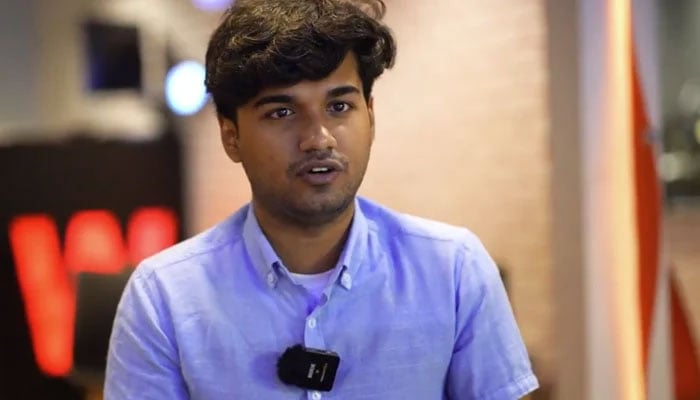
Police have made fresh progress in the investigation into the murder of 25-year-old Mir Raza, whose body was found in Karachi’s Gulistan-e-Jauhar area. Investigators have recorded the statement of his fiancée and uncovered new details about his movements before his death.

According to the investigation, Mir Raza left his home at approximately 4:02am on July 28. Before leaving, he reportedly left behind several personal belongings, including his wallet, house keys, and smartwatch. Police said he also transferred some money to his parents’ bank account before departing.

Investigators have obtained more than 100 CCTV recordings from different locations and are reviewing the footage to trace Mir Raza’s final movements and identify any suspects or suspicious activity.

Police also recorded the statement of Mir Raza’s fiancée as part of the investigation. She told investigators that he had not shared any concerns, fears, or personal problems with her before leaving home. She added that she repeatedly tried to contact him by phone on the morning of July 28 but received no response.

According to the post-mortem report, Mir Raza died after suffering a gunshot wound to the chest, with excessive blood loss identified as the cause of death.

Police recently recovered Mir Raza’s mobile phone from a location near the crime scene. The device has been sent for forensic examination to help investigators retrieve digital evidence and establish the circumstances leading to the killing.

The investigation remains underway, with police examining CCTV footage, forensic evidence, and witness statements as they continue efforts to determine the motive behind the murder and identify those responsible.


Similar Posts

  • | |

    Police intensify Mir Ali Raza murder probe

    Police have stepped up investigations into the abduction and murder of 25-year-old businessman Mir Ali Raza, whose body was found in Karachi’s Gulistan-e-Jauhar after he disappeared under mysterious circumstances. Investigators are pursuing multiple leads and examining digital evidence as they work to identify those responsible for the killing. According to the investigation, Raza returned home from his business on the night of July 28. A short while later, he left again after telling his family that he would return within 10 minutes. When he failed to come back, his family became concerned and later reported the matter to the police. CCTV footage collected by investigators shows a white vehicle arriving outside Raza’s residence at around 4am. The footage allegedly shows the businessman getting into the rear seat of the vehicle before it drove away. Police are trying to trace the vehicle and identify everyone who was inside at the time. The businessman’s body was later recovered from bushes in Block 1 of Gulistan-e-Jauhar. A preliminary investigation found that he had been subjected to torture before being shot once in the chest. Officials also clarified that rumours claiming acid had been used were incorrect. They said the condition of the body resulted from decomposition after it had remained at the location for more than 30 hours. Investigators discovered that before his disappearance, Raza had booked an online taxi and travelled to the kitchen facility used for his dessert business in Gulistan-e-Jauhar. The taxi driver confirmed dropping him off at the location. Police believe the kidnapping and murder occurred after he left the premises. One of the biggest challenges in the investigation is the disappearance of the victim’s mobile phone. Police have requested technical assistance from telecom authorities to obtain his call records, location history and other digital data. Investigators are also examining the people he had recently contacted to determine whether any connection exists between those communications and the crime. Authorities are also investigating the sudden deactivation of Raza’s social media accounts shortly before his body was discovered. Investigators are trying to establish whether the accounts were deactivated by the businessman himself or by someone who gained access to his phone after the incident. Police have questioned employees working at the kitchen on the night of the incident, along with staff members employed at his restaurants. Several people have been interviewed as part of the investigation, but officials have not disclosed further details, saying the inquiry is still ongoing. Investigators continue to analyse CCTV footage collected from nearby houses, shops and streets in an effort to reconstruct the victim’s final movements. However, officials say the absence of a citywide surveillance system and the poor quality of many privately installed cameras have made the investigation more difficult.

  • | |

    Supreme Court upholds landlord’s right to us…

    The Supreme Court of Pakistan has ruled that a property owner has the exclusive right to decide how to use their property and is not bound by the wishes or preferences of a tenant. The judgment came while deciding a long-running landlord-tenant dispute involving a residential building in Karachi’s Saddar area. In an eight-page verdict authored by Justice Aqeel Ahmed Abbasi, the apex court set aside an earlier decision of the Sindh High Court, which had ruled in favour of the tenant. The Supreme Court observed that it is a well-established legal principle that a property owner is the sole judge of their own requirements. The court held that if a landlord submits a sworn statement declaring the need to use their property personally, that statement is sufficient to establish bona fide necessity unless proven otherwise. The judgment further stated that an owner cannot be compelled to use another portion of the property simply because a tenant believes alternative accommodation is available. The court emphasised that the landlord’s choice regarding the use of their property cannot be dictated by the tenant. The case involved a dispute over a flat in a building located in Karachi’s Saddar neighbourhood. During the proceedings, the tenant argued that several other flats in the same building had become vacant and could instead be used by the landlord. The Sindh High Court accepted this argument and ruled in favour of the tenant. However, the Supreme Court disagreed with that reasoning, stating that the availability of other vacant units does not deprive the owner of the right to reclaim a specific property for personal use. Allowing the landlord’s appeal, the Supreme Court ordered the tenant to vacate the flat within six months, bringing the legal dispute to a close while reaffirming the property rights of landlords under the law.

  • | |

    PPP-PML-N row intensifies as AJK polls enter secon…

    Political tensions between the Pakistan Peoples Party (PPP) and the Pakistan Muslim League-Nawaz (PML-N) have deepened as Azad Jammu and Kashmir (AJK) entered the second phase of its elections. Despite several rounds of negotiations, the two coalition partners failed to resolve their dispute over the first phase of polling. The second phase of the elections is being held in nine constituencies of Muzaffarabad division and all 12 refugee constituencies. Authorities have made extensive security arrangements to ensure peaceful polling, while political uncertainty continues to dominate the electoral process. The disagreement began after the first phase of elections in Mirpur, where the PML-N secured key victories. The PPP questioned the election results and alleged irregularities in several constituencies. The PML-N rejected the allegations and insisted that the elections reflected the public mandate. The dispute has led to an exchange of sharp political statements between leaders of both parties. Senior PML-N leader Rana Sanaullah criticized PPP Chairman Bilawal Bhutto Zardari for repeatedly raising allegations of election rigging. He questioned the basis of such claims and also referred to the election of President Asif Ali Zardari while responding to the PPP’s criticism of the 2024 general elections. Rana Sanaullah also commented on Interior Minister Mohsin Naqvi’s recent remarks regarding the country’s governance system and the debate over creating new provinces. He criticized the minister’s statements and questioned his political rise. Meanwhile, PPP leader Saeed Ghani strongly defended his party during a press conference. He claimed that the PPP had never formed a government through election manipulation. He alleged that the PML-N had repeatedly benefited from controversial election outcomes and accused its leadership of making baseless allegations against the PPP. In an effort to reduce tensions, senior representatives from both parties held several meetings over the past few days. The discussions focused on finding a legal and political solution to the dispute over the election results. According to party sources, the PPP initially challenged the results in four constituencies. It later withdrew objections in two constituencies but continued to demand action regarding Charhoi and Nakyal, where its candidates were defeated by PML-N nominees. During the negotiations, PML-N representatives maintained that any irregularities were isolated incidents rather than evidence of systematic rigging. They argued that such incidents had occurred in previous elections and should not be used to question the overall electoral process. The talks, however, failed to produce a final agreement. As a result, political tensions remained high ahead of the second phase of voting. Separately, Prime Minister Shehbaz Sharif met PML-N President Nawaz Sharif at Jati Umra to review the evolving political situation. The meeting focused on the party’s strategy and the growing dispute with the PPP over the AJK elections. Punjab Chief Minister Maryam Nawaz and Deputy Prime Minister Ishaq Dar also attended the consultation. The participants reviewed the political challenges facing the ruling coalition and discussed possible steps to prevent further escalation between the two allied parties. In another development, PPP Chairman Bilawal Bhutto Zardari said he had received a positive response to his proposal for establishing a truth and reconciliation commission in Azad Kashmir. He described the response as encouraging and said the proposal had also received support from the AJK Legislative Assembly. Bilawal said he would carefully review the suggestions before consulting AJK Prime Minister Raja Faisal Mumtaz Rathore. He added that discussions would also be held with the federal government and other stakeholders to determine whether a consensus could be reached on the proposed commission.

  • | |

    More than 100 aftershocks hit Japan after powerful…

    Japan’s south‑western Kyushu region has been rattled by more than 100 aftershocks following Tuesday’s powerful earthquake that left at least 13 people dead and many others in critical condition. Rescue teams are working in extreme heat to search for survivors trapped under rubble in Kumamoto prefecture, where a paper factory and a shopping mall were among the worst‑hit sites. The Aeon Mall in Kashima suffered an explosion shortly after the quake, killing three people and injuring several others. Three remain missing as crews continue to sift through debris. Prime Minister Sanae Takaichi described the situation as “truly a race against time,” with thousands sheltering in evacuation centres and widespread power outages reported. The Japan Meteorological Agency has warned residents to remain vigilant, saying strong aftershocks with seismic intensity up to 7 could strike in the coming days. The quake struck Kumamoto at 16:27 local time (07:27 GMT) and caused significant damage across the region. In Yatsushiro City, two people were found without signs of life at a factory, while nine others remain unaccounted for. Officials say the scale of destruction is still being assessed, but the combination of collapsed buildings, fires and aftershocks has left communities deeply shaken.

  • | | |

    AJK election first phase concludes, vote counting …

    Polling for the first phase of the Azad Jammu and Kashmir (AJK) Legislative Assembly elections concluded on Monday, with vote counting now underway across 13 constituencies in Mirpur Division. The first phase covered three districts — Mirpur, Kotli and Bhimber. Polling was initially scheduled to end at 5pm but was extended by one hour. Voting continued until 6pm to provide voters with additional time to cast their ballots. More than 1.4 million registered voters were eligible to participate in the first phase. The Election Commission had established 2,454 polling stations across the three districts. Of these, 597 polling stations were set up across four constituencies in Mirpur district. Kotli had 1,107 polling stations across six constituencies, while 608 polling stations were established in three constituencies of Bhimber. A total of 296 candidates, including nominees from the Pakistan Peoples Party (PPP), Pakistan Muslim League-Nawaz (PML-N), Istehkam-e-Pakistan Party and independent candidates, contested the 13 seats. Polling disrupted at some stations Although polling remained largely peaceful, some polling stations reported disruptions. In Kotli’s Aghaar Colony, voting continued at Polling Station 38. However, polling could not begin at Stations 36 and 37 because voters did not arrive. PPP AJK Election Cell in-charge Sardar Abdul Shakoor claimed that disturbances occurred at polling stations 119, 120 and 121 in LA-5 Barnala. He said polling was affected for some time. According to Shakoor, voting resumed after security forces reached the area. However, he said the polling process remained slow. The PPP also established a central election monitoring cell in Islamabad. Senior party leaders, including Sherry Rehman, Nadeem Afzal Chan, Shazia Marri, Sharjeel Memon and Saeed Ghani, monitored developments and remained in contact with election officials, district administrations and party candidates. Former National Assembly speaker Raja Pervez Ashraf expressed concern over alleged irregularities at different polling stations. He called for additional security personnel at sensitive locations, including Gulpur, Thurochi and Muhajir Camp. He urged the Election Commission to immediately and impartially investigate all complaints and ensure free, fair and transparent elections. Political leaders urge voters to participate PML-N candidate Chaudhry Tariq Farooq cast his vote at Polling Station 161 in Bhimber’s LA-7 constituency. Speaking after voting, Farooq said voter turnout was expected to be higher in rural areas than in cities. He also expressed confidence in the security and election arrangements in Bhimber. PPP Chairman Bilawal Bhutto Zardari, accompanied by his sister Aseefa Bhutto Zardari, appealed to voters in Mirpur to participate in the elections. In a video message, Bilawal urged people to leave their homes and exercise their right to vote if they wanted Kashmir’s future to be decided by its people. He also asked voters to support PPP candidates. PPP Karachi Division President Saeed Ghani described the election as a contest between the genuine issues of Kashmiris and what he called false promises. Ghani said Kashmiris needed political rights, ownership rights and employment opportunities. He criticised the focus on providing a limited number of buses, saying development should address wider public needs. PPP leader Nadeem Afzal Chan also raised concerns about alleged federal interference and the use of government resources during the elections. He demanded that the polls remain free, fair and transparent. He also called on the federal government to avoid any involvement that could influence the electoral process. PPP spokesperson Shazia Marri said the people of Kashmir would deliver their verdict through their votes. She said the party’s election symbol, the arrow, represented hope for the people of Mirpur. Police praise peaceful polling AJK police said the first phase of polling remained peaceful across Mirpur Division. A spokesperson for the AJK police chief said voters had rejected calls for unrest and instead chose to exercise their democratic right. Voters began arriving at polling stations soon after voting opened at 8am. AJK Inspector General of Police Liaquat Ali Malik thanked residents for cooperating with law enforcement agencies and helping maintain peace during the election. He warned that no individual, including political workers, would be allowed to take the law into their own hands. Mirpur Commissioner Raja Tahir Mumtaz and DIG Kamran Ali also visited Ward 16/17 in LA-3 to review the polling arrangements. The commissioner said polling had remained peaceful across Mirpur, Kotli and Bhimber. He urged voters to come out without fear and assured them that the administration had made arrangements for a secure environment. Security arrangements strengthened Authorities made extensive security arrangements for the elections. AJK Chief Election Commissioner Justice (retd) Ghulam Mustafa Mughal said legal action would be taken against anyone attempting to disrupt the voting process. AJK Chief Secretary Khushal Khan said state institutions were fully prepared to maintain peace during the elections. He said the people had rejected attempts to create disorder and demonstrated confidence in the democratic process.

  • | |

    Pakistan’s civil awards triple in nine years…

    ISLAMABAD: The number of people receiving Pakistan’s civil awards has increased sharply over the past nine years, but the share of women among the recipients has remained almost unchanged, according to an analysis by economist Zehra Farooq. Farooq, who has analysed civil award lists from 2018 to 2026, said she compiled all 2,209 awards announced during the nine-year period and examined each award by field, gender, level of award and nationality. Her analysis shows that the number of award recipients increased more than three times during the period, rising from 73 people in 2018 to 372 in 2026. However, the share of women receiving the awards did not show a similar increase. Women made up between roughly 10% and 16% of civil award recipients in each year from 2018 to 2026. Ms Farooq said the figures show that while the size of the annual awards lists changed greatly, the share of women remained within almost the same range. The lowest share was around 10% in 2023, while the highest was 16% in 2018 and 2021. The share stood at 15% in 2024 before falling to 12% in 2025 and 11% in 2026. Her analysis also looked at the figures after excluding gallantry awards. Gallantry awards were kept separate because they mainly relate to military and police roles. Even after removing these awards, the overall share of women increased only from around 12% to 14%, according to the analysis. This suggests that the low share of women is not limited to gallantry awards. Farooq said the same pattern can also be seen in civilian awards. Public service awards show a wider gap The Public Service category is the largest civilian category in the dataset and shows a particularly large difference between men and women. Among Pakistani recipients of Public Service awards, 295 were men and only 27 were women. This means men received about 92% of these awards, while women received only around 8%. Farooq noted that in several years, the entire Public Service list included only one or two women. The figures raise questions about how women are represented among people being recognised for public service. The analysis does not, however, establish why the gap exists. Farooq suggested that one possibility worth examining is whether the awards reflect the existing structure of Pakistan’s civil bureaucracy. She noted that the quota for women in the civil bureaucracy is around 10%, while the share of awards going to women remains below or around that level. This raises a question about whether the civil awards are reflecting the existing gender structure in public institutions rather than creating a separate pattern of their own. Major changes in fields The analysis also found major changes in the fields represented in the civil award lists. Science and engineering together accounted for close to one-third of the 2021 list. However, by 2025 and 2026, the two fields together made up less than 2% of the list. At the same time, some new categories appeared. Information technology appeared as a category for the first time in 2021, while climate appeared in 2025. Farooq said these changes raise questions about how the state decides which areas deserve recognition. She asked whether the decline in science and engineering awards reflects fewer major contributions in these fields, fewer people entering these professions, or a change in the areas where the state looks for achievement. The appearance of IT and climate-related awards also raises another question: whether official recognition is beginning to follow changes in the areas where Pakistan’s talent and work are growing. Women receive fewer top-level awards The analysis also examined the civil awards according to their level. The awards are divided into different levels, with Nishan and Hilal at the senior end, followed by Sitara and Tamgha. Ms Farooq found that the share of women becomes smaller as the level of the award becomes higher. At the two highest levels, women account for less than 5% of recipients. At the more common lower levels, the share of women is higher, generally ranging between 11% and 14%. This means that the overall percentage of women receiving civil awards does not tell the full story. Women may represent around 10% to 16% of all recipients in a year, but their representation becomes much smaller when only the highest-level honours are considered. The findings therefore point to two separate issues: the overall number of women receiving civil awards and the level of recognition they receive. Nine years provide a wider picture Ms Farooq said looking at the awards over several years gives a clearer picture than looking at a single annual list. The civil awards are announced every August, and each year’s list can show changes in the number and type of recipients. But when the lists are combined over nine years, longer-term patterns become visible. The biggest pattern in the data is the contrast between the rapidly growing number of awards and the almost unchanged share of women. From 73 recipients in 2018, the annual list reached 372 in 2026. Yet women remained within roughly the same 10% to 16% range throughout the period. The analysis also shows that the composition of the awards has changed in other ways, including the fields being recognised and the introduction of new categories. She said the data does not provide all the answers, but it raises questions that can be examined further.

Leave a Reply

Your email address will not be published. Required fields are marked *