pcb unveils commentary
|

PCB unveils commentary panel for Champions Cup 2026

MULTAN: The Pakistan Cricket Board (PCB) has announced a star-studded commentary panel for the National Champions Cup 2026, adding further excitement to a tournament that could prove important in shaping Pakistan’s future international squad.

The seven-match competition will be played at Multan Cricket Stadium from August 11 to 18, with four teams — Pakistan Greens, Pakistan Whites, Pakistan Blues and Pakistan Gold — competing in a single round-robin format.

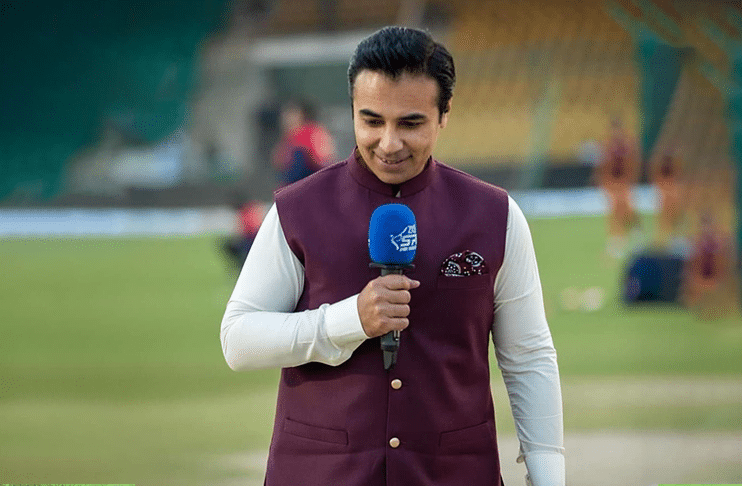
Former Pakistan captain Salman Butt will headline the commentary team alongside Ali Younis, Tariq Saeed, Aimen Anwar and Raja Asad. Their experience and analysis are expected to provide viewers with deeper insight into the performances of established players and emerging prospects.

Under the tournament format, each team will face the other three sides once. The two teams collecting the most points at the end of the league stage will advance to the final.

The Champions Cup carries added significance as the PCB looks ahead to the ICC Men’s Cricket World Cup 2027. Selectors will use the competition to closely monitor players competing for national recognition, while younger cricketers will have an opportunity to make a strong impression.

The PCB has selected 44 players across the four squads, with another 13 players included in a reserve pool. Reserve players can replace members of the main squads only in cases involving injury or concussion.

With established internationals sharing the field with promising domestic talent, the tournament is expected to offer a revealing look at Pakistan’s emerging cricketing depth.

For selectors, every match could become an audition. For players, the Champions Cup may represent a crucial step towards earning a place in Pakistan’s plans for the 2027 World Cup, to be jointly hosted by South Africa, Zimbabwe and Namibia.

Squads

Pakistan Greens

Playing XI: Shadab Khan (c), Faheem Ashraf, Fakhar Zaman, Farhan Yousuf, Mehran Mumtaz, Mohammad Hasnain, Mohammad Salman Mirza, Naseem Shah, Omair Bin Yousuf, Saad Baig (wk) and Sameer Minhas.

Pakistan Whites

Playing XI: Saim Ayub (c), Akif Javed, Ali Raza, Haris Rauf, Hasan Nawaz, Khushdil Shah, Mohsin Riaz, Mohammad Wasim Jnr, Saad Masood, Shahzaib Khan and Usman Khan (wk).

Pakistan Blues

Playing XI: Sahibzada Farhan (c), Abdullah Shafique, Ahmed Daniyal, Arafat Minhas, Hasan Ali, Hussain Talat, Jahandad Khan, Rohail Nazir (wk), Shamyl Hussain, Sufyan Moqim, Taimur Khan (wk).

Pakistan Gold

Playing XI: Shaheen Shah Afridi (c), Abdul Samad, Abdul Subhan, Faisal Akram, Haider Ali, Kamran Ghulam, Maaz Sadaqat, Mohammad Nawaz, Muhammad Akhlaq (wk), Muhammad Imran and Saad Khan.

Similar Posts

  • | | | |

    Iran FM accuses West of ‘shameful hypocrisy’

    Iran FM accuses West of ‘shameful hypocrisy’Iranian Foreign Minister Abbas Araghchi has sharply criticised France and other Western countries over their stance on human rights and Iran’s treatment of protesters. Araghchi accused Western governments of adopting double standards by condemning Tehran over its response to domestic unrest while, in his view, failing to take meaningful action over Israel’s conduct in Gaza and the wider Middle East. In a statement on X, the Iranian foreign minister said countries such as France should stop giving lectures to others on human rights and international law. He described what he called Western hypocrisy as both “clear and shameful,” arguing that their policies had undermined their claims of moral authority. Araghchi also criticised Western support for Israel, saying that backing Israel during the Gaza conflict and what he described as aggression against Iran had damaged the credibility of Western governments on human rights issues. His comments came after the European Union and 20 other countries issued a joint statement expressing concern over the deaths of protesters in Iran. The countries called on the Iranian authorities to take meaningful measures to protect human rights. They also urged Tehran to end the use of the death penalty and release people who had allegedly been detained arbitrarily. Araghchi rejected the criticism and questioned the consistency of Western governments’ positions on human rights. The dispute highlights growing tensions between Iran and Western nations over the treatment of protesters, the use of capital punishment and the broader conflict in the Middle East. Iran has repeatedly accused Western governments of interfering in its internal affairs and applying selective standards to international human rights issues. Western governments, meanwhile, have continued to raise concerns about the treatment of protesters and detainees in Iran.

  • |

    Buleha” faces suspension as Senate demands name change and removal of Bulleh Shah dialogue

    Islamabad: A controversy over the Pakistani film “Buleha” after a Senate committee questioned whether the movie damaged the image of legendary Sufi poet Baba Bulleh Shah by showing a character connected with violence, weapons and personal justice. During a heated discussion, Senator Pervaiz Rashid questioned how a film carrying the name of a famous symbol of peace and love was approved despite scenes and dialogues that critics said were opposite to Bulleh Shah’s teachings. The controversy intensified when members of the Censor Board admitted that some important points were overlooked during the approval process. Dr. Sultan Azam Taimuri, a senior member of the board, accepted responsibility and said the concerns raised about the connection between the fictional character and Baba Bulleh Shah should have been discussed more carefully. The committee argued that Baba Bulleh Shah was known for promoting peace, humanity and love, while the film appeared to show a character using force and weapons to fight criminals. Members questioned whether such a portrayal could create confusion among young viewers about the real message and personality of one of Punjab’s most respected Sufi poets. The debate became intense when a Senator Pervaiz Rashid asked if a film about another respected poet, such as Khushal Khan Khattak or Ghalib, showed that personality in a completely opposite way, would the Censor Board approve it. A censor board member admitted that such a film would not be acceptable and said it would be wrong to show a historical personality against their actual beliefs. The committee then questioned why the same standard was not applied to “Buleha.” The Censor Board defended its decision by saying the movie was not a biography of Baba Bulleh Shah. Officials explained that the character in the film was fictional and had no direct connection with the real life of the Sufi poet. They said the board considered the movie a fictional story and believed the name alone was not enough reason to stop its release because Bulleh Shah himself used the word “Bullah” in his poetry. However, the committee pointed out that the board’s explanation created confusion. Members questioned how the film could have no connection with Bulleh Shah but still use a name and dialogue strongly linked with him. The discussion became more serious when Dr. Sultan admitted that the committee’s concerns had a point. He said the board did not discuss this angle properly at the time of approval and accepted responsibility. He also admitted that a dialogue in the film where the character compares himself with Bulleh Shah could be controversial. Another Censor Board member, Syed Farooq Hassan, also accepted that the board overlooked this perspective. He said the board knew Baba Bulleh Shah’s teachings were completely different from the violence shown in the film, but members believed the character was fictional and not based on the actual life of Bulleh Shah. The board members also explained that Pakistan’s film industry was already struggling, and they wanted to support local movies within acceptable limits. They said promoting cinema was also one reason behind their decision. The committee, however, questioned whether supporting the film industry should come before protecting the image of respected cultural and historical figures. During the meeting, criticism was also directed at the writer of the film. Members questioned whether being a successful film writer was enough qualification to handle the story of a major historical and spiritual personality. They argued that the writer’s fame came mainly from action based films and said success in commercial cinema does not automatically mean expertise in history, culture or the lives of national figures. One committee member strongly criticised the idea of approving a film simply because it was written by a famous writer. He said the writer was known for introducing violent action elements in films but was not known as an expert on Sufi personalities or Pakistan’s cultural traditions. The committee also rejected the argument that other provincial censor boards had already approved the film. Officials said Punjab and Sindh censor boards had approved the movie without cuts, and it had also been aired on Local TV. However, committee members said approval by other boards did not remove the responsibility of reviewing the film’s impact. The discussion also raised questions about the knowledge and background of Censor Board members. Members suggested that people approving films about major personalities should have knowledge of history, literature, culture and society. They said the selection criteria for board members should ensure they understand how films can influence children and families. The committee argued that showing respected personalities incorrectly could affect how younger generations understand their history. At the end of the meeting, the committee made a strong recommendation regarding the film. The committee suggested that the film name should be changed and the dialogue in which the character calls himself Bulleh Shah should be removed. It further recommended that the film’s exhibition licence should remain suspended until these changes are made and that online versions should also be removed if available. The Senate Standing Committee on Information and Broadcasting has also included the film “Buleha” issue in its upcoming agenda, calling Censor Board members and producers to explain the certification process and the discussions behind the film’s approval.

  • | |

    Federal cabinet meeting postponed ahead of PM’s …

    The federal cabinet meeting scheduled to be chaired by Prime Minister Shehbaz Sharif has been postponed due to his official visit to Saudi Arabia, according to government sources. The meeting was expected to discuss important national and administrative matters. However, it has been deferred as the prime minister is leaving for a two-day official visit to the Kingdom. Sources said Prime Minister Shehbaz Sharif will depart for Saudi Arabia later today. During the visit, he is expected to hold a high-level meeting with Saudi Crown Prince Mohammed bin Salman. The two leaders are likely to review the strong and longstanding relationship between Pakistan and Saudi Arabia. Discussions will focus on expanding bilateral cooperation in various sectors, including trade, investment, energy and economic collaboration. Regional and international developments will also feature prominently in the talks. Both leaders are expected to exchange views on the evolving situation in the Middle East and other issues of mutual concern. They will also discuss ways to enhance coordination on matters affecting regional peace, stability and security. The visit reflects the close strategic partnership between Pakistan and Saudi Arabia. The two countries maintain strong political, economic and defence ties, while Saudi Arabia has remained one of Pakistan’s key allies and economic partners. Officials said the federal cabinet meeting will be rescheduled after the prime minister returns from Saudi Arabia. A new date for the meeting is expected to be announced in due course.

  • | | | |

    US strikes IRGC bases after Iran missile attack

    The Middle East moved a step closer to a broader regional conflict after the United States launched large-scale airstrikes against dozens of Islamic Revolutionary Guard Corps (IRGC) facilities across Iran in retaliation for Tehran’s ballistic missile attack targeting American forces stationed in the region. According to the US Central Command (CENTCOM), the operation targeted military command centers, drone infrastructure, weapons depots and other strategic IRGC installations during a coordinated two-hour campaign. US officials said the strikes were intended to weaken Iran’s ability to threaten American troops, commercial shipping lanes and allied Gulf nations. Iranian state media reported that at least three people were killed during strikes on Qeshm Island, while authorities vowed that the country would continue defending its territory against what it described as “American aggression.” The crisis quickly spread beyond Iran’s borders. Jordan announced that its air defence systems intercepted five missiles following Iran’s confirmed launch toward US military installations in the kingdom. Washington maintained that all missiles directed at American bases were successfully intercepted, preventing casualties among US personnel. In another major development, US and Saudi forces carried out coordinated strikes against Iran-backed armed groups operating in eastern Iraq after drone attacks launched from Iraqi territory targeted Saudi oil facilities. The joint operation marked the first publicly acknowledged military action conducted together by Washington and Riyadh against Iran-aligned militias. Regional instability deepened further after a fire broke out aboard a US-owned gas storage tanker at Egypt’s Mediterranean port of Damietta. Although maritime security experts suggested the blaze may have resulted from a drone strike, Egyptian officials confirmed only the fire and said investigations into its cause were continuing. The latest escalation comes against the backdrop of months of confrontation between Iran, the United States and Israel. Fighting resumed after disputes over the strategically important Strait of Hormuz ended a short-lived ceasefire reached in June. US President Donald Trump reiterated that America would respond decisively to attacks on its forces while insisting diplomatic efforts remained active. However, continued military exchanges around the Strait of Hormuz have complicated negotiations and increased concerns over global energy supplies. Iran has claimed it targeted three tankers attempting to pass through what it called an unauthorized route in the strait, while rejecting an Omani-backed proposal supported by Gulf states for joint management of the crucial waterway. The conflict has also rattled global energy markets, with Brent crude prices climbing above $90 per barrel before easing later in trading. Meanwhile, Iraq’s Iran-backed Popular Mobilisation Forces said at least 20 of their fighters were killed in the US-Saudi strikes, prompting Baghdad to condemn the attacks as a violation of its sovereignty while urging all armed groups to halt cross-border military operations. Saudi Arabia has also intensified diplomatic efforts, with Defence Minister Prince Khalid bin Salman meeting US Vice President JD Vance in Washington to urge restraint. Saudi officials reportedly warned that expanding military operations against Yemen’s Houthis and Iran-backed militias in Iraq could trigger unpredictable consequences across the Middle East, highlighting growing fears that the conflict could widen even further.

  • | | |

    Iran says Pakistan ties gaining greater importance

    TEHRAN: Iran has described its relationship with Pakistan as increasingly important, saying Islamabad has played a significant role as a mediator since the outbreak of the regional conflict. Iranian Foreign Ministry spokesperson Esmaeil Baghaei said the two neighbouring countries were maintaining close diplomatic contacts. He also confirmed that Iranian Foreign Minister Abbas Araghchi and Parliament Speaker Mohammad Bagher Ghalibaf had been invited to visit Islamabad. Baghaei said the two officials would travel to Pakistan at a suitable time. He did not announce a specific date for the visit. He described reciprocal visits between the two countries as a natural part of their growing bilateral relationship. The Iranian official also played down concerns that the recently signed defence agreement between Pakistan, Saudi Arabia and Turkiye was aimed at Tehran. Pakistan, Saudi Arabia and Turkiye signed the Makkah Joint Defence Agreement on August 7. The agreement seeks to strengthen collective defence cooperation and provides for a joint response if any member comes under attack. Baghaei said Tehran did not consider the agreement a direct threat to Iran. He said regional countries were increasingly seeking security arrangements based on their own regional realities rather than relying entirely on external powers. He maintained that regional cooperation could contribute to stability if such arrangements remained inclusive and focused on preventing conflict. Baghaei also said Iran was not prepared to resume direct negotiations with the United States while Tehran believed Washington was violating an interim agreement. The Iranian government has also linked the reopening of the Strait of Hormuz to a number of demands. These include compensation for damage caused during the conflict and an end to the US naval blockade of Iranian ports. Meanwhile, Iran and Oman are continuing discussions on arrangements for commercial shipping through the Strait of Hormuz. Baghaei said the talks were progressing in a constructive manner. He said the two sides had reached an understanding on a proposed map for shipping traffic and were working on several technical details. According to the Iranian official, the proposed arrangement would establish mechanisms for safer maritime movement. It would also address environmental protection and maritime crimes. He stressed that the discussions with Oman were focused on ensuring safe international shipping and were separate from broader political disputes. Baghaei nevertheless reiterated that Tehran would not allow the full reopening of the strategic waterway unless its conditions concerning Washington were addressed. In a separate development, Iran has appointed former Islamic Revolutionary Guard Corps commander Mohsen Rezaei to a senior position in the Supreme National Security Council. Rezaei has replaced Mohammad Baqer Zolqadr as secretary of the body responsible for coordinating Iran’s security and foreign policy. No official reason was immediately given for the change. It also remains unclear whether the appointment will lead to any major shift in Iran’s security policy. Rezaei, 71, commanded the Revolutionary Guards from 1981 to 1997. He later served for more than two decades as secretary of Iran’s Expediency Discernment Council and also held the position of vice president for economic affairs. Iran’s Supreme National Security Council brings together senior military, intelligence and government officials. It is formally chaired by the president, while the supreme leader retains ultimate authority over major state matters. A separate decree appointed Rezaei as the supreme leader’s representative on the council. Zolqadr was instead named as a political adviser. The developments come as Iran faces heightened regional tensions and continues efforts to manage its relations with neighbouring countries and major international powers.

  • |

    Here’s the Most Likely 2027 Super Bowl Winner, According to Current Odds

    Super Bowl 60 took place in February, but NFL fans are already looking toward the 2026-27 and Super Bowl 61 in Los Angeles, California. Two teams already stand out as the favorites, according to Polymarket. Both of these teams hail from the NFC West, the division that captured Super Bowl 61 last season. Polymarket currently […]

Leave a Reply

Your email address will not be published. Required fields are marked *