mitchell starc sixfor
|

Mitchell Starc six-for destroys Bangladesh for just 64

MACKAY: Bangladesh’s batting collapsed spectacularly against Australia on Saturday, folding for just 64 runs in the first innings of the second Test as Mitchell Starc produced a devastating spell of fast bowling.

Playing at the Great Barrier Reef Arena in Mackay, Australia won the toss and elected to bowl first. The decision quickly paid off as Bangladesh’s batters struggled to cope with the pace and movement generated by the Australian attack.

Starc was the chief destroyer, claiming six wickets for just 12 runs from 10 overs. His relentless spell left Bangladesh’s batting order in tatters and gave Australia complete control of the opening stages of the match.

Captain Pat Cummins provided strong support, taking three wickets, while Josh Hazlewood claimed the remaining wicket as Australia’s pace trio ripped through the visitors.

Bangladesh’s innings offered little resistance. No specialist batter managed to produce a substantial score, with No. 11 batter Shoriful Islam emerging as the team’s leading scorer with 14 runs.

Mehidy Hasan Miraz and Taijul Islam each contributed 11, but the lower order could not prevent Bangladesh from being bowled out for one of their lowest Test totals.

The collapse is a dramatic turnaround from the opening match of the series. Bangladesh stunned Australia in the first Test in Darwin, securing a historic nine-wicket victory — their first Test win over Australia on Australian soil.

That result had given Bangladesh enormous confidence and put the hosts under early pressure in the series. However, Starc and Australia’s fast bowlers ensured that the second Test began on an entirely different note.

For Bangladesh, the immediate challenge is to recover from the huge first-innings setback and find a way to contain Australia’s batting. For the hosts, meanwhile, the emphatic bowling performance offers a chance to level the series after their unexpected defeat in Darwin.

Starc’s six-wicket haul has already become the defining moment of the match, with Australia firmly on top after Bangladesh’s dramatic batting collapse.
Similar Posts

  • | |

    Iran’s parliament backs bill criminalizing c…

    Iran’s parliament approved the general framework of a bill Sunday that would make it a crime to give interviews or engage in other communication with media outlets considered hostile to the Islamic Republic, including American or Israeli outlets and any media funded by either country, according to Iran’s Shargh newspaper. Osman Salari, a member of parliament’s judicial and legal commission, said individual provisions within the bill, which aims to counter what officials describe as foreign intelligence influence, still require separate debate and approval. He told the Mizan news agency that details reported so far about the bill should not be treated as final. Under the proposed legislation, interviews or participation in discussions with media deemed hostile would be banned outright, with violations carrying prison terms ranging from six months to two years. Interviews with other foreign media outlets would require advance notification to the intelligence ministry, while any contact with foreign embassies, offices of foreign organizations or other non Iranian institutions, conducted without notification and written permission from the foreign ministry, would draw fines and the loss of certain social rights. The bill would also increase penalties for economic crimes carried out under the direction or supervision of foreign actors, prohibit sharing information with foreigners without intelligence ministry approval, and limit scientific cooperation with foreign institutions to those on an approved list. It would further criminalize policy or legislative proposals made under the direction of foreign intelligence services if such proposals are found to harm Iran’s security or independence, with penalties reaching up to 30 years in prison. Cases brought under this provision would fall under the jurisdiction of Iran’s Revolutionary Courts. Parliament will now review the bill article by article. Once lawmakers approve a final text, the legislation must still pass review by the Guardian Council before it can take effect as law. This is not the first time Iran has moved to criminalize cooperation with foreign entities. A law passed in 2025, following a 12 day war with Israel, introduced harsher penalties for alleged cooperation with hostile states. Earlier this month, Iranian photojournalist Yalda Moaiery was sentenced to 15 years in prison under that law over accusations that included giving interviews to media considered hostile and supplying photographs to organizations linked to the United States and Israel.

  • | |

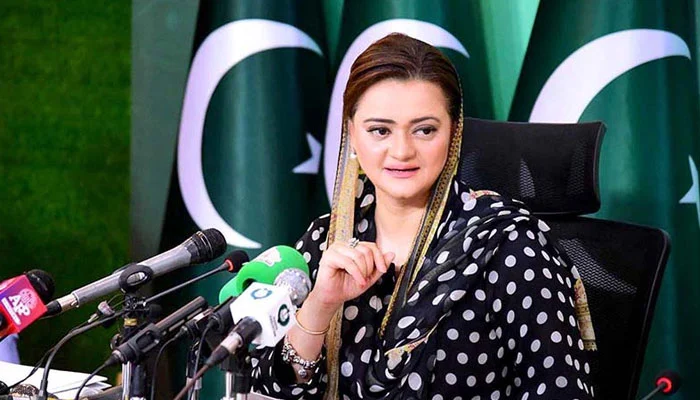
    Maryam Aurangzeb rejects PPP’s rigging claim…

      Pakistan Muslim League (Nawaz) (PML-N) leader and Senior Minister of Punjab, Maryam Aurangzeb, strongly rejected allegations of election rigging made by the Pakistan Peoples Party (PPP), questioning the credibility of such claims by pointing to the PPP’s own government in Azad Jammu and Kashmir (AJK). Speaking to the media in Rawalpindi, Maryam Aurangzeb said that the PPP’s accusations of electoral fraud were baseless and contradictory. Referring to PPP leader Nayyar Bukhari’s remarks, she said it was unreasonable to claim widespread rigging on the basis of only two ballot papers when the election involved thousands of votes. According to her, isolated incidents cannot be used to undermine the credibility of an entire electoral process. She further argued that since the Pakistan Peoples Party is in power in Azad Kashmir, its allegations of election manipulation effectively amount to accusing its own administration of wrongdoing. “If you insist that rigging took place in Azad Kashmir, then you are accusing your own government of conducting fraudulent elections,” she remarked. Aurangzeb added that the people of both Punjab and Azad Kashmir had exercised their democratic right and chosen not to vote for the PPP, and that the party should accept the public verdict instead of making unfounded allegations. Maryam Aurangzeb also criticized the timing of the PPP’s accusations, noting that claims of rigging were being made as soon as polling began. She argued that elections are won through the support of voters, not through repeated allegations. “You do not win elections by making accusations; you win them by earning the trust and votes of the people,” she said. Addressing another issue, Aurangzeb questioned attempts to politicize a recent death, stating that the deceased had not died from gunfire. She asked whether political opponents now intended to use even such incidents for political gain, criticizing what she described as the exploitation of sensitive matters for electoral purposes. Turning her attention to governance, Aurangzeb said the Pakistan Peoples Party should focus on improving its performance in Sindh, where it has governed for years. She argued that better governance would provide meaningful relief to the people of the province. Drawing an analogy, she said that if a student fails to prepare for an examination, they cannot simply lock the examination hall. In the same way, she suggested that political parties cannot blame the electoral process when they fail to secure public support. Aurangzeb maintained that the Pakistan Muslim League (N) had earned the confidence of the electorate through its performance and public service. She expressed surprise that the PPP was repeatedly raising issues related to gunfire and election rigging, saying such rhetoric reflected an unwillingness to accept the democratic outcome. She also referred to a speech delivered by PPP Chairman Bilawal Bhutto Zardari the previous day, questioning the tone and substance of his remarks. According to Aurangzeb, the PPP should respect the will of the voters rather than challenging the legitimacy of the election without sufficient evidence. Concluding her remarks, Maryam Aurangzeb emphasized that Pakistan’s electoral system provides legal mechanisms for addressing disputes. She said that if the PPP genuinely believes irregularities occurred, it should present its evidence before the Election Commission or the relevant election tribunals. Instead of complaining publicly, she urged the party to pursue the appropriate legal channels. She concluded by saying that the PPP’s own voters had rejected its narrative and that the party should contest elections through democratic means while respecting the mandate given by the people.

  • |

    Amanda Knox defends comedy show after backlash from Meredith Kercher’s sister

    Amanda Knox is standing by her Edinburgh Fringe comedy show, pushing back against claims from Meredith Kercher’s sister that the performance trivializes violence against women. Knox, 39, was convicted and later acquitted of murdering her British roommate Kercher in Italy 19 years ago. She took to Instagram on Thursday to say her show “honors Meredith Kercher’s memory” and “calls out the violence that was done to her and to me.” The show, titled “Cartwheel,” debuted Friday evening and runs for 11 nights straight at the Scottish festival. Its title nods to a widely repeated claim that Knox did cartwheels at the police station after Kercher’s death. The show is being pitched as the story of a woman nearing forty, balancing motherhood while finally processing her wrongful imprisonment. The backlash follows a BBC interview with Kercher’s sister, Stephanie, who said the show “normalizes and trivializes violence against women.” She acknowledged that Knox is free to live her life however she chooses, but argued that turning this particular story into comedy crosses a line. Stephanie stressed that her objection is not about guilt or innocence. She said the same discomfort would apply even if someone else were behind the show, though she admitted it stings more knowing it’s Knox herself. She said she feels strongly that the project shouldn’t be given a platform at all. An online petition demanding the show’s cancellation has gathered more than 4,400 signatures so far. It accuses the show of mocking the tragedy surrounding Kercher’s death and turning it into entertainment. Knox has previously defended the project in other interviews too. She told The Telegraph she believes Kercher would have “appreciated” the show, calling it an honest look at what it means to be a young woman, and even guessed her late roommate would have found parts of it funny. Despite the criticism, Knox appears set on moving forward with the run as planned. The show continues through the rest of its scheduled dates in Edinburgh, with public reaction still divided over whether the format is appropriate for such a painful and personal subject. For now, the controversy has added extra attention to a performance that was already drawing curiosity given Knox’s unusual path from headline-making legal saga to stand-up stage.

  • |

    PIA-style model proposed for DISCO privatisation

    ISLAMABAD: The government has proposed a new financial structure for the privatisation of three major power distribution companies. The plan covers Faisalabad Electric Supply Company (FESCO), Gujranwala Electric Power Company (GEPCO) and Islamabad Electric Supply Company (IESCO).The proposal is based on the restructuring model used during the privatisation process of Pakistan International Airlines (PIA). Under the proposed plan, selected assets and liabilities of the three companies will be separated from their balance sheets.The government plans to establish a Special Purpose Vehicle (SPV) for this purpose. The SPV will be owned by the government. It will hold specific assets and liabilities removed from the DISCOs. The restructuring is aimed at making the companies more attractive to private investors. The government wants to offer financially stronger entities to potential buyers.Land assets are among the items expected to be separated from the DISCO balance sheets. Liabilities related to retired employees and pension benefits will also be shifted to the SPV.These pension-related liabilities were worth around Rs312 billion for the three companies as of June 2025. The final amount could change after the companies’ balance sheets are restructured. The government plans to use audited financial results for March 2026 as the basis for the final calculation.The three DISCOs had combined assets of around Rs1.2 trillion in June 2025. Their combined liabilities stood at approximately Rs1.05 trillion.The companies together reported net positive equity of around Rs145 billion. However, the financial position of the three companies varies considerably.GEPCO had negative equity of around Rs14.4 billion as of June 2025. The final figures may be different because the government is using March 2026 audited accounts for the restructuring process. The Privatisation Commission board has recommended that the Cabinet Committee on Privatisation approve the restructuring plans. The plans cover the first group of DISCOs selected for privatisation.The proposed arrangements have been prepared using audited financial statements for the period ending March 31, 2026. Officials believe the new structure could increase the value of the companies for the government.It is also intended to make the transactions commercially viable for private-sector investors. The government hopes the approach will attract stronger interest from domestic and international buyers.The strategy closely resembles the model adopted for PIA. During the airline’s privatisation process, the government separated more than Rs650 billion in liabilities from PIA’s balance sheet.The move was designed to leave the airline in a stronger financial position before its transfer to new owners. A similar approach is now being considered for the three DISCOs.The Privatisation Commission has been informed that both local and foreign investors have shown interest in the companies. The government has already announced deadlines for Expressions of Interest.Investors interested in FESCO must submit their Expressions of Interest by August 7, 2026. The deadline for GEPCO is August 21, 2026.For IESCO, the deadline has been set for September 7, 2026. FESCO has a relatively stronger financial position among the three companies.Its assets stood at around Rs410.3 billion as of June 2025. Its liabilities were approximately Rs347 billion.The company reported positive equity of around Rs63 billion. The equity position was supported by deposits for shares and gains from asset revaluation.FESCO also recorded a profit after tax of around Rs9.4 billion. Its non-current liabilities stood at approximately Rs217.6 billion.Staff retirement benefits accounted for around Rs123 billion of these liabilities. The company’s current liabilities were estimated at about Rs130 billion.Trade payables made up around Rs118 billion of the current liabilities. GEPCO reported a profit after tax of around Rs13.7 billion.Its total assets stood at approximately Rs238 billion. However, its equity remained negative at around Rs14.4 billion.The company’s total liabilities were around Rs252.5 billion. Staff retirement benefits accounted for approximately Rs79 billion.IESCO reported a loss after tax of around Rs1.42 billion during the same period. The company had total assets of approximately Rs547 billion.Its liabilities stood at around Rs450 billion. Despite recording a loss, IESCO had positive equity of around Rs97 billion. The company’s equity position was supported by a share deposit of approximately Rs67 billion. It also benefited from a surplus revaluation of around Rs158 billion.IESCO’s liabilities included staff retirement benefits worth around Rs110 billion. The company also carried deferred tax liabilities.The proposed privatisation is part of Pakistan’s wider power-sector reform programme. It is also linked to commitments made under Pakistan’s agreement with the International Monetary Fund (IMF).Pakistan has repeatedly pledged to reduce government involvement in the power distribution sector. The commitment to privatise at least three DISCOs has been made several times since 2013.Previous attempts, however, failed to reach completion. The IMF has urged Pakistan to implement structural reforms in the power sector.The broader objective is to reduce electricity costs for households and businesses. The reforms also aim to improve the operational efficiency of power distribution companies.The IMF has previously noted delays in the private-sector participation process for DISCOs. The first group, consisting of FESCO, GEPCO and IESCO, faced delays after potential investors raised concerns about the proposed transaction structure.The government has now said that those concerns have been addressed. Officials expect the privatisation process to move forward.The government is targeting completion of the first phase by early 2027. The proposed SPV will be an important part of the process.It is intended to separate selected financial burdens from the three companies before they are offered to private investors. The government hopes the restructuring will improve investor confidence and make the DISCO transactions more commercially attractive.

  • | |

    Over 4,000 cops to secure AJK elections in Rawalpi…

    More than 4,000 police personnel will be deployed in Rawalpindi division to ensure security during the Azad Jammu and Kashmir (AJK) Legislative Assembly elections on August 2. Police officials have prepared a detailed security plan for polling in four constituencies of the division, including Attock, Jhelum, Chakwal and Murree. A total of 4,029 police officers will be assigned duties at 175 polling stations. The polling stations have been divided into three categories according to their security requirements. Category A includes highly sensitive stations, Category B covers sensitive locations, while Category C consists of normal polling stations. Rawalpindi Regional Police Officer Babar Sarfraz Alpa said providing voters with a safe and peaceful environment is the top priority. He added that all available resources would be used to ensure free and transparent elections. He said strict monitoring would be carried out at sensitive polling stations. Additional patrolling and surveillance measures would remain active throughout the polling process. Police officials will also monitor suspicious activities, illegal weapons and any violations of the election code of conduct. Legal action will be taken against individuals involved in disrupting the electoral process. In Rawalpindi district, more than 3,100 police personnel and 200 traffic police officials will be deployed at 100 polling stations. These stations are located in different areas, including Rawalpindi city, Taxila, Wah Cantt, Gujar Khan, Kallar Syedan and Kahuta. Among the 100 polling stations, 18 have been declared highly sensitive, 45 sensitive and 37 normal. Security arrangements have also been made for the safe transportation of polling materials. City Police Officer Hassan Mushtaq Sukhera said the police would ensure implementation of the Election Commission’s rules and maintain law and order until the completion of the election process. The AJK elections are being conducted in phases due to security concerns. Authorities have increased security measures after previous election-related tensions and allegations of irregularities.

  • |

    Pakistan begins Commonwealth Games 2026 campaign with hopes pinned on Arshad Nadeem

    GLASGOW: The 2026 Commonwealth Games have officially begun in Glasgow and will continue until August 2, bringing together nearly 3,000 athletes from 74 countries to compete across multiple sporting disciplines. Pakistan has sent a 36-member contingent, including 20 athletes, along with coaches and officials, to participate in this year’s event. The national team will compete in six sports: athletics, boxing, judo, gymnastics, lawn bowls and swimming. Pakistan’s biggest medal hope is Olympic javelin champion Arshad Nadeem, who will defend his Commonwealth Games title. Having achieved historic success for Pakistan on the international stage in recent years, Arshad is widely regarded as the country’s strongest contender for a gold medal. In athletics, Pakistan will be represented by Arshad Nadeem, Faiqa Riaz, Ansar Abbas, Muhammad Akhtar, Muhammad Ismail, Muhammad Yasir and Noreen Hussain. The boxing squad includes Afzal Khan, Fatima Zahra, Malaika Zahid, Qudratullah and Samama Rehman. Shah Hussain Shah will compete in judo, while Shehzad Ali will represent Pakistan in gymnastics. In lawn bowls, Maqsood Waseem Khan and Muhammad Ayub Qureshi will compete, while Hamza Asif, Hareem Malik, Jehanara Nabi and Muhammad Ahmed Durrani will represent Pakistan in swimming. Sports analysts believe Pakistan’s brightest medal prospect is Arshad Nadeem in the men’s javelin throw. If he performs at his best, he is considered a leading favourite to win gold. Pakistan could also challenge for medals in boxing, although the competition is expected to be tough. In judo, Shah Hussain Shah is viewed as another strong contender, given Pakistan’s previous success in the sport at the Commonwealth Games. In gymnastics, lawn bowls and swimming, the main objective for Pakistani athletes will be to reach the final rounds and achieve personal best performances. Overall, experts believe Pakistan has the potential to win one to three medals, with the strongest possibility being a gold medal through Arshad Nadeem. A standout performance in boxing or judo could further improve the country’s medal tally. As the Games get underway, Pakistani fans will be closely following Arshad Nadeem, whose achievements have made him one of the country’s most celebrated athletes and an inspiration for the next generation of sportsmen and women.

Leave a Reply

Your email address will not be published. Required fields are marked *