independent experts confirm
|

Independent experts confirm pellet-gun injuries among protesters in Delhi

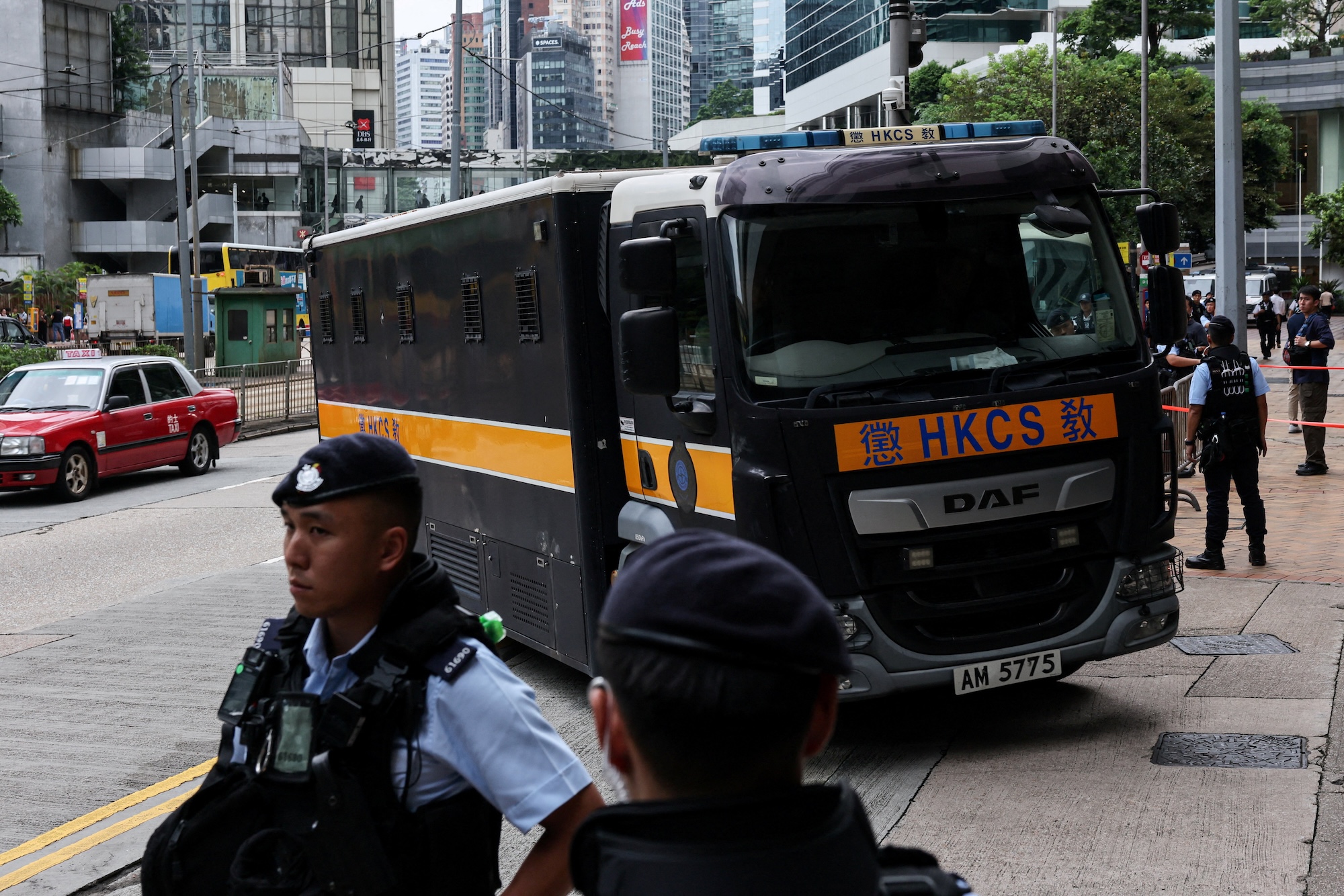
Independent ballistic and forensic experts have confirmed to the BBC that injuries sustained by protesters during the 20 July demonstrations in Delhi were caused by birdshot from 12-gauge pellet guns. The protests, led by the Cockroach Janta Party over repeated exam paper leaks, faced a heavy police and paramilitary crackdown near parliament.

While government ministers and Delhi Police have denied deploying pellet guns, insisting only batons and tear gas were used, hospital records, X-rays, and multiple victims verify dozens of small metal pellets embedded in bodies.

Among the injured is 19-year-old student Sahil Lochab, who risks losing an eye, and a journalist who documented 30 pellet wounds. If officially verified, this represents the first instance of Indian security forces using pellet guns for crowd control within the capital.

Similar Posts

  • | |

    Lahore police bar women from stations after sunset

    Lahore Police have directed that no woman should remain at any police station after sunset, introducing a new measure that officials say is aimed at ensuring the safety and dignity of women. The directive was issued by Deputy Inspector General (DIG) Operations Muhammad Faisal Kamran during a crime review meeting with officers of the City Division. He instructed police personnel to treat women with respect and ensure that female complainants as well as women taken into custody are not kept at police stations after Maghrib. According to the directive, police officers must adopt procedures that protect women’s privacy and dignity while dealing with complaints or investigations. The decision comes in the wake of growing concerns over crimes against women and follows the arrest of a Lahore police Assistant Sub-Inspector (ASI) accused of sexually assaulting a 19-year-old woman with a mental health condition. According to police, the woman had left her home and did not return for several hours. Her family later learned from a local resident that a plain-clothes police officer had taken her away on a motorcycle. The victim later alleged that the officer took her to another location and sexually assaulted her. Following the allegations, police registered a case against the accused officer. DIG Investigation Syed Zeeshan Raza ordered an immediate and transparent investigation, directing investigators to proceed strictly on merit. The incident also led to disciplinary action within the police department, with 78 police officials reportedly suspended as authorities launched an internal review of the case. While police officials say the new directive is intended to safeguard women, some critics argue that restricting women’s presence at police stations does not address the root problem. They contend that law enforcement agencies should instead focus on ensuring police stations remain safe and accessible for women at all hours.

  • | | |

    High Commissioner Tipu Usman inaugurates Quaid-e-A…

    LONDON: Pakistan’s High Commissioner to the United Kingdom, Tipu Usman, inaugurated an art exhibition titled “Legacy Beyond Time”, celebrating the life, vision and enduring legacy of Muhammad Ali Jinnah, at the historic National Liberal Club, where the founder of Pakistan was once a member. The exhibition was organised by the Mont Rose Foundation in collaboration with the Pakistan High Commission, London, as part of the commemorative events marking the 150th birth anniversary of Quaid-e-Azam, being celebrated this year. Featuring a collection of watercolour paintings by renowned artist Amera Rashid, the exhibition attracted a large gathering of British and Pakistani admirers of Quaid-e-Azam, who viewed artistic depictions reflecting his leadership, statesmanship and contribution to the creation of Pakistan. Delivering the keynote address, High Commissioner Tipu Usman said Quaid-e-Azam firmly believed in the rule of law, reasoned argument, dialogue and political negotiation despite political differences. He said Jinnah’s legacy was not merely about remembering the struggle that led to the creation of Pakistan, but also about understanding the principles, democratic values and vision that guided that historic movement. The High Commissioner praised the efforts of Bilal Sheikh, Chief Executive of the Mont Rose Foundation, for organising the exhibition and for commissioning a permanent portrait of Quaid-e-Azam, now displayed at the National Liberal Club. Speaking on the occasion, Bilal Sheikh described it as a privilege to host the exhibition at such a prestigious venue closely associated with Muhammad Ali Jinnah. He said Quaid-e-Azam’s vision had inspired millions across generations and noted that the National Liberal Club was a place where Jinnah frequently held meetings during his time in London. He reaffirmed the Mont Rose Foundation’s commitment to continuing the promotion of Jinnah’s ideals and legacy through similar initiatives. Other speakers paid tribute to Quaid-e-Azam’s exceptional legal acumen, unwavering commitment to democratic principles and his leadership in the struggle that culminated in the independence of Pakistan. The exhibition, “Legacy Beyond Time,” forms part of a wider series of cultural and educational events being organised jointly by the Pakistan High Commission, London and the Mont Rose Foundation to commemorate the 150th anniversary of the birth of the founder of Pakistan

  • |

    Thank you for calling us Cockroaches’: activist reacts to Indian Education Minister’s resignation

    Following the resignation of Indian Education Minister Dharmendra Pradhan, Cockroach Janta Party (CJP) chief Abhijit Dipke addressed a protest rally at Jantar Mantar and thanked those who had referred to young people as “cockroaches.” Speaking at the demonstration, Dipke directly addressed Chief Justice of India Surya Kant, saying that if the chief justice had not used the term, he would not have returned to India and the protest movement would never have begun. According to Indian media reports, the youth-led campaign began after a Supreme Court hearing on May 15. During a case concerning the designation of senior advocates, Chief Justice Surya Kant reportedly compared some young people to cockroaches, saying they struggled to find employment and opportunities in their professions. The chief justice later clarified that his remarks were directed at people holding fake law degrees and were not intended to describe unemployed youth generally. However, the statement quickly spread across social media and triggered widespread criticism. The following day, Abhijit Dipke, a student based in Boston and a former communications strategist for the Aam Aadmi Party, announced the formation of the Cockroach Janta Party in a satirical social media post. Dipke presented the group as a platform for young people who considered themselves “cockroaches” — including unemployed youth, active social media users and those critical of the existing system. The campaign gained momentum as public anger increased over allegations surrounding a National Eligibility Test (NET) paper leak. Dipke returned to India in early June and began leading protests at Jantar Mantar. The protesters’ main demand was the resignation of Education Minister Dharmendra Pradhan over alleged irregularities in examinations. The movement later received wider attention when social activist Sonam Wangchuk began an indefinite hunger strike on June 28. He ended the hunger strike after 26 days following written assurances from the government. The assurances included a commitment that peaceful protesters would not face criminal cases. The government also agreed to consider examination reforms and accountability measures in Parliament. It further agreed to consider a proposal for compensation for families of students who allegedly died by suicide following the reported paper leak. Despite the end of Wangchuk’s hunger strike, the Cockroach Janta Party continued demanding Pradhan’s resignation. The protests continued even after demonstrators were reportedly subjected to a baton charge on July 20. Growing pressure eventually led to Pradhan stepping down. In his resignation, Pradhan said he was leaving his position with the future of students in mind. He also said the decision was necessary to prevent anti-national elements from taking advantage of the situation at Jantar Mantar and elsewhere across the country.

  • |

    3 killed, 25 injured in Ukraine drone strike on Russia

    Three people were killed and 25 others injured after Ukrainian drones struck Russia’s Belgorod region, according to Russian authorities. Officials said the drone attack took place overnight, targeting areas in and around Belgorod. Emergency teams responded to the affected locations and began rescue and relief operations following the strikes. The latest attack comes amid continued fighting between Russia and Ukraine, with both sides carrying out frequent drone and missile strikes against targets across the border. Meanwhile, Russia has launched an attack on Ukraine’s strategic port city of Odesa. Ukrainian President Volodymyr Zelenskyy confirmed the Russian strike, saying the attack caused damage to the Odesa port. Zelenskyy condemned the assault and said the continued attacks on civilian and critical infrastructure demonstrated the intensity of the ongoing conflict. The strikes on Belgorod and Odesa highlight the continued escalation of cross-border attacks as the war enters another phase of sustained military confrontation.

  • |

    Anthropic releases Claude Opus 5, offering high pe…

    Anthropic on Friday released Claude Opus 5, a new artificial intelligence model that the company says approaches the performance of its most powerful system at half the price. The San Francisco-based startup, a chief rival to OpenAI, said the model tops industry benchmarks for coding and knowledge work while consuming fewer computing resources than earlier versions. The claim addressed rising concerns among business customers who have balked at the expense of running advanced AI systems. Claude competes with OpenAI’s ChatGPT and Google’s Gemini, with customers paying based on the amount of work performed, measured in units called tokens. Opus 5 costs $5 per million input tokens and $25 per million output tokens, half the price of Fable 5, Anthropic’s most expensive publicly available offering. The company said the new model performs close to Fable 5 across many tasks despite the lower cost. Cost has become a major issue after Anthropic and its rival OpenAI both filed for stock market listings in June. Wall Street is scrutinising their business performance more closely than ever ahead of their market debuts. The release of Opus 5 is a strategic move by Anthropic to address the growing demand for affordable AI solutions while maintaining high performance. On cybersecurity, Anthropic said it deliberately avoided training Opus 5 on cyber tasks, and that the model remains behind Mythos 5  its most capable and most tightly restricted system, available only to select partners  on both offensive cyber work and biological research capabilities that could be misused. Mythos is Anthropic’s most advanced series of AI models, and its strength at finding weaknesses in computer systems has caused controversy, pushing the company to build tight guardrails around them. The company said Opus 5 finds software flaws about as well as Mythos 5 but lags far behind in turning those flaws into something that could be weaponised into an attack. Citing the reduced risk, Anthropic said its automated safety filters will intervene roughly 85% less often on Opus 5 than on Fable 5, the Mythos-class model it released last month. Fable 5 and Mythos 5 were briefly pulled from public access in June after the US Commerce Department imposed export controls, which were lifted at the end of that month. The release of Claude Opus 5 marks a significant milestone for Anthropic as it seeks to compete in the rapidly evolving AI market. By offering a high-performance model at a lower cost, the company aims to attract a broader range of customers, including businesses and developers who may have been priced out of the market. The focus on affordability and performance reflects the growing demand for AI solutions that can deliver results without breaking the bank. As the AI industry continues to evolve, the competition between Anthropic, OpenAI, and other players is expected to intensify, with companies racing to develop models that are both powerful and cost-effective. Anthropic’s strategic approach to balancing performance, cost, and safety positions it well in the competitive landscape, and the company is likely to continue innovating to meet the needs of its customers. The launch of Opus 5 is a testament to Anthropic’s commitment to advancing AI technology while addressing the practical concerns of businesses and developers. The AI industry will be watching closely to see how the market responds to this new offering and how it shapes the future of AI development and deployment.

  • | | | |

    ‘Severe anxiety’: What Imran Khan’s report r…

    A medical report submitted to the Supreme Court has revealed that former prime minister and PTI founder Imran Khan is experiencing severe anxiety symptoms. The report was submitted by the superintendent of Adiala Jail. It contains details about Imran Khan’s physical and mental health. The report was submitted after PTI Secretary General Salman Akram Raja approached the Supreme Court. His petition raised concerns about Imran Khan’s health and restrictions on meetings with him. According to the report, Imran Khan’s anxiety was recorded at “Level 3+”. The condition has been described as severe. A medical board examined Imran Khan on August 10, 2026. The board included specialists in eye diseases, cardiology and general medicine. The report states that Imran Khan is around 73 years old. His blood pressure was recorded at 140/80. His pulse was 54 beats per minute. His ECG was found to be normal. His chest was also clear. Doctors found his heart valves and chambers to be normal. The report says Imran Khan complained of heaviness in his head. He also reported feeling that his heartbeat was faster than usual. However, he did not report chest pain. He also did not complain of chest heaviness or shortness of breath. The medical board recommended medicines to control his blood pressure and anxiety. Doctors also recommended regular physical activity. The board suggested that Imran Khan should walk for one hour every day. It also recommended activities that could provide mental relaxation. The report recommends that he should be provided with magazines, newspapers, television and books. These activities could help reduce mental stress during his imprisonment. The medical board also recommended increasing the duration of meetings with Imran Khan’s family and wife. According to the report, greater family interaction could help control his anxiety and blood pressure. The recommendations come amid repeated demands from PTI leaders for greater access to the former prime minister. Jail authorities said Imran Khan receives regular medical attention. Medical officers reportedly check his food intake and conduct medical examinations three times a day. The report also states that several government doctors have examined him during his imprisonment. Records of these medical examinations have reportedly been maintained. The former prime minister has also received treatment from an eye specialist. According to the jail authorities, one of his eyes has now recovered to an almost normal condition. The report includes a summary of medical examinations conducted by 39 different specialists between November 4, 2023, and August 10, 2026. The jail authorities have asked the Supreme Court to dispose of the petition. They maintain that Imran Khan is receiving regular medical care inside the prison. The report also discusses the issue of meetings with Imran Khan. Jail authorities claimed that some meetings had been used to generate public sentiment against the judiciary, foreign policy and law enforcement institutions. According to the report, Imran Khan and his wife Bushra Bibi meet every Tuesday under jail rules. A total of 84 meetings between them have reportedly taken place so far. The document also states that Imran Khan’s lawyer Salman Safdar met him on February 10 and April 4, 2026. The medical report comes amid renewed political pressure over Imran Khan’s health and access to his family and personal doctors. Khyber Pakhtunkhwa Chief Minister Sohail Afridi recently announced a protest programme if Imran Khan was not allowed access to his family and personal physicians. The issue of Imran Khan’s health has become a major point of political debate. PTI leaders have repeatedly demanded better medical facilities and greater access to his personal doctors. A psychiatrist cited in the report said that “Level 3+” anxiety indicates a severe state of anxiety and distress. The psychiatrist explained that prolonged isolation and limited social interaction can worsen anxiety. Such conditions may also contribute to hopelessness and depression. He said regular interaction with other people can help reduce anxiety. He also recommended walking and exercise as useful measures for managing symptoms of anxiety and panic. The three-member Supreme Court bench headed by Justice Shahid Waheed will hear the petition. Justice Naeem Afghan and Justice Ishtiaq Ibrahim are also part of the bench. The court will examine the medical report and the concerns raised over Imran Khan’s health, medical treatment and access to family members and doctors.

Leave a Reply

Your email address will not be published. Required fields are marked *