
fatima jinnah remembered
| |

Fatima Jinnah remembered for inspiring legacy on b…

SIALKOT: Government College Women University Sialkot (GCWUS) commemorated the birth anniversary of Madar-e-Millat Fatima Jinnah, honouring her remarkable role in Pakistan’s independence movement, her commitment to women’s empowerment, and her lasting contributions to nation-building.

In a statement issued on Friday, the university described Fatima Jinnah as one of the country’s most influential national figures. Born in Karachi on July 31, 1893, she remained a steadfast supporter of her brother, Quaid-e-Azam Muhammad Ali Jinnah, and played a pivotal role in encouraging Muslim women to actively participate in the struggle for an independent homeland.

The university also highlighted her leadership in establishing the All India Muslim League Women’s Committee in 1937, an initiative that helped spread the message of the Pakistan Movement among women across the subcontinent and strengthened their political participation.

Paying tribute to her humanitarian efforts, GCWUS noted that Fatima Jinnah also devoted herself to the rehabilitation of refugees and the provision of medical assistance following the creation of Pakistan.

The university said her vision, courage, and dedication continue to inspire generations, reaffirming her enduring place in the country’s history as a symbol of patriotism, resilience, and public service.
Similar Posts

  • | |

    Former MPA accuses ex-wife of AI image deception

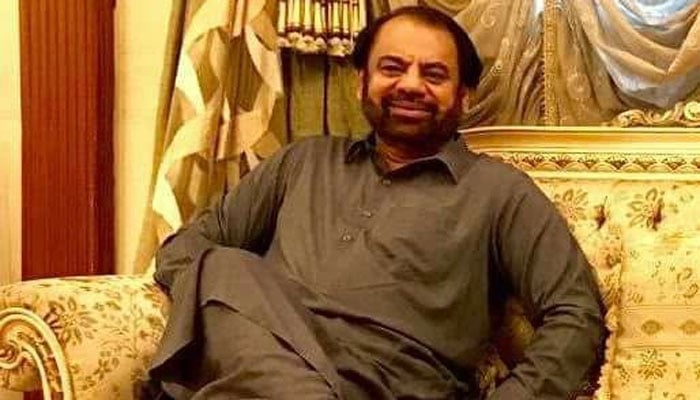
    Former Sindh Assembly member Ghulam Rasool Unar has accused his former wife of allegedly deceiving him through artificial intelligence-generated images. The case was heard by the Additional District and Sessions Court South in Karachi. During the hearing, the former MPA’s ex-wife opposed the petition filed by Unar. Her lawyer rejected several claims made in the petition. He said the former MPA’s claim that he had established contact with the woman through social media was not correct. The lawyer also told the court that the applicant had accepted certain conditions before the marriage. He said these conditions were acknowledged through an affidavit signed before the couple’s marriage. The dispute relates to allegations about photographs allegedly shared before the marriage. A few days earlier, Ghulam Rasool Unar had approached the court with his allegations. In his petition, he claimed that he had communicated with the woman through social media before their marriage. According to the former MPA, photographs were shared with him during their communication. He claimed that the woman appeared different in those photographs. Unar alleged that he saw his former wife in person for the first time after the marriage. He claimed that her appearance was completely different from the photographs he had received before the marriage. The former lawmaker alleged that the photographs had been manipulated or generated using artificial intelligence. He said the difference between the images and the woman’s actual appearance led him to distance himself from her. Unar further told the court that he stopped maintaining contact with the woman after seeing her in person. He also stated in his petition that he divorced her on August 9. The divorce followed the dispute over the alleged differences between the photographs and her actual appearance, according to his account. The former wife’s lawyer, however, disputed the allegations. The defence maintained that the claims made by the former MPA should not be accepted without proper legal examination. The court proceedings have brought attention to the growing legal questions surrounding AI-generated and digitally manipulated images. Such technology can create highly realistic photographs and has raised concerns about identity, consent and online deception. The case is still being heard. The allegations made by the former MPA have not been established by the court, while his former wife has challenged his claims through her legal counsel.

  • | |

    FIFA pushes ahead with controversial commercial investment plan despite opposition from UEFA and Concacaf

    FIFA has insisted that “nobody is selling football” whilst reaffirming its intention to proceed with a plan to sell minority stakes in its commercial operations to private investors, despite a fierce backlash from major regional governing bodies. UEFA voted to boycott future World Cups if the initiative moves forward, whilst Concacaf confirmed its 41 member associations also rejected the proposal put forward by FIFA president Gianni Infantino. Under the proposal, FIFA intends to establish a new commercial subsidiary, FIFA Forward Enterprise (FFE), to manage the commercial rights of major tournaments including the men’s World Cup. Private equity firm Thrive Eternal, founded by venture capitalist Joshua Kushner, is expected to lead the investor group purchasing a minority stake in the new entity, which carries an initial valuation of $20 billion. To secure the necessary 106 votes from FIFA’s 211 member associations, Infantino has offered an immediate $20 million payout to federations that back the proposal before a 19 September deadline. FIFA maintains the initiative will significantly increase development funding for smaller footballing nations without compromising the sport’s governance.

  • | | |

    Israel erupts over reported US-Saudi nuclear deal …

    Israel’s opposition leaders have sharply criticized Prime Minister Benjamin Netanyahu for remaining silent over reports of a proposed civil nuclear agreement between the United States and Saudi Arabia. The reported deal has sparked concerns among Israeli politicians, who argue it could have significant security implications for the Middle East. According to Israeli media, former Defense Minister Avigdor Lieberman described the proposed agreement as a strategic threat to Israel. He argued that civil nuclear programs can eventually pave the way for military nuclear capabilities, pointing to Iran as an example. Lieberman warned that allowing Saudi Arabia to enrich uranium on its own territory would cross a major security red line and could encourage a regional nuclear arms race. Lieberman also expressed concern that nuclear facilities in Saudi Arabia could become potential targets in any future conflict involving Iran. He urged the Israeli government to actively oppose the agreement and lobby members of the US Congress to reject it, even if doing so creates disagreements with US President Donald Trump. Former Israeli Prime Minister Ehud Barak also questioned the reported agreement, noting that it reportedly does not require Saudi Arabia to normalize diplomatic relations with Israel. According to Barak, the absence of such a condition could indicate reduced trust between Netanyahu and the US administration. Meanwhile, Democratic Party leader Yair Golan blamed Netanyahu’s policies for creating conditions that made such an agreement possible. He argued that if Saudi Arabia secures a favorable nuclear cooperation deal, other countries in the Middle East may seek similar agreements with Washington, potentially reshaping the region’s strategic balance. Reports in the Israeli newspaper Haaretz suggest that Israeli officials are particularly concerned about the possibility of Saudi Arabia being allowed to enrich uranium domestically. One Israeli source reportedly said such a provision would not be viewed positively in Israel, even if it were accompanied by future normalization between Saudi Arabia and Israel. The debate follows reports published by The Wall Street Journal, which claimed that President Donald Trump has approved a framework for a civil nuclear cooperation agreement with Saudi Arabia. According to the report, the proposed agreement could run for 30 years and involve investments worth several billion dollars. It would reportedly provide Saudi Arabia with access to civilian nuclear technology for energy production, while discussions continue over whether uranium enrichment would be permitted under the deal. Although negotiations over US-Saudi nuclear cooperation have continued for years, the reported agreement remains closely watched because of its potential impact on regional security, energy cooperation, and future diplomatic relations in the Middle East.

  • | |

    Pakistan rejects Imran Khan’s sons’ allegation…

    The Government of Pakistan has categorically rejected allegations by the sons of former Prime Minister Imran Khan that he has been kept under a seven-month communications blackout and denied access to his family, lawyers and doctors, terming the claims “unsubstantiated” and contrary to official prison records. In a detailed response, the government said documented records showed that Imran Khan had continued to receive visitors, legal access and medical care during his imprisonment, rejecting what it described as an attempt to create an international controversy without evidence. According to the government, since the beginning of his conviction, prison records show 198 meetings involving more than 900 visitors, including family members, legal representatives and political associates. It said Khan was also allowed a weekly meeting with his wife, with the latest meeting taking place on 4 August 2026, the same day his sons made allegations of a communications blackout during an appearance on CNN. The government said prison authorities maintain records of approved visits and communications, including WhatsApp and landline calls with family members in Pakistan and abroad. It added that Khan’s last call with his son was recorded on 21 March 2026. The statement said any temporary restrictions were imposed under Pakistan Prison Rules, court orders and security requirements applicable to high-profile prisoners, particularly due to political activities outside the prison. “There is no prohibition on access; it is regulated under the law,” the government said, adding that prison meetings cannot be used as unrestricted political communication channels. Rejecting claims regarding medical treatment, the government said Imran Khan had received regular medical examinations by specialist teams and medical boards from institutions including the Pakistan Institute of Medical Sciences (PIMS), Shifa International Hospital, Shaukat Khanum Memorial Hospital and Al-Shifa Trust Eye Hospital. The government said Khan underwent treatment for a retinal condition, including five intravitreal anti-VEGF injections, specialist examinations and retinal imaging. It added that his latest specialist assessment was carried out in July 2026, with further medication and follow-up care prescribed. According to the official statement, medical records describe Khan as “oriented and stable”, with no reported acute or unmanaged deterioration. The government said disclosure of medical reports remained subject to legal procedures, patient confidentiality and ongoing proceedings before the Supreme Court of Pakistan. Addressing the issue of Khan’s sons’ travel to Pakistan, the government said the matter involved separate processes relating to NICOP and visa requirements. It stated that overseas Pakistanis holding a valid NICOP are eligible for visa-free entry and rejected what it called an attempt to present an administrative matter as political victimisation. The statement also detailed the facilities provided to Imran Khan in prison, saying he was being kept in a separate compound with accommodation and amenities exceeding minimum requirements for prisoners in the same category. The government maintained that Imran Khan was being treated according to constitutional guarantees, prison laws and court directives, while insisting that no individual was entitled to a separate legal framework or exemption from security regulations.

  • | |

    Climate authority summoned again as questions grow…

    Islamabad: The Pakistan Climate Change Authority has been called back before a Senate committee only days after Chairperson Sherry Rehman strongly questioned why a new authority was operating alongside the Climate Change Ministry, asked what new work it was actually doing and raised concerns over staff costs, duplication and the use of public money. The fresh meeting will again focus almost entirely on the authority, its work, projects, programmes and progress. The quick return of the issue to the committee has increased pressure on the authority to clearly explain why it exists and what results it has produced that the Ministry of Climate Change and Environmental Coordination could not already deliver. At the previous meeting, Sherry Rehman repeatedly asked officials what work the authority was doing that the ministry was not already responsible for. She questioned whether the government had effectively created a parallel structure carrying out the same work on climate mitigation, adaptation, coordination and policy implementation. Rehman said the presentation before the committee did not show a clear new role for the authority. She also questioned why another institution was being created at a time when the ministry itself was facing shrinking development budgets. One of the strongest moments came when the committee discussed the authority’s staffing and expenditure. Rehman referred to a sanctioned strength of 24 positions and said employee related expenditure had already reached around Rs 80 million according to the presentation placed before the committee. She questioned why these costs were being incurred when she could not see a clear difference between the work of the authority and the ministry. She warned officials not to treat the meeting as a routine presentation exercise and demanded direct answers about public spending and actual results. Rehman also questioned whether creating the authority had brought new climate experts into government. Members asked whether the purpose was to recruit technocrats who could not otherwise be brought into the ministry. However, Rehman said the presentation appeared to show many of the same officials who had already worked inside government departments. She described the situation as a reshuffling of bureaucracy rather than the creation of a new technical institution. She said fragmentation was already a major government problem, with different organisations working separately on connected climate and disaster issues. According to her argument, creating another body without a clearly different mandate could increase costs while making responsibility more confusing. Rehman also questioned why the authority had been activated years after the law creating it first appeared. She said the law allowed the authority to exist but argued that this did not necessarily mean the government was forced to operationalise it. She said earlier governments had discussed removing such overlapping structures instead. During the exchange, she said she had opposed operationalising the authority while serving as minister because she feared it would create duplication. She told the committee that the result now appeared close to what she had warned about: officials were moving between the ministry and the authority instead of creating a completely new technical team. The authority defended its role. Dr Muhammad Rafiq told the committee that the authority was originally designed to provide technical support to the ministry. He acknowledged that more explanation was needed regarding what the authority was delivering against its original responsibilities. He suggested that the ministry and authority should be given an opportunity to return with a clearer presentation explaining what results they expected to achieve and what the authority could do that the ministry could not. The committee was told that the authority was still incomplete. Officials said a permanent chairperson was still being appointed and that only three members were working at the authority with a limited number of staff against the total positions planned. The authority also presented one of its strongest arguments in defence of its performance. An authority member told the committee that it had become Pakistan’s first public sector organisation to qualify as a delivery partner with the Green Climate Fund through the relevant mechanism. The official said this had been achieved by only three members and without technical assistance. He argued that this status could help the authority develop technical proposals and bring more climate finance into Pakistan. Rehman was not convinced that this achievement alone justified a separate authority. She argued that Green Climate Fund financing had already been coming to Pakistan through government structures and questioned why a completely new authority was needed when a climate finance office could operate within the ministry. She again asked why project development and technical hiring could not be handled directly by the ministry. Her central question remained the same throughout the discussion: what exactly could the new authority do that the ministry could not already do? The ministry told the committee that it had a supervisory and controlling role over the authority and that the authority’s budget passed through the ministry. However, Rehman continued to question how effective that control was if the authority could hire staff and exercise statutory powers separately. She asked officials to explain how rotating officials into a separate authority would make climate work more efficient when the ministry itself was losing development resources. Professor Dr Zahoor Ahmed Bazai, who identified himself as an unpaid member nominated to the authority and as a climate change academic, defended the institution. He told the committee that the authority was included in the climate law and that members had been nominated through the formal process. He argued that the authority was intended to provide expertise and serve an advisory role. Rehman said her criticism was not directed personally at individual members. She said the bigger problem was duplication between institutions and the growing number of attached bodies dealing with similar climate matters. The committee chairperson was also critical of the presentation the authority gave. Rehman said the presentation was not strong enough to be used by Pakistan at an international climate forum and described it as outdated in style. She said that if the authority wanted to demonstrate its value and

  • |

    Oil prices slide as US-Iran tensions ease

    Global oil prices declined by about 1% on Tuesday as investors assessed the possibility of a diplomatic breakthrough between the United States and Iran. Brent crude futures fell by 54 cents, or 0.6%, to $87.82 a barrel. US West Texas Intermediate crude dropped 66 cents, or 0.8%, to $81.95 a barrel. Both benchmarks had fallen by around 1% earlier in the session. They reached their lowest levels in more than a week. The decline came after US President Donald Trump said Washington was engaged in positive talks with Iran. He also indicated that a settlement could be possible. However, Trump warned that US strikes could resume if negotiations fail. Iran has also indicated that it would respond to further attacks. The possibility of diplomatic progress has reduced some concerns about disruptions to oil supplies from the Middle East. Analysts said the market remained highly uncertain. Any breakdown in negotiations could quickly push oil prices higher. Concerns about attacks by Yemen-based Houthi fighters have also influenced the market. Officials in Yemen have warned that the Houthis could seek to disrupt shipping through the Bab el-Mandeb Strait. The waterway is an important route for international energy shipments. Market analysts remain uncertain about whether the Houthis have the ability to impose a complete blockade. However, shipping activity in the Red Sea and nearby waters has already declined significantly. The Strait of Hormuz is another major concern for energy markets. It is a key route for global oil shipments. Recent data showed that oil and refined product exports through the strait had dropped sharply. Net exports averaged around 2.9 million barrels per day in the week ending July 24. The figure was nearly 5.9 million barrels per day during the previous week. The lower shipping volumes have added to concerns about global energy supplies. However, analysts said weaker demand was also preventing oil prices from rising further. Demand in Asia has been particularly affected. Slower consumption could reduce pressure on the global oil market. Investors are also watching US energy inventory data. A preliminary market survey indicated that US crude oil stocks probably declined last week. Gasoline inventories were also expected to fall. Distillate stocks, which include diesel and heating oil, were estimated to have increased. The market is now closely following developments in US-Iran talks. A successful diplomatic agreement could reduce fears about supply disruptions and support the normal flow of energy shipments. A breakdown in negotiations, however, could revive concerns over attacks and shipping disruptions.

Leave a Reply

Your email address will not be published. Required fields are marked *