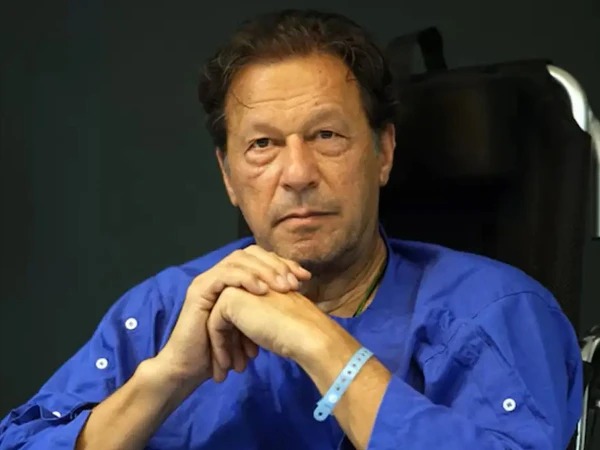
maryam hits back
| |

Maryam hits back at Bilawal with video proof

Punjab Senior Minister Maryam Aurangzeb has responded to criticism by Pakistan Peoples Party (PPP) Chairman Bilawal Bhutto Zardari by releasing video footage showcasing the condition of roads, streets, and sanitation in several cities across Punjab.

The response followed Bilawal’s address at an election rally in Azad Jammu and Kashmir (AJK), where he questioned the state of development and municipal services in different parts of Punjab. During his speech, Bilawal raised concerns about the condition of cities beyond Lahore and asked whether residents of other districts were receiving the same level of attention and development.

Soon after the speech, Maryam Aurangzeb shared a series of videos on social media. The footage focused on the same cities mentioned by Bilawal. According to her, the videos were intended to present the actual situation on the ground and respond directly to the questions raised during the rally.

The videos highlighted roads, streets, and cleanliness operations in different districts. They showed paved roads, cleaned streets, and sanitation activities carried out by local authorities. Maryam Aurangzeb maintained that the footage reflected the provincial government’s ongoing efforts to improve infrastructure and public services across Punjab.

She gave special attention to Vehari and Kasur, two districts specifically mentioned by Bilawal in his speech. To answer his criticism, she shared separate videos from both cities. The footage displayed roads, residential streets, and cleanliness arrangements, which she described as evidence of the government’s development work.

Maryam Aurangzeb said the videos served as visual proof of the progress made in Punjab. She maintained that the provincial government was working to improve civic facilities in both major cities and smaller districts, rather than focusing only on Lahore.

https://x.com/i/status/2079953668946976948
Similar Posts

  • |

    North Korea battles heatwave with dog soup

    North Korea is highlighting traditional foods, health advice and leisure activities as an intense heatwave sweeps across the Korean Peninsula. State media reported that temperatures in the country reached 36.7°C, the highest recorded since modern weather observations began. The extreme heat has also brought a series of unusually warm nights. With the hottest period of summer underway, North Korean media has focused heavily on ways for people to stay cool and maintain their health. One of the recommendations receiving particular attention is dog-meat soup. State media described the dish as a traditional summer food and promoted a long-standing belief that it can help people cope with extreme heat. Other foods recommended by state media include watermelon, cucumbers, mung beans, fish porridge and red-bean porridge. Chicken soup prepared with ginseng, sticky rice and dates has also been promoted as a popular summer meal. Health programmes on North Korean television have urged people to remain hydrated and take precautions while swimming or exercising outdoors. The country has not released figures on deaths linked to the current heatwave. South Korea, meanwhile, has reported more than 20 heat-related deaths. North Korean state media has also used the extreme weather to highlight leader Kim Jong Un’s image as a leader who shares difficult conditions with ordinary citizens. A recent report recalled a 2013 visit by Kim to a construction site during hot weather. The report said his clothes became soaked with sweat during the inspection. According to the account, Kim insisted that important work for the people should continue despite the heat. State media also highlighted other past inspections in difficult weather conditions. These included a trip through mountainous terrain during heavy rain and a visit to a seafood factory where temperatures were reportedly around 39°C. There has been no detailed report on Kim’s activities during the current heatwave. Meanwhile, state television has shown large crowds visiting beaches, swimming pools and water parks to escape the extreme temperatures. Thousands of people have reportedly visited the Wonsan Kalma Coastal Tourist Zone, one of Kim’s major tourism projects on the country’s eastern coast.

  • | |

    Pakistan’s military tightens grip on Islamis…

    Munir’s family background feeds into this shift as well. He is the son of an imam and considers himself a devout, conservative Muslim, and religious identity remains deeply woven into Pakistan’s state institutions. Even so, he has pushed the country toward international engagement through cryptocurrency partnerships, foreign investment deals, a mediating role in the conflict between the United States and Iran, and a mutual defence pact with Saudi Arabia. Data shared with a foreign news agency by the Armed Conflict Location and Event Data Project, a group that tracks conflict incidents worldwide, shows the scale of the shift. Pakistan averaged more than seven blasphemy related riots or attacks annually between 2021 and 2024, but recorded only one such incident over the past twelve months. Economic pressure appears to have played a significant role in prompting the crackdown. Two Pakistani government sources said officials grew alarmed during the summer of 2025 that rising hostility from fundamentalist groups toward France and other European countries threatened to jeopardize a European Union duty waiver covering Pakistani exports. Nearly a third of Pakistan’s total exports go to the EU, and losing that preferential access could have dealt a severe blow to the national economy. Neither the European Commission nor Pakistan’s commerce ministry responded to requests for comment on the matter. Washington has added its own pressure over religious freedom concerns. The US Commission on International Religious Freedom, a government watchdog, recommended last year that Pakistan be placed back on a list of countries of particular concern due to its blasphemy laws, a designation Islamabad has firmly rejected. Analyst Abdul Basit of Singapore’s S. Rajaratnam School of International Studies said worsening insurgent violence in Balochistan and Khyber Pakhtunkhwa, Pakistan’s two most mineral rich provinces, likely added urgency to Munir’s campaign, particularly since he has pitched foreign investment in the country’s mining sector to American officials over the past year. Basit noted that religious groups have lost favor within the state’s priorities, though he cautioned that the militias driving these regional insurgencies are not formally tied to the newly banned Islamist organizations, even if both draw recruits from the same pool of young, radicalized men. Elizabeth Threlkeld, who directs the Stimson Center’s South Asia program, said the open question going forward is whether Pakistan can sustain this level of focus over time. Crackdown targets country’s largest fundamentalist movement The largest of the groups swept up in the crackdown, Tehreek e Labbaik Pakistan, built its identity around the slogan “Death to blasphemers” before authorities banned it late last year. Many of its leaders now sit in jail, its mosques have been sealed shut and its financial accounts frozen. A previously undisclosed government document that laid the groundwork for the ban argued the organization had become a serious threat to Pakistan by damaging both domestic stability and the country’s standing internationally. A spokesperson for the group pointed to a statement it issued last year describing the ban as illegal and unconstitutional. The move against Tehreek e Labbaik follows earlier crackdowns on groups such as Lashkar e Taiba and Jaish e Muhammad, which Pakistan pursued under pressure from the Financial Action Task Force, the international body that monitors terrorism financing. Basit linked the newest crackdown to a period of internal reflection within Pakistan over its historical backing of the Afghan Taliban, whom Islamabad now blames for stoking Islamist insurgencies against the Pakistani state from across the border. The Taliban government in Kabul has dismissed that accusation as baseless, and a spokesperson for its foreign ministry declined to comment further, describing Pakistan’s crackdown as an internal matter. For Pakistan’s Christian, Shia and Ahmadi communities, the change in atmosphere has been dramatic. In the past, suspects in blasphemy related killings, including police officers, were sometimes greeted with rose petals or celebratory receptions, and individuals accused of burning churches or minority mosques often received public praise. Blasphemy remains a capital offense under Pakistani law, and even a rumor of an accusation has historically been enough to spark riots or lynchings. Human rights organizations say victims’ families have rarely obtained justice, since judges and lawyers have often been too frightened to take on such cases. Officer Malik said everyone who confronted the crowd during last month’s incident in Karachi felt genuine fear. The Christian family targeted that day was eventually moved to safety, and an initial investigation has since found the accusations against them to be false. Group’s military links trace back a decade Tehreek e Labbaik formed in 2015 while its founder was imprisoned for shooting and killing a Pakistani provincial governor in 2011 over his support for a Christian woman accused of blasphemy. That gunman, a former police bodyguard, was later convicted and executed months after the group’s founding. Analysts have long suspected the group’s creation received at least tacit support from Pakistan’s military establishment, including its intelligence services, as a tool to keep civilian governments and mainstream political parties in check. Following violent riots led by the group in 2017, then army chief General Qamar Javed Bajwa referred to its protesters as the country’s own people. Pakistan’s Supreme Court later ordered the military and intelligence agencies to stay out of politics but stopped short of directly tying them to the organization. Analysts and former officials say the effects of years of tolerance for the group will not disappear simply because of a ban, and that the shock felt by its supporters could still trigger backlash. Ihsan Ghani, who served as Pakistan’s counter terrorism chief during the 2017 riots, said he worries the group could resurface at full strength if its usefulness to the state changes again. He compared decades of state backed nurturing of the movement to something that cannot simply be switched on and off at will. Within Pakistan’s minority communities, the sudden shift still feels fragile. One of the Christian women rescued during last month’s incident in Karachi said she and her family are now physically safe, but admitted the fear has not fully faded.

  • | | |

    Friendship turns into betrayal in Rs. 36 million K…

    Karachi police have arrested a man accused of stealing Rs. 36 million in cash from his friend’s house, successfully recovering the entire amount during a targeted operation. According to District West Police, the suspect had hidden the stolen money beneath a pile of sand and gravel at his home. Police spokespersons said the burglary was reported by complainant Fayaz Khan, a mobile phone trader. At the time of the incident, Khan was at work while his family had traveled to their hometown, leaving the house unoccupied. The suspect allegedly took advantage of the situation and broke into the residence, making off with a large amount of cash. Following the report, investigators collected evidence from the crime scene and launched an inquiry. During the investigation, police received confidential information that led them to the complainant’s close friend, identified as Zeeshan. After questioning, the suspect allegedly confessed to his involvement in the burglary. Based on the suspect’s disclosure, police conducted a search of his residence. During the operation, officers recovered the full Rs. 36 million in stolen cash, which had been concealed beneath sand and gravel in an apparent attempt to avoid detection. The successful recovery brought the investigation to a significant breakthrough. According to police, the recovered money has been taken into custody as evidence and will be returned to its rightful owner after the completion of legal formalities. Authorities described the operation as the result of timely investigation, evidence collection, and intelligence-based policing. The arrested suspect has been handed over to the investigation wing for further questioning. Police are now examining whether anyone else assisted in planning or carrying out the burglary. Investigators are also trying to determine how the suspect obtained detailed knowledge of the victim’s home and the cash stored inside. Police have advised residents to avoid keeping large amounts of cash at home whenever possible and to strengthen home security measures, especially when houses are left vacant. They also urged citizens to be cautious about sharing personal or financial information, even with close acquaintances. The case serves as a reminder that crimes can sometimes involve people known to the victim. Authorities say the investigation remains ongoing, and further legal action will be taken based on the findings.

  • | |

    Kris Jenner remembers late mom MJ on her first hea…

    Kris Jenner is honoring the memory of her beloved mother, Mary Jo “MJ” Campbell, with an emotional tribute on what would have been her 92nd birthday. Just days after MJ’s passing on July 16, the Kardashian-Jenner matriarch took to Instagram to celebrate her mother’s life, expressing how deeply she misses the woman who shaped her family’s legacy. (people.com⁠) Sharing a collection of cherished family photos spanning several decades, Kris reflected on the irreplaceable role her mother played in her life. The heartfelt post featured smiling moments with children and grandchildren, capturing MJ’s warmth, kindness, and unwavering love for her family. “Happy Heavenly Birthday to my beautiful mommy. Today you would have been 92. I miss you every single day. I love you more than words can say,” Kris wrote in part. She went on to thank her mother for the countless lessons she taught her, from strength and resilience to unconditional love and generosity. (people.com⁠) Mary Jo Campbell, affectionately known as “MJ,” was more than just the Kardashian-Jenner family matriarch. She became a familiar and much-loved face to millions of viewers through Keeping Up with the Kardashians and later The Kardashians. Fans admired her gentle personality, quick wit, and the close relationships she shared with Kris, Kim Kardashian, Kourtney Kardashian, Khloé Kardashian, Rob Kardashian, Kendall Jenner, Kylie Jenner, and her great-grandchildren. (people.com⁠) Following MJ’s death, members of the Kardashian-Jenner family have continued to share touching tributes celebrating her remarkable life. Kim Kardashian recently posted never-before-seen family photos while revealing that sorting through her grandmother’s belongings had helped her learn even more about the woman she admired. She ended her tribute by writing, “I miss you like crazy,” highlighting the profound impact MJ had on the entire family. (people.com⁠) For Kris, her mother was a constant source of wisdom, encouragement, and unconditional support. Throughout the years, she often credited MJ with teaching her the values that guided both her family and her successful career. Their close bond was evident on screen and off, making her loss especially heartbreaking. Although this birthday was the first the family celebrated without MJ physically by their side, Kris’s emotional message made it clear that her mother’s love and influence remain deeply rooted in their lives. As the Kardashian-Jenner family continues to grieve, they are also celebrating a remarkable woman whose legacy of compassion, strength, and devotion will continue to inspire generations. Through heartfelt memories and treasured photographs, Kris Jenner ensured that her mother’s first heavenly birthday was not only a day of remembrance but also a celebration of a life filled with love, family, and lasting impact.

  • | |

    Govt raises education bar for LG polls, sets 14 ye…

    ISLAMABAD: The government has introduced minimum educational qualifications for candidates contesting local government elections, setting a 14-year education requirement for chairmen and 12 years for councillors. According to a notification issued by the Ministry of Local Government & Rural Development, candidates seeking to contest for chairman must have at least 14 years of education, equivalent to a BA/BSc degree, while councillor candidates must possess a minimum of 12 years of education, equivalent to FA/FSc. The notification, dated 20 August 2026, requires candidates to submit attested copies of their educational certificates or degrees along with their nomination papers as proof of eligibility. It further states that candidates providing false information or concealing facts may have their candidature rejected at any stage, while legal action may also be initiated against them. Officials and sources familiar with the development described the decision as a significant move toward promoting merit, transparency and greater participation of educated youth in local politics. Supporters of the measure said it could help reduce the influence of dynastic politics, feudal interests and nepotism by creating greater opportunities for candidates from ordinary households. The initiative is also being viewed as an attempt to encourage educated young people to enter public service and play a greater role in local governance and community development. The Local Government Department, Islamabad issued the notification on 18 August 2026.

  • |

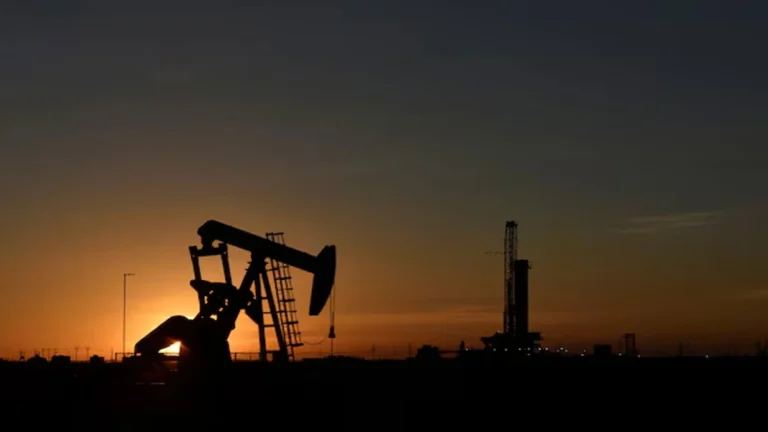
    Petrol prices may bring relief in two days if global oil rates stay stable

    LAHORE: Federal Petroleum Minister Ali Pervaiz Malik has indicated that consumers could receive some relief in petroleum prices within the next two days if international crude oil rates remain stable, while acknowledging that elevated fuel costs continue to place pressure on households and the wider economy. Speaking in Lahore, the petroleum minister said the government was closely monitoring developments in the international oil market and would take the prevailing global prices into account during the next petroleum price review. Malik explained that petroleum prices in Pakistan are linked to international market trends and are calculated on the basis of a seven-day average. He said the Oil and Gas Regulatory Authority (OGRA) is responsible for determining the prices under the existing mechanism. He added that the movement of global oil prices during the next couple of days would be particularly important in determining whether consumers could receive positive news in the upcoming review. Government averts fuel supply crisis The minister said Pakistan had managed to maintain uninterrupted supplies of petroleum products despite severe pressure created by regional tensions and volatility in international energy markets. According to Malik, Prime Minister Shehbaz Sharif and his team took measures on both the economic and diplomatic fronts to ensure that the country did not experience a fuel shortage. He said the government had continued supplying petroleum products across the country even during a period when uncertainty in the region was creating serious risks for energy-importing nations. “There was no shortage of petroleum products in Pakistan during the tension,” Malik said, stressing that maintaining fuel supplies remained one of the government’s key priorities. He acknowledged, however, that preventing a shortage did not eliminate the financial burden caused by high international oil prices. International oil market remains a major concern Malik said the recent regional conflict created extraordinary volatility in global energy markets. He pointed to sharp increases in crude oil, petrol and diesel prices during the period of heightened tensions. He said crude oil prices had at one stage climbed as high as $170 per barrel, while diesel prices reached around $280 and petrol prices also touched $170. The minister further referred to periods when market expectations pointed towards even more dramatic increases, with petrol and diesel prices moving towards levels of around $500. Such volatility, he said, demonstrated the difficulties faced by countries that rely heavily on imported energy to meet domestic requirements. Pakistan, being an energy-importing country, remains particularly vulnerable to sudden increases in international oil prices because changes in global rates can quickly affect domestic fuel prices, transportation expenses and industrial costs. Expensive fuel putting pressure on people The petroleum minister conceded that high fuel prices are creating difficulties for ordinary citizens and businesses. He said an increase in petroleum prices does not remain confined to fuel stations, as higher transportation and energy costs eventually affect the prices of goods and services throughout the economy. According to Malik, expensive petroleum products increase the cost of moving agricultural produce, industrial raw materials and finished goods, thereby adding to inflationary pressure. “The people are suffering” because petroleum products are expensive, he said, while maintaining that the government was making efforts to provide relief within its available financial capacity. Petroleum levy collection exceeds target Malik also disclosed that the government collected around Rs1,900 billion through the petroleum levy during the previous year, exceeding the official target of Rs1,700 billion. The collection represents an important source of government revenue, but the minister acknowledged the broader economic implications of relying on petroleum-related revenues while consumers are already facing high fuel costs. He said the government had to balance revenue requirements with the need to protect consumers from excessive increases in petroleum prices. Prices cut when conditions allowed The minister said the government reduced petroleum prices whenever international market conditions and other relevant factors created room for downward revisions. He said Prime Minister Shehbaz Sharif had ordered reductions when an agreement was reached and circumstances permitted the government to pass on the benefit to consumers. Malik said the administration was attempting to manage fuel prices within the limits imposed by international markets and domestic economic conditions. He also recalled the prime minister’s commitment to introducing greater transparency in the petroleum pricing mechanism. The minister said the government had been required to make difficult decisions as part of broader efforts to stabilise the economy and place Pakistan on a sustainable development path. Heavy reliance on imported energy questioned Malik also raised concerns over Pakistan’s longstanding dependence on imported energy. He questioned why the country had continued relying on overseas energy supplies for decades despite having significant potential for developing domestic oil and gas resources. The minister said Pakistan obtains around 90% of its energy requirements from foreign sources, leaving the economy exposed to fluctuations in global energy prices and geopolitical developments. He argued that reducing this dependence should be treated as a long-term national priority. According to Malik, Pakistan has promising gas resources in areas such as Waziristan and Balochistan, and greater efforts are required to explore, develop and utilise domestic reserves. He said increasing local production could eventually reduce pressure on the country’s import bill and provide greater protection against international price shocks. Focus shifts towards domestic energy development The minister said Pakistan could not continue responding to every international energy crisis after it had already occurred. Instead, he stressed the need for long-term investment in exploration, infrastructure and domestic energy production. He said the government wants to move the country away from a cycle in which international price increases immediately translate into domestic economic difficulties. Malik described development of local energy resources as an important component of Pakistan’s broader economic strategy. He said the government was working towards an environment in which energy availability could support industrial expansion, investment and economic growth. Major energy infrastructure initiative planned Malik also referred to a new infrastructure initiative, saying the prime minister and the field marshal had assigned a major internationally recognised company to undertake energy infrastructure work within a

Leave a Reply

Your email address will not be published. Required fields are marked *