air india introduce
|

Air India to introduce mandatory drug testing for all Pilots


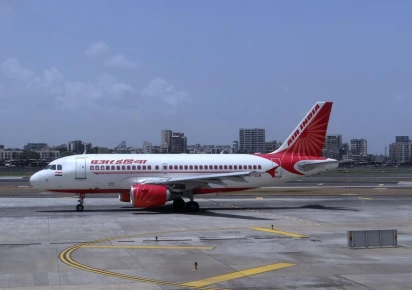
Air India is set to introduce mandatory substance testing for all its pilots from Thursday, going beyond the drug-screening requirements currently imposed by aviation regulators. The decision comes days after the captain of an Air India flight involved in a serious mid-air incident reportedly tested positive for marijuana, raising fresh concerns about flight safety and crew fitness.

According to an internal memo circulated by the airline, the expanded testing programme will check pilots for substances and medications prohibited under aviation regulations. The screenings will be carried out at several locations, including the airline’s training academy in Gurugram, briefing centres and offices, as well as other facilities designated according to pilots’ home bases.

Pilots working for Air India Express, the airline’s budget subsidiary, will also be included in the new testing programme.

Air India said in the memo that although existing regulations already require airlines to conduct random testing on at least 10% of their flight crew for psychoactive substances every year, the company believes additional measures are necessary. The airline said the broader testing initiative was being introduced to strengthen safety standards and reassure passengers, employees and other stakeholders.

The announcement follows an investigation into an incident involving an Air India Airbus A320neo travelling from Phuket, Thailand, to New Delhi on August 4. During the flight, the aircraft unexpectedly lost around 300 feet, or approximately 91 metres, of altitude while cruising.

According to a source familiar with the matter, the aircraft’s captain tested positive for marijuana during a confirmatory drug test. The incident has prompted increased scrutiny of pilot health and safety procedures at the airline.

The flight was carrying 137 passengers and eight crew members when it experienced what authorities described as a “momentary altitude variation” while flying over Odisha in eastern India. Although the aircraft subsequently continued its journey and landed safely in Delhi, the sudden change in altitude reportedly resulted in injuries to 13 passengers and four crew members.

Indian aviation authorities have launched an investigation into the incident to determine what caused the sudden altitude change and whether any operational or human factors were involved.

Earlier, Reuters reported that India’s Ministry of Civil Aviation had summoned Air India Chief Executive Officer Campbell Wilson following the incident. A source familiar with the matter said the summons was related to the investigation and the airline’s handling of the situation.

Air India and the Ministry of Civil Aviation did not immediately respond to requests for comment regarding the summons or the investigation. Wilson, however, told news channels that the airline had provided the ministry with an update on the progress of the investigation.

The introduction of mandatory testing represents a significant expansion of Air India’s internal safety measures. By testing its entire pilot workforce rather than relying solely on the minimum regulatory requirement for random checks, the airline aims to strengthen oversight of substances that could potentially affect pilots’ ability to perform their duties.

The move also comes at a sensitive time for Air India, as the airline faces continued scrutiny over operational safety following several recent incidents. Aviation authorities and industry observers are expected to closely monitor the findings of the investigation into the Phuket-to-Delhi flight.

Air India’s expanded testing programme is intended to ensure that pilots remain fit to operate aircraft and comply fully with aviation safety regulations. The airline said the initiative would reinforce its commitment to maintaining high safety standards and restoring passenger confidence as investigations into the August 4 incident continue.

Similar Posts

  • | | |

    Nearly 600 Israeli settlers enter Al-Aqsa mosque c…

    Nearly 600 Israeli settlers entered the Al-Aqsa Mosque compound in occupied East Jerusalem on Thursday under Israeli police protection, according to a local official cited by Anadolu Agency. An official from Jerusalem’s Islamic Endowments Department said at least 584 settlers entered the compound during the morning period through the Moroccan Gate. The official added that additional groups were expected to enter after noon prayers. Eyewitnesses reported that some of the incursions involved prayers, religious rituals and dancing. Such activities have become a source of heightened tension because of disputes surrounding the longstanding arrangements governing access and worship at the holy site. The latest incident occurred on the first day of a new month in the Hebrew calendar, a period when Israeli settler visits to the compound have traditionally increased. According to the report, Israel began allowing such entries into the compound in 2003. Since then, visits have taken place regularly, except on Fridays and Saturdays, with the number of participants increasing over the years. The Al-Aqsa Mosque compound is one of the most sensitive religious and political sites in Jerusalem. It is Islam’s third-holiest site and holds profound religious significance for Muslims around the world. The site is also known to Jews as the Temple Mount, who associate the area with the historical location of two ancient Jewish temples. Competing religious and political claims over the site have contributed to repeated tensions in Jerusalem. East Jerusalem, where Al-Aqsa Mosque is located, was occupied by Israel during the 1967 Arab-Israeli War. Israel later annexed the entire city in 1980, a move that has not been recognised by the international community. The latest entry of hundreds of Israeli settlers under police protection is likely to draw further attention amid the longstanding tensions surrounding access to and activities at the holy compound. The incident underscores the continuing sensitivity of Al-Aqsa Mosque and its central role in the broader Israeli-Palestinian conflict.

  • |

    Hasina vows Bangladesh return despite death sentence

    Former Bangladesh prime minister Sheikh Hasina has announced that she intends to return to Bangladesh from self-imposed exile in India in December, despite facing a death sentence following her conviction in a crimes against humanity case. Speaking through an audio message at an event in New Delhi marking the second anniversary of the 2024 uprising, Hasina said she was determined to return to her country regardless of the risks. She stated that serving the people remained her responsibility and that fear would not prevent her from going back. Hasina has been living in India since August 2024, when a student-led protest movement forced her from office after weeks of nationwide unrest. She was later convicted in absentia by a Bangladeshi court over allegations linked to the violent crackdown on demonstrators during the protests. She has consistently denied the charges. According to a United Nations report, nearly 1,400 people were killed during the 2024 unrest. Bangladesh has repeatedly requested Hasina’s extradition from India, but New Delhi has not handed her over. In her address, Hasina also demanded that the ban on her Awami League party be lifted and called for the release of political prisoners. She maintained that the party should be allowed to resume its political activities. Meanwhile, Bangladesh officially inaugurated the July Mass Uprising Memorial Museum in Dhaka to commemorate the 2024 protests. The museum has been established in Hasina’s former official residence and contains photographs, audio and video recordings, personal belongings of victims and historical records documenting the events of the uprising. Prime Minister Tarique Rahman inaugurated the museum alongside interim government leader and Nobel Peace Prize laureate Muhammad Yunus, whose administration took office after Hasina’s removal from power. The museum also highlights allegations of political repression during Hasina’s years in office.

  • | | | |

    Pakistan, Saudi Arabia and Türkiye sign Makkah jo…

    MAKKAH: Pakistan, Saudi Arabia and Türkiye have signed the Makkah Joint Defence Agreement, pledging to strengthen collective security and defence cooperation among the three countries. The agreement was signed on Friday during a high-level summit at Al-Safa Palace in Makkah, where Saudi Crown Prince and Prime Minister Mohammed bin Salman received Pakistani Prime Minister Shehbaz Sharif and Turkish President Recep Tayyip Erdogan. According to the agreement, the three countries reaffirmed their commitment to strengthening collective security and promoting peace, stability and security in the region and beyond. The agreement is based on the longstanding relations and shared strategic interests of Pakistan, Saudi Arabia and Türkiye. It also highlights their continued defence cooperation and commitment to closer coordination on security matters. Any attack to be treated as an attack on all three A key provision of the agreement states that an armed attack against any one of the three countries will be regarded as an attack against all three. The pact is intended to enhance collective deterrence against acts of aggression and expand cooperation across various areas of defence. The agreement also seeks to strengthen military and security coordination among the three states and build a framework for closer cooperation in the face of regional security challenges. The summit brought together the leaders at a time of heightened tensions and instability across the Middle East. Recent reporting had indicated that the three countries were preparing to deepen defence coordination through a joint pact. Prime Minister Shehbaz Sharif was accompanied by Deputy Prime Minister and Foreign Minister Ishaq Dar, Chief of Army Staff and Chief of Defence Forces Field Marshal Syed Asim Munir, and Defence Minister Khawaja Asif. The leaders also reviewed bilateral and regional matters of mutual interest and discussed ways to further strengthen cooperation. The Makkah agreement marks a significant development in defence ties among Pakistan, Saudi Arabia and Türkiye, establishing a stronger trilateral framework for collective security and defence cooperation.

  • | | |

    Pezeshkian says Iran seeks peace, not wider conflict

    Iranian President Masoud Pezeshkian has said that Iran has no intention of prolonging the current conflict or expanding it beyond its existing scope. However, he made it clear that the country will continue to defend its sovereignty, territorial integrity and national interests against any threat. Speaking at a ceremony in Tehran, the president said Iran’s policy is based on protecting its borders while avoiding any unnecessary escalation. He stressed that the country does not seek war but will not hesitate to respond if its security or independence is challenged. Pezeshkian said maintaining national security is not only the responsibility of the armed forces but also depends on the unity and solidarity of the Iranian people. He urged citizens to set aside political and social differences and work together to strengthen the country during a difficult period. The president said internal unity is one of the strongest defenses against foreign interference. According to him, divisions within society can create opportunities for outside powers to influence domestic affairs. He added that a united nation is better equipped to face political, economic and security challenges. He emphasized the need to build a strong and stable society where people enjoy confidence in national institutions and where hostile elements cannot create unrest or weaken public trust. He said Iran must focus on strengthening its social fabric to prevent enemies from exploiting internal disagreements. Pezeshkian also called for greater national cooperation to overcome current challenges. He said every segment of society has a role to play in safeguarding the country’s future and preserving stability. The Iranian president reiterated that his government remains committed to protecting the country’s borders and national interests while pursuing policies that avoid a wider regional conflict. He said Iran’s priority is to maintain security, preserve national unity and prevent conditions that could lead to further instability.

  • | | | |

    Hormuz uncertainty pushes global oil prices higher

    KARACHI: Global oil prices edged higher on Monday as uncertainty over the reopening of the Strait of Hormuz continued to unsettle energy markets. Brent crude climbed by more than 1% in Asian trading, moving above $84 a barrel, while US crude prices also posted gains of over 1%. The market remains focused on the situation surrounding the Strait of Hormuz, a critical maritime route through which a significant share of the world’s oil supplies passes. Any prolonged disruption or uncertainty over shipping through the waterway could put further pressure on global energy prices. Iran has indicated that discussions with Oman on establishing alternative shipping routes are nearing completion. However, Tehran says the United States still needs to fulfil additional conditions before arrangements concerning the waterway can move forward. With the situation still unresolved, traders are closely watching developments around the Strait, with concerns over supply disruptions continuing to influence crude prices.

  • | | | |

    Trump reveals why Secret Service changed his plane

    WASHINGTON: US President Donald Trump has confirmed that his surprise plane switch during his departure from Turkey last month was carried out on the advice of the Secret Service, amid concerns over a potential threat linked to Iran. Trump said the aircraft he had initially been expected to travel on could have faced a “greater risk,” adding that he does not trust Iran. His remarks came after reports revealed that his departure from Ankara following the NATO summit involved an elaborate security operation. According to reports, Trump publicly boarded Air Force One in front of cameras, creating the impression that he would fly out of Turkey on the presidential aircraft. However, he was later secretly transferred to a smaller C-32A military aircraft. The move was reportedly carried out using an airport catering truck to conceal his transfer. Journalists and some White House staff reportedly remained under the impression that Trump was aboard Air Force One. Reporters were also instructed to keep their window shades closed, adding to the secrecy surrounding the operation. Trump said he followed the Secret Service’s instructions when the aircraft change was made and did not challenge the security decision. The unusual operation reportedly stemmed from heightened concerns over Iranian threats against the US president. Trump’s latest comments have now confirmed key details of the previously undisclosed flight arrangement. The episode has drawn attention because of the extraordinary measures used to conceal the president’s movements. It also highlights the heightened security concerns surrounding Trump amid continuing tensions between Washington and Tehran. For a president whose movements are normally tracked closely by the media and security officials, the covert transfer from one aircraft to another remains one of the most unusual presidential travel episodes of the year.

Leave a Reply

Your email address will not be published. Required fields are marked *