iran prepares possible
|

Iran prepares for possible major war as tensions with US and Israel escalate


WASHINGTON: Iran’s hardline leadership has reportedly spent the past two months preparing for a possible major war. The preparations allegedly began after the signing of an Islamabad memorandum of understanding in mid-June.

According to the report, Iran’s Islamic Revolutionary Guard Corps (IRGC) was given greater control over the country’s regular military, while officers with experience in the Iran-Iraq War and previous domestic crackdowns were appointed to key positions.


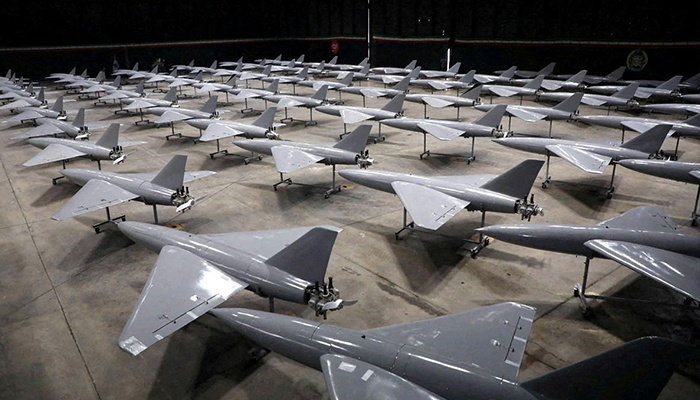
At the same time, Iran expanded its internal counterintelligence operations and accelerated the production of missiles and drones. Iranian leaders also reportedly moved quickly to strengthen their control over the Strait of Hormuz by targeting ships and expanding the potential battlefield toward the Red Sea.


US officials said Arab intelligence agencies had obtained evidence suggesting that Iran’s hardline leadership was pursuing a strategy aimed at expanding the conflict and creating greater difficulties for the United States.


The developments have reportedly caused concern among Gulf countries such as Kuwait. Iranian leaders have increasingly spoken about offensive operations against enemy territory, with the stated objective of inflicting significant damage and preventing a repeat of the attacks Iran experienced during last year’s 12-day war and the current conflict.

Mohammad Hassan Sangtarash, a defense analyst considered close to the Iranian government, said there is a widespread view in Iran that “the real war has not started yet.” He described the events so far as limited and gradual escalation intended to weaken the enemy’s capabilities before a potentially larger attack.


Israeli officials are concerned that Iran is rebuilding its infrastructure and restoring access to missile bases much faster than expected. The report claimed that Iran has successfully targeted US bases and retains enough firepower to threaten commercial shipping and energy infrastructure in the Gulf.

Iran had been pursuing a dual-track policy. While its diplomats were attempting to negotiate a peace agreement with the United States, Supreme Leader Mojtaba Khamenei was reportedly taking steps to prepare security institutions for a major confrontation that Tehran itself could potentially initiate.

Arab intelligence reports cited by the newspaper reportedly indicated that, during the period following the signing of the memorandum, the IRGC sent advisers to allied groups in Iraq, Yemen and Lebanon to help prepare for potentially intensified attacks.

The IRGC also allegedly supervised the deployment of missiles, naval weapons and drone launchers at locations overlooking the Red Sea. Officials claimed that Iranian forces provided Yemeni militants with intelligence and lists of potential targets, including Saudi ports and energy facilities, while also offering advice on avoiding Saudi retaliation.

The newspaper further reported that the IRGC had warned Gulf states that if the United States attacked Iranian energy facilities, Iran could retaliate against their energy infrastructure. Iranian officials allegedly provided Arab counterparts with detailed lists of individual potential targets.

IRGC spokesman Brigadier General Hossein Mohebbi reportedly acknowledged in a July interview with Tasnim News Agency that Iran had used the ceasefire period to strengthen its capabilities, accelerate missile production and improve missile accuracy.

Meanwhile, sources close to senior Iranian negotiators reportedly warned that the current peace talks could merely represent a temporary pause before a larger conflict. Mehdi Mohammadi, a strategic adviser to Iran’s chief negotiator, described the current stalemate as the “calm before the storm.”

In an earlier statement, Mohammadi also said that Iran still had many scores to settle with US President Donald Trump and claimed that the country was fully prepared for a major confrontation.

Similar Posts

  • | |

    Berlin Pride turns tragic as car hits crowd, 1 dea…

    BERLIN: A celebration that had drawn huge crowds to Berlin for Christopher Street Day ended in tragedy late Saturday when a vehicle drove into people near the event, killing one person and injuring at least 16 others. The incident happened shortly after 10pm local time in the Tiergarten area, near the route of the Pride celebrations. Emergency services rushed to the scene as police launched a major operation and ordered people to leave the area. According to police, the vehicle struck several people before the driver fled the scene. One person died, while 16 others were injured. Several victims were reported to be in serious or life-threatening condition, adding to the shock surrounding an event that had begun peacefully. Authorities quickly called off the remaining Christopher Street Day celebrations and urged visitors to stay away from the affected area. Police and rescue teams remained deployed around Tiergarten as investigators worked to establish exactly what happened and why. The incident also triggered an immediate search for the suspected driver. Police said they had identified a possible suspect but had not initially confirmed an arrest. German authorities were investigating the circumstances and motive behind the vehicle attack. Berlin Mayor Kai Wegner described the incident as an attack on the city’s free and cosmopolitan society, expressing sympathy for the victims and their families. He also praised emergency responders who arrived at the scene shortly after the incident. German Chancellor Friedrich Merz also condemned the incident and pledged that those responsible would face justice. The tragedy cast a dark shadow over one of Berlin’s biggest annual public celebrations. Christopher Street Day is both a major Pride gathering and a public demonstration for LGBTQ+ rights, equality and freedom. What had started as a day of colorful parades, music and crowds waving rainbow flags ended with emergency vehicles filling the streets and the celebration being abruptly abandoned. Police have urged members of the public to avoid the area while the investigation continues and to rely on official information rather than unverified reports circulating online.

  • |

    Man arrested over US Consulate bomb threat

    A man has been arrested in Halifax, Canada, after allegedly threatening to blow up the US Consulate, triggering a major security operation in the area. According to US media reports, Canadian authorities found flammable materials inside the suspect’s vehicle near the consulate. Police responded quickly to the bomb threat and evacuated several blocks surrounding the diplomatic facility as a precaution. The security operation continued for more than five hours as police and emergency teams searched the area and assessed the potential threat. Authorities later cleared the site and confirmed that there was no longer any danger to the public. Canadian police said they had taken a man into custody in connection with the incident. However, authorities have not yet filed criminal charges against him, and investigators are continuing to examine the circumstances surrounding the threat. The incident prompted heightened security measures around the US diplomatic facility and temporarily disrupted activity in the surrounding area. The security scare comes amid increased concern over attacks targeting US diplomatic facilities in Canada. US media reports that the American Consulate in Toronto has come under gunfire twice this year, although the Halifax incident has not been publicly linked to those attacks. Canadian authorities are expected to continue their investigation to determine the suspect’s motive and whether he intended to carry out an actual attack.

  • |

    Thai teen’s shooting sparks school safety review

    Thai police said a 14-year-old boy accused of carrying out a deadly shooting near Bangkok had shown an interest in firearms for up to two years and had watched violent material online. The teenager allegedly killed his grandparents at their home on Friday before shooting six people at his school and taking his own life. More than 20 others suffered injuries in the attack, which became Thailand’s deadliest mass shooting since 2022. Deputy Commissioner of Provincial Police Region 1 Atthapol Anusit told reporters that investigators had questioned 17 witnesses so far. Police also found a knife in the teenager’s school bag, along with a firearm, spent cartridge cases and a personal computer. Investigators examining the computer found social media content involving violence. Police also said the boy had used social media to learn about firearms, although they have not yet found evidence that he regularly practised shooting. A teacher had confiscated a BB gun from the boy at school last year, according to police. The teenager had lived with his grandparents for about 12 years after his parents separated. In response to the tragedy, Thailand’s Ministry of Education said it would introduce new school safety measures within three months. The plan includes mental health screening, referrals for students considered at risk, emergency response drills, stronger anti-bullying measures and tighter checks to prevent weapons and other dangerous items from entering schools. The shooting has renewed calls for stronger firearm controls in Thailand, which has one of the highest rates of civilian gun ownership in Southeast Asia.

  • |

    Germany weighs tougher rules on sick leave

    BERLIN: Germany is considering tougher rules for workers taking sick leave, but researchers warn that stricter requirements may not address the deeper reasons behind the country’s high absenteeism. German employees took an average of around 22 sick days in 2024. The figure is among the highest reported internationally. The government’s proposed changes are part of a wider effort to improve productivity. Germany is dealing with an ageing population and years of weak economic growth. Under the proposed changes, employers could require workers to provide a medical certificate from the first day of absence. Telephone-based sick notes could also be scrapped. However, researchers say the debate should focus on why workers are becoming ill rather than simply making it harder to take sick leave. Healthcare, education and social services are among the sectors reporting the highest levels of absenteeism. Workers in these fields often face heavy workloads. They also deal with staff shortages, emotional pressure and difficult working conditions. BKK data shows that women working in healthcare and social work took an average of 27 sick days in 2024. Teachers recorded around 24 days. The figures were lower in several other sectors. Workers in finance averaged about 18 days, while employees in communications recorded around 16 days. Researchers say mental health is an important part of the problem. Mental health-related cases represent a relatively small share of total sickness cases. However, they often result in much longer absences. Data from AOK shows that sick-leave days linked to mental health problems have increased by 47% since 2014. Mental health conditions are now one of the biggest causes of prolonged absence after respiratory illnesses. Experts say burnout and exhaustion can develop without reaching the level of a diagnosed mental disorder. Healthcare workers and teachers are particularly exposed to these pressures. They carry significant responsibilities while dealing with emotional and sometimes physical challenges. Teachers have reported violence and aggressive behaviour in schools. A 2024 survey found that almost half had experienced psychological or physical violence among pupils at their schools. More than one-third also reported feeling emotionally exhausted several times a week. Nursing faces similar difficulties. Germany has a shortage of healthcare workers, but studies indicate that wage growth has remained limited in some hospitals and public institutions. Researchers describe the situation as an imbalance between effort and reward. Workers face high demands but may receive relatively low pay, limited career opportunities and insufficient recognition. Studies have linked such conditions to mental health problems and long-term sickness absence. However, experts caution against blaming Germany’s absenteeism solely on workplace stress. Sick leave is affected by many factors. These include the age of the workforce, working conditions, social attitudes and differences in healthcare systems. Germany also has generous sick-pay provisions. Workers can generally receive full wages during the initial period of illness. Several other European countries, however, report even higher levels of sick leave among full-time employees. Researchers have also found little evidence of widespread abuse of sick-note rules. A study by DAK and the IGES Institute found that the sharp rise in recorded absences in 2022 was largely linked to improved electronic reporting and unusually high levels of respiratory infections and Covid-19. Sick-leave levels have since stabilised. Researchers also found no clear evidence that telephone sick notes introduced during the pandemic caused the increase. The government’s proposal has faced opposition from labour representatives. The Verdi services union has described the plan as creating a culture of distrust towards employees. Doctors have also warned that tougher certification requirements could put additional pressure on already busy medical practices. The government has defended its approach. It says employers would have the option of requiring certificates from the first day of illness while allowing companies to retain existing arrangements. The debate is therefore moving beyond the question of whether German workers take too many sick days. Researchers argue that reducing absenteeism in the long term may require better staffing, improved working conditions, stronger career prospects and greater support for workers facing emotional pressure.

  • | | |

    Viral protest turns Indian model into symbol of resistance

    Indian model and social media personality Riya Aher has become a symbol of resistance after standing in front of a police van during a student protest in Mumbai. Her action, captured on video and widely shared online, has drawn nationwide attention and sparked debate over the handling of student demonstrations in India. The incident took place on Wednesday at Shivaji Park in Mumbai’s Dadar area, where students had gathered to protest alleged irregularities in examinations. The demonstrators were demanding greater transparency in the examination process and calling for the resignation of India’s Education Minister Dharmendra Pradhan. According to Indian media reports, 27-year-old Riya Aher arrived at the protest to express solidarity with the students. As she approached the demonstration site, she noticed a police van carrying a large number of detained students. Concerned about the situation, she questioned police officers about the legal basis for the arrests and asked whether they had arrest warrants for those taken into custody. Riya said the officers did not provide a clear answer. Believing that the students were being treated unfairly, she decided to stand directly in front of the police vehicle, preventing it from moving. She later said she could not remain silent because she believed it was her responsibility as a citizen to speak out against what she considered an injustice. Her action quickly attracted the attention of other protesters and passersby. More people gathered around the police vehicle and joined the demonstration. Protesters raised slogans demanding justice for the students and called for the resignation of Education Minister Dharmendra Pradhan. According to Riya, the public resistance eventually led to the release of the detained students. While officials have not publicly commented on her claim, videos of the confrontation spread rapidly across social media platforms, where many users praised her courage and peaceful protest. Speaking about the viral video, Riya said mobile phone cameras play an important role in documenting events and ensuring accountability. She noted that although young people are often criticised for recording videos on their phones, such recordings can become valuable evidence during public demonstrations and other important incidents. Riya also criticised the government’s response to the student protests, calling the action against demonstrators a serious mistake. She repeated her demand for the education minister’s resignation and urged authorities to respect the democratic right to peaceful protest.

  • US and Saudi forces launch joint precision strikes on Iranian-backed targets in eastern Iraq

    Joint military operations between United States fighter jets and the Saudi Arabian Armed Forces targeted multiple logistics and weapons facilities belonging to Iranian-aligned armed groups across eastern Iraq, US Central Command confirmed in an official statement. The coordinated air raids were conducted in direct retaliation to more than thirty Iranian-directed aerial drone attacks launched over a seventy-two-hour period. Central Command specified that the targeted militia groups acted under the explicit direction of Iran’s Islamic Revolutionary Guard Corps to strike American troop installations and Saudi energy infrastructure. While American military officials confirmed that recent strikes against US assets were successfully defended without casualties, the Saudi Ministry of Defense cited international self-defence provisions under Article 51 of the United Nations Charter, noting that the aerial campaign directly addressed drone incursions originating from Iraqi territory against petroleum facilities in eastern Saudi Arabia and Riyadh. The joint intervention signals a notable strategic escalation for Saudi Arabia, which had previously sought to limit direct military involvement despite recurring proxy threats along its borders and maritime trade corridors. Central Command noted that Iranian-backed militias in Iraq attempted over six hundred attacks against US personnel and facilities between February and April alone, warning that failure to cease offensive operations would trigger further military action. In response to the bombings, representatives for Iraq’s Popular Mobilization Forces reported casualties and structural damage across several headquarters, condemning the strikes as a severe violation of Iraqi national sovereignty.

Leave a Reply

Your email address will not be published. Required fields are marked *