turkish vice president
|

Turkish Vice President, top officials join Pakistan Day celebration in Ankara

ANKARA: Pakistan’s 79th Independence Day was celebrated with a grand ceremony at Pakistan House in Ankara, where Türkiye’s senior leadership joined Pakistani officials, diplomats and members of the community to highlight the deep and enduring friendship between the two countries.

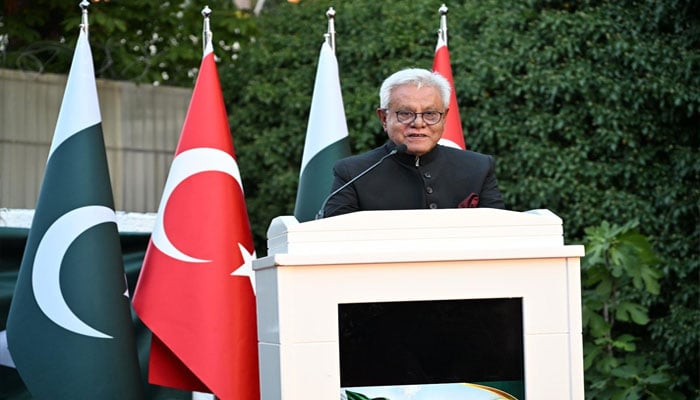
Türkiye’s Vice President Cevdet Yilmaz attended the event as chief guest, joined by senior political, military and diplomatic officials. The high-level participation underscored the importance Ankara attaches to its relationship with Islamabad and the longstanding bonds between the two nations.

Among those attending were Turkish Defence Minister Yaşar Güler, Chief of General Staff Gen Selçuk Bayraktaroğlu, Naval Forces Commander Adm Ercüment Tatlıoğlu, Land Forces Commander Gen Metin Tokel and Air Force Commander Gen Ziya Cemal Kadıoğlu.

Senior Turkish Officials

Former senior officials, members of parliament, ambassadors, diplomatic representatives, Pakistani community members and media representatives also attended the ceremony.

The event began with the recitation of the Holy Quran, followed by the national anthems of Pakistan and Türkiye.

Students from the Pakistan Embassy International Study Group School added a colourful touch to the celebrations with national songs and traditional performances. Guests warmly applauded the cultural presentation.

A documentary showcasing Pakistan’s history, cultural heritage, natural beauty, tourism potential and social and economic development was also screened.

Yilmaz: Pakistan-Türkiye ties go beyond diplomacy

Addressing the gathering, Vice President Yilmaz conveyed greetings from President Recep Tayyip Erdogan and the Turkish people to the government and people of Pakistan.

Turkish Vice President Cevdet Yilmaz

He emphasised that the relationship between Pakistan and Türkiye went far beyond conventional diplomatic ties, describing it as a unique brotherly bond rooted in shared history and mutual solidarity.

Yilmaz recalled the support shown by Muslims of the subcontinent to the Turkish people during the Turkish War of Independence, saying the historic connection continued to shape relations between the two countries.

He reaffirmed Türkiye’s commitment to expanding bilateral cooperation with Pakistan and said both countries would continue working together to promote peace and stability in the region.

The Turkish vice president also highlighted the importance of strengthening strategic cooperation and exploring new avenues for regional collaboration, including greater trilateral cooperation among Türkiye, Pakistan and Saudi Arabia.

Pakistan envoy highlights sacrifices behind independence

Pakistan’s Ambassador to Türkiye, Dr Yousaf Junaid, paid tribute to Quaid-i-Azam Muhammad Ali Jinnah and the sacrifices made during the Pakistan Movement.

He said Pakistan’s independence was achieved through extraordinary courage, perseverance, determination and sacrifice.

The ambassador urged Pakistanis to strengthen national unity and work collectively for the country’s stability, prosperity and development.

Referring to Pakistan-Türkiye relations, Junaid said the partnership was based not merely on formal diplomacy but on shared values, history, mutual trust and strong public sentiment.

He said cooperation between the two countries was expanding across defence, trade, investment, education, culture and people-to-people contacts.

Jinnah exhibition adds historic touch

The ceremony also featured a special photographic exhibition marking the 150th birth anniversary of Quaid-i-Azam Muhammad Ali Jinnah.

Exhibition Inauguration

Vice President Yilmaz, Ambassador Junaid and other dignitaries jointly inaugurated the exhibition, which highlighted Jinnah’s life, political vision, leadership and historic role in the creation of Pakistan.

The event concluded with a traditional Pakistani dinner hosted in the gardens of Pakistan House.

Turkish Leadership

Against the backdrop of Pakistan’s green and white flags and warm Turkish hospitality, the Ankara celebration became more than an Independence Day ceremony. It served as a vivid reminder of a relationship built on history, affection and mutual trust — and of the two countries’ shared ambition to take that friendship into a stronger and broader future.
Similar Posts

  • |

    US awards Lockheed up to $58.6 billion for Patriot missile production

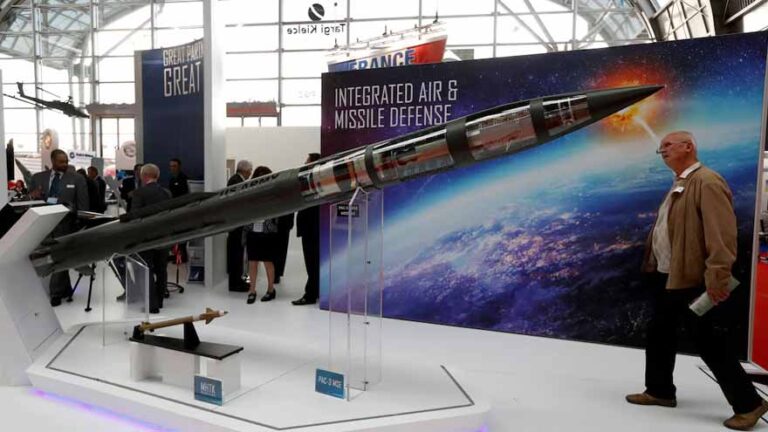
    The United States has awarded Lockheed Martin a defence contract worth up to $58.6 billion to expand production of Patriot interceptor missiles, as ongoing conflicts in the Middle East and Ukraine continue to put pressure on American weapons stockpiles. The agreement, announced by the Pentagon on Wednesday, is designed to strengthen the country’s air defence capabilities and ensure a steady supply of Patriot missiles over the coming years. The move comes after the United States supplied large quantities of military equipment to its allies while also using significant numbers of precision guided weapons during its own military operations against Iran. The new contract replaces an earlier one year agreement valued at $4.7 billion that was signed in April. It now establishes a seven year procurement framework covering the period from the 2026 to the 2032 fiscal years. According to the US Army, the longer term arrangement is expected to provide greater stability for production planning while helping manufacturers increase output to meet rising demand. The Pentagon has been urging defence companies to speed up production as global security challenges increase. Officials have been negotiating with major contractors throughout the year to secure higher manufacturing capacity for missiles and other critical military equipment. The administration of President Donald Trump has also increased pressure on defence firms to focus more heavily on fulfilling government contracts. Earlier this year, Trump signed an executive order directing officials to identify companies that were failing to meet contract obligations while continuing to reward shareholders. The administration has argued that expanding production is essential as the US seeks to replenish military inventories. Industry leaders have welcomed the government’s long term procurement strategy, saying it gives manufacturers greater confidence to plan future investments. However, they have also noted that Congress must approve the necessary funding before companies can fully expand production facilities and hire additional workers. Many of the final details surrounding Pentagon weapons contracts, including delivery schedules and production targets, are still being negotiated. The Patriot missile agreement follows a similar initiative involving RTX, the parent company of Raytheon, aimed at increasing production of Tomahawk cruise missiles. Under that plan, annual output is expected to rise dramatically from around 60 missiles to as many as 1,000 each year once production reaches full capacity. Lockheed Martin said the latest contract will support its long term investment plans and help the company significantly expand manufacturing. The company expects to triple production capacity for its PAC 3 MSE interceptor missiles by the end of 2030. It also plans to increase its workforce at its Camden, Arkansas, facility by about 50 percent, raising employment from roughly 1,200 workers to around 1,850. The defence contractor has also announced plans to invest between $8 billion and $9 billion through 2030 to modernise more than 20 facilities across the United States. The investment includes the construction of new munitions production centres in Alabama and Arkansas to support increased manufacturing. The PAC 3 MSE interceptor is one of the most advanced missiles used within the Patriot air defence system. It is designed to destroy incoming ballistic missiles, cruise missiles, and aircraft through direct impact rather than carrying an explosive warhead. The system has become an important part of air defence operations in several regions facing growing missile threats. Concerns over US missile inventories have intensified in recent months. The Washington based Center for Strategic and International Studies recently estimated that the US military has fewer than 1,000 Patriot interceptors and fewer than 250 THAAD interceptors remaining in its stockpile. Both systems have been heavily used during recent military operations in the Middle East while the United States has also continued supplying advanced air defence equipment to partners facing ongoing security challenges.

  • |

    EU to end automatic GSP+ extension from 2027, Pakistan told to submit fresh action plan

    ISLAMABAD: The European Union (EU) is set to introduce a revised mechanism for extending its Generalised Scheme of Preferences Plus (GSP+) trade facility from January 2027, under which beneficiary countries will no longer receive an automatic extension. The Commerce Ministry informed the National Assembly Standing Committee on Commerce on Wednesday that Pakistan would have to formally seek continuation of the GSP+ facility and submit an action plan covering its commitments under 32 United Nations conventions. Commerce Secretary Jawad Paul briefed the committee that the new GSP+ framework would come into force in January 2027, followed by a two-year transition period. During this period, countries benefiting from the scheme will be required to prepare and submit their respective plans, which will subsequently be assessed by the European Union. According to the secretary, the EU’s assessment of Pakistan contains both positive observations and areas of concern. Among the issues highlighted by the European bloc is the human rights situation in Pakistan, along with security and climate-related challenges. The briefing was given during a meeting of the National Assembly Standing Committee on Commerce chaired by Jawad Hanif. Members including Asad Alam Khan Niazi, Khurshid Ahmed Junejo, Shaista Pervaiz, Dr Ramesh Kumar Vankwani, Tahira Aurangzeb, Mir Amir Magsi, Dr Mirza Ikhtiar Baig and Kiran Haider attended the meeting. EU concerns discussed The committee asked the Commerce Ministry to explain the concerns raised by the European Union in its latest assessment of Pakistan and their possible implications for the country’s trade interests. Jawad Paul said the EU report had acknowledged the difficult circumstances Pakistan was facing, particularly in terms of security challenges, economic pressures and climate-related disasters, including floods. These factors, he said, had affected the country’s capacity to fully implement various commitments. He urged members of parliament to present Pakistan’s perspective during their engagements with European Parliamentarians and other EU representatives. The secretary maintained that Pakistan’s circumstances should be taken into account while evaluating the country’s performance under the GSP+ framework. He said the government needed to undertake fundamental measures to address the challenges identified by the EU while also ensuring that Pakistan’s position was effectively communicated to European stakeholders. The committee also expressed concern over the repeated absence of the Commerce Minister from its meetings and conveyed its displeasure over the matter. Tariff reforms aimed at boosting exports The meeting also reviewed the government’s tariff reforms and their impact on industrial competitiveness and exports. Committee members questioned whether exporters would be required to commit to specific export targets in return for government support. The committee chairman clarified that the measures being introduced should not be viewed simply as incentives for exporters, arguing that reductions in duties and taxes were intended to lower production costs and improve Pakistan’s competitiveness in international markets. Officials from the Commerce Ministry said the government had been pursuing a policy of reducing tariff protection and lowering the cost of imported raw materials. The objective, they said, was to enable domestic industries to become more competitive and increase their presence in international markets. As part of the reforms, tariffs on around 2,000 tariff lines were reduced last year to make raw materials and other industrial inputs available at lower prices. The secretary said tariff reforms were being implemented under the National Tariff Policy and that the government had provided an estimated Rs160 billion benefit to industry and exporters during the previous year. For fiscal year 2026-27, another Rs120 billion has been earmarked under the relevant support measures. According to the Commerce Ministry, the previous Rs120 billion package was associated with a $1.27 billion increase in exports during 2025-26. Jawad Paul acknowledged that the tariff changes could initially result in higher imports as industries gained access to cheaper inputs and machinery. However, he argued that the trade imbalance could gradually improve as increased industrial production translated into stronger exports. Committee seeks review of Pakistan-China trade agreement The standing committee also raised concerns over Pakistan’s trade deficit with China and identified the China-Pakistan Free Trade Agreement (CPFTA) as an issue requiring closer examination. Members asked the Commerce Ministry to provide a detailed presentation on the agreement’s impact on Pakistan’s exports, imports and overall trade balance. The committee also sought an update on the latest trade discussions between Pakistan and the United States. The Commerce Secretary assured members that a detailed briefing on the matter would be provided in an in-camera session. Export Development Fund restructuring reviewed The committee separately examined the restructuring of the Export Development Fund (EDF). Officials told the meeting that the management and decision-making structure of the fund had been moved towards greater private-sector participation, with leading exporters being given a more significant role in determining spending priorities. The committee welcomed the shift towards projects that have a direct and measurable connection with export growth rather than conventional infrastructure-focused initiatives. Members also reviewed the allocation of 40% of the Export Finance Scheme (EFS) portfolio for small and medium-sized enterprises (SMEs). They stressed that smaller businesses should have fair and sufficient access to export financing so that they can participate more effectively in international trade. Pakistan Reinsurance Company performance discussed The committee also reviewed the performance and investment strategy of Pakistan Reinsurance Company Limited (PRCL). Members were informed that the company retained nearly 30% of its risk domestically, while approximately 70% was placed in international reinsurance markets, including London, Dubai and Singapore. The committee chairman called for careful management of the company’s financial resources and urged officials to explore opportunities to improve returns without compromising risk-management standards. Proposed amendments for Karachi Chamber examined The committee considered the Trade Organizations (Third Amendment) Bill, 2026, a Private Member’s Bill seeking amendments to the Trade Organizations Act in relation to the Karachi Chamber of Commerce and Industry (KCCI). During the discussion, members examined the special status of KCCI and proposed exemptions from certain district-related provisions. The chairman directed that the proposed amendments be drafted in appropriate legal language in consultation with the Ministry of Commerce and the Ministry of Law and Justice

  • |

    Govt extends austerity measures to control expenditure

    The federal government has formally extended its existing austerity policy into the ongoing 2026-27 fiscal year as part of a continued effort to manage public spending and restrict non-essential state expenditures. Following an official decision reached by the federal cabinet to maintain spending controls across public sector institutions, the Ministry of Finance issued a detailed notification on Tuesday outlining the continuation of these operational guidelines. Under the reinforced financial regulations, the government has mandated the immediate abolition of all public sector positions across federal departments that have remained vacant for the past three years. Furthermore, the policy maintains a complete, ongoing prohibition on the creation of any new posts, while also extending strict limitations on the procurement of new machinery, official equipment, and public sector vehicles. In addition to procurement restrictions, the federal government has kept in place its ban on state-funded medical treatment abroad for officials, as well as restrictions on non-essential foreign travel funded at the government’s expense. However, the Ministry of Finance specified that certain essential service categories will remain exempt from the purchase ban. These exemptions cover ambulances, specialised mobile medical vehicles, fire-fighting engines, buses and vans intended for educational institutions, waste and garbage collection vehicles, and operational motorcycles.

  • |

    Pakistan begins Commonwealth Games 2026 campaign with hopes pinned on Arshad Nadeem

    GLASGOW: The 2026 Commonwealth Games have officially begun in Glasgow and will continue until August 2, bringing together nearly 3,000 athletes from 74 countries to compete across multiple sporting disciplines. Pakistan has sent a 36-member contingent, including 20 athletes, along with coaches and officials, to participate in this year’s event. The national team will compete in six sports: athletics, boxing, judo, gymnastics, lawn bowls and swimming. Pakistan’s biggest medal hope is Olympic javelin champion Arshad Nadeem, who will defend his Commonwealth Games title. Having achieved historic success for Pakistan on the international stage in recent years, Arshad is widely regarded as the country’s strongest contender for a gold medal. In athletics, Pakistan will be represented by Arshad Nadeem, Faiqa Riaz, Ansar Abbas, Muhammad Akhtar, Muhammad Ismail, Muhammad Yasir and Noreen Hussain. The boxing squad includes Afzal Khan, Fatima Zahra, Malaika Zahid, Qudratullah and Samama Rehman. Shah Hussain Shah will compete in judo, while Shehzad Ali will represent Pakistan in gymnastics. In lawn bowls, Maqsood Waseem Khan and Muhammad Ayub Qureshi will compete, while Hamza Asif, Hareem Malik, Jehanara Nabi and Muhammad Ahmed Durrani will represent Pakistan in swimming. Sports analysts believe Pakistan’s brightest medal prospect is Arshad Nadeem in the men’s javelin throw. If he performs at his best, he is considered a leading favourite to win gold. Pakistan could also challenge for medals in boxing, although the competition is expected to be tough. In judo, Shah Hussain Shah is viewed as another strong contender, given Pakistan’s previous success in the sport at the Commonwealth Games. In gymnastics, lawn bowls and swimming, the main objective for Pakistani athletes will be to reach the final rounds and achieve personal best performances. Overall, experts believe Pakistan has the potential to win one to three medals, with the strongest possibility being a gold medal through Arshad Nadeem. A standout performance in boxing or judo could further improve the country’s medal tally. As the Games get underway, Pakistani fans will be closely following Arshad Nadeem, whose achievements have made him one of the country’s most celebrated athletes and an inspiration for the next generation of sportsmen and women.

  • | |

    Quetta blast attack: One citizen killed, Four inju…

    A deadly explosion in Quetta claimed the life of one citizen and injured four others, including a child, after an attack occurred on Patel Road, according to initial reports from police officials.  The incident created panic in the area as emergency teams and law enforcement agencies rushed to the scene following the blast. Rescue officials shifted the injured victims to a nearby hospital for medical treatment, while security personnel cordoned off the area and began collecting evidence. Police officials confirmed that one person lost his life in the attack, while four people sustained injuries. Among the injured was a child who was reportedly present with family members near the site of the explosion. One injured victim, identified as Abrar Ahmed, said he had come to a hospital on Patel Road for medical treatment. He stated that he was leaving the hospital with his family when the explosion occurred, leaving him seriously injured. Another injured person, Wazir Khan, shared his account of the incident, saying he was returning home with friends after completing work at a workshop when he was caught in the blast. He said he lost consciousness after the explosion and regained awareness later at the hospital. Security agencies launched an investigation into the incident to determine the nature of the attack and identify those responsible. Officials are examining evidence collected from the site and reviewing available information as part of the investigation process. Authorities have expressed their commitment to maintaining security and preventing such attacks against civilians. Security officials have also urged citizens to remain alert and cooperate with law enforcement agencies during investigations. Quetta has witnessed several security incidents in the past, and law enforcement agencies have continued operations to counter militant activities and improve public safety across the province. The attack has renewed concerns over the targeting of civilian areas and the need for enhanced security measures. Further details regarding the investigation and the identities of those responsible are expected as authorities continue their probe. The government and security institutions have reiterated that efforts will continue to ensure peace and stability in Balochistan while taking action against elements involved in violence.

  • | |

    Pakistan paid Rs6,405 billion to IPPs in capacity …

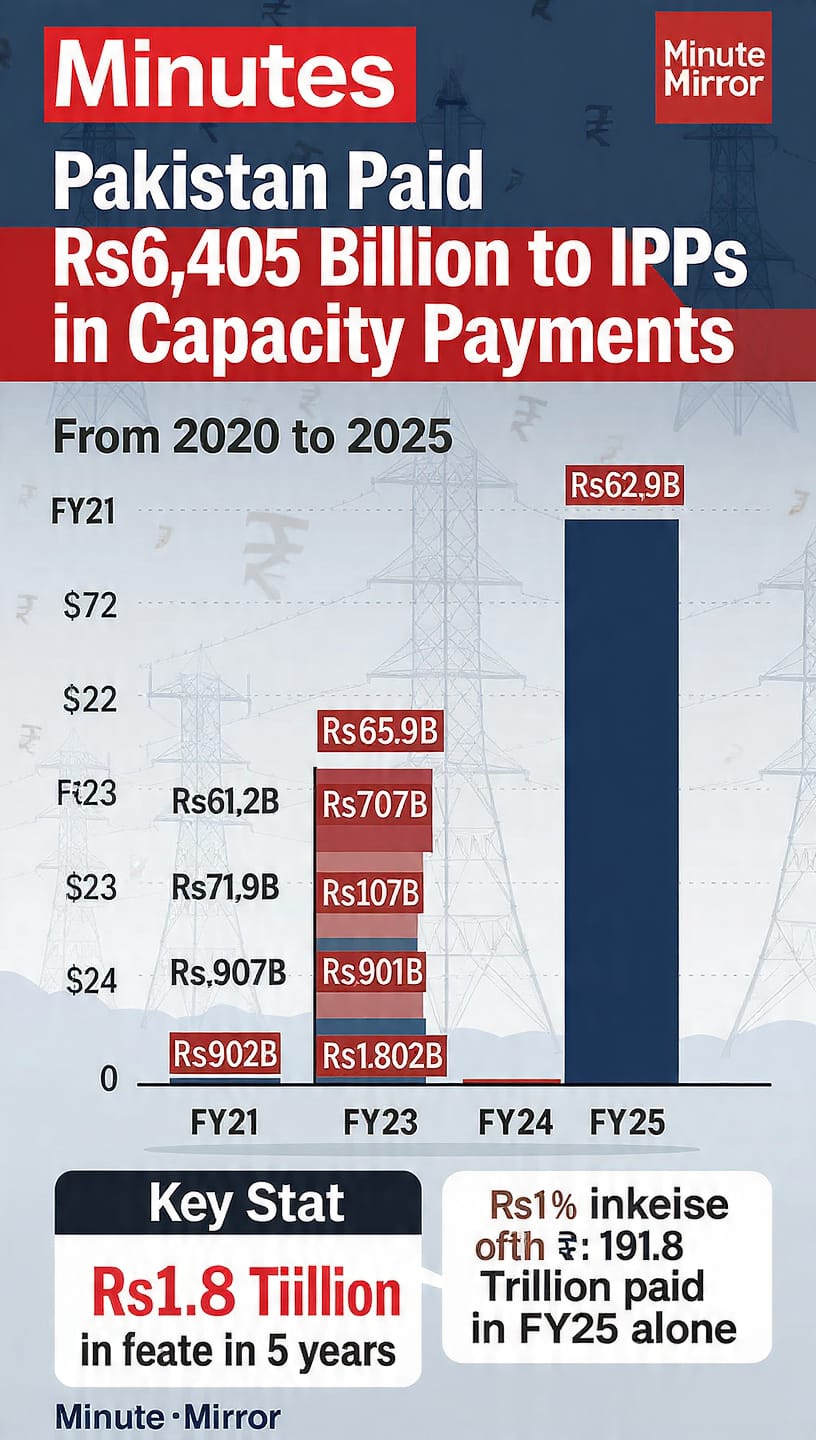
      ISLAMABAD: Pakistan’s federal government paid a total of Rs6,405 billion to Independent Power Producers (IPPs) in capacity payments between 2020 and 2025, the National Assembly has been informed, highlighting the growing financial burden associated with the country’s power sector. According to a written response submitted by Federal Minister for Energy Awais Ahmad Leghari, capacity payments increased significantly during the five-year period despite government efforts to renegotiate power purchase agreements and reduce electricity costs. The figures presented to the National Assembly show that capacity payments rose from Rs613.9 billion in FY2020-21 to Rs1,807 billion in FY2024-25. This represents an increase of approximately 194% over the period. The government paid Rs613.9 billion in capacity charges during FY2020-21. The amount increased to Rs775.9 billion in FY2021-22 before rising sharply to Rs1,307 billion in FY2022-23. Capacity payments reached their highest level during FY2023-24, when the government paid around Rs1.902 trillion to IPPs. Although the amount declined slightly in FY2024-25 to Rs1.807 trillion it remained almost three times higher than the amount paid in FY2020-21. Capacity payments are charges made to power producers for keeping their generating plants available to supply electricity, regardless of whether the full generation capacity is actually utilised. These payments are part of the contractual arrangements between the government and IPPs and have frequently been identified as one of the factors contributing to Pakistan’s expensive electricity system and growing circular debt. Responding to questions in the National Assembly, Energy Minister Awais Ahmad Leghari said the government has taken several measures to reduce the financial pressure created by existing power agreements. According to the minister, a government task force has terminated power purchase agreements with six IPPs, while agreements with several other producers have also been revised. The objective of these measures is to reduce electricity costs and limit the financial burden on the national power sector. The Ministry of Energy estimates that the changes made to the agreements could result in savings of approximately Rs4.3 trillion over the remaining life of the contracts. Leghari also clarified that payments made to power producers are based on tariffs determined by the National Electric Power Regulatory Authority (Nepra) and the terms agreed under the relevant power purchase agreements. He rejected the impression that generators were receiving payments outside the approved contractual and regulatory framework, stating that there were no additional payments beyond the applicable arrangements. Despite the government’s renegotiation efforts, the figures show that capacity payments continue to represent a major financial obligation for Pakistan. The Rs1.807 trillion paid in FY2024-25 alone demonstrates the scale of the challenge facing the country’s power sector. The government’s efforts to terminate and revise agreements are expected to provide substantial savings in the coming years. However, reducing capacity payments and addressing the broader issues of electricity pricing, power utilisation and circular debt remain critical challenges for Pakistan’s energy sector.

Leave a Reply

Your email address will not be published. Required fields are marked *