
saif ali khan
|

Saif Ali Khan reveals his Sons are frightened by global wars and conflicts


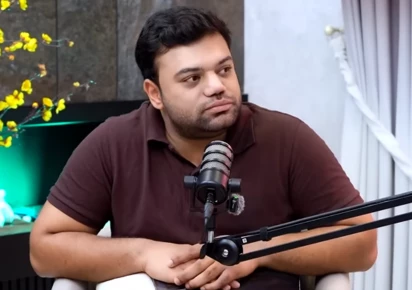
MUMBAI:Bollywood actor Saif Ali Khan has revealed that his two sons, Taimur Ali Khan and Jehangir, are frightened by the wars, conflicts and growing tensions around the world.

The 56-year-old actor recently spoke about his family and expressed concern over the impact of the current global situation on his children. While discussing his sons with his wife, actress Kareena Kapoor Khan, Saif said that the children are aware of the conflicts taking place in different parts of the world and frequently ask questions about their safety and what the future may hold.

Saif Ali Khan made the remarks during a visit to Uri in Jammu and Kashmir as part of a programme series. During his interaction, the actor spoke about the concerns of his children and explained how global conflicts have affected their sense of security.

According to Saif, his children often ask him questions about the wars taking place in different parts of the world. Their questions, he said, reflect the fear and uncertainty they experience while watching or hearing about international conflicts.

“My children ask about the various wars happening around the world,” Saif said, adding that they are also frightened by the current situation.

The actor said that his sons want to know who is responsible for protecting them and whether they are safe. They also ask what could happen in the future and whether the situation around the world could become even worse.

Saif recalled some of the questions his children ask, including, “Who is protecting us?” and “What will happen next?” He said they also worry about whether the circumstances could deteriorate further.

The actor’s comments highlight how international conflicts can affect children even when they are physically far away from the areas where fighting is taking place. With news about wars and geopolitical tensions spreading rapidly through television, social media and the internet, children can become increasingly aware of events that may otherwise seem distant from their daily lives.

Saif’s remarks have also drawn attention to the emotional impact of global instability on families. Parents are increasingly required to explain complex international developments to children while attempting to reassure them about their safety and future.

The actor’s comments come at a time when several regions of the world continue to experience conflict and political tensions. The ongoing international crisis involving the United States, Israel and Iran has also contributed to concerns about the possibility of wider instability.

The situation has generated anxiety among people across the world, particularly because of concerns that existing conflicts could expand and have broader regional and international consequences.

Saif Ali Khan’s disclosure offers a personal perspective on how such developments can affect even celebrity families. Despite living a privileged life, his children, like many others, remain exposed to global news and the uncertainty created by wars and international tensions.

His comments also underline the importance of creating a sense of security for children during periods of international crisis. For parents, addressing children’s fears and answering their questions honestly while avoiding unnecessary alarm can be particularly challenging.

By sharing his sons’ concerns, Saif has highlighted the wider human impact of global conflicts and the way uncertainty can reach families far beyond the immediate areas affected by war.
Similar Posts

  • | |

    Elon Musk aims to release AI-generated ‘The Odyssey’ in 2026

    Tech entrepreneur Elon Musk has announced plans to produce a full-length artificial intelligence-generated adaptation of “The Odyssey” before the end of 2026, signalling a major step in the use of AI technology in the film industry. Musk shared the announcement on his social media platform X, where he said that Grok Imagine, the AI video-generation system developed by his company xAI, would create a complete feature film based on Homer’s ancient Greek epic. According to Musk, the project will aim to remain historically accurate while staying faithful to the original literary work. He said the AI-generated film would present the classic story in a way that reflects Homer’s vision. The announcement came shortly after the successful release of filmmaker Christopher Nolan’s live-action adaptation of The Odyssey, which performed strongly at the global box office during its opening weekend. Musk has previously expressed criticism of Nolan’s interpretation of the famous epic, and his latest announcement is widely viewed as an alternative approach using artificial intelligence. The proposal has attracted widespread attention across social media, with technology enthusiasts and film fans debating whether AI can produce feature-length movies capable of matching traditional filmmaking. Supporters believe advances in artificial intelligence are transforming the entertainment industry. They argue that AI-generated video technology has improved rapidly and could reduce production costs while making filmmaking faster and more accessible. Many users praised the capabilities of AI-generated characters and visual effects, saying recent improvements have produced increasingly realistic performances and cinematic quality. However, others questioned whether artificial intelligence can replace human creativity. Critics argued that while AI may be useful for technical production, it still struggles to create emotionally powerful stories, memorable characters, and original artistic ideas. They believe experienced writers, directors, and actors remain essential to producing high-quality films. The announcement has intensified the broader debate about the growing role of artificial intelligence in creative industries. Experts say AI is becoming increasingly capable of assisting with scriptwriting, visual effects, editing, animation, and content production, but concerns remain over originality, copyright, employment, and the future of creative professions. Musk’s project also highlights the increasing competition among technology companies investing heavily in artificial intelligence. Companies around the world are racing to develop more advanced AI systems capable of producing videos, films, music, and other digital content with minimal human involvement.

  • | |

    Was Celeste Rivas pregnant? DA reveals detail in D4vd case

    A key clarification has emerged in the murder case against singer D4vd, as the Los Angeles County District Attorney’s Office confirmed that Celeste Rivas Hernandez was not pregnant at the time of her death, putting to rest speculation that surfaced during recent court proceedings. The clarification follows widespread discussion after prosecutors presented text messages during a preliminary hearing showing that Rivas had previously become pregnant in 2024, when she was 13 years old, and later underwent an abortion. The disclosure led to online speculation that she may have also been pregnant when she died in April 2025. According to the District Attorney’s Office, investigators do not believe Rivas was pregnant at the time of her death. Prosecutors shared the update with People on July 29, explaining that the clarification was issued after an amendment to her death certificate had changed the pregnancy section from “no” to “unknown,” creating confusion about her medical status. The murder case centres on David Anthony Burke, the singer professionally known as D4vd, who has pleaded not guilty to multiple charges, including first-degree murder, continuous sexual abuse of a child under the age of 14 and unlawful mutilation of human remains. During the preliminary hearing, prosecutors introduced text messages exchanged between Burke and Rivas regarding the earlier pregnancy. In one message, Rivas wrote, “Both of us aren’t able to take care of it,” while Burke replied, “I know but still.” Prosecutors presented the messages as part of their evidence during the hearing. Court proceedings also included testimony from investigators and forensic experts as prosecutors argued there was sufficient evidence for the case to proceed to trial. The hearing focused on determining whether enough evidence existed to hold Burke over for trial rather than deciding guilt or innocence. Earlier this week, a Los Angeles judge ruled that prosecutors had presented enough evidence for Burke to stand trial on the charges. The decision came after several days of testimony and the presentation of forensic, digital and documentary evidence by the prosecution. Rivas’ remains were discovered in September 2025 inside the trunk of a Tesla linked to Burke. Authorities later ruled her death a homicide, leading to Burke’s arrest in April 2026. He remains in custody after pleading not guilty to all charges filed against him. The District Attorney’s latest clarification specifically addresses speculation surrounding Rivas’ pregnancy status, confirming that while the teenager had previously experienced a pregnancy more than a year before her death, she was not pregnant when she was killed. Prosecutors said the earlier text messages and abortion were unrelated to her medical condition at the time of her death. The criminal case against Burke will now move forward after the judge’s ruling, with further proceedings expected in the coming weeks as prosecutors continue pursuing the charges against the singer.

  • | |

    HYBE clarifies stance after BTS announces Grammys boycott

    Entertainment giant HYBE has responded after BTS announced they would not participate in the upcoming Grammy Awards, clarifying that the group’s decision should not be interpreted as a company-wide boycott. The statement comes after the seven BTS members — RM, Jin, Suga, J-Hope, Jimin, V and Jungkook — reportedly decided against participating following changes to the Recording Academy’s awards structure. The controversy centres on the Grammys’ reported introduction of dedicated K-pop categories, a move that many fans believe separates Korean artists from competing equally in the general-field categories. According to reports, BTS and HYBE view the changes as unfair at a time when the group is considered one of the strongest contenders for major Grammy honours. Addressing the issue, HYBE released a statement explaining its concerns over the reported rule changes. “It is difficult to accept that this Grammy’s screening change was made when BTS is most likely to win the main prize.” Despite expressing disappointment, the company stressed that BTS’s decision does not represent an official boycott by HYBE itself. “It’s not a boycott at the company level.” An official further clarified the company’s position, saying, “In the case of other artists, if they are willing to participate, they will proceed with the exhibition as scheduled.” HYBE also revealed that BTS carefully considered whether to participate before reaching their final decision. “BTS also thought about whether to participate until the last minute of this announcement, but they made this decision with the idea that a cautious move is necessary for the sake of the music industry and K-pop as a whole.” According to the statement, the group’s decision was made after considering what they believe are broader implications for K-pop artists rather than focusing solely on their own chances at the awards. Industry observers believe BTS’s move could influence conversations across the global music business. In recent years, all four major American music awards have introduced dedicated K-pop categories, prompting debate over whether such divisions recognise the genre or limit Korean artists from competing directly alongside international acts in major categories. While BTS has chosen not to participate, neither the group nor HYBE has encouraged other artists to do the same. The company has made it clear that performers under its management remain free to decide whether they wish to submit their work or attend the ceremony. The reported boycott is especially significant because BTS has historically been one of the Grammy Awards’ biggest international attractions. Their appearances have consistently generated massive global viewership, extensive social media engagement and strong fan participation, making their absence notable for both the Recording Academy and music fans worldwide. Neither the Recording Academy nor Grammy organisers have publicly responded to HYBE’s latest statement at the time of writing. Fans continue to debate the issue across social media, with many praising BTS for taking what they view as a principled stand, while others hope discussions between the music industry and award organisers will lead to greater equality for K-pop artists in future Grammy competitions. HYBE, however, has maintained that the decision reflects BTS’s own position and should not be viewed as a blanket boycott by the company or its other artists. 

  • | |

    Japanese influencer dies by suicide amid online trolling

    A Japanese influencer living in South Korea reportedly died by suicide during a TikTok livestream, following intense online trolling and criticism. According to international media reports, Mina-chan was found dead at her residence in Seoul on August 5 after viewers alerted police during a livestream. Yongsan Police responded to the report and found her body at the scene. Mina-chan was a popular TikTok creator and a fan of K-pop group ENHYPEN. She had around 80,000 followers on the platform. Her younger sister later confirmed her death through a post on Instagram. Reports said Mina-chan had faced criticism on social media after an incident at an ENHYPEN concert in the United States last month. During the event, she reportedly asked the group’s member Sunoo to pass flowers she had brought to another Japanese member, Ni-ki. Following the incident, some fans accused her of crossing boundaries with the group members. She subsequently became the target of criticism and online trolling. On July 31, Mina-chan posted a lengthy apology on X. She said she believed she had taken advantage of Sunoo’s kindness and expressed regret over her actions. She also said that after attending several fan-sign events, she had mistakenly developed the impression that she was particularly close to the members of the group. Despite issuing an apology, reports said the online criticism and abusive comments against her continued.

  • | |

    Jameela Jamil defends Ariana Grande remarks

    British actor and activist Jameela Jamil has defended her recent comments about Ariana Grande’s appearance, saying her remarks were motivated by concern over beauty standards rather than criticism of the singer. Responding to backlash on Instagram, Jamil cited her own experience with anorexia and argued that discussions about the impact of celebrity imagery on young audiences should not be dismissed. Jamil had previously faced criticism after suggesting that Grande could be “possibly dying,” a comment that many social media users viewed as inappropriate. Addressing the backlash, the actress clarified that she had intentionally used the word “possibly” and insisted that her broader concern was the influence such images can have on girls and women. She wrote: “I said possibly. My god. And my point stands, that this is deeply irresponsible for all the people involved to deliver this aesthetic as glamorous to the many billions of girls and women consuming this imagery.” Jamil went on to explain that her views are shaped by her own struggle with anorexia, revealing that she nearly lost her life to the eating disorder. She said it was only through intervention from those around her that she was able to recover. Reflecting on her experience, she stated: “I feel extremely bad for Ariana having almost died of anorexia myself. And it was only due to the people around me intervening INSENSITIVELY once I willfully ignored (and sort of enjoyed) their careful concern, that I survived.” The actor acknowledged that she does not know Grande personally and stressed that she hopes the singer is healthy. At the same time, she argued that conversations about body image should focus on the impression such appearances leave on younger audiences. She wrote: “I don’t know Ariana and pray she recovers. I don’t think she’s in the comments sections of tiny posts, but young girls watching are, and we need to signal to THEM that this is not the time to pretend this is ok, just because ‘we shouldn’t talk about other people’s bodies.’” Jamil also referred to late American singer Karen Carpenter, whose battle with anorexia raised global awareness of eating disorders. She argued that society should not ignore potentially harmful beauty standards simply because they involve famous public figures. She said: “We do not pretend then that it is not appropriate to comment on how thin they are. We don’t have to pretend we are blind because it’s a pop star. Everyone is killing her by normalizing this. Silence is complicity when it gets this far.” Her comments have generated mixed reactions online. While some users praised Jamil for speaking openly about eating disorders and their impact, others argued that public speculation about another person’s health can be harmful, regardless of the intention. The discussion comes shortly after Ariana Grande announced an indefinite break from public-facing work following the conclusion of her Eternal Sunshine tour. Grande herself has not publicly responded to Jamil’s remarks, leaving the debate to continue across social media as fans and commentators discuss the balance between raising awareness of eating disorders and respecting personal boundaries. 

  • | |

    Greek epic poetry finds a home in Irish literature

    There is an intimacy in the way Irish writers engage with classical mythology including epic poetry. The Odyssey predates Ireland’s earliest written epic, Táin Bó Cúailnge (The Cattle Raid of Cooley), by nearly 1,400 years. The distance in time and geography vanishes the moment an Irish poet puts pen to paper. Universal Image of The Weary Traveler In her modern translation of The Odyssey, classicist Emily Wilson frames Homer’s epic through a deeply human lens. She writes of an exhausted wanderer standing outside a home. A figure who has been displaced and lost for decades. That universal image of the weary traveler searching for home is precisely why Homer’s writing has found such a permanent resonance in Ireland’s literary canon. Across generations, Ireland’s greatest literary minds have treated Homer as a living contemporary. William Butler Yeats, Patrick Kavanagh, and Nobel laureate Seamus Heaney all drew heavily on Homeric motifs to articulate the Irish experience. For these writers, the themes of exiled wanderers, domestic longing, political strife, and tragic return were not abstract concepts from a bygone Mediterranean era. They mirrored the realities of Irish history, rural life, and national identity. Seamus Heaney Seamus Heaney’s engagement with classical literature was particularly profound. Heaney frequently used ancient myths to process modern conflict, finding in Greek drama and epic poetry a framework to speak about political violence, loss, and reconciliation during the Troubles in Northern Ireland. By mapping Homeric echoes onto the Irish landscape, Heaney showed that the struggles of Ithaca were not so different from those of Derry or Ulster. To Heaney and his peers, classical antiquity offered a universal mirror through which local grief and local beauty could be understood. Patrick Kavanagh Similarly, Patrick Kavanagh famously elevated the quiet, local struggles of rural Monaghan by comparing them to the epic siege of Troy, insisting that the everyday life of ordinary people contains just as much drama and dignity as the ancient sagas. Meanwhile, W.B. Yeats wove Homeric imagery directly into the fabric of the Irish Literary Revival, bridging Ireland’s Gaelic heritage with classical antiquity to forge a distinct national identity. Ireland’s Relationship with The Odyssey What makes Ireland’s relationship with The Odyssey so enduring is this sense of shared cultural DNA. Both traditions belong to storytelling cultures rooted in oral performance, mythic memory, and a deep reverence for language. Homer’s tales of displaced heroes, lingering grief, and ultimate return resonate naturally within an island nation shaped by exile, migration, and the constant search for home. Ultimately, the literary bridge connecting Homer to Heaney proves that timeless stories do not belong to a single era or place. As long as readers recognize the tired wanderer standing at the door, The Odyssey will continue to find a home in Irish literature. The Literary Parallel Homer’s The Odyssey predates Ireland’s national epic, Táin Bó Cúailnge, by roughly 14 centuries, yet their thematic overlap remains seamless. Prominent Irish authors including Seamus Heaney, W.B. Yeats, and Patrick Kavanagh frequently adapted Homeric themes into their modern works. Emily Wilson’s modern translation highlights themes of exile and displacement, which reflect Ireland’s history of migration, political conflict, and domestic longing.

Leave a Reply

Your email address will not be published. Required fields are marked *