finland restricts sea
|

Finland restricts sea traffic near Russia

Finland has temporarily closed part of its airspace and restricted maritime traffic along its southern coast near the Russian border due to concerns over possible stray drones.

The Finnish military announced the measures on Tuesday. Officials said the restrictions were introduced to ensure authorities can respond safely if drones enter the area.

A military spokesperson said the measures would allow authorities to take necessary countermeasures while protecting people in the affected areas.

The military did not disclose the source of information about the possible drone activity. The spokesperson said details could not be shared because they were related to ongoing operational matters.

The move comes amid growing concerns among NATO countries that the war in Ukraine could spill across alliance borders. Ukrainian drones targeting Russian positions have reportedly entered the airspace of Finland, Estonia, Latvia and Lithuania this year.

Ukraine has increased its use of long-range drones against targets inside Russia. Kyiv and several NATO members have blamed Russian electronic interference for causing some Ukrainian drones to deviate from their intended routes and enter NATO airspace.

Moscow, however, has accused Ukraine of deliberately directing drones across international borders.

Finland’s latest restrictions highlight the security concerns facing NATO’s northern members as drone warfare continues to expand in the region.

Authorities are expected to continue monitoring the situation closely and adjust the restrictions depending on the potential threat.

Similar Posts

  • | | |

    Teen in clown costume arrested after fatal stabbin…

    A 15-year-old boy has been arrested after allegedly fatally stabbing a 78-year-old man while dressed in a clown costume in East St. Louis, Illinois, in a case that has shocked local residents and gained widespread attention online. Authorities say doorbell camera footage and neighborhood surveillance videos were instrumental in identifying and apprehending the suspect. According to police, the incident occurred on Monday night when the victim, John Wesley Allen Sr., was waiting at a bus stop to meet his sister. Investigators allege that the teenager, dressed in a loose black-and-red clown outfit, suddenly attacked the elderly man with a knife, inflicting multiple stab wounds. Allen, a retired bus driver and US Navy veteran, died from his injuries. Before the fatal attack, the suspect was reportedly seen wandering through nearby neighborhoods while wearing the clown costume. Residents told investigators that the teenager rang several doorbells, peered through windows, and appeared to be searching for someone. One widely shared doorbell camera video shows the suspect leaning toward the camera and whispering, “I’m looking for you,” in a chilling moment that later spread across social media. Initially, many online users believed the footage was part of a prank or a horror-themed stunt. However, police later confirmed that the video was connected to a real homicide investigation, adding to the public shock surrounding the case. One local resident told police that if his mother had opened the door after the suspect rang the bell, she might also have become a victim. Investigators are reviewing additional surveillance footage and digital evidence to determine whether the attack was premeditated or a random act of violence. Using surveillance footage from nearby homes and businesses, police identified the suspect and arrested him within hours at a residence in the area. Authorities have charged the teenager with first-degree murder. Because the suspect is a minor, law enforcement officials have not released his identity. Police said preliminary findings indicate that the victim and the suspect had no known connection, suggesting the stabbing may have been a random attack. The investigation remains ongoing as detectives continue examining evidence, including social media activity and surveillance recordings, to establish the motive behind the killing. The case has drawn national attention due to its disturbing nature and the viral spread of the doorbell camera footage, while authorities continue to urge the public to avoid speculation until the investigation is complete.

  • |

    US fuel opens a capitalist crack in Cuba

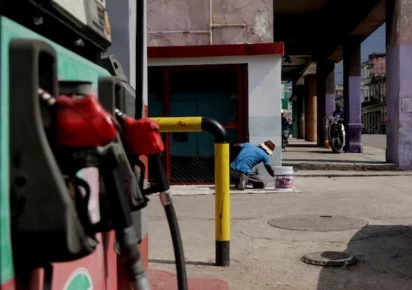
    HAVANA: Gasoline selling for as much as $38 a gallon, diesel advertised on social media and fuel stored inside cramped apartments are offering an unusual glimpse of private enterprise in communist Cuba, where the energy sector has long remained firmly under state control. A US policy allowing American companies to export fuel to private Cuban businesses has triggered an unexpected transformation. As Cuba struggles with shortages, blackouts and a weakened public transport system, imported fuel is creating a growing private market — while also exposing a sharp divide between those who can afford it and millions who cannot. The change follows the collapse of Cuba’s traditional fuel supplies from Venezuela and Mexico after the United States removed Venezuelan President Nicolas Maduro in January. With sanctions discouraging tankers from sailing toward the island, fuel shortages have increasingly affected transport, hospitals, schools and other essential services. Under an exception to Washington’s oil restrictions, however, private Cuban restaurants, retailers, taxi operators and other businesses have been allowed to import fuel. The impact has been striking. Between February and May, around 900,000 barrels of US fuel entered Cuba — enough to meet only about nine days of the country’s energy requirements. Yet those relatively small shipments have helped create a new network of legal wholesalers, private buyers and illegal resellers. Gasoline becomes a luxury For ordinary Cubans, the new fuel market has often brought frustration rather than relief. On a July afternoon in Havana, 53-year-old Amarilis Sanchez waited for hours at a bus stop after attending her daughter’s birthday celebration. Public buses, which normally cost only two pesos, were unreliable. Nearby, taxi drivers offered rides in vintage cars, but one driver quoted Sanchez 1,000 pesos for the journey — roughly 500 times the price of a bus ride. Unable to afford it, Sanchez considered spending the night at her daughter’s home and trying again for a bus the following day. Her experience illustrates how Cuba’s fuel crisis is creating two very different realities: one for people with access to private vehicles and imported fuel, and another for those dependent on the country’s struggling public transport network. Black-market gasoline prices reportedly reached $10 per litre, or about $38 per gallon, during the spring before falling as imports increased. Social media fuels a new market The emerging trade is increasingly visible online. WhatsApp groups and Facebook pages advertise gasoline and diesel, while some sellers store fuel in apartments and small shops despite the dangers posed by fire, explosions and toxic fumes. At one Havana convenience store, a shopkeeper reportedly kept around a dozen 20-litre fuel containers in a backroom, selling gasoline for approximately $5 per litre. Private companies are also moving into the newly emerging legal wholesale market. By late July, almost 200 Cuban businesses had received permission to distribute fuel wholesale to other private companies. One company, A Granel, advertises diesel through social media and charges $2.50 per litre for a 940-litre tank. The promotion reportedly features a model walking through a warehouse of diesel containers while Daddy Yankee’s famous song Gasolina plays in the background — an unusually flashy image for a country where the energy industry has historically been dominated by the state. Are Cuban gas stations next? The transformation could go further. Cuban lawmakers approved a broad package of economic reforms in June aimed at opening the energy sector to private and foreign investment. Prime Minister Manuel Marrero Cruz later announced that Cuba had approved its first foreign investment project focused on importing and selling fuel, although he did not name the company. The reforms have raised the possibility that private operators could eventually take control of some of Cuba’s familiar state-run Cupet petrol stations. For now, however, retail fuel sales remain largely under state control. Some state-owned stations are storing imported fuel but can distribute it only to vehicles belonging to authorised private businesses. Cuban authorities have defended the reforms while rejecting the idea that they represent a move toward large-scale privatisation. President Miguel Diaz-Canel has accused Washington of imposing a “genocidal siege” on Cuba and said economic changes were not being introduced to satisfy the United States. A lifeline with a heavy price The new fuel market has helped prevent some businesses from shutting down completely. During recent power outages, restaurants and shops with generators powered by imported fuel remained illuminated while much of Havana was plunged into darkness. But experts warn that the emerging system could deepen inequality. With the average government salary reportedly around $10 a month, imported gasoline remains unaffordable for most of Cuba’s roughly nine million residents. Cuban sociologist Mayra Espina said the limited fuel supplies had helped prevent “complete paralysis” but warned that the benefits were overwhelmingly concentrated among those able to pay. The result is an extraordinary contradiction: a small opening toward private enterprise is helping Cuba keep parts of its economy running, while simultaneously making access to basic mobility and energy increasingly dependent on wealth. For a country that has spent decades keeping fuel firmly within the state system, Cuba’s new gasoline economy may therefore prove to be more than a temporary response to shortage. It could become an early test of how far Havana is prepared to let capitalism into one of its most tightly controlled sectors.


  • |

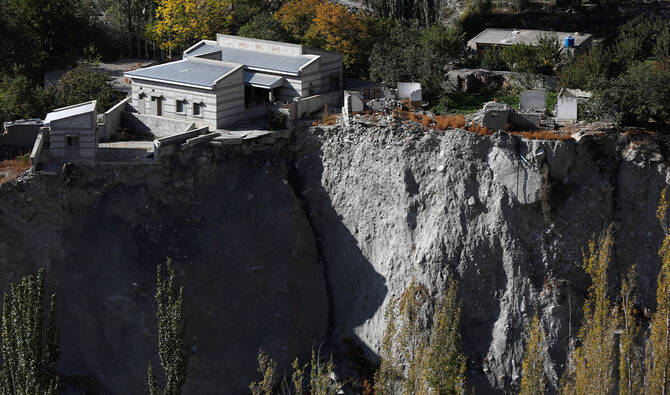
    Northwestern province warns of glacial floods as Pakistan monsoon death toll rises to 107

    Authorities in Khyber Pakhtunkhwa province have issued urgent warnings regarding potential glacial lake outburst floods, urging residents and tourists to stay away from rivers, streams, and narrow mountain valleys. The disaster alert follows persistent heavy monsoon rains that have killed at least 107 people and injured 344 others across the country since late June, with the heaviest casualties reported in Khyber Pakhtunkhwa and Punjab due to flash floods, structural collapses, and electrocutions. The Provincial Disaster Management Authority has highlighted specific high-risk northern districts, including Upper and Lower Chitral, Upper Dir, Swat, Upper Kohistan, and Mansehra, where warm temperatures combined with intermittent rainfall are rapidly accelerating glacial melt. Local administrations have been instructed to monitor vulnerable zones closely, with officials advising the public to watch for sudden changes in river water colour or unusual mountain sounds that could signal an imminent surge.

  • |

    Sanya Malhotra says desi ‘acts of service’ hurt women

    Sanya Malhotra has spoken about breaking old patterns in her own family. She admitted she “forced” her mother to step back from the kitchen and focus on herself instead. According to her, the habit of women expressing love through nonstop service is not healthy. In many South Asian homes, she said, women spend their days caring for others while their own goals get set aside. She brought this up in a recent interview. Her own house followed the same pattern growing up. Women stayed in the kitchen. Men waited around for things to be handed to them. She said she didn’t fully see how much pressure her mother was under until she moved away to Mumbai. One memory stood out for her. Her mother once cried simply because she felt too sick to cook. Sanya told her that food had nothing to do with love. She explained that cooking is just one way people show care, not the only way it can be shown. That moment shifted things at home. Sanya started nudging her parents away from old habits. Her mother now listens when Sanya tells her to skip the kitchen for a day. She said it makes her proud watching her mother take time for herself in the mornings instead of rushing straight to chores. Her father was not left out either. Sanya said she often pushed him to do small things, like getting his own glass of water or making a simple meal. She admitted the change has not fully stuck yet, but she keeps reminding him. She connected all of this to her character in Mrs. In the film, she plays a newlywed whose entire identity gets swallowed by household duties. Sanya said many women tell her the story feels personal to them. That response, she said, leaves her both upset and hopeful, since even a small shift in mindset feels worth it to her. She also called out how sacrifice tends to get romanticised, especially when it comes to mothers. Women, she said, are often expected to give up their own dreams the moment they become parents. Talking about her mother’s past, Sanya revealed she once wanted to become a fashion designer. It took her years to understand her mother had dreams of her own beyond raising a family. As for the criticism Mrs received, Sanya said none of it bothered her. She said she has no interest in defending her views to people who never even watched the film. She last appeared in Netflix’s Toaster and is currently working on Bandar and Sundar Poonam.

  • | |

    PM takes notice of lawmakers’ absenteeism

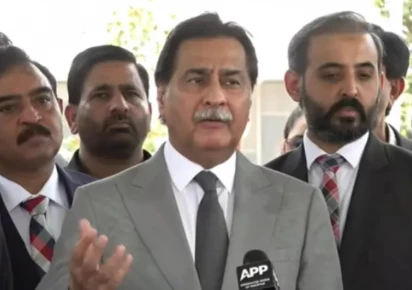
    ISLAMABAD: National Assembly Speaker Sardar Ayaz Sadiq has said Prime Minister Shehbaz Sharif has taken notice of the low attendance of lawmakers during parliamentary sessions. Speaking to the media outside the National Assembly on Tuesday, Sadiq said some federal ministers had raised the issue of members’ absence with the prime minister. He said the government and lawmakers were now paying attention to improving attendance. The speaker’s comments came after a session of the National Assembly witnessed a low presence of members, with a large number of seats remaining vacant during proceedings. Sadiq said maintaining the required quorum was not solely the responsibility of the speaker. He said both the government and opposition benches had a duty to ensure that their members attended parliamentary proceedings. He expressed hope that attendance would improve when the next session is held, which is expected to take place later this week. According to the speaker, the government had conveyed that it recognised the seriousness of the issue and intended to improve lawmakers’ presence in future sessions. Sadiq urged members from both sides of the House to remain present during proceedings. He said parliamentary sessions provided limited time for debate, questions, discussions and legislation, and lawmakers should make full use of the opportunity. He noted that poor attendance affected both sides of the House. The government could not properly complete its legislative agenda, while opposition members also lost the opportunity to raise issues and scrutinise government policies. The speaker also commented on Jamiat Ulema-e-Islam-Fazl (JUI-F) chief Maulana Fazlur Rehman’s intention to adopt a more active approach towards legislation. Sadiq welcomed the move, saying stronger opposition participation could improve parliamentary accountability. He said constructive pressure from opposition parties could also encourage the government to introduce reforms. Regarding resignations submitted by Pakistan Tehreek-e-Insaf (PTI) members from standing committees, the speaker said he had not accepted any of the resignations. He said parliamentary committees were continuing to function and could perform more effectively if opposition members regularly participated in their meetings. Asked about the possibility of the united opposition moving a no-confidence motion against him or Prime Minister Shehbaz Sharif, Sadiq said it was a constitutional and democratic right of the opposition. He said the National Assembly would facilitate the opposition if it decided to exercise that right. Sadiq also spoke about efforts to reduce political tensions between the government and opposition. He said several attempts had been made to bring the two sides to the negotiating table. He said he, Prime Minister Shehbaz Sharif, the law minister and Rana Sanaullah had repeatedly offered dialogue.

  • | |

    52 life-saving drugs clear major approval hurdle

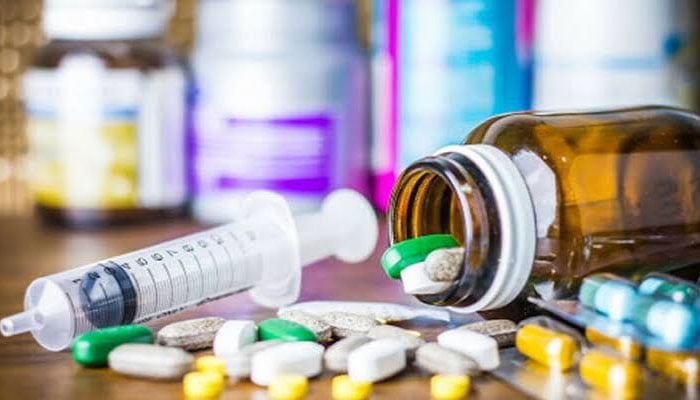
    ISLAMABAD: A federal cabinet subcommittee has approved the prices of 52 newly registered life-saving medicines, including treatments for cancer, diabetes, haemophilia and Parkinson’s disease, in a move aimed at improving access to essential medicines across Pakistan. The meeting was chaired by Finance Minister Senator Muhammad Aurangzeb in Islamabad. The committee reviewed pricing proposals for newly registered medicines and approved the prices for all 52 products. Officials said the approved medicines include several advanced treatments for serious and chronic illnesses. Among them is Keytruda, a modern immunotherapy drug used globally to treat more than 20 types of cancer. Other approved medicines include Nivolumab, Dasatinib, Meropenem and insulin, which are widely used to treat cancer, severe infections and diabetes. The pricing decision will now be sent to the federal cabinet for final approval. Once endorsed, the Drug Regulatory Authority of Pakistan (DRAP) will issue an official price notification, allowing the medicines to be legally marketed and sold in the country. Health Ministry officials said early approval of medicine prices was necessary to address the difficulties faced by patients. Delays in pricing had prevented several newly registered medicines from entering the local market, forcing many patients to rely on unregistered, smuggled or costly imported alternatives. Authorities believe the approval will improve the availability of high-quality medicines and reduce dependence on illegal supply channels. They said the move will also help ensure that patients have access to safe and regulated treatments through authorised healthcare providers. During the meeting, the finance minister stressed the importance of transparency and protecting the public interest in decisions related to medicine pricing. He called for a fair pricing mechanism that balances patient affordability with the availability of essential medicines.

Leave a Reply

Your email address will not be published. Required fields are marked *