
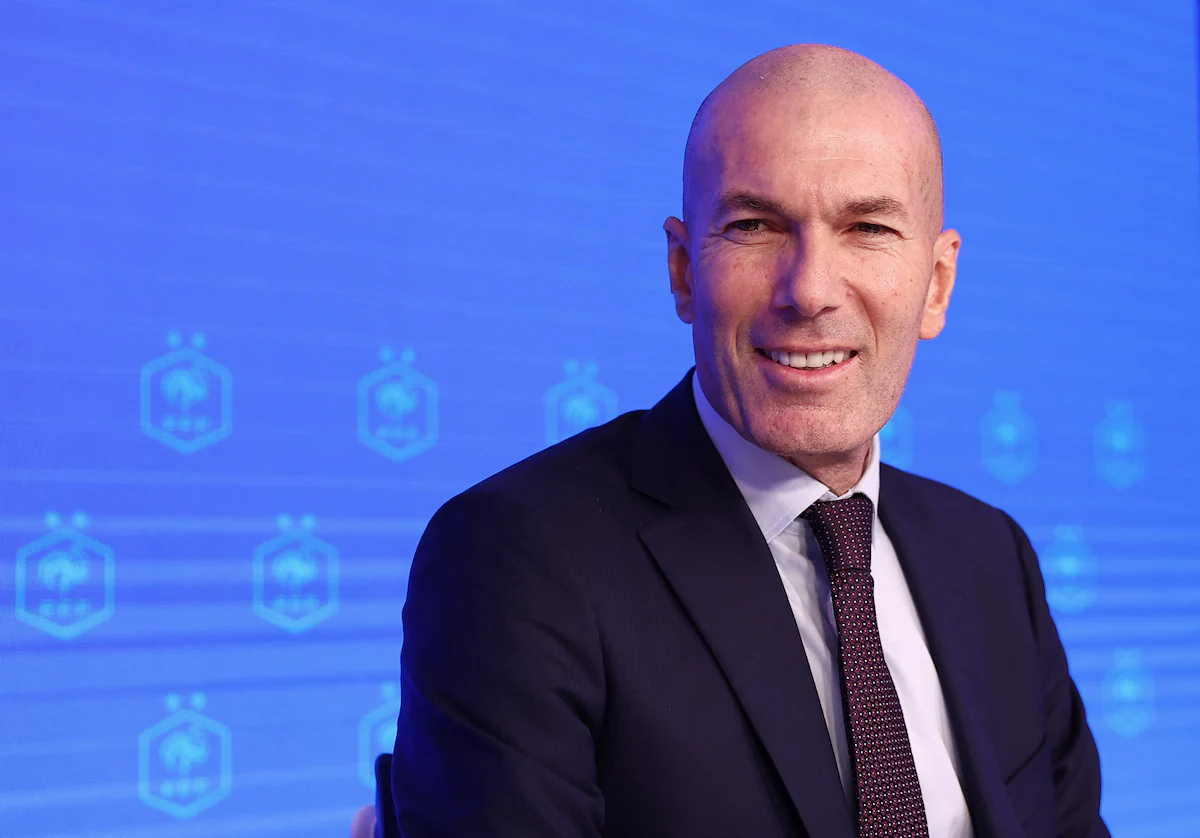
zidane takes charge
|

Zidane takes charge as France head coach

France have appointed former midfielder and Real Madrid manager Zinedine Zidane as their new head coach, beginning a new era for the national team. The French Football Federation confirmed the appointment on Tuesday.

The 54-year-old succeeds Didier Deschamps, who stepped down after 14 years in charge. Deschamps guided France to the 2018 World Cup title and the 2020-21 Nations League trophy. He also led the team to the Euro 2016 and 2022 World Cup finals.

Zidane now returns to the national setup more than two decades after helping France win the 1998 World Cup on home soil. He played a key role in that historic campaign and won the Ballon d’Or the same year.

The appointment brings together Zidane’s successful playing career and an impressive managerial record. As Real Madrid coach, he won three consecutive Champions League titles and established himself as one of Europe’s most successful managers.

Zidane’s first major challenge will be to build on France’s strong squad and prepare the team for the next international cycle. His appointment is expected to bring a fresh tactical approach while maintaining France’s status as one of the world’s leading football nations.

His tenure is set to run through the 2030 World Cup.

The new France boss is expected to begin his international campaign with a Nations League match away to Turkey. France will then host Italy at the Stade de France on October 2.
Similar Posts

  • |

    Saudi Arabia introduces major education reforms under new school law

    Saudi Arabia has approved the executive regulations for its new General Education Law, introducing wide ranging reforms that will reshape the country’s education system from nursery through Grade 12. The new legislation creates a comprehensive legal framework for public and private education and is designed to support the goals of Saudi Arabia’s Vision 2030 by improving educational quality, expanding opportunities and strengthening oversight across the sector. One of the most notable changes allows private schools to decide whether boys and girls can study together, while public schools will continue to separate male and female students after the early childhood stage. The move marks a significant shift in education policy for the Kingdom and gives private institutions greater flexibility in organizing their academic programmes. The law also establishes a new General Education Affairs Council that will oversee key education policies. The council will be chaired by the Minister of Education and include representatives from several government ministries, the Education and Training Evaluation Commission and the private sector. Officials say the body will help coordinate education reforms and ensure that policies are aligned with national development goals. Compulsory education will continue for children between the ages of six and 15. The Ministry of Education will have the authority to take legal action against parents or guardians who prevent children from attending school or who contribute to students leaving education before completing the compulsory stage. Officials say the measure is intended to improve school attendance and reduce dropout rates. Arabic will remain the main language of instruction throughout the general education system. However, schools will be allowed to teach in another language when appropriate, giving educational institutions greater flexibility while preserving the country’s cultural and linguistic identity. The legislation also confirms that classroom teaching will remain the primary method of education across all grade levels. At the same time, the Ministry of Education plans to expand digital learning by developing programmes that include live online classes, self paced learning and other flexible educational options. Regulations will also be introduced for lifelong learning certificates to encourage continuous education beyond traditional schooling. Students will have access to more diverse educational pathways under the new framework. The ministry will be able to introduce specialized academic and vocational tracks designed to better prepare students for future careers and meet the changing demands of the labor market. The law places greater emphasis on supporting students with disabilities by requiring schools to provide suitable educational services, assistive technology and assessment methods that match individual learning needs. It also strengthens programmes for gifted students through specialized schools, enrichment centers, improved identification systems, teacher training and partnerships with universities and research institutions. Private schools will face stricter quality standards under the reforms. Educational institutions must obtain accreditation from the Education and Training Evaluation Commission or another internationally recognized accreditation body approved by Saudi authorities. The Ministry of Education will oversee licensing procedures, ownership transfers, school operations and the introduction of international curricula while ensuring that subjects related to national identity remain part of every approved curriculum. The new rules also introduce a clearer process for education licences. Applications must receive a written decision within 30 days, and institutions whose applications are rejected will have the right to appeal. The government says these measures are intended to improve transparency and encourage investment in the education sector. Private and nonprofit education providers will also benefit from a more defined regulatory framework. Under certain conditions, the ministry may provide financial assistance, staffing support or other resources to eligible institutions as part of efforts to expand educational services under Vision 2030. Teachers will have broader professional responsibilities under the new law. They will be expected to follow approved curricula, meet the learning needs of individual students, encourage creativity and innovation, identify gifted learners, uphold national values and participate in continuous professional development programmes. The legislation also introduces stricter disciplinary procedures for teachers, administrators and private schools that violate regulations. Authorities will have the power to temporarily remove staff from duty while investigations are carried out. Serious violations could result in dismissal and permanent disqualification from working in the education sector. Private schools that fail to comply with the law may receive warnings, face financial penalties, lose the right to admit new students or have their operating licences revoked. If a licence is cancelled, the school must ensure that enrolled students are able to complete the academic year without disruption at the owner’s expense.

  • | |

    Israel quietly receives advanced INS Drakon submar…

    JERUSALEM: Israel has quietly taken delivery of the advanced INS Drakon submarine, with the handover reportedly taking place without the usual public ceremony or official fanfare. According to media reports, the submarine belongs to the Dakar-class fleet and was built in Germany by Thyssenkrupp Marine Systems (TKMS). The vessel is regarded as one of the most sophisticated additions to the Israeli Navy’s underwater fleet. Defense analysts say the INS Drakon is designed for long-range covert operations, intelligence gathering, and extended deployments at sea, significantly enhancing Israel’s naval capabilities. The submarine is part of Israel’s ongoing efforts to modernize its maritime defense amid evolving regional security challenges. Some defense experts have also suggested that Israel’s Dolphin-class submarines may be capable of carrying nuclear-armed missiles, although Israeli authorities have never officially confirmed such capabilities. The arrival of the INS Drakon further strengthens Israel’s strategic naval deterrence and expands its ability to conduct long-duration missions across distant maritime regions.

  • |

    Perez Hilton’s family shares heartbreaking update after health scare

    Perez Hilton’s family has shared a heartbreaking update about the celebrity blogger’s condition following a serious health emergency earlier this week. In a statement released on Saturday, August 8, the family revealed that the 48-year-old is facing a long recovery and will require surgery after suffering significant blood loss and additional injuries during an apparent self-harm incident. According to the statement, Hilton’s communication has been extremely limited as he remains focused on receiving medical care. His contact has been restricted to immediate family members, medical professionals, and others directly involved in his treatment. The family also clarified that Hilton has not spoken to the media or released any public statements since the incident. They emphasized that his priority at this time is receiving proper medical attention and beginning the recovery process. “His treatment and recovery will be a long process,” the family explained, highlighting the seriousness of his current condition. The Hilton family further expressed concern over the attention surrounding the incident and urged members of the media and public to respect their privacy while he continues his treatment. They specifically asked photographers and reporters to stop gathering outside the family home, following relatives, or attempting to take photographs of Hilton’s children. The family stressed that there was no reason for members of the media or public to remain outside the residence. They also appealed to photo agencies not to purchase, publish, or distribute any photographs of the children that may have been taken during the ongoing situation. The emotional statement comes days after Hilton was reportedly rushed to a hospital following an apparent self-harm incident during a TikTok livestream on August 4. According to reports surrounding the emergency response, authorities received a call concerning a possible suicide at around 6:51 p.m. local time. Later that night, an alleged suicide attempt at Hilton’s Miami residence was reported. Responding authorities subsequently entered the home, and emergency units were later reported to be heading toward a local hospital. Hilton was taken for medical treatment following the incident. The latest health scare comes only months after Hilton faced another major medical crisis. In March, the blogger reportedly spent 21 days in the hospital after developing sepsis following an ulcer and perforation. His condition became serious enough to require extensive medical care. He later underwent emergency surgery after doctors discovered a severe blood clot in his leg. The recent incident has therefore added another difficult chapter to Hilton’s ongoing health struggles. For now, his family says its attention remains firmly focused on his treatment and recovery. They are asking the public to give Hilton and his loved ones privacy as he undergoes surgery and begins what could be a lengthy recovery journey. If you want, I can also give you an SEO headline, focus key phrase, slug, and meta description for this article.

  • | | |

    Pakistan ‘not a hard state’, says DG I…

    Lieutenant General Ahmed Sharif Chaudhry, Director General of Inter-Services Public Relations (ISPR), said on Friday that Pakistan cannot yet be described as a “hard state,” stressing that the country’s laws must apply equally to all citizens without discrimination or elitism. Speaking at a press conference focused on the security situation in Balochistan, the military spokesperson said the briefing aimed to address concerns about the province and explain the broader national security landscape. He clarified that the term “hard state” does not refer to military rule but to a system where the rule of law is upheld uniformly, every citizen is treated equally, and all issues are resolved through legal and constitutional mechanisms. The DG ISPR urged citizens to balance demands for rights with their constitutional responsibilities. Referring to Article 5 of the Constitution, he said loyalty to the state and obedience to the Constitution and the law are fundamental obligations of every Pakistani. He added that national identity should take precedence over provincial or ethnic affiliations, emphasizing that every citizen’s foremost identity should be Pakistani. Highlighting the country’s counterterrorism efforts, Lt Gen Chaudhry said security forces have conducted 40,348 intelligence-based operations (IBOs) across Pakistan so far this year, averaging around 194 operations daily, with a significant number taking place in Balochistan. According to the military spokesperson, security forces have eliminated 2,084 terrorists during 2026, averaging nearly 10 militants killed each day. He said 3,145 terrorist incidents have been recorded this year, while 819 people have lost their lives, including 303 Pakistan Army personnel, 194 members of law enforcement agencies, and 322 civilians. He also revealed that 28 suicide bombings have occurred this year, claiming that most of the attackers were Afghan nationals. He said Afghan citizens, along with individuals linked to Afghan security forces, were among those killed or arrested during counterterrorism operations. Comparing recent years, the DG ISPR said security forces killed 2,597 terrorists throughout 2025, while the total for 2026 has already reached 2,084. He noted that the effectiveness of counterterrorism operations has improved over time, with security forces now inflicting heavier losses on militant groups. Responding to questions about the increase in terrorist incidents, Lt Gen Chaudhry said militant groups affiliated with the Taliban have intensified their activities because Pakistan has adopted a firm stance against them. He added that the rise in reported incidents also reflects the growing number of proactive intelligence-based operations, which lead to more engagements between security forces and terrorists. He reaffirmed that Pakistan’s security forces remain committed to eliminating terrorism and maintaining stability across the country, particularly in Balochistan.

  • | | |

    KP considers law for computerized prescriptions an…

    The Khyber Pakhtunkhwa (KP) government is considering new legislation that would require doctors to prescribe medicines using their generic names instead of brand names and issue computerized prescriptions to patients. The provincial government has announced plans to consult the federal government, as the matter falls under federal jurisdiction. The proposal was discussed in the Khyber Pakhtunkhwa Assembly after Pakistan Peoples Party (PPP) lawmaker Mehr Sultana submitted a calling attention notice highlighting the absence of an effective legal framework requiring doctors to prescribe medicines by their generic names. According to the lawmaker, many physicians continue to prescribe branded medicines, limiting patients’ ability to choose more affordable alternatives. She argued that requiring doctors to write only the generic or formula name of a medicine would improve transparency, increase competition among pharmaceutical companies, and reduce treatment costs for patients. Mehr Sultana also emphasized the need to make computerized prescriptions mandatory, pointing out that handwritten prescriptions are often difficult to read. Illegible prescriptions can result in medication errors, delays in treatment, and confusion for pharmacists and patients. She urged the provincial government to introduce legislation or regulations that would modernize the prescription system and improve patient safety. Responding to the proposal, KP Health Minister Khaliq ur Rahman acknowledged the importance of the issue but explained that the authority to legislate in this area primarily rests with the federal government. He said the provincial government would formally approach the federal authorities to explore the possibility of introducing the necessary legal changes. The discussion also covered healthcare infrastructure in the province. During the assembly session, lawmaker Shahida Waheed raised concerns over non-functional CT scan and MRI machines at Mardan Medical Complex. In response, the health minister informed the assembly that the CT scan machine had already been repaired, while the MRI machine is expected to become operational within a week. If implemented, the proposed reforms could significantly improve prescribing practices across Khyber Pakhtunkhwa by encouraging the use of generic medicines and replacing handwritten prescriptions with digital records. Supporters of the proposal believe these changes would help reduce medication errors, lower healthcare costs, and improve access to affordable medicines, while also promoting greater efficiency in hospitals and clinics. Any legal amendments, however, will require coordination with the federal government before they can be introduced and enforced.

  • | |

    Umera Ahmed urges fans to avoid AI-generated content

    Renowned Urdu novelist Umera Ahmed has appealed to readers and content creators to stop producing and sharing AI-generated visuals based on her literary works, saying such content diminishes the emotional and spiritual depth of her stories. In a statement shared through her official Instagram page, Ahmed’s team thanked readers for their continued love and support but expressed concern over the growing number of AI-generated images, videos and reels portraying scenes, characters and dialogues from her novels. The statement urged fan pages and digital creators to refrain from using artificial intelligence to recreate her books. According to the team, literature offers every reader a unique and personal experience, while AI-generated visuals limit that imagination by presenting a fixed interpretation of characters and events. Special concern was raised over Ahmed’s acclaimed novel Peer-e-Kamil, which the team described as a deeply spiritual and emotionally sensitive work. They said its message, beauty and sanctity should not be diluted through artificial intelligence-generated content. While appreciating the passion and dedication of fan communities, the statement encouraged readers to experience and share the author’s work in its original form, allowing the stories to leave their intended emotional impact without technological alteration. The appeal comes as artificial intelligence continues to spark debate within Pakistan’s creative and entertainment industries. Concerns over the misuse of AI have grown in recent months, with artists and public figures warning about its impact on originality, artistic integrity and personal image rights. The discussion intensified after an AI-generated promotional music video released by the Ministry of Planning and Development drew widespread criticism. Separately, television personalities Tauseeq Haider and Farah Saadia were forced to deny false rumours after AI-created images depicting their alleged wedding circulated online. Actor Hira Tareen has also urged fellow performers to carefully review contract terms, warning that some agreements may allow studios to use an actor’s likeness for AI-generated productions without adequate safeguards.

Leave a Reply

Your email address will not be published. Required fields are marked *