motorway controversy rocks
| |

Motorway controversy rocks Senate: officer suspend…

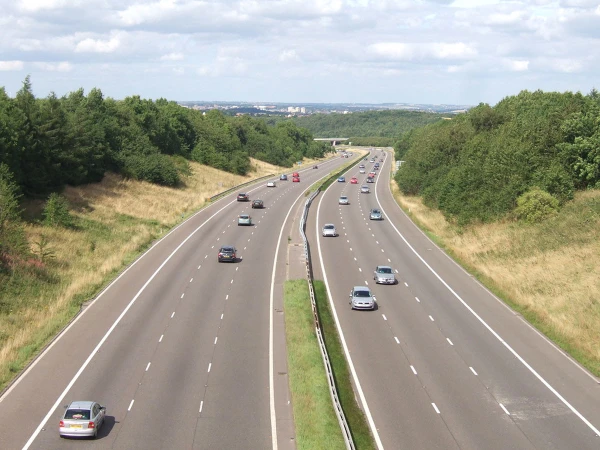
Islamabad: A controversy over a motorway incident involving a couple’s video and growing concerns over delayed road projects dominated the Senate Standing Committee on Communications meeting, where lawmakers questioned the role of motorway police and raised serious concerns over incomplete highways due to funding problems.

The committee was informed that the motorway police officer involved in the incident had been suspended and an inquiry was underway after officials clarified that moral policing is not part of the department’s official duties.

Inspector General Motorway Police told the committee that the incident took place on 16 July when motorway police found a vehicle parked on the roadside. He said an argument developed when the vehicle moved away.

The IG informed lawmakers that stopping people for moral reasons is not included in the motorway police’s standard operating procedures. He assured the committee that action had been taken against the officer involved and the inquiry would be completed soon.

The Senate Standing Committee on Communications, chaired by Senator Pervaiz Rashid, also reviewed major road development issues and questioned delays in important infrastructure projects.

During the meeting, lawmakers raised concerns over the incomplete Kuchlak to Zhob N50 Highway project, which covers around 298 kilometres. Officials informed the committee that the project remains unfinished because of a shortage of funds.

Senator Zameer Hussain Ghumro questioned why new development plans are considered when existing projects are still waiting for completion. The Additional Secretary of the Ministry of Communications informed the committee that no new projects had been started during the current year.

The committee stressed that incomplete projects increase public difficulties and may also increase costs because delays often create additional financial pressure. Members discussed improving the National Highway Authority’s funding system so road projects can continue without stopping due to delayed payments.

The committee recommended that project funds should be released every three months to ensure contractors receive payments on time and construction work continues smoothly. Officials also discussed creating a bridge financial system to prevent road projects from being affected by temporary funding shortages.

The committee was briefed about financial matters related to development loans and agreed that funding mechanisms should be discussed separately to create better policies for future projects.

Senator Muhammad Abdul Qadir also raised concerns about the distribution of development funds and pointed out differences in allocation for road projects. He said that out of Rs116 billion approved for Balochistan, around Rs100 billion was allocated for the N25 Highway project.

The committee said better planning was needed to ensure development funds are distributed effectively and important routes receive timely attention.

Several questions related to road projects in Chitral and Balochistan, including CPEC related highways and the Karachi Bela Road, could not be discussed because the members who had submitted the questions were not present.

Similar Posts

  • | |

    Rain inundates homes, shops in Rawalpindi

    Heavy rain in Rawalpindi has caused flooding in several low-lying areas, creating difficulties for residents. Water entered homes in Sadiqabad and Dhoke Elahi Bakhsh. Residents faced problems as rainwater accumulated inside residential areas. Several major roads were also affected. Rainwater collected on Murree Road, Rawal Road and Dhoke Khaba, disrupting traffic and making movement difficult. The situation became more difficult as WASA drainage teams had yet to reach some affected areas. Residents were waiting for authorities to clear the accumulated water. Water also entered shops in some areas, causing inconvenience to traders and residents. Meanwhile, the rain in Rawalpindi and Islamabad later stopped. Following the end of the rainfall, the water level in Nullah Lai began to fall. At Kattarian, the water level dropped to around 14 feet. At the Gawalmandi Bridge, the water level was recorded at around 16 feet. The rainfall has highlighted the vulnerability of low-lying areas in Rawalpindi to urban flooding. Residents have called for timely drainage operations to prevent rainwater from entering homes and businesses. The weather department has also forecast rain at some places in Punjab, Balochistan and Khyber Pakhtunkhwa. Authorities are expected to remain alert in areas vulnerable to flooding and water accumulation.

  • | | | |

    Iran says Pakistan-Turkey-Saudi pact not aimed at Tehran

    Iran has said it has no reason to believe that the new security agreement between Pakistan, Turkey and Saudi Arabia is aimed against Tehran. Iranian Foreign Ministry spokesperson Esmaeil Baghaei said the agreement should not be viewed as a direct threat to Iran. He said the new regional security arrangement reflects a broader change in how countries in the Middle East are approaching their security needs. Baghaei said regional states are increasingly recognising that the United States cannot guarantee long-term security in the region. He also accused Washington of contributing to instability in the Middle East. He said regional security arrangements could help strengthen stability if they take into account the political and historical realities of the region. He also called for such arrangements to be broad and inclusive. Baghaei said Iran would not resume direct negotiations with the United States while Washington continues to violate an interim agreement between the two sides. Iran has also linked the reopening of the Strait of Hormuz to several demands from Washington. Iranian Foreign Minister Abbas Araghchi said Tehran and Oman were close to finalising an agreement on new shipping routes through the strategic waterway. He said the agreement was in its final stages. However, Araghchi stressed that an agreement with Oman would not automatically lead to the reopening of the strait. He said the United States would first need to meet several conditions set by Tehran. Iran is demanding compensation for damage caused by US attacks. It is also calling for an end to US military threats and sanctions against Iran. Iran has further demanded an end to attacks against its regional allies. Other demands include the removal of restrictions on Iranian shipping and the release of frozen Iranian assets. The Strait of Hormuz is a major international route for oil and gas shipments. Its prolonged closure has raised concerns over global energy supplies and shipping. Iran and the United States are currently not holding direct talks. Tehran says it will not enter direct negotiations while Washington continues to breach the interim agreement reached earlier this year. Messages between the two countries are being exchanged through intermediaries. Iran has also made a major change in its national security leadership. Former Revolutionary Guards commander Mohsen Rezaei has been appointed secretary of the Supreme National Security Council. Rezaei replaces Mohammad Bagher Zolghadr, who had been appointed to the position in March. No official reason was given for the change. The move, however, comes at a sensitive time for Iran as tensions with the United States and Israel remain high. Rezaei, 71, is a senior figure in Iran’s political and security establishment. He led the Islamic Revolutionary Guard Corps from 1981 to 1997. He served during much of the Iran-Iraq war. He later spent more than two decades as secretary of Iran’s Expediency Discernment Council. Rezaei also served as vice president for economic affairs from 2021 to 2023 under former President Ebrahim Raisi. Iran’s Supreme Leader Mojtaba Khamenei has also appointed Rezaei as his representative on the Supreme National Security Council. Zolghadr has been appointed as Khamenei’s political adviser. The Supreme National Security Council coordinates Iran’s security and foreign policy. It includes senior military, intelligence and government officials. Meanwhile, differences between the United States and Israel are reportedly growing over military operations across the region. Israeli broadcaster Channel 13 reported that Washington is pushing Israel to move toward ending fighting on three fronts. These include Gaza, Lebanon and Iran. US Central Command chief Admiral Brad Cooper reportedly conveyed the message during a visit to Israel. Washington wants progress toward reducing military operations and closing the three active fronts. Israeli officials, however, have indicated that they want to maintain freedom to act against Iran. Israeli military officials reportedly told their US counterparts that Israel intends to retain the ability to strike Iran if Tehran continues developing its nuclear programme or rebuilding its ballistic missile capabilities. Washington is also pushing for further Israeli withdrawals from positions in southern Lebanon. In Gaza, the United States is seeking progress toward a broader settlement. It is also supporting the deployment of a multinational force in the territory. Israeli security officials have reportedly objected to some US demands. These include reducing military operations and targeted killings in Gaza. The developments point to growing differences between Washington and Tel Aviv over how to manage conflicts involving Iran, Lebanon and Gaza. At the same time, the United States appears to be adopting a more cautious approach toward Iran. Tehran, however, continues to link the reopening of the Strait of Hormuz to major concessions from Washington.

  • | | |

    Jamaat-e-Islami storms streets over petrol levy

    Jamaat-e-Islami (JI) has staged sit-ins in Karachi, Lahore and Peshawar against the petroleum levy, rising fuel prices and inflation. In Karachi, a JI rally led by Karachi chief Munim Zafar reached Fawara Chowk. The party had announced a sit-in outside the Governor House to protest the petroleum levy. JI workers are moving towards the Governor House from the Sindh High Court. Party activists have been raising concerns over the impact of the petroleum levy and rising fuel prices on the public. Following the sit-in at Fawara Chowk, the road leading towards the Press Club and Arts Council remains open for traffic. Police personnel have also been deployed near the Governor House to maintain security and manage the situation. In Lahore, JI workers staged a sit-in at Faisal Chowk on Mall Road, near the Chief Minister’s House. JI Pakistan chief Hafiz Naeemur Rehman also reached the protest site and joined the demonstrators. The protest in Lahore was led by JI Punjab chief Javed Kasuri and other party leaders. The protesters are demanding relief from rising petroleum prices and the petroleum levy. The party has also criticised the increasing burden of inflation on ordinary citizens. JI leaders have called for measures to reduce the financial pressure faced by the public. In Peshawar, JI workers staged a sit-in outside the Governor House. The protest has resulted in the closure of the road up to the Sadar Khyber Pakhtunkhwa Assembly Chowk. JI Deputy Emir Liaquat Baloch is scheduled to address the protesters in Peshawar. Party leaders are expected to highlight their demands regarding petroleum prices, the levy and inflation. The demonstrations are part of JI’s wider campaign against the petroleum levy and rising prices. The party has announced protests in different cities to pressure the government to provide relief to consumers. JI leaders have argued that increases in petroleum prices affect the prices of transport, food and other essential goods. They have demanded that the government reconsider the petroleum levy and take steps to control inflation.

  • | |

    DNA tests ordered after Mir Raza Ali’s grave exh…

    KARACHI: An eight-member medical board has completed a fresh post-mortem examination of Wafflix owner Mir Raza Ali’s exhumed remains and sent samples for DNA and chemical testing, amid questions over the identity of the body and the circumstances surrounding his death. Ali’s grave was exhumed on Saturday at the Tariq Road cemetery in Karachi, where the medical board collected evidence before the remains were reburied. Professor Dr Naseem, a member of the medical board, said the samples had been properly preserved and would be examined at a laboratory. The testing will include DNA analysis and chemical examination, which officials say could provide crucial evidence in the case. The exhumation and re-post-mortem were conducted under the supervision of the judicial magistrate and police surgeon. Advocate Jibran Nasir said the process began at around 11:07am and was completed after the medical team collected the required evidence. He said the board had also addressed questions previously raised by the police surgeon. According to Nasir, an initial medical report was expected later on Saturday, while the final findings would be issued after completion of the chemical examination. The fresh examination is expected to help determine whether Ali died by suicide or was murdered and whether the injuries found on the body were self-inflicted or caused by another person. Nasir said the proceedings had been conducted satisfactorily and expressed appreciation for the judiciary’s intervention in the matter. He said the investigation could help resolve speculation and unanswered questions surrounding the young entrepreneur’s death. However, another member of the medical board, CPLC official Amir Hasan, raised a significant question over the identity of the remains. Hasan said the board was not yet certain that the exhumed body belonged to Ali. To establish the identity, DNA samples were collected from the remains as well as from Ali’s parents. He said the DNA comparison would determine whether the body buried at the cemetery was indeed that of Ali.

  • | |

    Court extends remand of PAF officer’s murder sus…

    An anti-terrorism court (ATC) in Islamabad has granted police another seven days of physical remand of Saad Abbasi, who is accused of killing Pakistan Air Force (PAF) Group Captain Asim Tariq. Abbasi was produced before the court on Monday after completing his initial seven-day physical remand. ATC Judge Abul Hasnat Muhammad Zulqarnain heard the case. The prosecution requested an additional 15 days of physical remand to continue the investigation. Prosecutor Raja Naveed Hussain Kayani told the court that police had recovered the pistol allegedly used in the killing. He said the suspect had allegedly concealed the weapon after the incident. The prosecution also informed the court that investigators had yet to recover the suspect’s mobile phone. Police said the phone could provide further information relevant to the investigation. After hearing arguments from the prosecution, the court reserved its decision on the remand request. The court later approved seven more days of physical remand. Abbasi was handed back to police custody for further investigation. The court directed police to produce the suspect before it again after the completion of the additional remand period. The case relates to the death of Group Captain Asim Tariq in Islamabad on July 5. According to the investigation, the PAF officer intervened when the suspect allegedly attempted to forcibly take a woman away. The situation reportedly escalated after Tariq intervened. The suspect allegedly opened fire, and the officer was struck by a bullet. Tariq succumbed to his injuries and was later declared a martyr. Islamabad police arrested Abbasi within nine hours of the incident. Investigators are continuing to examine the circumstances surrounding the shooting. Police are also working to recover the suspect’s mobile phone and gather additional evidence.

  • |

    Fact check: SRK never backed Jantar Mantar protest

    A social media claim suggesting that Bollywood star Shah Rukh Khan publicly backed the ongoing student demonstrations at Jantar Mantar in Delhi has been found to be untrue, following verification against his official accounts. A screenshot circulating widely online alleged that the actor had voiced solidarity with the protesting students. The post claimed he described himself as standing behind them “emotionally and morally.” The image spread rapidly, and a large number of social media users took it at face value, assuming Khan had genuinely made a public statement on the matter. But a closer look at his verified profiles told a different story. Neither his official Instagram nor his X account contained any post referencing the protest. According to various reports, the mix-up likely originated from a fan-run account operating under his name, which had been posting updates related to the demonstrations. A number of users apparently mistook these fan posts for statements coming directly from the actor himself. As the fake screenshot kept circulating, other users began flagging it as inauthentic. Comments pushing back on the claim appeared across social platforms. One person simply labeled it “Fake.” Another echoed the sentiment, writing, “This is fake.” A third user challenged those sharing it, asking why they were “spreading fake news” when the actor “has not posted anything.” Yet another dismissed it in Hindi, writing “Fake hai.” For his part, Shah Rukh Khan has stayed silent on the protest altogether. His attention, based on available reports, remains directed toward his upcoming release, ‘King’, rather than commentary on the demonstrations. The protests themselves have drawn considerable attention, pulling in thousands of participants. The gathering followed the larger ‘Chalo Sansad’ march, which appears to have been a catalyst for the broader movement. At this point, there is no confirmed or verified statement from Shah Rukh Khan addressing the protest in any capacity. Until his official channels indicate otherwise, claims attributing such remarks to him should be treated as unverified and, based on current evidence, false.

Leave a Reply

Your email address will not be published. Required fields are marked *