prime minister keir

UK Prime Minister Keir Starmer Resigns Amid Pressure from Labour Party

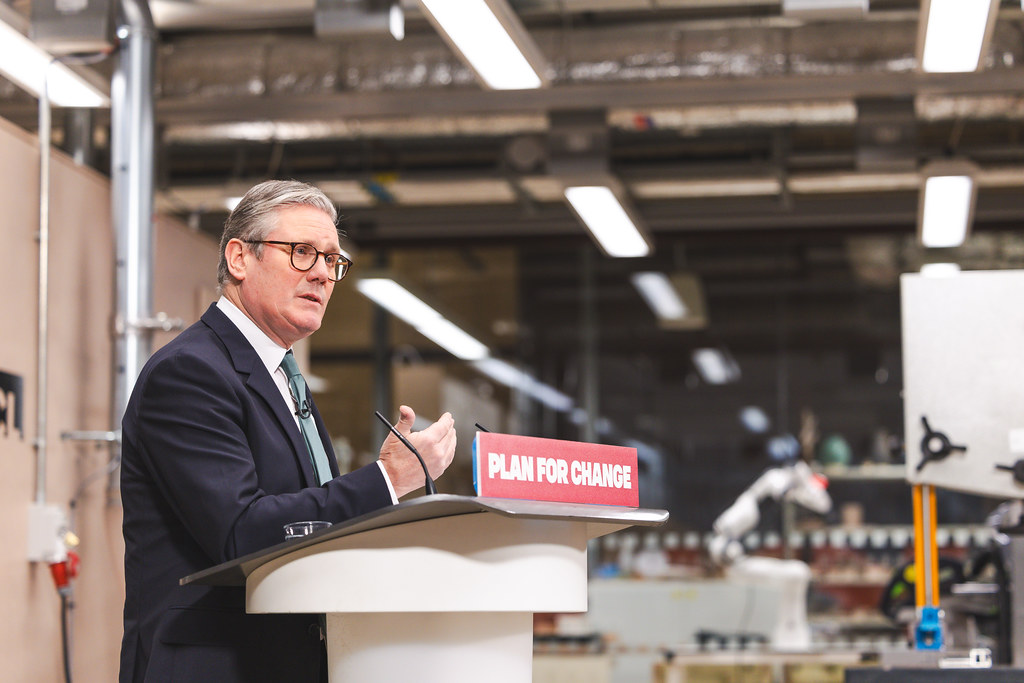
Keir Starmer announced his resignation as Leader of the Labour Party and Prime Minister of the United Kingdom on Monday, visibly emotional as he acknowledged that he had lost the confidence of his parliamentary group to continue governing. His appearance came after a weekend of reflection on his political future, besieged by pressure following a majority of Labour MPs expressing their support for Andy Burnham, the former Mayor of Manchester, as his successor. Burnham confirmed shortly afterwards that he would stand to replace Starmer.

Britain on High Alert: UK police prepare for more unrest

In a statement outside Number 10 Downing Street, Starmer, his voice breaking, said that “the question my party is now asking is whether I am the right person” to lead them until the next general election, scheduled for 2029. After hearing the response from his parliamentary group, he continued, he had “willingly” accepted the decision to “prioritise the country I love.” “That is why I will resign as Leader of the Labour Party. This morning I spoke to His Majesty the King to inform him of my decision,” Starmer said, visibly emotional in front of television cameras, surrounded by his ministers and Downing Street staff.

Starmer, who came to power on 4 July 2024 with an absolute majority in the general election after 14 years of Conservative governments, said he would ask the Labour Party’s National Executive Committee to establish a timetable for the leadership nomination period to open on 9 July and close before the parliamentary summer recess, which begins in the House of Commons on 16 July. “In the event of a leadership contest, this will ensure that there is a new leader before Parliament resumes in September,” he continued. As is customary in such cases to avoid a power vacuum, Starmer will remain in office until the election of a new leader, and on Monday he pledged to give “full support” to his successor. “I will remain as Prime Minister until the election is complete and I will do everything I can to ensure an orderly transition of power,” he assured.

The House of Commons will resume sitting after the summer break on 1 September. By then, the new British Prime Minister is expected to be Burnham, provided he ultimately faces no opposition from other candidates for the Labour leadership. If internal primaries were to take place, the new Prime Minister would assume office at the end of August, according to the British press. This means the United Kingdom will have its seventh Prime Minister in a decade. Since early 2016, Number 10 Downing Street has been occupied successively by Conservatives David Cameron, Theresa May, Boris Johnson, Liz Truss and Rishi Sunak, and Labour’s Keir Starmer, with the seventh now awaiting designation.

Starmer, who spent the weekend with his family at his Chequers country residence outside London, was forced to leave power after Burnham entered Parliament as an MP by winning Thursday’s by-election in Makerfield, in north-west England, a necessary step for a potential challenge to the Prime Minister’s leadership. Burnham, a “charismatic” figure within Labour, confirmed shortly after Starmer’s announcement that he would run to replace the still Prime Minister, for which he would need the support of at least 81 Labour MPs—20% of the parliamentary group—but is estimated to already have at least 200.

What remains to be seen is whether Burnham, who enjoys broad support among Labour MPs, will be the sole candidate to replace Starmer, or whether there will be other contenders. Wes Streeting, who resigned as UK Health Minister in May in protest at Keir Starmer’s government management and had expressed his intention to run for leadership, declared his support for Burnham on Monday. Several British media outlets, including The Observer, The Guardian and The Telegraph, had already reported on Sunday that the UK head of government had decided to resign after a majority of Labour MPs expressed support for Burnham as his successor.

US President Donald Trump also took it for granted on Sunday that Keir Starmer would resign and, while wishing him luck, considered that the British head of government had failed on issues such as migration and energy policy. Finally, on Monday, Starmer announced his resignation after receiving pressure from his ministers and MPs following the electoral setback suffered by Labour in the English local elections and regional elections in Scotland and Wales on 7 May.

In his statement alongside his wife Victoria, the Labour leader said that two years ago Labour returned to power after 14 years in opposition, beginning “a new chapter in our country’s history after years of disappointment and despair, the opportunity to improve the lives of millions of people.” “I was told time and again that my party was finished, that we were consigned to history, that a majority in a general election, let alone a landslide, was impossible. But we proved them wrong, because we transformed our party, eradicating the poison of antisemitism, restoring confidence in the economy, defence and national security, and making us a party again,” he argued.

At the helm of a Labour government, in less than two years, Starmer went from winning an absolute majority with the promise of bringing change to the country to becoming tremendously unpopular among the British. A lawyer by profession, with a serious and uncharismatic profile—far from the eccentricities of Boris Johnson—Starmer nevertheless had a long and successful political and public management career as his main asset.

But Starmer’s Labour mandate has been characterised by its lukewarm positioning on controversial issues such as the Palestinian-Israeli conflict, as well as by some highly criticised fiscal and policy decisions, such as cutting pensioner benefits, attempting to limit subsidies for families with three children, or the appointment of former minister Peter Mandelson, who has close ties to convicted American paedophile Jeffrey Epstein, as ambassador to Washington.

Three dead, many injured including several children, after multiple stabbing in north Liverpool

On the other hand, he also advocated restoring relations between the United Kingdom and the European Union, damaged after Brexit, in trade, security and defence matters—without daring to advocate for the country’s return to the EU—and took a leading role in international initiatives such as the so-called Coalition of the Willing, alongside France, to create a possible multinational peace force in Ukraine.

-Thailand News (TN)

Similar Posts

  • | |

    Brooklyn Beckham and Nicola Peltz reportedly embra…

    Brooklyn Beckham and Nicola Peltz are reportedly redefining how they celebrate their marriage by marking the anniversary of their 2025 vow renewal instead of the date of their lavish 2022 wedding. According to new reports, the couple no longer looks back fondly on their original Palm Beach wedding and have decided to make their private vow renewal the milestone they celebrate each year. The reported shift has sparked fresh speculation about the reasons behind the change, especially amid ongoing rumors of family tensions involving the Beckham family. (hellomagazine.com⁠ and people.com⁠) Sources claim that Brooklyn, 27, and Nicola, 31, see their 2025 vow renewal as a more meaningful reflection of their relationship. Unlike their star-studded wedding, which attracted global media attention, the renewal ceremony was reportedly a quiet and deeply personal occasion attended by only a small group of loved ones. An insider told The Sun that the couple now considers the vow renewal to be the true celebration of their marriage. According to the source, the original wedding has become associated with difficult memories, while the intimate ceremony allowed them to focus solely on each other and their commitment. (thesun.co.uk⁠) Brooklyn and Nicola tied the knot in April 2022 at the Peltz family estate in Palm Beach, Florida. The lavish event made headlines around the world but was later overshadowed by reports of disagreements within the Beckham family, particularly involving Brooklyn’s mother, Victoria Beckham. Although members of the family have repeatedly dismissed claims of a lasting feud, speculation has continued to follow the couple over the years. (people.com⁠) Neither Brooklyn nor Nicola has publicly commented on the latest reports about their anniversary tradition. However, the pair have consistently shared affectionate tributes to one another on social media, often describing each other as best friends and expressing gratitude for their marriage. The reported decision reflects a growing trend among some couples who choose to celebrate meaningful milestones beyond their wedding day. For Brooklyn and Nicola, the vow renewal is said to represent a fresh chapter in their relationship, free from outside pressures and public scrutiny. Despite ongoing rumors surrounding family dynamics, those close to the couple say they remain focused on building their future together. Brooklyn has frequently spoken about his admiration for Nicola, while she has publicly supported his personal and professional endeavors. As neither the Beckham nor Peltz families have addressed the latest claims, the reports remain unconfirmed. Still, the story has generated significant interest among fans, many of whom have praised the idea of celebrating the moment that feels most meaningful rather than simply following tradition. Whether or not the reports prove accurate, Brooklyn Beckham and Nicola Peltz continue to show that they are determined to define their marriage on their own terms. If the vow renewal has indeed become their new anniversary tradition, it marks another example of the couple choosing personal meaning over public expectation as they continue their journey together.

  • | | |

    Rana slams Naqvi’s ‘confusing’ provinces rem…

    Prime Minister Shehbaz Sharif’s Adviser on Political Affairs, Rana Sanaullah, said it was true that former prime minister Nawaz Sharif had instructed party leaders not to respond to Interior Minister Mohsin Naqvi’s recent statements. He added that the Pakistan Muslim League-Nawaz (PML-N) strongly disagreed with both the content and tone of Naqvi’s remarks. Speaking on a television programme, Rana Sanaullah described Mohsin Naqvi’s comments as “meaningless” and lacking context. He said he had listened to Naqvi’s speech but could not understand what message he was trying to convey. “It appeared that he wanted to make a significant point but failed to explain it properly. Once he made the statement, his subsequent remarks contradicted one another. I simply could not understand what he was saying or why he was saying it,” Rana Sanaullah said. He stressed that whenever a person makes a public statement, it reflects their personal opinion, adding that it was up to Mohsin Naqvi to clarify the intent behind his remarks and take responsibility for their interpretation. Responding to Naqvi’s proposal regarding the creation of new administrative units or provinces, Rana Sanaullah said such matters could not be decided merely through public statements. “You cannot simply talk about new provinces and expect them to come into existence. The Constitution clearly defines the procedure for creating new provinces or administrative units,” he said. He maintained that the issue should first be debated in Parliament, while the final decision would rest with the leadership of the political parties. Rana Sanaullah recalled that during the PML-N government in Punjab from 2013 to 2018, the party had formally proposed the creation of new provinces. He said he had personally presented both the resolution and the proposal for establishing a commission to examine the matter. He explained that a national commission would have to be formed to review all aspects of creating new provinces, including financial resources, administrative arrangements and constitutional requirements. “The commission would also need to consult on representation in the National Assembly, provincial assemblies and the Senate. This is a highly complex issue that requires serious deliberation by experienced policymakers,” he said. Rana Sanaullah added that Pakistan could adopt smaller provinces, a stronger local government system, or even both, but such decisions should be made collectively by political parties after thorough consultation

  • Cambodia Pushes for Immediate Ceasefire as Border Talks Resume

    BANGKOK – Cambodian Defence Minister Tea Seiha has formally called for an immediate end to hostilities and full implementation of existing ceasefire agreements in a letter to his Thai counterpart. The proposal, dated December 22, urges a return to the terms of the Kuala Lumpur ceasefire agreement signed on July 26 and the Joint Declaration […]

  • | |

    China’s burger boom draws coffee chains and …

    Burgers have become one of China’s most contested fast food categories, with budget minded diners and shrinking household sizes fueling a rush that now includes hotpot operators and coffee brands alongside established global chains. Yum China’s Pizza Hut Burger Bar concept, which places a dedicated burger counter inside existing Pizza Hut locations, expanded to more than 200 outlets within six months, the company said in July. Yum China plans to grow the format to between 500 and 600 outlets by the end of 2026, representing roughly 10 percent of its total Pizza Hut store network in China. The surge into burgers reflects broader changes in Chinese consumer habits. As households shrink and economic uncertainty keeps spending cautious, diners increasingly favor lower cost, portable meals that deliver convenience without sacrificing value. That shift has transformed burgers from a niche Western import long dominated by McDonald’s, KFC and Burger King into one of the most fiercely contested segments of China’s restaurant industry, drawing a wave of new entrants eager to capture market share. Last month, hotpot chain Haidilao entered the space with a new concept called Huanxianbao, or Fresh Burger, which sells burgers alongside pizza, pasta and fried chicken. Coffee chain M Stand has also opened burger focused locations in several cities. China’s Western style fast food market was valued at 499.65 billion yuan, or about $74.1 billion, in 2025 and is projected to reach 587.09 billion yuan by 2027, according to data provider iiMedia Research, even as several global brands face broader challenges in the market. Burgers ranked as the top preference among consumers surveyed, with 55 percent selecting the category. While still a relatively small slice of China’s overall fast food industry, the burger segment alone was worth $18.4 billion in 2025 and is expected to grow 8.7 percent annually through 2035, according to Emergen Research. Part of the category’s appeal lies in simple economics. Food industry analyst Zhu Danpeng said burgers offer a lower cost alternative to full service restaurant meals while still functioning as a substantial meal, calling them a strong value for money option amid cautious consumer spending. Wang Fang, a university student in Beijing, said burgers have become a default lunch choice for her and her classmates because they cost less than ordering several dishes at a sit down restaurant. She said a burger loaded with meat, vegetables and butter makes for an affordable, balanced meal. The category’s rise also tracks with shifting demographics. Growing numbers of single person households, smaller families and young urban professionals have driven demand for convenient meals sized for one, a trend Yum China says is opening opportunities across its brand portfolio. Pizza Hut added burgers to its menu in 2024, and by 2025 the category accounted for a mid single digit percentage of Pizza Hut’s total sales in China, the company said. Yum China expects burgers to generate more than 1 billion yuan in sales this year, representing 5 to 6 percent of the brand’s revenue. The company said burgers resonate strongly with takeaway and delivery customers in China, where 43 percent of consumers order delivery at least once a week, compared with a global average of 23 percent, according to Euromonitor. The growing appetite for burgers has drawn competitors from across the industry. Domestic chains such as Tasiting now compete directly with McDonald’s, Yum China’s KFC and Shake Shack for market share. International brands are eager to join the competition as well. When US chain Five Guys opened its first stores in Beijing this month, customers waited more than two hours to be served. Wendy’s said in May that it plans to enter the Chinese market and open as many as 1,000 franchised restaurants over the next decade. Liu Tao, a 48 year old musician in Beijing, regularly takes his 11 year old son to McDonald’s on Sundays, fitting the meal into a tight schedule between the boy’s math and English classes. He said burgers work well when time is short and he needs food that feels clean, quick and won’t bore his son, noting that his son often eats in the car on the way to his next class.

  • | |

    Anas Sarwar joins UK Cabinet as Trade Minister

    Anas Sarwar has resigned as leader of the Scottish Labour Party after accepting the post of Minister of State for Trade in Prime Minister Andy Burnham’s government. The move ends his five-year leadership of the party and opens a new chapter in his political career at the national level. Sarwar confirmed that he will step down from the Scottish Parliament and will receive a life peerage, allowing him to take a seat in the House of Lords. From there, he will serve as a minister in the UK government and take responsibility for trade-related matters. In a statement, Sarwar said it was a great honour to be asked to join the government. He said public service has always been the driving force behind his political career. He added that serving the entire United Kingdom in the new role is a responsibility he accepts with humility and determination. Sarwar also reflected on Scottish Labour’s disappointing performance in the recent Scottish Parliament elections. The party won only 17 seats in the 129-member parliament, its worst result on record. He admitted that he shares responsibility for the defeat and said he was sorry that the party had failed to meet expectations. Despite the setback, Sarwar said the country faces serious political and economic challenges that require strong leadership. He warned that the rise of right-wing politics presents a major test for the United Kingdom. He said the Labour government must succeed in delivering stability, economic growth and better opportunities for people across the country. Following his resignation, Scottish Labour deputy leader Dame Jackie Baillie has taken over as acting leader. She thanked Sarwar for his leadership and praised his commitment to equality, fairness and public service. She said the party’s executive committee will soon announce the timetable for electing a new permanent leader. Sarwar’s departure from the Scottish Parliament will not trigger a by-election because he was elected through the regional list system. Under parliamentary rules, the next eligible Labour candidate on the Glasgow regional list is expected to replace him. His decision has sparked strong political debate. Opposition parties accused him of changing his position after previously supporting the abolition of the House of Lords. Critics also pointed to his earlier statements in which he said his main goal was to become Scotland’s first minister and remain focused on Scottish politics. Political leaders offered mixed reactions to the announcement. Some congratulated Sarwar on his new role and wished him success in government. Others argued that accepting a seat in the House of Lords contradicts his previous promises and could damage public confidence in politics.

  • | |

    IHC reserves verdict on judges’ appointments ple…

    The Islamabad High Court (IHC) on Thursday reserved its verdict on the maintainability of a petition challenging the delay in the approval of judicial appointments for high courts across the country. Justice Arbab Muhammad Tahir heard the petition filed by advocate Luqman Zafar Chaudhary through his counsel Zahid Asif Chaudhry. The petitioner requested the court to direct President Asif Ali Zardari to approve a summary forwarded by the prime minister for the appointment of 19 additional judges and the confirmation of five judges in the Islamabad, Lahore, Sindh, Balochistan and Peshawar high courts. During the hearing, the petitioner’s lawyer argued that the Judicial Commission of Pakistan (JCP) had recommended the appointments during its meetings held on July 20 and 21. He said the summary was later sent to the president for approval, but no decision has been made despite the passage of more than two weeks. The counsel maintained that the delay is affecting the functioning of the superior judiciary. He informed the court that the tenure of an additional judge of the Sindh High Court has already expired, while the terms of four additional judges of the Peshawar High Court are expected to end within the coming days. The lawyer also told the court that reports suggest the government may issue notifications regarding the appointments within the next 48 hours. Justice Tahir repeatedly questioned whether a constitutional petition could legally be maintained against the president. He asked the petitioner’s counsel to cite any previous court ruling in which a writ had been issued against the president regarding the exercise of constitutional powers. The court observed that the judgments presented by the petitioner did not support the argument that courts could direct the president in matters governed by Article 48 of the Constitution. Justice Tahir asked whether any legal precedent existed requiring the president to act on such matters through a judicial order. The petitioner’s counsel argued that Article 48 requires the president to act on the advice of the prime minister or the cabinet. He maintained that the president has no independent authority to indefinitely delay judicial appointments once the Judicial Commission has completed its recommendations. The lawyer further argued that the Ministry of Law is the competent authority to issue appointment notifications after the completion of the constitutional process. He claimed that the president’s role in the appointment process is largely formal and that unnecessary delays should not hinder the functioning of the judiciary. The petitioner requested the court to seek responses from the federal government, the Prime Minister’s Office and the Ministry of Law regarding the status of the pending summary. However, the court declined to issue notices at this stage.

Leave a Reply

Your email address will not be published. Required fields are marked *