
womens t20 asia
| |

Women’s T20 Asia Cup 2026 likely to be held in U…

The Women’s T20 Asia Cup 2026 is expected to be hosted by the United Arab Emirates (UAE), with participating teams reportedly informed about the possible tournament dates through unofficial channels. The Asian Cricket Council (ACC) is expected to make an official announcement regarding the venue and schedule soon.

According to cricket reports, the tournament is likely to take place from August 28 to September 13 and will feature eight teams competing for the continental title. The UAE has emerged as the likely host after discussions regarding the tournament’s arrangements and logistics.

The competition is expected to include some of the leading women’s cricket teams from Asia, including Pakistan, India, Sri Lanka, Bangladesh, Nepal, Malaysia, Thailand, and the UAE. The participation of eight teams highlights the growing popularity and development of women’s cricket across the region.

The Women’s Asia Cup has become one of the most important tournaments in the Asian cricket calendar, providing teams with an opportunity to compete at a high level and prepare for major international events. The upcoming edition is expected to attract significant attention from cricket fans across Asia.

The Board of Control for Cricket in India (BCCI) has already announced its squad for the tournament. Star all-rounder Harmanpreet Kaur has been retained as captain of the Indian women’s team, with the side aiming to continue its strong performances in regional competitions.

Pakistan’s women’s team is also expected to participate in the tournament as part of its preparations for upcoming international assignments. The competition will provide players with valuable experience against some of Asia’s strongest cricketing nations.

The UAE has previously hosted several international cricket events due to its modern facilities, suitable playing conditions, and established cricket infrastructure. Venues in the country have regularly hosted international matches and major tournaments, making it a preferred destination for cricket events when neutral venues are required.

The final confirmation of the venue, match schedule, and tournament details will come from the Asian Cricket Council. Until then, teams are expected to continue preparations based on the proposed dates.

With regional rivals set to compete and eight teams participating, the Women’s T20 Asia Cup 2026 is expected to be an exciting event for fans and an important platform for the growth of women’s cricket in Asia.

Similar Posts

  • | | |

    CM Punjab approves 800 mini dams for Potohar water…

    POTOHAR: Punjab Chief Minister Maryam Nawaz Sharif has approved an ambitious plan to construct 800 mini dams across the Potohar region over the next three years, marking one of the province’s largest initiatives aimed at improving rainwater storage and tackling water scarcity. The decision was taken during a high-level meeting on water conservation and groundwater management, where officials briefed the Chief Minister on ongoing efforts to protect Punjab’s water resources. Authorities informed the meeting that 110 mini dams have already been completed across the province, contributing to improved water preservation. The new project is expected to add storage capacity of approximately 32,000 acre-feet of rainwater, strengthening water security for agriculture and local communities. Maryam Nawaz also directed officials to prepare a comprehensive strategy for developing natural and artificial water bodies while calling for stronger legislation to regulate groundwater use. To improve oversight, dedicated personnel will be assigned to monitor water conservation initiatives. The chief minister instructed the agriculture, irrigation, housing and local government departments to work together to ensure the effective implementation of water-saving measures. Officials presented photographic evidence of recently completed mini dams in Attock, Talagang, Gujar Khan and Rawalpindi, highlighting progress already made in the region. During the briefing, authorities revealed that Punjab has developed a strategy to minimise water losses, which currently stand at around 30 per cent during distribution and 25 per cent during consumption. They also reported that the lining of 2,600 watercourses covering nearly 7,000 kilometres has already delivered significant water savings. Over the next three years, another 4,500 watercourses stretching 11,500 kilometres will be upgraded. The meeting was informed that high-efficiency irrigation systems have already conserved around 18,000 acre-feet of water while boosting crop productivity by nearly 50 per cent. The government now plans to extend modern drip and sprinkler irrigation systems to an additional 30,000 acres. Officials further stated that 100 groundwater recharge wells are already operational in the Gujranwala, Gujrat and Lahore divisions, with another 300 nearing completion to strengthen groundwater reserves. The chief minister also reviewed the availability of fertilisers across Punjab and approved the provision of 1,000 new laser land levellers to farmers at a 50 per cent subsidy during the current financial year to promote efficient farming practices. In a separate meeting on law and order, Maryam Nawaz directed authorities to adopt a zero-tolerance approach against rape, child abuse and corruption. She was also informed that the Safe City Project has now been implemented in all 43 districts of Punjab and is expected to be inaugurated soon, further enhancing public safety and surveillance across the province.

  • |

    Powerful 7.4 magnitude earthquake hits western Colombia, killing at least 111

    A powerful 7.4 magnitude earthquake struck western Colombia on Monday, killing at least 111 people and injuring dozens more in what authorities have confirmed is the country’s strongest earthquake of the 21st century. The massive tremor struck at a depth of 107 kilometres, with its epicentre located near Chocó. Despite occurring deep beneath the Earth’s crust, the intense seismic shock waves triggered widespread destruction across densely populated urban valleys throughout western Colombia and the primary coffee-growing regions. In Pereira, a four-story building collapsed into rubble, while video footage from Manizales captured the catastrophic collapse of one of the side towers of the city’s historic neo-Gothic cathedral. Severe building collapses and casualties were also reported in Cali, where local residents formed human chains alongside emergency responders to shovel away fallen concrete and pull survivors from trapped spaces. Thrusting the administration into its first major crisis just days after his inauguration, President Abelardo De La Espriella declared a national state of emergency. In a live television address, De La Espriella announced that all available state and military resources were being deployed to western Colombia, confirming that the national government’s immediate priority remains the location and rescue of victims trapped beneath collapsed structures. Severe regional communications outages initially delayed casualty reporting from rural zones near the epicentre in Chocó, where Governor Nubia Carolina Córdoba confirmed at least 12 fatalities and scores of injuries. Meanwhile, Colombia’s civil aviation authority halted flight operations across key regional airports, including facilities in Pereira, Manizales, Quibdó, Armenia, Cartago, and Buenaventura, while structural engineers assess airfield and terminal safety. The Colombian Geological Service recorded over 20 aftershocks following the initial quake and warned that additional tremors remain likely. Sitting directly along the seismically active Pacific Ring of Fire, western Colombia previously suffered a devastating magnitude 6.2 earthquake in 1999 that claimed more than 1,000 lives across the same region.

  • |

    Moroccan migrants return home after failed bid to reach Europe

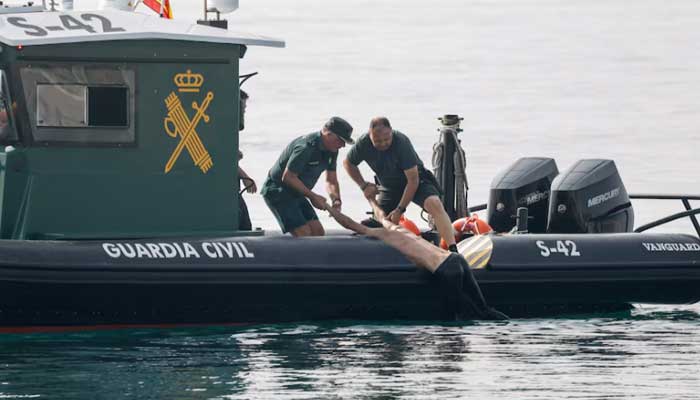
    Thousands of Moroccan migrants who entered Spain’s North African enclave of Ceuta this week have begun returning home after their hopes of reaching mainland Europe faded. Many said they were driven back by hunger, exhaustion and difficult living conditions, while others claimed they faced hostility after arriving in the Spanish territory. Several returnees said they had decided to cross into Ceuta after watching viral social media videos and receiving messages from friends claiming the heavily guarded border could be breached. Believing they had a chance to build a better future in Europe, many left their jobs and travelled to the border. However, after reaching Ceuta, migrants discovered there was no clear route to mainland Spain. Many said they became stranded in the enclave with limited access to food, water and shelter. One migrant said he survived for three days by drinking only water because he could not afford food. He described the cost of basic meals as extremely high and said life in Ceuta was far more difficult than he had expected. Returning migrants also claimed that many supermarkets and shops remained closed, making it difficult to buy essential supplies. Some spent days in wet clothes after swimming across the border and struggled to find safe places to rest. Several migrants alleged they were forced to leave certain neighbourhoods by local residents, although those claims could not be independently verified. Spanish authorities confirmed that two people suffered minor injuries in separate knife attacks and said one suspect had been arrested. Officials added that no deaths linked to the incidents had been reported. The large influx also affected businesses on both sides of the border. In the Moroccan border city of Fnideq, hotels and restaurants faced staff shortages after several workers crossed into Ceuta. Some employers have already begun looking for replacement workers as many employees remain missing. Meanwhile, daily life in Ceuta has gradually started returning to normal. Cafes have reopened in parts of the city, while police continue to maintain a strong security presence. Many businesses, however, remain closed as authorities monitor the situation. Aid workers said migrant reception facilities are operating at full capacity, with thousands of people still believed to be inside the enclave awaiting assistance or decisions on their future. Local residents expressed mixed emotions over the crisis. While many admitted the sudden arrival of thousands of migrants created fear and uncertainty, others said they sympathised with the young people, arguing they had been misled by false hopes of an easier route into Europe.

  • | |

    Pakistan cuts petrol price by Rs. 4.08 per litre, …

    The federal government has announced a reduction in petroleum prices, lowering the cost of petrol by Rs. 4.08 per litre and high-speed diesel (HSD) by Rs. 2.45 per litre. The revised prices will come into effect from August 4, providing some relief to consumers amid easing international oil prices. According to a notification issued by the Petroleum Division, the new price of petrol has been fixed at Rs. 331.95 per litre, while high-speed diesel will now be available at Rs. 389.93 per litre. The latest revision follows a decline in global crude oil prices after geopolitical tensions in the Middle East showed signs of easing. Despite the reduction, the government continues to impose substantial taxes and duties on petroleum products. Petrol carries approximately Rs. 110 per litre in taxes and levies, while diesel is subject to Rs. 96 per litre in government charges. Fuel prices had surged sharply earlier this year following heightened tensions between the United States and Iran, which raised concerns about potential disruptions to global oil supplies. High-speed diesel reached a record Rs. 520.35 per litre on April 3 after climbing from Rs. 281 per litre in late February. During the same period, petrol rose from Rs. 266 per litre to a peak of Rs. 458.41 per litre. Earlier, Petroleum Minister Ali Pervaiz Malik announced that fuel prices would now be reviewed daily instead of weekly in response to increased volatility in international energy markets. Under the new mechanism, the Oil and Gas Regulatory Authority (OGRA) has been tasked with determining petroleum prices based on prevailing global market trends. The decision to introduce daily pricing has, however, faced criticism from the All Pakistan Petroleum Dealers Association, which has opposed the move and indicated that it may consider launching protests against the policy. Petrol remains the primary fuel used by private vehicles, motorcycles, rickshaws, and small transport, making its price particularly important for middle- and lower-income households. Meanwhile, high-speed diesel is widely consumed by the heavy transport sector, agriculture, industries, power plants, and commercial generators, meaning changes in diesel prices have a broader impact on transportation costs, supply chains, and inflation. The latest reduction is expected to provide modest financial relief to consumers and businesses. However, future fuel prices will largely depend on international crude oil trends, exchange rate movements, and developments in the Middle East, all of which continue to influence Pakistan’s petroleum pricing policy.

  • | |

    Fatima Jinnah remembered for inspiring legacy on b…

    SIALKOT: Government College Women University Sialkot (GCWUS) commemorated the birth anniversary of Madar-e-Millat Fatima Jinnah, honouring her remarkable role in Pakistan’s independence movement, her commitment to women’s empowerment, and her lasting contributions to nation-building. In a statement issued on Friday, the university described Fatima Jinnah as one of the country’s most influential national figures. Born in Karachi on July 31, 1893, she remained a steadfast supporter of her brother, Quaid-e-Azam Muhammad Ali Jinnah, and played a pivotal role in encouraging Muslim women to actively participate in the struggle for an independent homeland. The university also highlighted her leadership in establishing the All India Muslim League Women’s Committee in 1937, an initiative that helped spread the message of the Pakistan Movement among women across the subcontinent and strengthened their political participation. Paying tribute to her humanitarian efforts, GCWUS noted that Fatima Jinnah also devoted herself to the rehabilitation of refugees and the provision of medical assistance following the creation of Pakistan. The university said her vision, courage, and dedication continue to inspire generations, reaffirming her enduring place in the country’s history as a symbol of patriotism, resilience, and public service.

  • | | |

    1,300-year-old shipwreck hides incredible gold tre…

    Archaeologists have uncovered an extraordinary collection of gold coins and precious jewelry from a sunken Byzantine-era ship near Croatia’s southern coastline, offering new insights into the empire’s maritime history and suggesting that a high-ranking official may have been among the passengers. The ancient shipwreck was first discovered more than a decade ago, but researchers spent several years conducting detailed underwater excavations before releasing their findings. The results, announced on Thursday, indicate that the vessel most likely dates back to the seventh or eighth century AD, making it one of the region’s most significant archaeological discoveries in recent years. According to experts, the remarkable collection of valuables recovered from the wreck suggests that the ship was far more than an ordinary merchant vessel. Instead, archaeologists believe it may have been transporting an influential government official, noble, or other prominent figure, accompanied by attendants or security personnel. Among the most valuable discoveries are gold coins minted during the reigns of four Byzantine emperors from the Heraclian dynasty, which ruled between AD 610 and 711. Researchers also recovered ornate gold fittings from luxury boxes decorated with rubies, emeralds, and pearls, highlighting the wealth and status of those on board. The quality and rarity of the artifacts provide important clues about the Byzantine Empire’s political, economic, and cultural life during the early medieval period. Experts say the recovered objects demonstrate the sophisticated craftsmanship of the era and reveal the importance of maritime travel for government officials and elite members of society. The ongoing archaeological investigation is expected to deepen historians’ understanding of Byzantine trade routes, royal travel, and naval activity across the Adriatic Sea. Researchers hope that further analysis of the ship’s structure, cargo, and recovered artifacts will help reconstruct the vessel’s final journey and explain the circumstances that led to its sinking centuries ago. Officials involved in the excavation described the discovery as a major milestone in underwater archaeology. As conservation work continues, many of the recovered treasures are expected to be carefully preserved and studied, providing valuable information for future research into the Byzantine Empire and its influence across southeastern Europe. The discovery underscores the importance of underwater archaeological exploration and demonstrates how centuries-old shipwrecks continue to reveal remarkable stories about ancient civilizations, their rulers, and the maritime networks that connected them across the Mediterranean world.

Leave a Reply

Your email address will not be published. Required fields are marked *