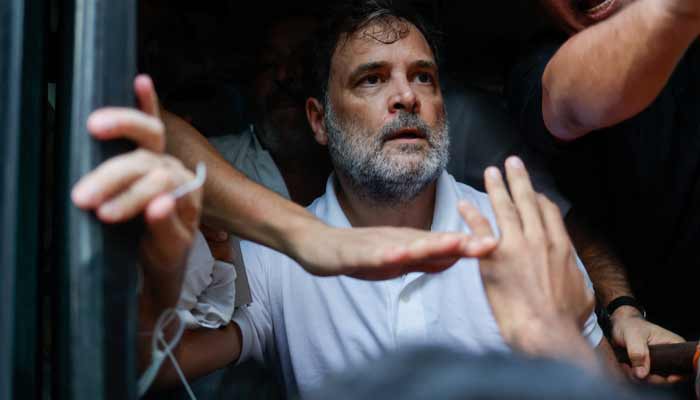
rahul gandhi released
|

Rahul Gandhi released after protest detention

Indian opposition leader Rahul Gandhi was released on Wednesday after being detained by police during a protest outside Prime Minister Narendra Modi’s residence in New Delhi. His release came as demonstrations over the country’s education system entered a third consecutive day.

Gandhi joined protesters to express support for students demanding reforms in India’s examination system. During the protest, he accused the government of ignoring students’ concerns and criticized the police response to demonstrations held earlier this week.

The protests are being led by the social media-driven Cockroach Janta Party (CJP), which has emerged as a major opposition movement calling for accountability and reforms in the country’s education sector. Protesters are demanding the resignation of Education Minister Dharmendra Pradhan and greater transparency in national examinations.

The movement has gained significant public attention after a series of examination-related controversies sparked widespread frustration among students and parents across the country.

Education Minister Dharmendra Pradhan said the government remains committed to addressing public concerns. In a statement, he acknowledged the need for accountability and reforms, adding that the government is working to improve the examination system and restore public confidence.

Violence erupted during protests in New Delhi after clashes broke out between demonstrators and security forces. Police used tear gas and batons to disperse crowds after some protesters allegedly threw stones at officers.

According to police, at least 60 civilians and 118 security personnel were injured during the unrest. Authorities said the situation was later brought under control, although security remained on high alert in several parts of the capital.

Demonstrations also spread to other major cities, including Mumbai and Bengaluru, where hundreds of people gathered in solidarity with the student movement.

On Wednesday, hundreds of protesters remained camped at Delhi’s Jantar Mantar protest site, vowing to continue their campaign until their demands are met. The CJP said it would maintain pressure on the government and continue nationwide demonstrations.

The protests have become one of the most significant public challenges faced by Prime Minister Narendra Modi’s government since his re-election in 2024.

Public anger has been fueled by repeated controversies surrounding India’s examination system. One of the biggest scandals involved the leak of a national medical entrance examination paper, forcing more than two million students to retake the test. Another dispute over the online evaluation of high school examinations further intensified criticism of the education system.
Similar Posts

  • | | | | |

    Trump claims limited talks with Iran are underway …

    WASHINGTON: US President Donald Trump has claimed that limited negotiations with Iran are currently taking place, while indicating that Washington is not pursuing an aggressive new military escalation against Tehran at this stage. Trump’s comments come amid continued tensions between the United States and Iran and growing international attention on efforts to reduce the conflict. Recent reports have also indicated that talks involving Iran and Oman have been taking place, although no final agreement has been reached. According to Trump, the United States is currently keeping a lower profile on the issue and is engaged in what he described as limited negotiations with Iran. He also claimed that Iran is facing severe economic difficulties and suggested that the country is under significant financial pressure. Trump argued that Iran’s economic situation has deteriorated considerably, making it difficult for the government to meet some of its financial obligations. These remarks were presented as part of his argument for maintaining economic pressure rather than immediately launching another major military campaign. The US president also referred to the wider impact of the conflict on energy markets and American consumers. Oil prices have remained closely linked to developments surrounding the Strait of Hormuz, a strategically important route for global energy shipments. Recent market reports have shown that investors have been watching diplomatic developments closely as hopes for an agreement affect oil prices. Trump described the confrontation with Iran as a complicated strategic contest, comparing the situation to a game of chess. He suggested that a solution could eventually be reached through negotiations and pressure. US officials have reportedly been considering different approaches to the conflict, including diplomatic engagement and economic measures. Recent reporting indicates that progress has been discussed in Iran-Oman talks, although significant issues remain unresolved. The latest developments come as Washington continues to monitor Iran’s military and economic position while seeking leverage in negotiations. For global markets, the outcome of the diplomatic efforts could be particularly important. Any agreement that improves the security of shipping through the Strait of Hormuz could influence crude oil prices and energy supplies worldwide. However, the situation remains fluid, and claims about the extent of direct negotiations have not been uniformly confirmed by all sides. Further diplomatic contacts are expected as the United States and its partners seek a way to reduce tensions and address the broader issues at the center of the conflict.

  • | |

    PTI march aims to reach Imran Khan, not secure rel…

    PESHAWAR: Khyber Pakhtunkhwa Chief Minister Sohail Afridi has said the Pakistan Tehreek-e-Insaf (PTI) long march planned for September 27 will focus on reaching party founder Imran Khan rather than demanding his immediate release. Speaking in an interview with private media, Afridi said he would personally lead the march and stressed that it would not be a one-day activity. He indicated that the participants would remain engaged in the movement rather than simply travelling to Islamabad and returning. Afridi said the decision to launch the march was taken after consultations with PTI leadership and representatives of the Tehreek Tahafuz Aain-e-Pakistan. He added that Aleema Khan, Imran Khan’s sister, would also participate in the campaign. Explaining the objective of the protest, the chief minister said the immediate goal was to gain access to Imran Khan, while any decision regarding his release would have to be made in accordance with the Constitution and the law. Afridi also addressed questions about announcing the march several weeks in advance. He said September 27 was selected after considering weather conditions and allowing sufficient time for preparations. The announcement comes as PTI continues to mobilise its supporters around the issue of Imran Khan’s imprisonment, with the party seeking greater political and legal pressure over his continued detention.

  • | | | |

    Iraq demands proof over Saudi attack claims

    BAGHDAD: Iraq has rejected allegations that its territory was used to launch attacks against Saudi Arabia and has called for evidence to support the claims. A spokesperson for the Commander-in-Chief of the Iraqi Armed Forces said no country or organisation had presented proof that attacks on Saudi Arabia originated from Iraqi soil. The spokesperson said Iraq remained committed to protecting its sovereignty and preventing its territory from being used to threaten neighbouring countries. He added that the government was implementing measures to strengthen national security and maintain full control over the country’s borders and military activities. The statement came after reports linked Iraq to attacks on Saudi Arabia, increasing tensions in an already volatile region. Following recent US and Saudi military strikes inside Iraq, the Iraqi National Security Council convened an emergency meeting to assess the security situation. During the meeting, the council condemned the attacks and described them as a violation of Iraq’s sovereignty. Officials stressed that all hostile actions carried out on Iraqi territory were unacceptable. The council said the Iraqi government alone has the authority to decide how to respond to any attacks launched from within the country. It warned against any unilateral military action that could further destabilise the region. The office of Iraqi Prime Minister also issued a statement reaffirming Baghdad’s policy of keeping Iraq out of regional conflicts. The statement said the government would continue to pursue diplomatic and legal measures to protect the country’s sovereignty, security and political stability. The latest developments follow joint US and Saudi air strikes targeting locations believed to be used by Iran-backed militias in Iraq. The strikes were reportedly carried out in response to drone attacks on Saudi oil facilities. According to the Popular Mobilisation Forces (PMF), the attacks targeted its headquarters and facilities across seven Iraqi provinces. The group said at least 20 of its personnel were killed, while another 32 were injured in the air strikes. It added that the heaviest attack took place in Nineveh province, where 10 fighters lost their lives. The military action has further raised concerns about growing instability in the region and the possibility of wider confrontation involving regional and international powers.

  • | |

    Punjab University bus falls into Ravine while tryi…

    A bus belonging to the University of the Punjab met with an accident after it fell into a ravine while attempting to avoid a car on the road. According to the spokesperson of Punjab University, the incident resulted in injuries to 16 university employees who were travelling on the bus at the time of the accident. The university spokesperson stated that the bus was carrying employees of the Transport Wing when the accident occurred. A total of 19 employees were present on the bus. The vehicle was reportedly travelling along its route when the driver suddenly tried to save the bus from colliding with a car. During this attempt, the driver lost control of the vehicle, causing it to veer off the road and fall into a nearby ravine. Following the accident, rescue teams and university officials reached the site to assist the injured passengers. The injured employees were immediately provided with medical aid and shifted to nearby hospitals for further treatment. The condition of the injured employees was being monitored by medical teams. The university administration expressed concern over the incident and assured that all necessary support would be provided to the affected employees and their families. Officials also began gathering information about the circumstances that led to the accident to determine the exact cause. Road accidents involving university transport vehicles often raise concerns about road safety, vehicle maintenance, and driver precautions. Authorities usually emphasize the importance of careful driving, regular vehicle inspections, and strict compliance with traffic rules to prevent such incidents in the future. The Punjab University spokesperson further stated that the university administration was closely following the situation and ensuring that injured employees received proper medical treatment. The officials also visited the injured individuals to inquire about their health and provide necessary assistance. The accident created concern among the university community, including students, faculty members, and employees. Many expressed their wishes for the quick recovery of those injured in the incident. The university community also highlighted the importance of improving safety measures for employees who rely on university transport services. Transport facilities play an important role in helping university staff and students travel safely, especially in large educational institutions. Ensuring that buses are properly maintained and drivers are trained to handle emergency situations is considered essential for reducing the risk of accidents. Authorities are expected to conduct a detailed investigation into the incident to identify whether any technical issues, road conditions, or other factors contributed to the accident. The findings of the investigation may help in introducing additional safety measures for university transportation in the future. The incident serves as a reminder of the importance of road safety and responsible driving. While the quick action of the driver to avoid a collision may have prevented a direct crash with the car, the situation ultimately resulted in the bus falling into a ravine and causing injuries to several passengers. The Punjab University administration has assured that the safety and well-being of its employees remain a priority and that further steps will be taken to prevent similar incidents in the future. The injured employees continue to receive medical attention as officials monitor their recovery.

  • |

    King Charles and Queen Camilla to pay state visit …

    King Charles III and Queen Camilla are due to pay a state visit to Spain next year, marking the first British royal state visit to the country since the late Queen Elizabeth II visited in 1988 with Prince Philip. The trip, expected to take place in 2027, will see the British monarchs hosted by Spanish King Felipe VI and Queen Letizia. Precise dates for the forthcoming trip have yet to be officially confirmed, but the visit is expected to include a state banquet and meetings with the Spanish royal family, including King Felipe’s daughters, Princess Leonor, 20, and Infanta Sofia, 19. The visit is a significant diplomatic gesture, reflecting the close ties between the two monarchies and the broader relationship between the United Kingdom and Spain. The announcement comes shortly after King Felipe, Queen Letizia, and their daughters returned from New Jersey, where they witnessed Spain’s triumphant victory over Argentina in the World Cup final. The royal family were seen celebrating with the team, with King Felipe breaking protocol to hug teenage star Lamine Yamal during the victory celebrations. King Charles and Queen Camilla’s visit is expected to strengthen the cultural and historical bonds between the UK and Spain, building on the legacy of Queen Elizabeth II’s visit nearly four decades ago. The 1988 visit was a milestone in Anglo-Spanish relations, and this upcoming state visit is seen as a continuation of that tradition. The royal visit will also provide an opportunity for discussions on mutual interests, including trade, climate change, and cultural exchange. Both countries are committed to strengthening their partnership in various fields, and the state visit is likely to further enhance these ties. As preparations for the visit get underway, the British and Spanish royal families are expected to engage in a series of events showcasing the best of both nations. The visit is anticipated to be a highlight of the diplomatic calendar for 2027, drawing attention from royal watchers and the media alike. King Charles has maintained a strong interest in international relations since ascending to the throne, and this visit to Spain will be an important step in his diplomatic outreach. Queen Camilla’s involvement in the trip underscores the importance of the visit in strengthening the monarchy’s ties with other royal houses. The state visit to Spain is part of a broader effort by the British monarchy to strengthen its international relationships and promote cultural diplomacy. The trip is expected to include engagements with Spanish officials, cultural institutions, and the public, showcasing the enduring friendship between the two nations. As the date approaches, more details about the itinerary and specific engagements are expected to be released.

  • |

    Saudi sounds alarm on rising sea threats

      Saudi Arabia has issued a forceful warning over escalating security dangers in the region, making it clear that the era of unilateral action is over. In an official statement, Ministry of Defense Spokesman Major General Turki Al-Malki stressed that new and complex threats—ranging from maritime terrorism to drone swarms and smuggling networks—now demand a collective response. “Every country has the right to protect its national interests,” Al-Malki said, “but the scale and sophistication of today’s risks require us to act together. No nation can stand alone.” He specifically pointed to the Red Sea corridor, a lifeline for global oil shipments and trade, as a flashpoint that needs constant vigilance. The nations bordering this strategic waterway, he added, are already in continuous dialogue to align their security strategies. The spokesman made it clear that the multi-national naval defense coalition—first proposed by Saudi Arabia—is not an offensive alliance but a defensive shield. Its core mission: to secure international shipping lanes, deter hostile acts, and ensure freedom of navigation in accordance with international law. The coalition, he emphasized, is open to all nations that share these goals and is firmly rooted in the principles of the United Nations Convention on the Law of the Sea. Al-Malki warned that the threat landscape has shifted dramatically. Non-state actors now possess advanced unmanned systems, anti-ship missiles, and cyber capabilities that can disrupt maritime traffic within minutes. Piracy and human trafficking add another layer of complexity. “We are not facing traditional navies,” he noted. “We are facing hybrid threats that exploit every gap in coordination. That is why interoperability, intelligence-sharing, and joint patrols are no longer optional—they are survival tools.” In a move that underscores Saudi Arabia’s commitment to this mission, the Ministry of Defense announced the appointment of Rear Admiral Abdullah bin Salim as the commander of the coalition. A distinguished naval officer with decades of command experience, bin Salim has served in multiple high-level posts within the Royal Saudi Naval Forces, overseeing fleet modernization and participating in large-scale international exercises. His leadership is expected to bring operational sharpness, strategic clarity, and a hands-on approach to coalition drills and rapid-response mechanisms. Rear Admiral bin Salim’s appointment is not merely symbolic. It reflects Saudi Arabia’s willingness to shoulder greater responsibility in regional security while maintaining an inclusive, consultative stance. He will oversee the integration of naval assets from partner nations, coordinate joint training missions, and ensure that the coalition can respond within hours—not days—to any maritime breach. Al-Malki also extended an open invitation to the international community. “We welcome all nations that believe in a rules-based maritime order,” he said. “The Red Sea is not just a regional asset—it is a global artery. Its security is everyone’s business.” He called for increased naval presence, technology transfers, and financial backing to sustain the coalition’s operations over the long term. The spokesman concluded with a sobering reminder: in a world of drone warfare, proxy conflicts, and rapidly evolving tactics, waiting for disaster is not a strategy. “The coalition is already active,” he said. “Our patrols are ongoing, our command is in place, and our resolve is firm. We are building a security architecture that will outlast any single crisis.” With Rear Admiral bin Salim now at the helm, the coalition enters a new phase—one defined by action, accountability, and unity. Saudi Arabia has made its position clear: the time for talk is over. The time for collective defense is now.

Leave a Reply

Your email address will not be published. Required fields are marked *