fuel opens capitalist
|

US fuel opens a capitalist crack in Cuba

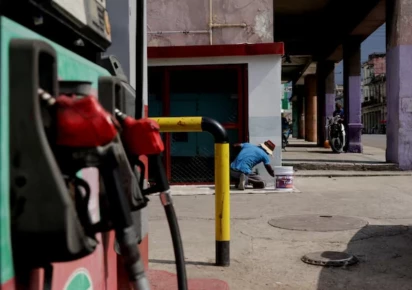
HAVANA: Gasoline selling for as much as $38 a gallon, diesel advertised on social media and fuel stored inside cramped apartments are offering an unusual glimpse of private enterprise in communist Cuba, where the energy sector has long remained firmly under state control.

A US policy allowing American companies to export fuel to private Cuban businesses has triggered an unexpected transformation. As Cuba struggles with shortages, blackouts and a weakened public transport system, imported fuel is creating a growing private market — while also exposing a sharp divide between those who can afford it and millions who cannot.

The change follows the collapse of Cuba’s traditional fuel supplies from Venezuela and Mexico after the United States removed Venezuelan President Nicolas Maduro in January. With sanctions discouraging tankers from sailing toward the island, fuel shortages have increasingly affected transport, hospitals, schools and other essential services.

Under an exception to Washington’s oil restrictions, however, private Cuban restaurants, retailers, taxi operators and other businesses have been allowed to import fuel.

The impact has been striking.

Between February and May, around 900,000 barrels of US fuel entered Cuba — enough to meet only about nine days of the country’s energy requirements. Yet those relatively small shipments have helped create a new network of legal wholesalers, private buyers and illegal resellers.

Gasoline becomes a luxury

For ordinary Cubans, the new fuel market has often brought frustration rather than relief.

On a July afternoon in Havana, 53-year-old Amarilis Sanchez waited for hours at a bus stop after attending her daughter’s birthday celebration. Public buses, which normally cost only two pesos, were unreliable.

Nearby, taxi drivers offered rides in vintage cars, but one driver quoted Sanchez 1,000 pesos for the journey — roughly 500 times the price of a bus ride.

Unable to afford it, Sanchez considered spending the night at her daughter’s home and trying again for a bus the following day.

Her experience illustrates how Cuba’s fuel crisis is creating two very different realities: one for people with access to private vehicles and imported fuel, and another for those dependent on the country’s struggling public transport network.

Black-market gasoline prices reportedly reached $10 per litre, or about $38 per gallon, during the spring before falling as imports increased.

Social media fuels a new market

The emerging trade is increasingly visible online.

WhatsApp groups and Facebook pages advertise gasoline and diesel, while some sellers store fuel in apartments and small shops despite the dangers posed by fire, explosions and toxic fumes.

At one Havana convenience store, a shopkeeper reportedly kept around a dozen 20-litre fuel containers in a backroom, selling gasoline for approximately $5 per litre.

Private companies are also moving into the newly emerging legal wholesale market.

By late July, almost 200 Cuban businesses had received permission to distribute fuel wholesale to other private companies. One company, A Granel, advertises diesel through social media and charges $2.50 per litre for a 940-litre tank.

The promotion reportedly features a model walking through a warehouse of diesel containers while Daddy Yankee’s famous song Gasolina plays in the background — an unusually flashy image for a country where the energy industry has historically been dominated by the state.

Are Cuban gas stations next?

The transformation could go further.

Cuban lawmakers approved a broad package of economic reforms in June aimed at opening the energy sector to private and foreign investment. Prime Minister Manuel Marrero Cruz later announced that Cuba had approved its first foreign investment project focused on importing and selling fuel, although he did not name the company.

The reforms have raised the possibility that private operators could eventually take control of some of Cuba’s familiar state-run Cupet petrol stations.

For now, however, retail fuel sales remain largely under state control.

Some state-owned stations are storing imported fuel but can distribute it only to vehicles belonging to authorised private businesses.

Cuban authorities have defended the reforms while rejecting the idea that they represent a move toward large-scale privatisation. President Miguel Diaz-Canel has accused Washington of imposing a “genocidal siege” on Cuba and said economic changes were not being introduced to satisfy the United States.

A lifeline with a heavy price

The new fuel market has helped prevent some businesses from shutting down completely. During recent power outages, restaurants and shops with generators powered by imported fuel remained illuminated while much of Havana was plunged into darkness.

But experts warn that the emerging system could deepen inequality.

With the average government salary reportedly around $10 a month, imported gasoline remains unaffordable for most of Cuba’s roughly nine million residents.

Cuban sociologist Mayra Espina said the limited fuel supplies had helped prevent “complete paralysis” but warned that the benefits were overwhelmingly concentrated among those able to pay.

The result is an extraordinary contradiction: a small opening toward private enterprise is helping Cuba keep parts of its economy running, while simultaneously making access to basic mobility and energy increasingly dependent on wealth.

For a country that has spent decades keeping fuel firmly within the state system, Cuba’s new gasoline economy may therefore prove to be more than a temporary response to shortage. It could become an early test of how far Havana is prepared to let capitalism into one of its most tightly controlled sectors.
Similar Posts

  • |

    India says talks with China stressed need for border peace to boost ties

    India and China have held a new round of border talks in New Delhi, emphasising that maintaining peace along their disputed frontier remains essential for broader bilateral relations. The 36th meeting of the Working Mechanism for Consultation and Coordination on India-China Border Affairs focused on boundary delimitation, border management, and trans-border cooperation. Indian officials also highlighted the necessity of early dialogue regarding shared rivers and the technical details of upstream projects. Both nations agreed to continue using diplomatic and military channels to resolve outstanding issues and prevent miscalculations along the Line of Actual Control.

  • | | |

    For key diplomacy Erdogan urges Trump to keep Iran…

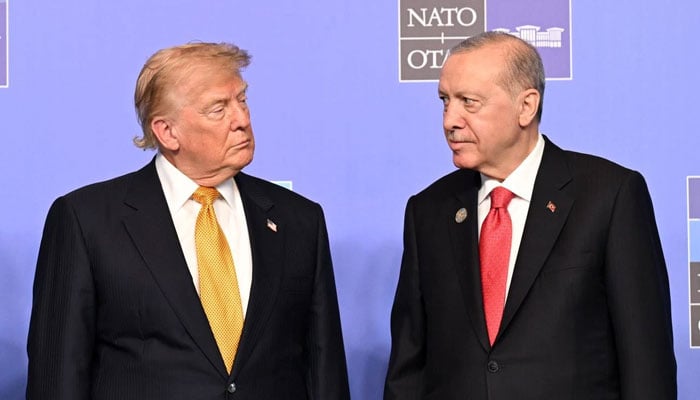
    ANKARA: Turkish President Recep Tayyip Erdogan has urged US President Donald Trump to keep diplomatic channels with Iran open, stressing that continued dialogue could help ease regional tensions. During a telephone conversation, Erdogan and Trump discussed bilateral ties as well as the ongoing conflicts involving Iran and Gaza, according to the Turkish presidency. The two leaders also exchanged views on defence agreements involving Pakistan and Saudi Arabia, amid growing regional security concerns. Erdogan told Trump that diplomacy should be given every opportunity and said Turkey was prepared to contribute to efforts aimed at maintaining dialogue with Iran. The Turkish president also raised concerns over the situation in Gaza, saying Israel’s military actions against Palestinians were continuing at a time when the second phase of a proposed peace plan was expected to begin. The call comes as Ankara continues to advocate diplomatic engagement to prevent further escalation and promote political solutions to conflicts across the region.

  • |

    Five dead, 41 missing after Indonesia ferry catches fire

    At least five people have died and 41 others remain missing after a passenger ferry caught fire while sailing off Indonesia’s Madura Island, prompting a large-scale search and rescue operation. According to Indonesian authorities, the ferry was carrying at least 250 passengers and crew when the blaze erupted during its voyage from Surabaya in East Java to Makassar in South Sulawesi. The captain alerted rescue authorities after the fire broke out early in the morning. Within hours, emergency teams launched a major operation involving rescue vessels and other maritime agencies to evacuate passengers from the burning ship. Officials said the fire rapidly spread across the ferry, leaving much of the vessel engulfed in flames. Many passengers gathered at the bow and bridge while waiting for help, while others were forced to jump into the sea to escape the intense heat and thick smoke. Videos circulating on local media showed heavy black smoke rising from the ferry as passengers wearing life jackets crowded onto lifeboats. Other footage captured desperate scenes of people entering the water as rescue teams threw lifebuoys and pulled survivors aboard nearby vessels. Search and rescue teams have so far recovered five bodies and rescued a large number of passengers. However, 41 people are still unaccounted for, and the operation continues with authorities searching the surrounding waters. Officials said emergency crews responded immediately after receiving the distress call and continue to coordinate efforts to locate the missing. Medical teams are also providing treatment to survivors rescued from the sea. The exact cause of the fire has not yet been determined. Maritime authorities have launched an investigation to establish how the blaze started and whether any safety violations contributed to the incident. Indonesia, an archipelago of more than 17,000 islands, depends heavily on ferry transport for inter-island travel.

  • |

    US issues fresh travel warning 

      The United States Embassy in Jordan has issued a fresh security alert urging American citizens to remain vigilant and consider leaving the Middle East if the regional security situation continues to deteriorate. In a statement shared on X (formerly Twitter) on Saturday, the embassy advised US nationals currently in the region to closely monitor developments and prepare for possible travel disruptions. The advisory warned that ongoing instability could result in flight cancellations, temporary airspace closures, and other transportation challenges that may affect travel plans at short notice. The embassy emphasized that Americans living in or visiting Middle Eastern countries should exercise increased caution and remain alert due to the rapidly changing security environment. It also encouraged those who are outside the region to carefully reconsider any plans to travel to or transit through Middle Eastern countries until the situation becomes more stable. According to the advisory, the regional security outlook remains highly unpredictable, with officials describing the situation as “fluid.” The embassy warned that Iran and groups aligned with or supported by Tehran could potentially target US interests in various locations overseas if tensions continue to rise. In a separate advisory, the US Embassy in Amman specifically instructed American citizens to avoid visiting military bases in Jordan. It urged them to stay informed through official embassy updates, closely follow announcements issued by Jordanian authorities, and comply with all local security instructions. The warning comes against the backdrop of increasing tensions between the United States and Iran. According to a report, Washington is reportedly preparing to carry out additional military strikes against Iran over the weekend. While US authorities have not publicly confirmed the reported plans, the development has raised concerns about the possibility of further escalation in the region. Security concerns have also intensified following a series of incidents reported on Saturday. Kuwaiti authorities said they intercepted Iranian drones that were allegedly targeting a government facility as well as civilian vehicles. Officials stated that the drones were successfully neutralized before they could cause damage, and no injuries or fatalities were reported. Meanwhile, another incident occurred in the Gulf region when a commercial tanker was struck by an unidentified projectile off the coast of Oman near the strategically important Strait of Hormuz. The vessel sustained damage, but authorities confirmed that there were no casualties among the crew. Investigations are underway to determine the source of the projectile and the circumstances surrounding the attack. The Strait of Hormuz remains one of the world’s most critical maritime trade routes, with a significant share of global oil shipments passing through the narrow waterway. Any security incidents in the area often raise concerns about international shipping, energy markets, and regional stability. As diplomatic and military tensions continue to mount, US officials are advising citizens to remain cautious, stay updated through official government channels, and be prepared for rapidly changing conditions across the Middle East.

  • | | |

    US General warns more warships are needed to defen…

    A senior US military commander has reportedly warned the Pentagon that without additional naval resources, the United States may be forced to prioritize its own national defense over the defense of Israel. The reported warning underscores the growing strain on American military capabilities amid the ongoing conflict involving Iran. According to a report by The Washington Post, General Alexus Grynkewich, the top US military commander in Europe, informed Pentagon officials this week that the number of US Navy destroyers currently available is insufficient to continue defending Israel against ballistic missile threats while maintaining broader US security commitments. The report states that General Grynkewich submitted a written assessment to senior Pentagon leaders, warning that unless another guided-missile destroyer is assigned to his command, he may have no choice but to give priority to defending the United States rather than supporting Israel’s missile defense. US defense officials quoted in the report said the message reflects a long-standing military practice in which commanders notify the Pentagon when operational demands begin to exceed available resources. Such assessments are intended to help civilian and military leaders make decisions about force allocation and strategic priorities. The reported warning comes as the conflict involving Iran has placed increasing pressure on US military assets over the past several months. Continuous naval operations, missile defense missions, and regional security responsibilities have stretched the availability of key warships and other defense resources. US Navy destroyers stationed in the eastern Mediterranean have played a significant role in supporting Israel’s defense by helping intercept ballistic missiles and other aerial threats. Equipped with advanced radar systems and missile defense capabilities, these vessels have also been used to counter attacks launched by Iran-backed Houthi forces operating from Yemen. The report noted that US European Command is responsible for coordinating military operations across Europe and the Mediterranean while also maintaining readiness to respond to potential security challenges involving NATO allies. Balancing these commitments with operations in the Middle East has become increasingly difficult as demand for naval assets continues to grow. Despite plans to expand the US naval presence in Europe with an additional destroyer later this year, officials reportedly remain concerned about maintenance requirements and operational fatigue affecting the existing fleet. The report also said additional US naval forces, including aircraft carriers and multiple destroyers, remain deployed in the Arabian Sea and the Red Sea to support regional operations and safeguard commercial shipping routes. The reported warning highlights the strategic challenges facing US defense planners as they seek to balance commitments to allies with broader national security priorities amid rising tensions in the Middle East

  • |

    Two injured in Edmonton Gurdwara attack

    Two people were injured after an attack at a Sikh gurdwara in Edmonton, Canada, police said. Canadian authorities have arrested a suspect in connection with the incident. Police said the injured men, aged 75 and 51, suffered injuries but remain in stable condition and are not in life-threatening danger. The police Hate Crimes Unit has also joined the investigation to determine the circumstances surrounding the attack and whether it involved a hate-related motive. According to the gurdwara administration, the attacker first targeted a religious leader and then assaulted an elderly volunteer. The incident caused concern among members of the Sikh community and prompted police to respond to the place of worship. Authorities are continuing to investigate the motive behind the attack and the circumstances that led to the violence. Further details are expected as the investigation progresses.

Leave a Reply

Your email address will not be published. Required fields are marked *