teacher injured roof
| |

Teacher injured as roof plaster of school caves in

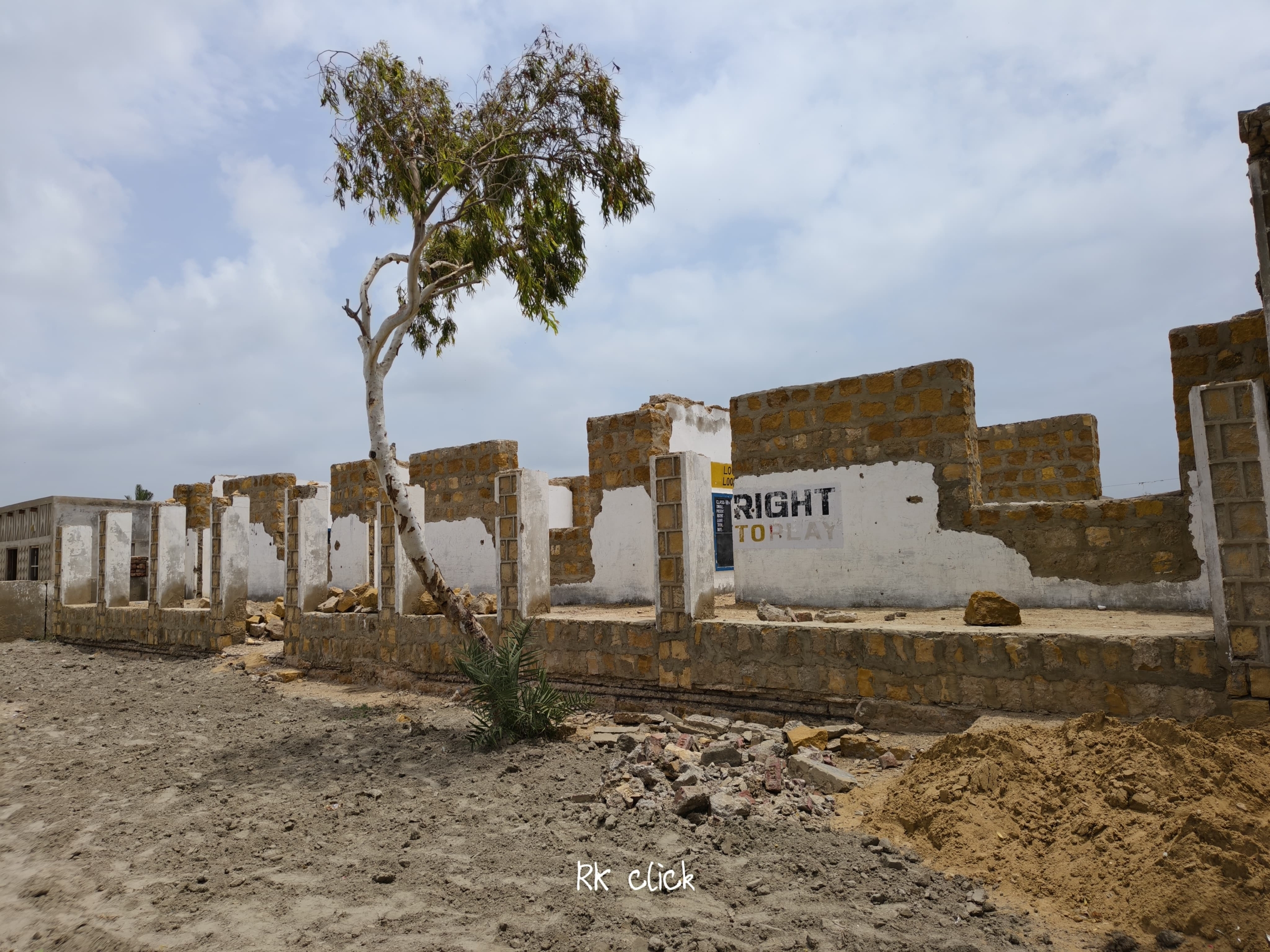
SUJAWAL:* In a disturbing incident on Wednesday morning, a teacher of Government Boys High School, Begna Mori, within Taluka Jati of District Sujawal, was injured when cement plaster from the staff room fell on him.

According to the Senior Head Master of the School, Aziz Allah Dino Khowaja, Junior Elementary School Teacher Fayyaz Zaur was present in the staff room, working on an official assignment, when the roof plaster fell on his head, leaving him critically injured. “As the blood started oozing from his head, we took him to Basic Health Unit Begna Mori for treatment,” said the Senior Head Master, adding that after treatment, the condition of the teacher had become stable.

School Teacher Abid Inayat disclosed that the tender for the school’s refurbishment had been passed, and the contractor had demolished a portion of the school comprising three classrooms, but a few months ago he abruptly stopped the renovation work and has been evading resuming work. “Multiple efforts have been made to contact the missing contractor, but he is evading a response,” the teacher said.

He further disclosed that the lives of 22 teachers, over a hundred students, and the lower staff had been at stake owing to the ramshackle condition of the building. The school, he said, is one of the schools with high enrollment, and such an incident would leave an adverse effect on the newcomers.

The Head Master mentioned that they had approached the District Education Officer (Secondary), Sujawal, and other concerned authorities to ensure the safety of children, but to no avail. He urged the Sindh Minister for Education, Syed Sardar Ali Shah, to take speedy measures for resuming the renovation work of the school and to conduct a thorough probe against the fleeing contractor.

Similar Posts

  • Senate seeks 16-year oil and gas profit record

    Islamabad: A Senate committee has raised serious questions over the distribution of billions of rupees generated from Pakistan’s oil and gas resources, demanding a complete financial breakdown of profits earned by oil and gas companies over the last 16 years. The Sub Committee of the Senate Functional Committee on Devolution directed authorities to provide a clear record of revenues and prepare a plan to ensure provinces receive their constitutional share from natural resources. The committee reviewed the implementation of Article 38(g) of the Constitution and examined whether provinces were receiving proper representation in federal institutions and a fair share from national resources. During the discussion on oil and gas revenues, the committee sought details of profits earned by oil and gas companies during the past 16 years. Officials were directed to verify and finalize the figures and prepare a proposal for the distribution of funds. Officials from the Petroleum Division informed the committee about the existing 50:50 revenue sharing system between the federal government and provinces. They explained that revenues generated from natural resources contribute to the national treasury through non tax income. However, the committee stressed that natural resources belong to the people and called for stronger transparency mechanisms to ensure that provinces receive their rightful share without unnecessary delays. Chairman Senator Zamir Hussain Ghumro directed authorities to introduce necessary legal and administrative improvements to strengthen the system of revenue distribution and prevent unequal treatment of provinces. The committee also focused on provincial employment representation in federal ministries and government linked corporate boards. The chairman expressed concern that constitutional provincial quotas were not being implemented effectively in some areas. He directed the Establishment Division to remove gaps in recruitment procedures and ensure that people from less developed and rural areas receive their due opportunities. The committee ordered officials to identify provinces facing representation shortages and take immediate steps to correct the imbalance. Officials were directed to submit a detailed compliance report in the next meeting, showing progress on both employment representation and natural resource revenue distribution.

  • |

    China, Indonesia deepen security and economic ties

    JAKARTA: China and Indonesia opened a new round of high-level talks on Friday, with defence cooperation, regional security, political relations and trade expected to dominate discussions as Jakarta seeks to maintain strong ties with Beijing while preserving its relationship with Washington. Chinese Foreign Minister Wang Yi, visiting Jakarta for the first time in two years, met his Indonesian counterpart Sugiono before joining a “2+2” dialogue involving the two countries’ defence ministers. The talks come at a sensitive moment for Southeast Asia, where tensions in the South China Sea, competition between China and the United States and growing economic interdependence are putting pressure on regional governments to carefully balance their relationships with major powers. Wang said the new dialogue mechanism was timely as the world faced increasingly complex challenges. “Unilateralism and hegemonic acts bring serious impact on global cooperation and stability,” he said, adding that China aimed to build cooperation with Indonesia at a high level. Indonesian officials said economic issues and political relations would be among the foreign ministers’ priorities, while China said the discussions would also cover defence cooperation and international and regional affairs. Defence Cooperation Expands Chinese Defence Minister Dong Jun was welcomed with a military honour guard at Indonesia’s defence ministry, where he said the two armed forces had significant room to strengthen cooperation. “The prospects for cooperation between the two militaries are broad,” Dong said, describing the relationship as increasingly effective and higher in quality. Indonesia’s Defence Minister Sjafrie Sjamsoeddin said the countries planned to expand military activities, including joint exercises, officer exchanges and cooperation in the defence industry. He described the move as an important step in strengthening Indonesia’s defence capabilities. The discussions follow a joint naval exercise between China and Indonesia last week that drew attention because of its location east of Taiwan. Taiwan, which Beijing claims as part of China, expressed concern over the exercise. Indonesia’s navy said the activity was routine and noted that it conducts exercises not only with China but also with Japan and the United States. Defence analyst Curie Maharani said the episode highlighted how military diplomacy could serve broader strategic purposes. Indonesia, she said, had gained an important lesson about how major powers can use defence cooperation to project influence. Balancing China and Washington Jakarta’s approach reflects its long-standing “free and active” foreign policy. President Prabowo Subianto has repeatedly said Indonesia intends to remain non-aligned while maintaining friendly relations with all countries, including China and the United States. That balancing act is becoming more complicated as competition between Washington and Beijing intensifies. Indonesia also has differences with China over developments in the South China Sea. Beijing claims almost the entire disputed waterway, while Indonesia has sought to avoid becoming directly involved in broader territorial disputes between China and the Philippines, Malaysia and Vietnam. Jakarta has generally maintained a measured position, prioritising diplomacy and economic cooperation while protecting its own interests. Billions at Stake Economic ties provide another major reason for Indonesia to maintain close relations with Beijing. China contributed $3.9 billion in foreign direct investment to Indonesia during the first half of 2026, according to Indonesian figures. Chinese companies have invested heavily in industries ranging from nickel processing and steel to electric-vehicle batteries. Indonesia possesses the world’s largest nickel reserves, making it strategically important to China’s rapidly expanding electric-vehicle supply chain. Among major investors are Contemporary Amperex Technology, one of the world’s largest electric-vehicle battery makers, and Tsingshan Group, which operates nickel and steel facilities in Indonesia. However, the growing investment relationship has not been free of tension. In May, Chinese companies operating in Indonesia urged Jakarta to introduce more business-friendly policies, arguing that higher taxes and a new nickel pricing formula were increasing costs and threatening investment. The China Chamber of Commerce in Indonesia also complained of what it described as excessive regulation and enforcement, while raising allegations of corruption and extortion. The concerns underline the challenge facing both countries: expanding economic cooperation while managing disagreements over regulation, investment conditions and strategic interests. For Indonesia, Friday’s talks therefore carry significance beyond bilateral diplomacy. Jakarta is trying to strengthen its economy and defence capabilities without becoming overly dependent on either Beijing or Washington. In For China, deeper engagement with Indonesia offers an opportunity to strengthen its influence in one of Southeast Asia’s largest economies while expanding defence and economic partnerships in a strategically important region.

  • |

    Healthy diet out of reach for one in three people globally, UN report reveals

    One in three people worldwide, approximately 2.69 billion individuals, cannot afford a healthy, nutrient-rich diet, according to a joint report by five United Nations agencies. The State of Food Security and Nutrition in the World 2026 calculates the global average cost of a healthy diet at 4.28 purchasing power parity (PPP) dollars per day. This figure significantly exceeds the international extreme poverty line of $3 PPP per person, placing diverse, nutrient-dense foods such as fruits, vegetables, dairy, and lean meats out of economic reach for billions. Public health experts note that historic agricultural subsidies have heavily favoured starchy staples over nutrient-dense options, driving a global surge in adult obesity rates from 12.1 per cent in 2012 to 16.2 per cent in 2024. While global hunger declined for a third consecutive year in 2025, affecting 7.8 per cent of the world’s population compared to 8.1 per cent in 2024, regional disparities remain severe. Africa has become home to the highest absolute number of hungry people for the first time, with roughly 309 million affected. Across the continent, 66.6 per cent of the population was unable to afford a healthy diet in 2025, more than double the rates observed in Asia or Latin America. UN officials warn that ongoing disruptions to maritime trade, alongside potential climate shocks, threaten to reverse recent progress and jeopardise international targets to eliminate global hunger by 2030.

  • |

    Pakistan, US move closer to finalising reciprocal trade framework

    Pakistan and the United States have reaffirmed their commitment to finalising a reciprocal trade framework at the earliest, signalling significant progress in negotiations aimed at strengthening bilateral trade, investment, and long-term economic cooperation. The renewed commitment was expressed during a virtual meeting held on Wednesday between Pakistan’s Finance Minister Muhammad Aurangzeb and United States Trade Representative (USTR) Ambassador Jamieson Greer. The two sides reviewed the progress made by their negotiating teams and discussed the remaining steps required to conclude the proposed agreement. According to an official statement, both countries acknowledged that negotiations have advanced substantially in recent months and reiterated their shared determination to complete the reciprocal trade framework as soon as possible. During the meeting, Finance Minister Muhammad Aurangzeb referred to the recent discussions held in Washington, D.C., and appreciated the constructive approach adopted by both negotiating teams. He said the steady progress reflects the mutual commitment of Pakistan and the United States to deepen economic ties and expand commercial cooperation. The finance minister stressed that maintaining the current momentum in negotiations is crucial for Pakistan’s broader economic agenda. He noted that a stronger trade and investment partnership with the United States would support Pakistan’s export-led growth strategy, improve economic resilience, attract foreign investment, and create new business opportunities for companies in both countries. Aurangzeb also highlighted the importance of continued collaboration with the US Export-Import Bank (EXIM Bank), saying enhanced financial cooperation could facilitate trade, encourage investment, and strengthen business-to-business engagement between the two countries. On the US side, Ambassador Jamieson Greer acknowledged Pakistan’s consistent engagement throughout the negotiation process and appreciated the progress achieved on key labour and regulatory reforms. He particularly welcomed Pakistan’s efforts to strengthen compliance with international labour standards, including measures related to preventing forced labour. The US trade representative reaffirmed Washington’s commitment to advancing bilateral trade discussions and expressed confidence that the remaining issues could be resolved through continued technical-level consultations between the two sides. Finance Minister Aurangzeb emphasised the need for close coordination between officials from both countries and called for accelerated technical discussions to build on the progress already achieved. He said timely completion of the agreement would open new avenues for economic cooperation and strengthen long-term bilateral relations. Both delegations expressed satisfaction over the pace of negotiations and agreed to continue regular engagement to finalise the outstanding elements of the reciprocal trade framework. The officials reaffirmed their shared objective of concluding the agreement in the near future, paving the way for stronger trade, investment, and economic collaboration between Pakistan and the United States.

  • | |

    Report details Trump’s covert aircraft switc…

    President Donald Trump quietly switched planes while departing a NATO summit in Turkey last month as part of an elaborate security maneuver designed to counter a possible Iranian threat, according to a US media report. The report said Trump boarded Air Force One in full public view before being discreetly transferred to a separate military aircraft with the help of a catering truck used to shield the movement from onlookers. Journalists and some White House staff traveling with the delegation reportedly had no idea at the time that Trump had already been moved off the plane. Officials said security teams had identified a credible Iranian threat involving a possible missile strike against the aircraft. During the Ankara summit, Trump had described Iran as the country’s top target. According to the report, Trump had traveled to Turkey aboard a newer Boeing 747-8 previously donated by Qatar, but chose to depart on the older Air Force One instead, saying at the time it was “for old time’s sake.” Footage released on July 9 showed Trump boarding the presidential aircraft at Ankara airport before being secretly transferred to a smaller C-32A military jet, a modified Boeing 757 typically used to transport the vice president. Defense Secretary Pete Hegseth reportedly boarded the C-32A through a separate exterior entrance as part of the effort to keep the flight’s appearance routine. Journalists and staff who boarded Air Force One were told to lower their window shades during the departure. While in the air, Trump spoke with reporters on board and acknowledged concerns about threats from Iran, though he made no mention of the earlier switch between aircraft. Explaining why passengers had been asked to keep their windows lowered during the flight from Turkey, Trump said the flight carried added risk “because of the sleazebags we have to deal with.” A previous report had already raised questions about security risks tied to the Qatari donated jet, noting that the Secret Service had urged Trump to change planes during his return from the NATO summit. The United States has spent months upgrading the $400 million Boeing 747-8 to bring it up to presidential standards, while older Air Force One aircraft carry laser based countermeasures designed to disrupt the guidance systems of incoming missiles.

  • |

    Pakistan hockey team Beats South Korea 3-1 in hist…

    Pakistan hockey team eased past South Korea 3-1 in the opening match of the four-test series at the Naseer Bunda Hockey Stadium on Thursday, marking the first time in 20 years that an international hockey team has toured Pakistan for an official bilateral series. The 13th-ranked Green Shirts dominated the 22nd-ranked Korea throughout the match. Sufyan scored twice, while newly appointed captain Abu Bakar Mahmood added a goal to cap off an excellent performance. South Korea managed just one goal in reply. The series marks a significant milestone for Pakistan hockey, which has struggled to attract international teams to its shores over the past two decades due to security concerns and the sport’s declining profile in the country. Earlier, President of the Pakistan Hockey Federation (PHF), Mohyuddin Ahmad Wani welcomed the Korean team’s arrival and described the tour as a landmark moment for the revival of international hockey in Pakistan. “This is a proud and memorable occasion for Pakistan hockey. After almost two decades, we are once again welcoming an international team to our home grounds,” he said. “We extend a warm welcome to the Korean National Hockey Team and are confident that this series will strengthen the longstanding friendship between our two countries while promoting high-quality international hockey.” The second match of the series will be played on 2 August, followed by the third and fourth fixtures on 4 and 7 August, respectively. The series is seen as a crucial step in Pakistan’s efforts to revive the sport and attract more international competition in the future.

Leave a Reply

Your email address will not be published. Required fields are marked *