20yearold suri cruise
| |

20-year-old Suri Cruise lands lead role in modern …

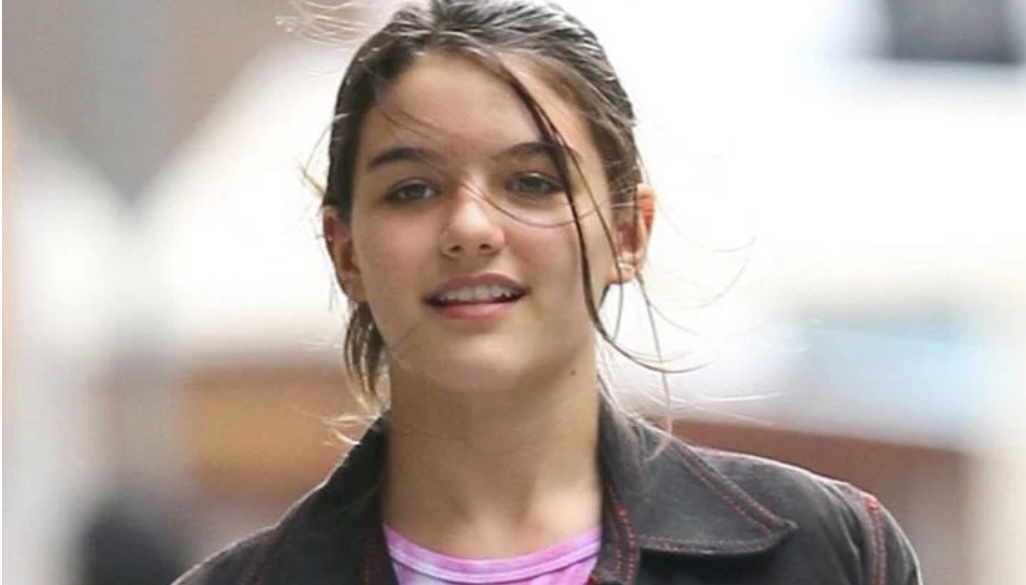
Suri Cruise is stepping into the spotlight with a major stage role that signals the beginning of an exciting chapter in her acting journey. The 20-year-old daughter of Hollywood stars Tom Cruise and Katie Holmes has landed a lead role in Midsummer!, a modern adaptation of William Shakespeare’s classic comedy A Midsummer Night’s Dream. The production marks another milestone for the young performer as she continues to build her career in theater. 

The play is being staged by students from Carnegie Mellon University’s prestigious School of Drama, where Suri is currently studying musical theater. Her major had been the subject of speculation after earlier reports suggested she might pursue fashion. However, new details have confirmed that she chose musical theater, reflecting her passion for acting, singing, and live performance. 

Midsummer! reimagines Shakespeare’s beloved romantic comedy for modern audiences while preserving the heart of the original story. The 90-minute production will first be performed at Pittsburgh’s Trust Arts Education Center on July 31 and August 1 before traveling to Scotland for the world-famous Edinburgh Festival Fringe in August. The opportunity gives Suri valuable international stage experience early in her career.

Suri has been preparing for this moment for years. She graduated from New York City’s renowned LaGuardia High School, an institution famous for nurturing young artists. Since enrolling at Carnegie Mellon, she has continued developing her acting skills and previously appeared in a staged reading of Cosmic Microwave Background, demonstrating her growing commitment to theater. 

While her famous last name naturally attracts attention, Suri appears determined to establish her own identity in the entertainment industry. She has professionally embraced the name “Suri Noelle,” using her mother’s middle name rather than her father’s surname. The decision reflects her desire to be recognized for her own talent and dedication rather than her family’s celebrity status. 

Landing a lead role in a modern Shakespeare production is a significant achievement for any young performer, particularly one still in college. As Suri Cruise continues her studies and gains professional stage experience, many believe this production could be an important stepping stone toward a promising career in theater and beyond. With classical storytelling, modern creativity, and a prestigious international performance ahead, all eyes will be on the rising actress as she takes center stage. 

Similar Posts

  • | |

    Govt increases fuel prices as international oil ra…

    The Government of Pakistan has announced a fresh increase in petroleum prices, raising the price of petrol by Rs. 1.63 per litre and high-speed diesel (HSD) by Rs. 1.55 per litre. The revised prices will come into effect from July 29, according to a notification issued by the Petroleum Division. Following the latest revision, petrol will now cost Rs. 335.81 per litre, while high-speed diesel will be available at Rs. 388.38 per litre. Officials said the increase reflects fluctuations in international crude oil prices caused by renewed tensions in the Persian Gulf, which have affected global energy markets. The government continues to collect substantial taxes and duties on petroleum products. Consumers currently pay around Rs110 per litre in taxes and levies on petrol, while diesel carries approximately Rs96 per litre in taxes and duties. Fuel prices have remained volatile throughout the year. Diesel had previously reached a record Rs520.35 per litre in early April after rising sharply from Rs281 per litre during the escalation of the US-Iran conflict. Similarly, petrol climbed to a peak of Rs458.41 per litre after increasing from Rs266 per litre in early March. Petroleum Minister Ali Pervaiz Malik recently announced that fuel prices would now be reviewed daily instead of weekly. The decision aims to ensure domestic fuel prices better reflect international market trends, especially during periods of global uncertainty. Under the new policy, the Oil and Gas Regulatory Authority (Ogra) will determine daily fuel prices based on changes in international oil markets. However, the move has faced criticism from the All Pakistan Dealers Association, which has warned that it may launch protests against the daily pricing mechanism. Petrol is primarily used by private vehicle owners, motorcycles, rickshaws, and small transport operators. As a result, any increase directly impacts middle- and lower-income households. High-speed diesel is widely used in heavy transport, agriculture, power generation, and industrial sectors, meaning price hikes can also increase transportation and production costs, contributing to inflation. With monthly sales of 700,000 to 800,000 tonnes, petrol and diesel remain Pakistan’s largest petroleum products by consumption and are significant contributors to government revenue. As global oil prices continue to fluctuate, consumers should expect further adjustments in domestic fuel prices in the coming weeks.

  • | |

    US lawmakers hold key talks with Field Marshal Asi…

    Two US lawmakers met Pakistan’s Chief of Army Staff and Chief of Defence Forces Field Marshal Syed Asim Munir at General Headquarters (GHQ) in Rawalpindi on Monday. Ryan Keith Zinke, a member of the US House of Representatives from Montana, and Michael James, a member of the House of Representatives from Washington state, held talks with the military leadership. The meeting covered several areas of mutual interest. Regional security, defence cooperation and economic ties between Pakistan and the United States were also discussed. The talks focused on ways to strengthen bilateral relations. Both sides explored opportunities for closer cooperation in the defence and economic sectors. Field Marshal Asim Munir highlighted Pakistan’s economic potential during the meeting. He said long-term regional stability depends heavily on economic growth, increased trade and stronger regional connectivity. The army chief also briefed the visiting lawmakers on Pakistan’s ongoing economic reforms. He said the reforms are aimed at creating a business-friendly environment and encouraging foreign investment. The Pakistani military leadership also stressed the importance of expanding economic cooperation. Greater trade and stronger links between the private sectors of both countries were discussed as potential areas for future collaboration. The US delegation acknowledged Pakistan’s importance in maintaining regional stability. The lawmakers also recognised the country’s role in promoting economic resilience in the region. Both sides discussed opportunities for increasing bilateral trade. They also considered greater private-sector partnerships and broader economic engagement between Pakistan and the United States. The visiting lawmakers thanked Pakistan’s military leadership for the hospitality extended to them during their visit. The meeting concluded with a shared emphasis on strengthening relations between the two countries. Both sides expressed interest in developing deeper economic, commercial and institutional links. The discussions come as Pakistan continues efforts to attract foreign investment and expand international trade. Strengthening economic cooperation with the United States could provide further opportunities for businesses and investors in both countries

  • Ustad Arif Baloch: The living legend of Balochi music

    By Muhammad Naseer Music is more than entertainment; it is a reflection of history, identity, and the soul of a people. Throughout history, musicians have played an important role in preserving languages, traditions, and cultural values that might otherwise fade with time. In Balochistan, few artists have contributed to this mission as profoundly as Ustad Arif Baloch. Widely regarded as one of Pakistan’s most celebrated Balochi singers and composers, he has dedicated his life to promoting the rich musical heritage of Balochistan. By blending traditional Balochi folk melodies with modern musical arrangements, he has introduced the beauty of Balochi culture to audiences both within Pakistan and abroad, making him one of the most influential cultural figures of the region. Born in Quetta into a family where music was deeply respected, Arif Baloch developed a passion for singing from an early age. Recognizing his talent, he received formal training in classical music under renowned teachers Ustad Abdul Sattar Baloch and Wali Mohammad Baloch, whose guidance laid the foundation for his remarkable career. While rooted in classical traditions, he possessed the vision to take Balochi music beyond its conventional boundaries. He later established his artistic base in Turbat, a city that would become the centre of his musical activities and his lifelong efforts to promote regional culture. Over the decades, Ustad Arif Baloch has built an extraordinary musical legacy. With more than sixty albums to his credit, he is among the most prolific artists in Balochi music. His greatest achievement lies in successfully blending traditional Balochi folk music with contemporary instruments such as the guitar and modern pop-rock rhythms. This innovative style introduced younger generations to their cultural heritage without compromising the authenticity of Balochi language, poetry, or musical traditions. His work demonstrated that traditional culture can evolve with time while preserving its original identity. His collaborations with legendary artists, particularly Ustad Noor Khan Bezanjo and Ustad Rasool Bakhsh Fareed, further strengthened the foundations of modern Balochi music. Together, they performed across Pakistan and in Gulf countries including Oman, Bahrain, and the United Arab Emirates, introducing international audiences to the richness of Balochi culture. These performances helped expand the reach of Balochi music beyond regional boundaries and earned it recognition among overseas Baloch communities. Several of his songs have become timeless classics admired by generations of listeners. Tracks such as Jee Mani Dost O, Pari Chammay, Mast-o-Sharaba, and Shar Dila Piske continue to be appreciated for their emotional depth, poetic beauty, and cultural significance. His music reflects the landscapes, traditions, emotions, and everyday life of Balochistan, making each composition not merely a song but a representation of the region’s identity and collective memory. One of Ustad Arif Baloch’s most remarkable contributions has been his role in preserving Balochi literature. Many of his songs are based on the poetry of renowned literary figures such as Atta Shad and Mubarak Qazi. By transforming their poetry into music, he introduced classical Balochi literature to younger generations in a form that was both accessible and memorable. At a time when many regional languages face the challenge of declining use among younger people, his music has helped preserve and promote the Balochi language with dignity and pride. His service to music extends well beyond his own performances. Understanding the struggles faced by aspiring musicians, especially those from underprivileged backgrounds, he established a music recording centre in Turbat where emerging artists could record and promote their work. For many young singers, this studio became their first opportunity to enter the music industry. Rather than keeping his success to himself, he chose to invest in the future of Balochi music by supporting and mentoring the next generation of artists. Despite his extraordinary achievements, Ustad Arif Baloch’s journey has not been free from hardship. Like many regional artists, he worked in an industry with limited commercial opportunities, inadequate infrastructure, and financial constraints. Frequent electricity shortages and the absence of strong institutional support posed additional challenges to music production. In July 2017, he reportedly endured a traumatic ordeal when unidentified armed men abducted him from his residence in Turbat before later releasing him. The incident drew widespread concern and condemnation from members of the artistic community and civil society. Yet, despite this painful experience, he remained committed to his homeland and continued creating music, demonstrating remarkable courage, resilience, and dedication to his profession. Today, many young Balochi singers regard Ustad Arif Baloch as both a mentor and an inspiration. His career proves that success is not measured solely by fame but by the positive impact one leaves on society. He has shown that preserving cultural identity does not require rejecting modernity. Instead, tradition and innovation can exist together when guided by creativity, respect, and a genuine love for one’s heritage. His life also offers valuable lessons for future generations. His perseverance in the face of adversity teaches the importance of remaining committed to one’s passion despite difficulties. His willingness to support young musicians reflects the value of sharing opportunities and uplifting others. Above all, his lifelong dedication reminds us that language, culture, and history are treasures that must be protected and passed on to future generations. Although Ustad Arif Baloch may not have received every national honour that his contributions deserve, the respect and admiration he enjoys among the people of Balochistan remain his greatest recognition. His music has become an inseparable part of the region’s cultural identity, and his influence continues to shape contemporary Balochi music. Through decades of dedication, he has preserved a priceless cultural heritage while inspiring countless musicians and listeners across generations. Ustad Arif Baloch’s legacy is far greater than a collection of albums or performances. It is the story of an artist who transformed music into a bridge between tradition and modernity, between literature and melody, and between past and future. As long as Balochi songs continue to echo through the mountains, deserts, and coastal towns of Balochistan, his voice and his contributions will remain alive. He is not merely a singer but a guardian

  • | |

    PTI vows no compromise over Imran Khan’s health …

    PESHAWAR: Khyber-Pakhtunkhwa Information Minister Shafi Jan has strongly criticised restrictions on meetings with former prime minister and PTI founder Imran Khan, saying the party will continue its legal, constitutional and political efforts to protect his health and fundamental rights. Speaking on Tuesday, Jan said the presence of a large number of PTI parliamentarians outside the Supreme Court reflected the party’s determination to ensure that Imran Khan receives proper medical care and access to his family and doctors. He described reports about the former prime minister’s health as deeply concerning and said denying him his constitutional and legal rights was unacceptable. Jan alleged that Imran Khan had been kept in detention through what the PTI considers politically motivated cases. The minister said PTI would not remain silent and would continue pressing for appropriate medical treatment, access to personal physicians and meetings with family members. He particularly criticised the reported denial of permission for Imran Khan’s sisters to meet him, calling the restrictions a violation of constitutional and legal rights as well as court directives. Jan said KP Chief Minister Sohail Afridi had already warned that PTI lawmakers would gather outside Adiala Jail on Thursday if Imran Khan’s sisters were again prevented from meeting him. Meanwhile, speaking to a private television channel on Monday, Afridi said the party had been left with little choice but to protest after its concerns were allegedly ignored by authorities. He rejected accusations that PTI was deliberately promoting unrest, arguing that protests would not have been necessary if the party’s grievances had been addressed. Afridi claimed that Imran Khan was being held unlawfully and was being denied access to his family, lawyers and personal doctors. He said PTI had exhausted available constitutional and legal avenues and would therefore continue with peaceful demonstrations. The chief minister maintained that peaceful protest was a constitutional right and urged authorities to listen to the party’s concerns.

  • |

    Colombia requests US joint military operations against cartels under new president

    US Defense Secretary Pete Hegseth announced that the newly inaugurated government of Colombian President Abelardo de la Espriella has formally requested US collaboration in joint military operations within Colombia to combat drug trafficking organizations. Speaking in Panama City during a meeting of the Americas Counter-Cartel Coalition, Hegseth confirmed that Colombia will join the US-led “Shield of the Americas” regional counter-narcotics initiative as its 19th member nation. De la Espriella, a conservative leader sworn into office last week, has taken a hardline stance against armed groups, reversing the policy direction of his predecessor, Gustavo Petro. Hegseth also urged participating Latin American nations to reject the jurisdiction of the International Criminal Court (ICC). Addressing legal scrutiny surrounding recent US military strikes against suspected regional drug networks, Hegseth maintained that US counter-cartel actions fully comply with international humanitarian law.

  • | |

    Kabaddi player’s wife dies in suspected suicide

    HARYANA: Muskan, the 23-year-old wife of international Indian kabaddi player Shailu Ballhara, was found dead at her residence in the Indian state of Haryana in what police believe to be a suspected suicide, according to Indian media reports. The incident reportedly took place on Friday afternoon. Family members informed the police after discovering her unconscious at the house. Law enforcement officials, along with a forensic team, reached the scene soon afterward and began collecting evidence. Police have launched an investigation to determine the circumstances surrounding the death. Officials said the exact cause behind the suspected suicide has not yet been established, and investigators are examining all possible aspects of the case. According to Muskan’s family, she married Shailu Ballhara in December 2023. The couple welcomed their son, Hardik, in November 2025. Relatives said the family had been living together following the birth of their child. Investigators are also reviewing Muskan’s recent social media activity. Indian media reported that a day before her death, she shared a video featuring a sad Punjabi song, which has become part of the ongoing investigation. However, police have not confirmed whether the post was linked to the incident. Officials said statements from family members and other individuals are being recorded, while forensic evidence collected from the residence is being examined. Authorities added that no conclusions will be drawn until the investigation is complete.

Leave a Reply

Your email address will not be published. Required fields are marked *