qatar pakistan advance
|

Qatar and Pakistan advance mediation efforts as US and Iran pause direct military strikes

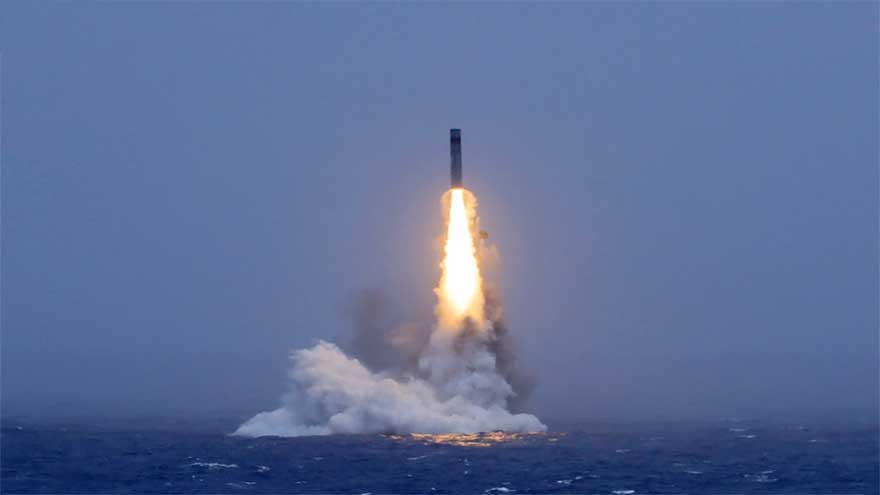
Regional mediators led by Qatar and Pakistan have achieved significant progress in restoring negotiations between the United States and Iran following a three-day pause in direct military strikes, according to regional officials.

The temporary lull comes after nearly two weeks of heavy bombardment triggered by Iranian actions in the Strait of Hormuz.

While US President Donald Trump and Tehran have temporarily halted direct strikes against one another, scattered attacks by regional armed groups persist, including drone attacks targetting Saudi petroleum facilities by Iran-backed militias and Houthis, alongside drone interceptions over Jordan and Iraq.

Talks facilitated alongside Oman are focusing on establishing a maritime management mechanism for the Strait of Hormuz to restore an interim ceasefire deal, although Iranian Foreign Ministry spokesperson Esmail Baghaei stated that no direct negotiations with Washington are taking place and that the waterway currently remains closed.

Concurrently, US naval blockades against Iran persist, and global shipping through both the Strait of Hormuz and the Bab el-Mandeb strait remains constrained.

Amid ongoing mediation, Israeli Prime Minister Benjamin Netanyahu is scheduled to meet US President Donald Trump in Washington to discuss the wider conflict, while Iranian officials have condemned a recent Ukrainian strike on an Iranian vessel in the Caspian Sea.
Similar Posts

  • |

    Iran advances in Hormuz talks with Oman

      Iran and Oman have made significant progress in negotiations over a shipping route through the Strait of Hormuz, with both sides agreeing on the precise maritime coordinates. Iranian Foreign Ministry spokesperson Esmaeil Baghaei said a joint statement is currently being prepared, although its release depends on the absence of outside interference. He stressed that the understanding, while important, would not by itself guarantee complete security in the strategically vital waterway. According to sources, the proposed arrangement would place Iran in charge of overseeing vessels entering the Gulf through the Strait of Hormuz. The sources described the proposal as one of Tehran’s most substantial concessions in the ongoing discussions. However, they dismissed claims made by US President Donald Trump that a comprehensive agreement to fully reopen the strait was close, saying several key issues remain unresolved. Baghaei described the negotiations with Oman as constructive and professional, noting that both countries have reached consensus on the shipping corridor. He added that officials are now working on the final wording of the joint declaration. An Iranian diplomatic source also expressed optimism that an agreement could be reached within the next couple of days if no external actors complicate the process. The source further clarified that the Strait of Hormuz has never been closed due to disagreements between Iran and Oman, insisting that any disruption to navigation depends on actions taken by the United States. Separately, Ebrahim Azizi, chairman of the Iranian parliament’s National Security Committee, said the time would eventually come when US military forces would withdraw from the region. He argued that countries hosting American bases would ultimately be responsible for financing their own security after the departure of US troops. Iranian state media also maintained that any shipping agreement with Oman would not automatically result in the reopening of the strait if Washington continued policies that Tehran considers hostile. A source quoted that the discussions with Oman are strictly bilateral and unrelated to negotiations involving the United States. In another development, United Nations High Commissioner for Human Rights Volker Türk voiced concern over a sharp increase in executions in Iran since March. He said at least 56 individuals have been executed on national security charges during this period, including 27 people connected to earlier anti-government protests. Meanwhile, Yemen’s Houthi movement claimed responsibility for launching ballistic missiles at the Saudi oil tanker Wafaa near Yanbu in the northern Red Sea. A Houthi spokesperson said the missiles struck their intended target and described the attack as part of the group’s continuing blockade against Saudi Arabia. According to the group, the tanker is the eighth vessel targeted since the blockade began in July. Iranian parliamentarian Esmail Kowsari criticised President Trump’s public statements on the Strait of Hormuz, accusing him of making inconsistent and misleading claims about the negotiations. He argued that repeated assertions about the strait reopening and Iran’s position have failed to match developments on the ground. President Trump, however, said the waterway would reopen soon and warned that Iran would face severe consequences if negotiations collapsed. He also claimed that easing tensions in the region could lead to a significant drop in global oil prices. Qatar said diplomatic mediation efforts are making steady progress, with the country’s Emir discussing the latest developments with President Trump in an effort to narrow differences between Washington and Tehran. At the same time, Israeli officials reportedly expressed concern that the United States appears willing to secure an agreement regardless of the terms, adding that Israel is receiving updates on the Hormuz negotiations only through indirect channels.

  • | | | |

    Pakistan repays $1.4bn China loan

    Pakistan has repaid a $1.4 billion commercial loan to China, with refinancing expected within the next few weeks, State Bank of Pakistan (SBP) Governor Jameel Ahmad said on Wednesday. Speaking to reporters after attending a meeting of the Senate Standing Committee on Finance at Parliament House, the SBP governor said the country had made external debt repayments worth $2.2 billion during July 2026. The repayments included the $1.4 billion commercial loan to Chinese banks, while the remaining $800 million was used to settle other external liabilities. Ahmad said the refinancing from Chinese banks had not yet been received but was expected shortly, adding that the funds would be made available to Pakistan after a brief delay. The central bank governor also revealed that the SBP had purchased $28 billion over the past three years to strengthen the country’s foreign exchange reserves. He said Pakistan’s external debt repayment requirement had declined from $26.5 billion to $21.5 billion, easing pressure on the country’s finances during the current fiscal year. According to Ahmad, around $3.5 billion of the remaining repayments will be used to service interest obligations. He said the government would continue its strategy of increasing foreign exchange reserves while maintaining external financial stability. The SBP governor further noted that Pakistan would require the rollover of nearly $12 billion in deposits from Saudi Arabia and China to support its external financing position. He expressed confidence that the country’s debt repayment burden would remain lower this year compared with previous years, helping improve Pakistan’s overall economic outlook.

  • | |

    Spotify reveals Atif Aslam nears 8 billion streams

    Atif Aslam is entering the release of his fourth studio album with a set of streaming numbers that underscore just how far his music has travelled and how deeply it has embedded itself in the listening habits of people around the world. With Subah Aye Na set to arrive on July 31, 2026, his first full-length album since Meri Kahani debuted in 2008, Spotify has released a series of listening insights that paint a remarkable picture of his global reach. According to the figures, Atif currently holds nearly 8 billion monthly streams on the platform, drawing in more than 80 million listeners spread across 184 countries. In 2025 alone, 96 percent of Atif’s listeners streamed his songs outside Pakistan, highlighting the strength of his international fanbase across the Middle East, North America, Asia Pacific, Europe, South Asia and beyond. (jang) It is a figure that speaks to something more than commercial success. It points to a voice that has crossed cultural and linguistic boundaries in a way that very few South Asian artists have managed at this scale. The generational dimension of his audience is equally striking. Spotify stats confirm that 85 percent of his streams come from younger listeners, suggesting that despite being a millennial himself, Atif’s music resonates deeply with Gen-Z audiences who have discovered him well into his career. (jang) That cross-generational appeal is one of the rarer qualities an artist can have, and the numbers suggest it is very much alive. Last year, more than 41 million listeners discovered or returned to his music on Spotify, a surge that reflects both new audiences finding him for the first time and long-time fans coming back. (jang) The platform also confirmed that his songs appear on more than 37.5 million user-created playlists, including wedding playlists, late night drive compilations and more, (jang) a detail that says as much about the emotional context of his music as it does about its streaming performance. His songs are not simply being listened to. They are being chosen for life’s most significant moments. Atif himself has been characteristically thoughtful in describing what the new album represents. “This album is a true representation of freeing myself from the chaos and meeting my real self,” he said. “Stay tuned. I can’t wait for all of you to hear it.” Subah Aye Na is an eight-track album featuring the songs Subah Aye Na, Safar Mein Hun, Ishq, Let’s Have Some Fun, Sun Sajna, Hun Ishq Mein, Char Yaar and Sachay Waday. For an artist whose career began with Doorie and Aadat and has since become the soundtrack to countless lives across the subcontinent and beyond, July 31 represents not just a new release but a return to something deeply personal.

  • |

    Houston hosts major Muharram haleem feast

      HOUSTON: Friends of Karachi Houston, a prominent Pakistani-American community organization, hosted a grand Haleem feast on August 2, 2026, to mark Muharram-ul-Haram, continuing a tradition that has brought the community together for the past 12 years. More than 2,000 people attended the annual community gathering, making it one of the largest Muharram-related Haleem events held in Texas, according to the organizers. The event attracted a diverse cross-section of the Pakistani-American community, including former federal and provincial ministers, former members of the National and Provincial Assemblies, political leaders, social workers, business figures and community representatives. Members of the US Congress also attended the gathering, along with representatives and office-bearers from both the Republican and Democratic parties. Their participation highlighted the event’s growing importance as a platform for community engagement and cultural connection. The gathering also brought together Pakistanis from different schools of thought and backgrounds, reflecting the spirit of unity and brotherhood associated with Muharram. Families, community members and guests gathered to enjoy traditional Pakistani Haleem while reconnecting with their cultural roots. Guests praised the organizers for the event’s arrangements and the authentic taste of the Haleem. Many attendees said the gathering gave them a strong sense of connection with Pakistan and made them feel as though they had briefly returned to their homeland. The annual feast has become a much-anticipated event for the Pakistani community in Houston. Over the years, it has provided an opportunity for people to come together, celebrate their shared cultural heritage and strengthen relationships within the wider community. At the conclusion of the event, the Friends of Karachi Houston administration thanked all guests, volunteers and supporters whose contributions helped make the gathering successful. The organizers also reaffirmed their commitment to continuing the tradition in the coming years and bringing the community together with the same spirit of service, solidarity and brotherhood during Muharram.

Leave a Reply

Your email address will not be published. Required fields are marked *