thai fuel prices

Thai Fuel Prices Jump by Six Baht per Litre as Government Ends Subsidies

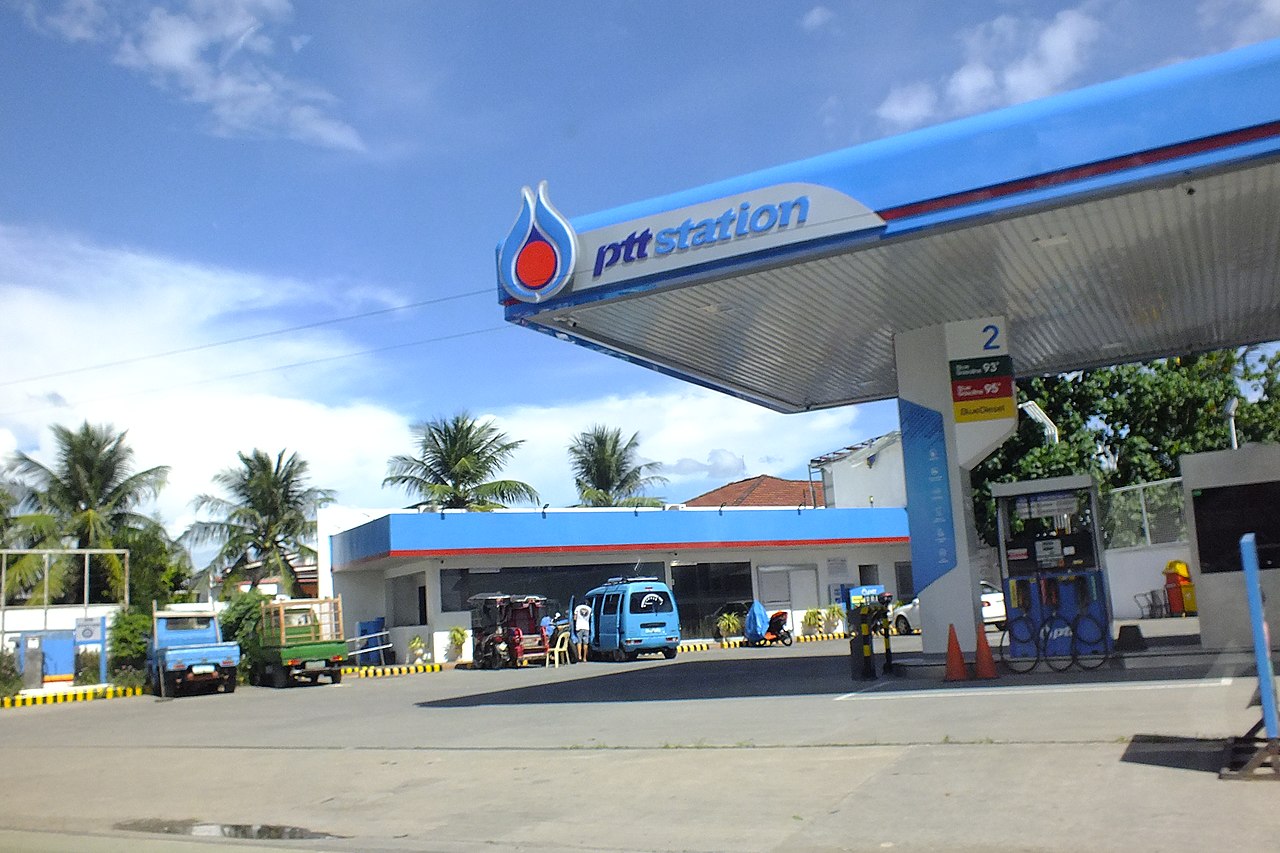
BANGKOK — Fuel prices across Thailand surged by six baht per litre on Thursday morning, marking the second increase in three days as the government abandoned costly subsidy programs in response to spiraling global oil prices driven by Middle East tensions.

Thai Oil Crisis Eases After Government Intervention

The price hike, effective from 5am, applies to diesel, benzine and all grades of gasohol — including Gasohol 95, Gasohol 91, E20 and E85. The increase follows a roughly two-baht rise implemented just two days earlier, compounding the financial strain on consumers and businesses already grappling with rising costs.

Subsidy Burden Becomes Unsustainable

The Oil Fuel Fund Executive Committee resolved on Wednesday to sharply increase retail prices, citing the unsustainable burden on the Oil Fuel Fund amid escalating global oil prices. The committee reported that the diesel price in Singapore had surged from US$198.20 per barrel on Monday to US$242.91 per barrel on Wednesday — a stark indicator of the volatility gripping energy markets.

The committee noted that maintaining subsidies at previous levels would have required the Oil Fuel Fund to shoulder an additional financial burden of approximately 2.592 billion baht per day, or roughly 80 billion baht per month — a level deemed unsustainable by authorities.

Regional Price Alignment

The committee said the price increase is also intended to maintain alignment with regional fuel prices, citing neighboring Malaysia, where diesel prices were raised from 32.40 baht per litre to 39.54 baht per litre on March 16.

New Retail Prices

The latest retail fuel prices, effective Thursday, are as follows:

  • Benzine: 49.64 baht per litre

  • Gasohol 95: 41.05 baht per litre

  • Gasohol 91: 40.68 baht per litre

  • Gasohol E20: 36.05 baht per litre

  • Gasohol E85: 32.79 baht per litre

  • High-speed diesel: 38.94 baht per litre

Consumer Relief Measures

While the government has ended its broad subsidy program, officials said they are considering targeted measures to help ease the impact on consumers. The sharp price increases are expected to have ripple effects across the economy, potentially driving up transportation costs and, in turn, the prices of goods and services.

Diesel Shortages Intensify Across Thailand, Pumps Run Dry

The decision to allow fuel prices to rise reflects the difficult balancing act facing policymakers as they seek to maintain fiscal discipline while protecting consumers from the full force of global energy market volatility. For now, motorists and businesses will bear the immediate impact of prices that have climbed dramatically in a matter of days.

-Thailand News (TN)

Similar Posts

  • | |

    Customs seize cameras and electronics worth Rs5.5m…

    Customs officials at Jinnah International Airport in Karachi have seized a large quantity of electronic goods from a passenger arriving from Dubai. According to customs sources, the passenger was intercepted during a routine check at the airport. Officials recovered 29 cameras from the passenger. The seized items also included five camera lenses. The consignment contained 19 digital cameras. Customs officials also found 10 fitness bands among the electronic goods. Other electronic items were also recovered during the inspection. The total value of the seized goods has been estimated at around Rs5.5 million. Customs officials are examining the recovered items as part of the ongoing investigation. The authorities are also checking the passenger’s travel and import details. The action was carried out at Jinnah International Airport, one of the country’s busiest entry points for international passengers. Officials regularly conduct inspections of incoming passengers to prevent the illegal movement of commercial goods and other undeclared items. The latest seizure highlights the continued monitoring of international arrivals at Karachi airport. Customs authorities are taking action when passengers are found carrying goods that require declaration or clearance under applicable rules.

  • | | | |

    US, Iran and Oman near interim Strait of Hormuz ag…

    WASHINGTON: A breakthrough agreement aimed at reopening the strategically vital Strait of Hormuz could be announced as early as Wednesday, with the United States, Iran and Oman reportedly nearing a temporary deal designed to restore maritime traffic and reinforce the fragile ceasefire between Washington and Tehran. According to a report by the US news website Axios, citing two regional sources and a US official, negotiations have reached their final stage after weeks of intensive diplomacy. The agreement is expected to provide a 60-day interim framework that could later be extended if both sides remain committed to its terms. Under the proposed arrangement, ships entering the Persian Gulf would travel through the northern shipping lane under Iranian oversight, while vessels leaving for the Arabian Sea would use the southern lane within Omani waters, coordinated in consultation with Iran. During the interim period, no tolls or transit fees would be imposed on commercial shipping. The deal also includes a commitment to clear naval mines from the central navigation channel within 30 days. Once the route is declared safe, it is expected to become the primary passage for two-way maritime traffic under a longer-term management framework jointly coordinated by Iran and Oman. The reported agreement would address some of Iran’s longstanding demands for a greater role in managing navigation through the strategic waterway, one of the world’s most important energy corridors through which a significant share of global oil and liquefied natural gas exports passes. Regional diplomatic efforts played a crucial role in bringing the parties closer to an understanding. Sources familiar with the talks said officials from Qatar, Pakistan and Saudi Arabia supported mediation efforts alongside Oman, while the White House remained actively involved throughout the negotiations. The report added that US envoy Steve Witkoff, Iranian Foreign Minister Abbas Araghchi, and Omani Foreign Minister Badr Albusaidi held several telephone discussions in recent days to finalize outstanding issues. Regional sources said Araghchi had agreed to the proposal in principle over the weekend, pending approval from Iran’s senior leadership and the Supreme National Security Council. A US official and another regional source indicated that Tehran completed its approval process on Tuesday, clearing the way for a formal announcement. If confirmed, the agreement could ease tensions in the Gulf, reduce risks to global energy supplies, and revive broader diplomatic efforts, including discussions on Iran’s nuclear programme and long-term regional stability.

  • | | |

    Punjab fixes wheat release price at Rs3,800 per ma…

    The Punjab government has fixed the new wheat release price at Rs3,800 per maund following approval from the provincial cabinet. According to a spokesperson for the Punjab Food Safety and Consumer Protection Department, a formal notification has been issued to implement the decision. The spokesperson said the federal government has directed Punjab to immediately procure wheat from the Pakistan Agricultural Storage and Services Corporation (PASSCO). The province has been approved to receive 300,000 metric tons of wheat under the arrangement. The department has already received 200,000 metric tons of wheat, while PASSCO has set its wheat price at Rs4,150 per maund. Officials said the move aims to ensure an uninterrupted supply of wheat and flour across the province while maintaining price stability in the market. The Punjab government also reiterated its commitment to ensuring that bread (roti) remains available to the public at Rs15 per piece. According to the spokesperson, Punjab had requested 800,000 metric tons of wheat, but only 533,440 metric tons have been allocated. Meanwhile, the Ministry of National Food Security has instructed the Punjab government to promptly submit its wheat procurement schedule along with the required advance payment to complete the purchase process.

  • | |

    SSGC rules out gas leak after Karachi odor complai…

    KARACHI: The Sui Southern Gas Company (SSGC) has reassured residents that the unusually strong smell of natural gas reported in several parts of Karachi is the result of routine testing linked to a new pipeline project and not due to any gas leak. In a statement issued on Sunday, the utility company said the odor was caused by the temporary addition of a higher-than-normal concentration of odorant during the commissioning of a new gas pipeline near Abul Hasan Ispahani Road. According to SSGC, the testing of odorisation plants forms a standard part of the commissioning process to ensure that natural gas can be easily detected by smell in the event of future leaks. The company emphasized that gas system pressures remain stable and that no leakage has been detected anywhere in the network. The stronger odor prompted numerous complaints from residents across different neighborhoods, many of whom feared a possible gas leak. However, SSGC clarified that the smell was expected during the testing phase and did not pose any immediate safety risk. “The system is operating under normal conditions, and no gas leakage has been reported,” the company said, urging consumers to remain calm and continue their daily activities without concern. Officials explained that odorants, which are harmless chemical compounds, are intentionally added to naturally odorless gas to help people quickly identify leaks. During commissioning and testing, the quantity of odorant may temporarily increase, resulting in a stronger smell than usual. The clarification comes amid heightened public sensitivity over gas safety following several incidents in recent years involving gas leaks and explosions in Karachi. In April this year, a local court held SSGC responsible for negligence in connection with a 2022 gas explosion in Orangi Town’s Millat Colony, which claimed the lives of two residents. The court directed the company to pay Rs30 million in compensation to the affected family after concluding that repeated complaints about gas leakage had not been addressed adequately. Against that backdrop, Sunday’s reports of a strong gas smell quickly attracted public attention and triggered concerns on social media. SSGC said it remains committed to maintaining a safe and reliable gas distribution system and advised consumers to report any actual signs of leakage, such as hissing sounds or damaged pipelines, through its emergency helpline. The company added that technical teams would continue monitoring the network while pipeline commissioning and testing activities are completed.

  • | | |

    PML-N clinches nine of 13 AJK seats

    The Pakistan Muslim League-Nawaz (PML-N) has secured a major victory in the first phase of the Azad Jammu and Kashmir (AJK) elections, winning nine of the 13 seats in the Mirpur division, according to preliminary results. The first phase of polling was held across the Mirpur division on Monday. The election was closely contested, particularly between the PML-N and Pakistan Peoples Party (PPP). However, the PML-N managed to establish a clear lead by winning most of the constituencies. Preliminary election results showed that the PML-N secured nine seats, while the PPP won four constituencies. The PML-N candidates emerged victorious in Dadyal, Khari Sharif, Barnala, Samahni, Bhimber, Nakyal, Sehnsa, Charhoi and Khuiratta. The party’s performance gave it a strong position in the division following an intense election campaign. The PPP, meanwhile, managed to win four constituencies. Its successful candidates secured the key Mirpur seat, two seats in Kotli and another constituency in Chakswari. Several constituencies witnessed closely fought contests. In LA-1 (Mirpur-I), PML-N candidate Azhar Sadiq secured victory after receiving 15,427 votes. His rival, Muhammad Afzal Shahid, received 9,832 votes. Another tight contest was witnessed in LA-5 (Mirpur-I), where PML-N’s Waqar Ahmed Noor defeated PPP candidate Chaudhry Pervaiz Ashraf. Noor secured 29,821 votes, while Ashraf received 29,100 votes. The PML-N candidate won the seat by a narrow margin of 721 votes. In LA-7 (Bhimber-III), PML-N candidate Tariq Farooq secured a more convincing victory. He received 37,613 votes, while former AJK prime minister Chaudhry Anwarul Haq finished second with 25,534 votes. The polling process was not without controversy. Reports of clashes and disturbances emerged from different areas during voting. Both the PML-N and PPP also exchanged allegations of electoral irregularities during the campaign and polling process. The AJK elections are being conducted in three phases due to security considerations. With the first phase now completed in the Mirpur division, attention has shifted towards the remaining constituencies. The second phase is scheduled for August 2. It will cover nine constituencies of the Muzaffarabad division as well as the 12 refugee constituencies. The third and final phase will take place on August 10. Polling will be held in 11 constituencies of the Poonch division.

  • | |

    Academy mafia behind MDCAT controversy, minister t…

    Islamabad: Federal Health Minister Mustafa Kamal on Tuesday blamed an organised academy mafia for creating controversy over MDCAT, while a Senate panel questioned why thousands of students were being pushed towards expensive coaching centres for medical college admission. During a heated meeting at Parliament House, Senator Anusha Rahman said private medical colleges in Pakistan were ripping off students by charging around Rs18 lakh every year. She compared these charges with medical education in China, where Pakistani students told her they were paying around Rs5 lakh a year and nearly Rs50 lakh for their complete medical degree. Anusha Rahman said she asked a Chinese provincial governor how they provided medical education at such a low cost. She said the governor replied, “We do not penalise the future.” The meeting of the Senate Health Committee Sub Committee was chaired by Senator Anusha Rahman. Senators Agha Shahzaib Durrani and Samina Mumtaz Zehri also attended. Senator Zehri joined the meeting online. Committee members expressed anger over the federal health minister’s late arrival. Senator Agha Shahzaib Durrani said the meeting had already been rescheduled three times at the minister’s request. Anusha Rahman warned that another meeting would be called the next day if the minister failed to attend. After joining the meeting, Mustafa Kamal said the MDCAT system could be improved but claimed that, in his view, the current system was perfect. He said coordinated text messages were being sent to senators to pressure them and delay the medical admission test. “Do not become emotional over these messages. This is the season of messages and there is a mafia behind them,” the minister told the committee. He also claimed that students sometimes demanded delays by citing floods and other emergencies as reasons. The minister said students from Khyber Pakhtunkhwa sometimes called for postponement even before floods reached Balochistan. He said some students later claimed that their books had been washed away in floods. Senator Samina Mumtaz Zehri rejected the idea that all complaints were organised. She said the committee was receiving around 50 messages from students every day and asked why their problems had not been addressed. She also raised concerns that FSc, A Level and MDCAT examination dates were overlapping. The minister said the MDCAT would be held around three weeks after the final board examination. He said the last board examination was expected to end on July 20 and MDCAT would be conducted three weeks later. The Pakistan Medical and Dental Council told the committee that around 135,000 students would appear in MDCAT. The test will be conducted in 36 cities, including 35 cities in Pakistan and Riyadh in Saudi Arabia. PMDC officials said medical colleges previously conducted separate entry tests, but the system was later changed to a national MDCAT. They said several problems had been reported in earlier years, especially regarding examination papers. To solve these problems, PMDC formed committees and prepared a nationally uniform syllabus. Officials said the syllabus was displayed on different public platforms and around 1,000 people submitted complaints. Anusha Rahman told PMDC officials that students had suffered because of weaknesses in the system. She said FSc students complained that they were asked questions linked to the A Level system, while A Level students were forced to study FSc books. She questioned why students were going to private academies and paying up to Rs1 lakh for MDCAT preparation. “Every year, academies make huge profits from these tests,” she said. She added that students were placed under heavy pressure to complete MDCAT preparation within three months. Senator Agha Shahzaib Durrani said the FSc system mainly focused on detailed knowledge, while the A Level system gave greater importance to analysis and reasoning. PMDC officials said MDCAT had been designed around common learning points included in both systems. They said the aim was to provide a fair test for FSc and A Level students. The health minister agreed to review the issue and asked the committee to send students with genuine complaints directly to the ministry and PMDC. He said officials would sit with the students, listen to their concerns and try to solve their problems. The committee also raised serious concerns about fees charged by private medical colleges. Members said many seats remained vacant because deserving students could not afford the fees. They said Pakistani students were choosing foreign universities because medical education abroad was cheaper. The committee called for a review of the fee structure of private medical colleges to make medical education more affordable. Senator Agha Shahzaib Durrani proposed giving 40 percent weight to MDCAT, 50 percent to academic results and 10 percent to interviews during medical college admissions. PMDC officials warned that reducing MDCAT marks could weaken the importance and credibility of the national test. The committee also recommended conducting MDCAT twice a year so students could get another chance instead of losing a complete academic year. Members appreciated some reforms introduced by PMDC but asked the council to improve public awareness. They recommended issuing brochures and running information campaigns about foreign medical colleges that are not recognised in Pakistan. The committee said students must be warned before spending money on institutions whose medical degrees will not be accepted by Pakistani authorities. It also recommended providing more house job and professional training opportunities to Pakistani medical graduates returning from foreign countries. The minister directed officials to provide complete MDCAT data from the last five years. The information will include the total number of students who appeared in the test and a comparison of FSc and A Level candidates. Committee members also sought details about the members of the MDCAT assessment committee. The health minister promised to provide those details within 24 hours. The committee decided to continue discussions on MDCAT, medical college fees and admission policies in its next meeting.

Leave a Reply

Your email address will not be published. Required fields are marked *