customs seize cameras
| |

Customs seize cameras and electronics worth Rs5.5m…

Customs officials at Jinnah International Airport in Karachi have seized a large quantity of electronic goods from a passenger arriving from Dubai.

According to customs sources, the passenger was intercepted during a routine check at the airport.

Officials recovered 29 cameras from the passenger. The seized items also included five camera lenses.

The consignment contained 19 digital cameras. Customs officials also found 10 fitness bands among the electronic goods.

Other electronic items were also recovered during the inspection.

The total value of the seized goods has been estimated at around Rs5.5 million.

Customs officials are examining the recovered items as part of the ongoing investigation. The authorities are also checking the passenger’s travel and import details.

The action was carried out at Jinnah International Airport, one of the country’s busiest entry points for international passengers.

Officials regularly conduct inspections of incoming passengers to prevent the illegal movement of commercial goods and other undeclared items.

The latest seizure highlights the continued monitoring of international arrivals at Karachi airport. Customs authorities are taking action when passengers are found carrying goods that require declaration or clearance under applicable rules.

Similar Posts

  • | |

    Ukraine targets mid-2027 for prototype of new Euro…

    Ukraine is pushing to have a working prototype of a European anti-ballistic missile system, codenamed Freyja, ready by the middle of next year, as Kyiv presses its allies to accelerate development of a weapon capable of intercepting Russian ballistic missiles. Davyd Aloian, deputy secretary of Ukraine’s National Security and Defence Council and the official overseeing the Freyja project, said an international steering committee responsible for estimating research and development costs is set to meet for the first time soon. The project was formally launched two weeks ago at a summit in Paris, where leaders from ten European nations, including Ukrainian President Volodymyr Zelenskiy, joined roughly a dozen defense manufacturers to establish the anti-ballistic coalition. Aloian said the tight timeline reflects an ambitious target. He described the goal as producing a minimum viable product within the first half of next year, meaning a prototype capable of demonstrating early practical results. Ukraine currently relies heavily on American made Patriot systems, which remain the only weapon in its arsenal able to reliably shoot down Russia’s ballistic missiles, capable of traveling at multiple times the speed of sound. Deliveries of Patriot systems have been hampered by shifting political circumstances, limited stockpiles and lengthy manufacturing timelines. Russia has intensified ballistic missile strikes this month on Kyiv and the southern port city of Odesa, launching dozens of missiles that Ukraine was largely unable to intercept due to a shortage of interceptor missiles. Ukraine has offered to contribute a launcher and an interceptor missile to the Freyja project, which Zelenskiy said this month essentially needs testing at this stage. He has said he hopes to see the system operational within a year. Kyiv is counting on its allies to supply key technology, including modern radar systems, sensors and expertise in missile guidance and control electronics. Defense companies that have joined the initiative so far include Eurosam, maker of the SAMP-T interceptor, along with Leonardo, Thales and Saab. Ukrainian missile and drone manufacturer Fire Point, known for developing the Flamingo cruise missile, has said it will serve as the lead industrial partner on the project and recently struck a deal with German firm Hensoldt to supply radar technology. The Freyja system is designed as a lower cost alternative to the Patriot, a system many European nations also depend on. Other existing air defense platforms, including the Franco Italian SAMP/T and Germany’s IRIS-T, have not yet demonstrated the ability to down ballistic missiles. Zelenskiy has compared the Freyja coalition to a Lego set, describing it as a system built by combining components supplied by different defense industry leaders. Aloian said manufacturers have been asked to build a framework that allows interchangeable parts from different countries. He explained that the system’s open architecture means individual nations can select their preferred components, whether that means Denmark opting for a Danish made Weibel radar or Sweden choosing Saab’s technology. Organizers are also considering setting up a dedicated body, potentially structured as a fund, to manage contributions and ensure the project receives stable financing over time. Aloian said involving private companies directly alongside governments should help cut through bureaucratic delays, adding that the coalition is meant to function as a practical effort rather than a political one. The push for a homegrown European missile defense capability reflects a broader shift underway across the continent, as governments reassess their reliance on American weapons systems amid growing pressure to build independent defense industrial capacity in the face of a prolonged war on Europe’s eastern border.

  • | | |

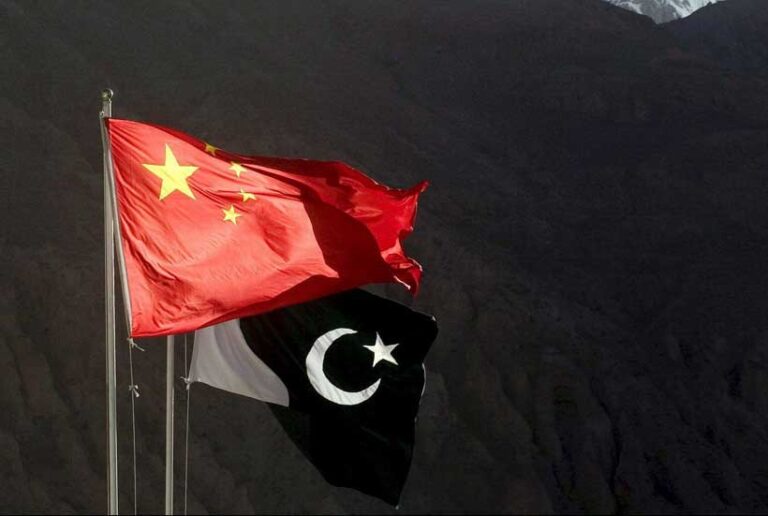
    China donates $2m health supplies to Pakistan

    ISLAMABAD: China, in partnership with the United Nations Population Fund (UNFPA), has provided Pakistan with reproductive health and family planning supplies and medical equipment valued at $2 million to improve maternal and newborn healthcare services across the country. The assistance was formally handed over to the Ministry of National Health Services, Regulations and Coordination during a ceremony held at the Rural Health Centre (RHC) Tarlai in Islamabad. The donation is aimed at expanding access to essential reproductive health services and family planning facilities in 10 underserved districts, where healthcare resources remain limited. The initiative is expected to enhance the availability of critical medical supplies, improve maternal and infant health outcomes, and strengthen Pakistan’s healthcare system by supporting vulnerable communities. Officials described the collaboration between China and UNFPA as an important step towards improving reproductive healthcare and ensuring greater access to quality medical services for women and families in underserved regions.

  • | |

    Rs120bn PRI subsidy ends as banks take over costs …

    Islamabad: The government has stopped providing the Pakistan Remittance Initiative subsidy, which reached Rs120 billion, saying the country’s financial difficulties make it impossible to continue the support under the current budget. Banks have agreed to absorb the related costs themselves to keep overseas Pakistanis sending money through official channels. The development puts the spotlight on the future of Pakistan’s remittance system, which depends heavily on money sent home by Pakistanis working abroad. The government had previously used subsidies to help banks facilitate these transfers, but curtailed that support last year. The Governor of the State Bank of Pakistan informed the Senate Standing Committee on Finance and Revenue that the government had initially provided subsidies to banks under the Pakistan Remittance Initiative to facilitate remittances from overseas Pakistanis. The total subsidy provided by the government reached Rs120 billion. However, the financial pressure on the government has now made it difficult to continue paying this amount. The subsidy could not be continued in the current budget because of prevailing fiscal constraints. Instead, banks have decided to bear the costs linked to facilitating remittances from their own resources. The decision means that banks will continue providing the service to overseas Pakistanis even though the government can no longer provide the previous level of financial support. The Pakistan Remittance Initiative was discussed by the committee during its meeting at Parliament House in Islamabad on August 25, 2026, under the chairmanship of Senator Saleem Mandviwalla. The committee considered the government’s decision important because remittances sent by Pakistanis living and working abroad are a major source of foreign currency for the country. The State Bank told the committee that banks decided to continue bearing the associated costs so that the flow of remittances would not be disrupted. The committee appreciated the banks’ decision but also decided to examine their actual performance. Selected banks will therefore be invited to the committee’s next meeting to explain their performance and contribution to the remittance sector. The move comes at a time when the government is facing tight financial conditions and has been forced to reduce or reconsider spending commitments. The end of the Rs120 billion subsidy raises an important question about how the remittance system will operate in the longer term if banks continue to carry the costs without government support. For millions of Pakistanis working overseas, remittances are an important way of supporting families at home. These transfers help families pay for everyday needs and also bring foreign currency into Pakistan. The government’s decision does not mean that the remittance service has stopped. Instead, banks have agreed to continue facilitating transfers while paying the related costs themselves. The Senate committee has now moved to check whether banks are fulfilling this responsibility effectively and whether overseas Pakistanis are receiving proper services. The next meeting is expected to provide the committee with a clearer picture of how banks are handling the change after the withdrawal of the government subsidy. The key issue remains whether banks can continue carrying the financial burden while maintaining an efficient and reliable remittance system for overseas Pakistanis. The Rs120 billion figure also shows the scale of government support previously used to encourage and facilitate remittances through the formal banking system.

  • | | |

    New committee to review Mir Raza case today

    A new investigation committee will hold an important meeting today to review the Mir Raza Ali murder case. The meeting will be chaired by DIG Aamir Farooqi. The committee will conduct a fresh and impartial investigation into the case. It will examine all aspects of the incident. Investigators will identify and collect any new evidence linked to the case. The evidence will be properly preserved and examined. Physical, technical, circumstantial and forensic evidence will also be reviewed. The committee will closely examine the victim’s injuries and clothes. It will also compare the two conflicting post-mortem reports. Investigators have been directed to take all possible steps to reach a conclusion. The team will submit its findings to the relevant court within the given timeframe. Daily progress reports will also be prepared. Additional officers may be included in the investigation if required. The committee will also record statements from members of the medical board involved in the first post-mortem. Doctors and experts who conducted the first post-mortem are expected to be questioned. They may also be given a detailed questionnaire. Investigators will try to determine the evidence behind the first post-mortem findings. The report had stated that the bullet entered through the chest and exited through the back. The team will also examine how forensic evidence was documented and preserved during the initial investigation. The second post-mortem report gave a different assessment of the bullet’s direction. Investigators will therefore compare both reports in detail. They will also examine the injuries, clothing and other forensic material. Meanwhile, investigators have obtained details about Mir Raza Ali’s movements on the night of July 28. Details of his final phone calls and messages have also been collected. According to the investigation, Mir Raza spoke to two people through three phone calls that night. He reportedly spoke to a person named Ali at 2:13am and again at 2:16am. His final call was answered by his friend Abdullah. The two spoke for more than three minutes.

  • |

    Arab and Palestinian groups urge global action to protect Jerusalem and Al Aqsa Mosque

    Fourteen Arab and Palestinian organisations have issued an urgent appeal calling for immediate international action to protect occupied East Jerusalem and the Al Aqsa Mosque, warning that recent Israeli measures are threatening the city’s religious heritage and historic identity. The groups said the situation has reached a critical stage and argued that stronger global intervention is needed to prevent further escalation. In a joint statement released on Wednesday, the organisations expressed concern over what they described as increasing Israeli actions aimed at changing the existing status of Jerusalem and its holy sites. They said recent developments have targeted not only Al Aqsa Mosque but also the Palestinian residents of Jerusalem and the city’s Arab, Islamic, and Christian character. Al Aqsa Mosque is considered Islam’s third holiest site. The same area is also revered by Jews as the Temple Mount, believed to be the location of two ancient Jewish temples. Israel captured East Jerusalem during the 1967 Arab Israeli war and later declared the entire city its capital in 1980, a move that has not been recognised by most of the international community. According to the appeal, Israeli authorities have allowed an increase in visits to the Al Aqsa compound by Jewish groups under police protection. The organisations claimed these actions, along with restrictions placed on Muslim worshippers, are attempts to alter the long standing arrangements governing access to the holy site. The statement also raised concerns about attacks on worshippers, restrictions placed on religious leaders, and measures targeting guards responsible for protecting the mosque. The groups argued that these actions undermine freedom of worship and threaten the historical and legal status of one of Islam’s most important religious landmarks. Beyond the mosque itself, the organisations accused Israel of expanding settlements, demolishing Palestinian homes, revoking residency rights, carrying out excavations around the Old City, and increasing pressure on both Islamic and Christian religious sites. They warned that these policies are changing the city’s demographic and cultural landscape while placing Jerusalem’s diverse religious heritage at risk. The appeal also highlighted concerns over the city’s Christian community. It said restrictions affecting churches, religious institutions, and Christian leaders threaten the long established Christian presence in Jerusalem and weaken the city’s multicultural identity. The organisations argued that international statements of concern are no longer enough to address the situation. They called for coordinated political, legal, and human rights efforts to stop actions they consider violations of international law. They also urged governments and international institutions to ensure accountability and prevent further changes to the city’s status. The statement specifically called on Jordan, which holds custodial responsibilities for Jerusalem’s Islamic and Christian holy sites, to intensify diplomatic efforts and encourage stronger international engagement. The groups said Jordan’s role remains essential in defending the religious and historical significance of the city’s sacred places. Describing Jerusalem as a shared historical, cultural, and religious responsibility, the organisations stressed that protecting the city requires practical measures rather than symbolic declarations. They said preserving the rights of its residents and safeguarding its holy sites should remain an international priority. The appeal was signed by several organisations, including the Popular Conference for Palestinians Abroad, the Al Quds International Institution, the Arab National Congress, the European Palestinian Conference, and the Islamic National Conference. The statement comes as tensions continue to rise across the occupied West Bank, where Israeli military raids and settler related violence have increased since the start of the Gaza conflict in October 2023. Palestinian officials say thousands of people have been injured or arrested during this period, while violence has intensified further following recent deadly clashes near Nablus involving Palestinians, Israeli settlers, and Israeli forces.

  • PFA deals four food outlets on M-2, imposes Rs3.5m fines

    GUJRANWALA: In one of the largest enforcement drives against food safety violations in recent months, the Punjab Food Authority (PFA) sealed four outlets of national food chains, imposed fines amounting to Rs3.5 million and destroyed more than one maund of substandard and prohibited food ingredients during a major crackdown at the M-2 Sukheki Motorway Service Area. The operation was led by Special Assistant to the Punjab Chief Minister Salma Butt along with Punjab Food Authority Director General Raja Mansoor Ahmad. Five well-known food chains were inspected as part of the campaign aimed at ensuring compliance with food safety standards at one of the province’s busiest motorway service areas. According to the Punjab Food Authority, inspection teams found multiple violations of food hygiene and safety regulations at the inspected outlets. Four national food chain outlets were sealed after authorities detected serious lapses that posed potential risks to public health. Officials said inspection teams found freezers and washing areas in an unhygienic condition, with stagnant foul-smelling water and poor sanitation. Mandatory supply records, return logs and other essential documentation were either incomplete or unavailable. Inspectors also reported widespread insect infestation, while food items and raw materials were found stored directly on the floor in violation of food safety protocols. The authority further noted that bakery products at some outlets were being offered without manufacturing and expiry dates, making it difficult to verify their freshness and safety for consumers. Open drains, poor housekeeping and an overall unhygienic environment were also cited among the violations observed during the inspection. Besides sealing the outlets, the Punjab Food Authority imposed cumulative fines of Rs3.5 million on the violators. More than one maund of substandard and prohibited food ingredients was confiscated and destroyed on the spot to prevent their use or sale. Speaking on the occasion, Punjab Food Authority Director General Raja Mansoor Ahmad said the authority was pursuing a province-wide campaign to eliminate food adulteration and fraudulent practices from the food supply chain. “Our teams are working to block every avenue of food adulteration and fraud across Punjab. Strict monitoring is being carried out from food production to its distribution, and there will be no compromise on quality,” he said. He added that the authority was implementing a zero-tolerance policy against violators under the directives of Punjab Chief Minister Maryam Nawaz Sharif. “The sale and distribution of substandard or expired food products will not be tolerated under any circumstances. Enforcement operations will continue to ensure consumers receive safe and hygienic food,” he said. The Punjab Food Authority has intensified inspections across the province in recent months as part of its ongoing efforts to improve food safety standards and strengthen regulatory enforcement at restaurants, bakeries, food chains and processing units.

Leave a Reply

Your email address will not be published. Required fields are marked *