sultan rahi8217s son
| |

Sultan Rahi’s son lashes out at Firdous Jamal

Actor Haider Sultan, the son of legendary Pakistani film icon Sultan Rahi, has strongly criticised veteran actor Firdous Jamal over his recent comments about his late father. The controversy began after Firdous Jamal appeared on Public Demand and questioned Sultan Rahi’s acting abilities, prompting Haider to respond through a video shared on his TikTok account.
Sultan Rahi remains one of Pakistan’s most celebrated film stars, having appeared in more than 800 Punjabi films during his illustrious career. He dominated both Punjabi and Urdu cinema for decades before his tragic death in 1996, when he was killed by unidentified assailants. His son, Haider Sultan, later followed in his footsteps by pursuing a career in television and film.
In his TikTok video, Haider expressed anger over Firdous Jamal’s remarks and questioned why the veteran actor had spoken about his father in such a manner. He said, “Unnecessary things were said about my father. Firdous Jamal, you are a senior, a so-called TV artist, but who are you to speak about my father?”
Continuing his criticism, Haider alleged that Jamal’s personal habits had affected his judgement. He stated, “Pride has ruined your life and your Hereafter. Your brain cells are dead because of consuming alcohol all the time. Before speaking about legends, you should first look at yourself. You have lost your senses.”
Defending his father’s legacy, Haider described Sultan Rahi as both an exceptional artist and a remarkable person. He said, “Sultan Rahi was a great actor and a wonderful human being. The whole world acknowledges his contributions. Your ranting will not make him any less of a legend or an artist.”
Haider also credited his father with playing a major role in sustaining Pakistan’s film industry during its most successful years. He remarked, “He kept the film industry alive, worked hard on his own, and elevated Pakistani cinema. You should be ashamed of yourself.” He further added, “Even your family has disowned you.”
The actor did not limit his criticism to Firdous Jamal alone. He also criticised Public Demand producer Tahir Sarwat Mir for allowing the comments to be broadcast. Haider said, “I also have complaints against the show’s producer, Tahir Sarwat Mir, for allowing such obnoxious remarks to be aired about the person who treated him as his son.”
He concluded his response by saying, “People may laugh at these comments, but everyone is condemning you. Who are you? ARY or Geo News? No, you are just a cheap Media group.”
The dispute began after Firdous Jamal stated on Public Demand that Sultan Rahi “didn’t have any craft” and described him as “just a loud actor with a lot of energy.” His remarks quickly sparked debate online, with many fans defending Sultan Rahi’s legacy and criticising the veteran actor’s assessment. Haider Sultan’s emotional response has since gone viral on social media, where supporters have praised him for standing up for his father’s contribution to Pakistani cinema. 

Similar Posts

  • |

    UN Security Council begins informal voting to choose next secretary general

    The United Nations Security Council will begin its first round of informal voting on Thursday to measure support for candidates seeking to become the next UN secretary general. The confidential ballots mark the start of a selection process that will eventually determine who succeeds Antonio Guterres when his second five year term ends later this year. Seven candidates from different regions are currently competing for the position. They include Argentina’s Rafael Grossi, who heads the UN nuclear watchdog, former Chilean President Michelle Bachelet, former Costa Rican Vice President Rebeca Grynspan, former Ecuadorian Foreign Minister Maria Fernanda Espinosa, former Guyanese Foreign Minister Carolyn Rodrigues-Birkett, former Senegalese President Macky Sall and Ugandan diplomat Olara Otunnu. Additional candidates are still allowed to enter the race before the selection process concludes. The next secretary general will take charge of the United Nations at a time when the organization faces mounting criticism over its effectiveness and structure. Calls for reform have increased as member states push for a more efficient institution, arguing that the UN must reduce bureaucracy, eliminate overlapping responsibilities among its agencies and improve its ability to respond to global crises. The first stage of the selection process involves informal straw polls conducted behind closed doors among the Security Council’s 15 members. During these secret ballots, council members indicate whether they encourage, discourage or have no opinion on each candidate. The votes are non binding but provide an early indication of which candidates have the strongest support and which face significant opposition. At this stage, all Security Council members use identical ballots, meaning diplomats can see the overall level of support for each candidate without knowing whether opposition comes from one of the council’s five permanent members. Those permanent members are China, France, Russia, the United Kingdom and the United States, each of which holds veto power over the final recommendation. As the selection process moves forward, the permanent members will use ballots in a different color during later rounds of voting. This allows diplomats to determine whether any candidate has received a negative vote from a veto holding country, information that often plays a decisive role in narrowing the field. There is currently no clear favorite to replace Guterres. Previous UN leadership contests have required several rounds of voting over many weeks before a consensus candidate emerged. Diplomats expect this year’s process could continue throughout the summer and possibly into late September or early October if no candidate gains broad enough support. If the Security Council remains divided, the process could take even longer. Once the council agrees on a single candidate, it will formally recommend that person to the 193 member UN General Assembly. The recommendation requires at least nine votes in favor and no veto from any of the five permanent members. The General Assembly then votes to confirm the appointment, a step that has traditionally been considered a formality after the Security Council reaches agreement. The current president of the Security Council is the Democratic Republic of the Congo. Its ambassador to the United Nations, Zenon Mukongo Ngay, confirmed that the first round of straw polls will take place on Thursday morning. He also said that Ugandan candidate Olara Otunnu will participate in the voting despite not taking part in the informal public hearings completed by the other candidates. According to his biography, Otunnu played an important role in shaping the current selection process. He states that he introduced the system of informal straw polls while serving as president of the Security Council in 1981. That method has since become a key part of the process used to identify the candidate most likely to secure broad international support before the final appointment is made.

  • | |

    Fatima Jinnah remembered for inspiring legacy on b…

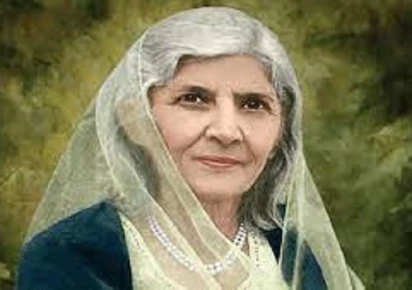
    SIALKOT: Government College Women University Sialkot (GCWUS) commemorated the birth anniversary of Madar-e-Millat Fatima Jinnah, honouring her remarkable role in Pakistan’s independence movement, her commitment to women’s empowerment, and her lasting contributions to nation-building. In a statement issued on Friday, the university described Fatima Jinnah as one of the country’s most influential national figures. Born in Karachi on July 31, 1893, she remained a steadfast supporter of her brother, Quaid-e-Azam Muhammad Ali Jinnah, and played a pivotal role in encouraging Muslim women to actively participate in the struggle for an independent homeland. The university also highlighted her leadership in establishing the All India Muslim League Women’s Committee in 1937, an initiative that helped spread the message of the Pakistan Movement among women across the subcontinent and strengthened their political participation. Paying tribute to her humanitarian efforts, GCWUS noted that Fatima Jinnah also devoted herself to the rehabilitation of refugees and the provision of medical assistance following the creation of Pakistan. The university said her vision, courage, and dedication continue to inspire generations, reaffirming her enduring place in the country’s history as a symbol of patriotism, resilience, and public service.

  • | |

    K-P assembly rejects move to absorb Haripur, Abbot…

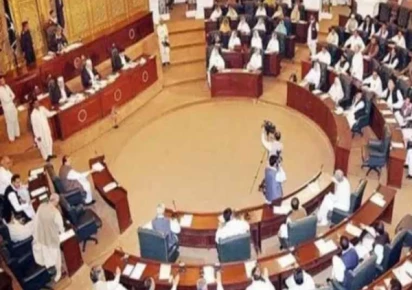
    PESHAWAR: The Khyber-Pakhtunkhwa Assembly has unanimously rejected any reported move to separate Haripur and Abbottabad from the province and place them under the administrative control of Islamabad, warning that any such attempt would undermine provincial autonomy and constitutional rights. The resolution was adopted during Friday’s session after Provincial Minister Akbar Ayub presented a strongly worded motion opposing any proposal by the federal government to alter the status of K-P districts, particularly Haripur and Abbottabad. The House declared that all districts of Khyber-Pakhtunkhwa are an integral part of the province and cannot be separated under any circumstances. It maintained that changing provincial boundaries for administrative, political or economic purposes, or to gain control over natural resources, would violate the constitutional rights of the province and its people. The resolution specifically highlighted K-P’s water resources, hydropower facilities, mineral wealth, forests and other natural assets, stating that these resources belong constitutionally to the province and its people. Any attempt, directly or indirectly, to take control of these resources was described as unacceptable. The provincial legislature called on the federal government to immediately drop any proposal concerning the separation of the districts and respect the existing constitutional, geographical and administrative status of K-P. The House also urged political parties, lawmakers, constitutional bodies, lawyers, civil society, young people and the media to maintain a united position in protecting the province’s territorial integrity, autonomy and public interests. During the same session, PPP lawmaker Mehr Sultana raised concerns over the lack of effective rules requiring doctors to prescribe medicines using generic names rather than specific brands. She also called for computerized prescriptions to become mandatory, pointing out that unclear handwritten prescriptions can create difficulties for patients and increase the risk of errors. She urged the provincial government to introduce legislation or regulations addressing both issues, with the aim of improving prescription practices and protecting patients.

  • | |

    Two terrorists killed in Balochistan operation

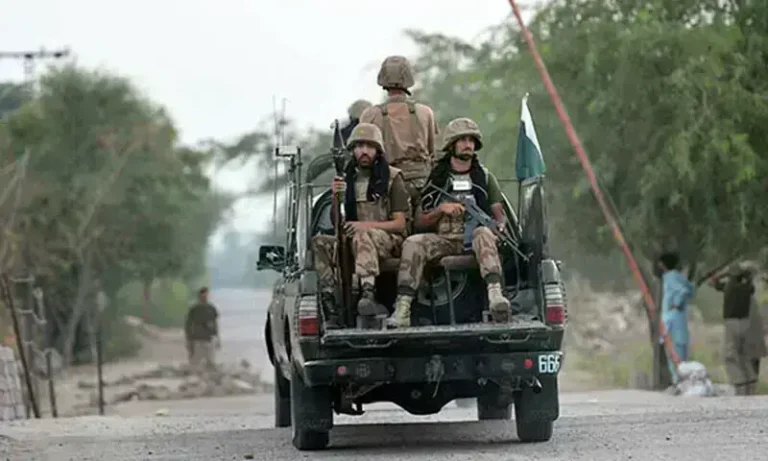
    Security forces have killed two terrorists and wounded three others during an intelligence-based operation in Killi Zaik, Balochistan, according to security sources. The operation was launched after intelligence reports indicated the presence of suspected terrorists in the area. Security personnel moved in on the reported hideout and conducted a targeted operation. Two terrorists were killed during the operation, while three others sustained injuries. Security forces also recovered ammunition, hand grenades and materials believed to have been used for preparing improvised explosive devices (IEDs). Officials said security operations against militant groups in Balochistan are continuing as part of ongoing efforts to prevent terrorist attacks and dismantle militant networks operating in the province. The latest operation comes amid an increase in security activity across Balochistan. In recent days, security forces have conducted several intelligence-based operations in different districts of the province. On Sunday, seven terrorists were killed during an intelligence-based operation in the Lajay area of Kharan. The previous day, 10 terrorists were killed and several others were injured during an operation in the Shor Pard area of Khuzdar district. Earlier, 18 terrorists were reported killed in operations in Surab district. Eight of them were killed after an explosive device detonated prematurely, according to security officials. Security forces have also carried out operations in Panjgur, where five terrorists, including a key militant commander, were killed in the Sarkini and Chedgi areas. The intensified security operations come as Balochistan continues to face serious security challenges. The province has witnessed a rise in militant activity and casualties in recent months. A recent security assessment by the Pakistan Institute for Conflict and Security Studies showed a sharp deterioration in the security situation in Balochistan during July. According to the assessment, deaths linked to violence in the province increased from 109 in June to 372 in July. The number of security personnel killed also rose significantly, from six in June to 62 in July. The report further recorded an increase in militant deaths, with 238 terrorists reportedly killed in July compared with 75 in June. Civilian deaths also rose from 28 to 54 during the same period.

  • |

    Cuba plunges into darkness as national electric grid collapses

    Cuba’s state-owned grid operator, Union Electrica de Cuba, announced that the national electricity system collapsed late on Sunday night, leaving approximately 10 million residents without power. The widespread outage marks the fourth major blackout to hit the country in recent weeks following three similar grid failures recorded throughout July. The worsening energy crisis is driven by severe fuel shortages, which have left the nation’s ageing power generation facilities unable to meet basic electrical demand. Sanctions and geopolitical shifts have severely restricted the island’s ability to import crude oil. Following the ouster of Venezuelan President Nicolas Maduro in January, a US-imposed oil blockade cut off Cuba’s primary source of imported fuel, while alternative shipments from Mexico have also stopped under pressure from Washington. To mitigate the escalating power supply emergency, the Cuban government has initiated unprecedented reforms by allowing private businesses and foreign-backed entities into its domestic wholesale fuel market.

  • | |

    Greek police fast-track toxicology tests in probe …

    Greek investigators say they are prioritizing toxicology testing in hopes of determining within days how a Scottish woman died after her body was discovered inside a suitcase in Athens. Elisabeth-Jane Ross, 38, was found in an abandoned building in the Kypseli district of the Greek capital on July 18, reportedly by a homeless man who came across the body. Known to family as Lisa, she is believed to have traveled to Greece from Edinburgh in late June and was reported missing on July 15. Greek authorities are also working to locate American friends of Lisa’s who they say were staying in the same Kypseli area at the time she disappeared. Police have not yet determined whether her death is being treated as a homicide. A post mortem examination is currently underway, and investigators say toxicology results could help establish whether foul play was involved in her death. Such tests typically take anywhere from several weeks to a few months to complete, depending on case complexity and the workload of forensic laboratories. However, police spokesperson Konstantina Dimoglidou told a Scottish broadcaster on Saturday that authorities have made the case a priority and expect results within days, saying investigators need answers on how she died without further delay. According to police accounts, Lisa initially stayed in the Keratsini area, located roughly six miles west of central Athens, with Greek friends. She told them that on July 15 she planned to travel to Kypseli to meet American friends or acquaintances. Investigators are now trying to identify those individuals. Officials also noted that her mobile phone continued transmitting a signal and sending messages for several days after her death is believed to have occurred. The UK’s Foreign, Commonwealth and Development Office confirmed Wednesday that it is providing consular support to Lisa’s family and remains in contact with Greek authorities. Scotland’s First Minister John Swinney described the case as absolutely appalling and said the Scottish government and the FCDO would continue supporting her family. Police Scotland said it is also providing assistance to the family as the investigation continues.

Leave a Reply

Your email address will not be published. Required fields are marked *