takes notice lawmakers
| |

PM takes notice of lawmakers’ absenteeism

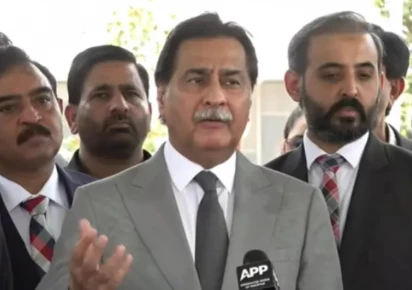
ISLAMABAD: National Assembly Speaker Sardar Ayaz Sadiq has said Prime Minister Shehbaz Sharif has taken notice of the low attendance of lawmakers during parliamentary sessions.

Speaking to the media outside the National Assembly on Tuesday, Sadiq said some federal ministers had raised the issue of members’ absence with the prime minister. He said the government and lawmakers were now paying attention to improving attendance.

The speaker’s comments came after a session of the National Assembly witnessed a low presence of members, with a large number of seats remaining vacant during proceedings.

Sadiq said maintaining the required quorum was not solely the responsibility of the speaker. He said both the government and opposition benches had a duty to ensure that their members attended parliamentary proceedings.

He expressed hope that attendance would improve when the next session is held, which is expected to take place later this week.

According to the speaker, the government had conveyed that it recognised the seriousness of the issue and intended to improve lawmakers’ presence in future sessions.

Sadiq urged members from both sides of the House to remain present during proceedings. He said parliamentary sessions provided limited time for debate, questions, discussions and legislation, and lawmakers should make full use of the opportunity.

He noted that poor attendance affected both sides of the House. The government could not properly complete its legislative agenda, while opposition members also lost the opportunity to raise issues and scrutinise government policies.

The speaker also commented on Jamiat Ulema-e-Islam-Fazl (JUI-F) chief Maulana Fazlur Rehman’s intention to adopt a more active approach towards legislation.

Sadiq welcomed the move, saying stronger opposition participation could improve parliamentary accountability. He said constructive pressure from opposition parties could also encourage the government to introduce reforms.

Regarding resignations submitted by Pakistan Tehreek-e-Insaf (PTI) members from standing committees, the speaker said he had not accepted any of the resignations.

He said parliamentary committees were continuing to function and could perform more effectively if opposition members regularly participated in their meetings.

Asked about the possibility of the united opposition moving a no-confidence motion against him or Prime Minister Shehbaz Sharif, Sadiq said it was a constitutional and democratic right of the opposition.

He said the National Assembly would facilitate the opposition if it decided to exercise that right.

Sadiq also spoke about efforts to reduce political tensions between the government and opposition. He said several attempts had been made to bring the two sides to the negotiating table.

He said he, Prime Minister Shehbaz Sharif, the law minister and Rana Sanaullah had repeatedly offered dialogue.

Similar Posts

  • Death Toll In Bangkok Rong Beer Na Fire Reaches 37

    BANGKOK, Thailand — The death toll from the devastating fire at the Rong Beer Na Ladprao entertainment venue in Bangkok’s Chatuchak district has risen to 37, following the death of a performing band member. Thitiwat “Din” Kaewkanha, a 27-year-old singer with the Tossakan band, succumbed to severe injuries at Rajavithi Hospital and after other injured […]

  • | |

    LHC acquits man sentenced to life for wife’s…

    LAHORE: The Lahore High Court ( LHC) has overturned the life imprisonment sentence of a man convicted of murdering his wife, ruling that the prosecution failed to establish his guilt beyond reasonable doubt. Justice Tariq Saleem Sheikh issued a detailed 19-page written judgment, allowing the appeal filed by the convict, Tanveer, and ordering his immediate release. According to the verdict, Tanveer maintained that he was on duty at a petrol station at the time of the incident and denied any involvement in the killing of his wife. The court observed that the prosecution had failed to produce reliable and convincing evidence to support the allegations against him. The judgment concluded that the available evidence was insufficient to sustain the conviction, leading the court to set aside the trial court’s decision and acquit the appellant. Tanveer had been sentenced to life imprisonment in 2022 by a trial court after being found guilty of his wife’s murder. In addition to the prison term, he was fined Rs400,000. He later challenged the conviction before the Lahore High Court, which has now ruled in his favor.

  • Cambridge leak row hits streets as students announce protest outside IBCC

    Islamabad: Students affected by the Cambridge examination paper leak controversy have announced a protest outside the IBCC office Islamabad on Wednesday, August 12, saying they have been left with no option but to take their fight to the streets after a key meeting meant to discuss their evidence was postponed until after the results. The protest has been called by Accountability4Cambridge, a student led movement campaigning over alleged leaks of Cambridge O Level and A Level examination papers during the June 2026 examination series. They said they had spent months collecting evidence, meeting government bodies and trying to get action before the results, but claimed their main meeting was postponed at the last stage. It said the meeting was important because students planned to present findings and evidence connected with the National Cyber Crime Investigation Agency investigation. According to Accountability4Cambridge, it had already met officials including representatives of the IBCC and the British Council, but the latest meeting was postponed without a clear reason. The group said Cambridge officials had also pulled out of an important meeting shortly before the results, ending what students described as their last major chance to settle the matter before grades were announced. The students have now called for what they describe as a peaceful demonstration outside the IBCC office. The group said students had waited long enough and wanted Cambridge, IBCC and other institutions to understand that the voices of students could not simply be ignored. The protest call comes as new forensic findings from the NCCIA add another layer to the controversy. A July 31 report from the National Cyber Crime Investigation Agency examined digital evidence submitted in connection with 13 disputed Cambridge examination components. The NCCIA forensic laboratory examined 24 files stored on a USB drive. According to the report, investigators found no evidence of artificial video editing, splicing, frame addition or cropping in the 24 files they examined. However, the findings did not establish who originally leaked the examination papers. NCCIA said the videos had been shared through social media services including WhatsApp, Discord, Reddit and Telegram. Because the videos were shared through social media services, including WhatsApp, Discord, Reddit, and Telegram, important information about the original recording devices was removed. This meant investigators could not confirm the make, model or serial number of the phones or devices that first created the Leaks. The agency also said the exact recording times could not be confirmed from the media files alone. To establish those details, investigators would need physical access to the original devices. This is an important part of the case because the students say the evidence that examination material was circulating before papers were officially held. The NCCIA report confirmed that the files showed no signs of artificial manipulation, but it also made clear that the digital evidence alone could not legally identify the original person responsible for the leaks. The agency found what it called double encoding in material linked to Chemistry A Level 9701/21 and IGCSE Physics. Simply put, investigators found signs that some material had been recorded from another screen before being shared again. The agency stated this indicated the circulating videos were secondary recordings rather than recordings made directly at the alleged leak’s original source. NCCIA also found foreign time zone information and other indicators in some Physics and Sociology material. The report suggested this could indicate that some material first appeared outside Pakistan before being shared online. However, the agency did not identify the final source of the leak. It said physical seizure and examination of the original recording devices would be necessary to meet the level of evidence required for prosecution or disciplinary action. Accountability4Cambridge has presented the forensic report as an important development in its campaign. The group says the findings support its position that the submitted leaks were genuine rather than artificially created or edited. At the same time, the NCCIA itself stopped short of confirming when the material was originally recorded, who recorded it or who first leaked the examination papers. The protest is also linked to anger over Cambridge’s handling of Mathematics A Level S1, also referred to as Paper 5 of syllabus 9709. According to material shared by campaigners, Cambridge had earlier said the paper had been exposed prematurely and that assessed grades would be used. However, students and teachers later criticised a reported decision to mark candidates’ original scripts instead. Critics argued that even if leaked material reached only a limited number of students, those students could still gain an unfair advantage over candidates who sat the paper honestly. They said a leak does not become harmless simply because the material may not have reached thousands of students. Students fear that those who saw the questions early could score unusually high marks, which could affect grading and disadvantage honest candidates. The controversy has caused particular concern because Cambridge results can affect university admissions, scholarships and future education plans in Pakistan and abroad. Some campaigners also criticised schools and colleges for not speaking strongly enough when the alleged leaks were first being reported. They argued that major schools have direct communication channels with Cambridge and should have raised the issue much earlier on behalf of their students. Critics said statements issued only a few days before results would not solve the problem. They also demanded guarantees that similar incidents would not happen again when students entering A Level or moving from AS to A2 sit their examinations next year. The controversy has also started a wider discussion over whether students in Pakistan should continue depending so heavily on Cambridge examinations. Accountability4Cambridge says its main aim is not hostility towards Cambridge. The movement wants transparency, accountability, fair treatment and compensation for affected students. The group says it has approached senators, parliamentary committees, education authorities and other stakeholders to keep the issue alive. The latest protest call follows months of complaints over the June 2026 examination series. Accountability4Cambridge says the August 12 protest is intended to increase pressure before its

  • | |

    DI Khan church still guards colonial memories

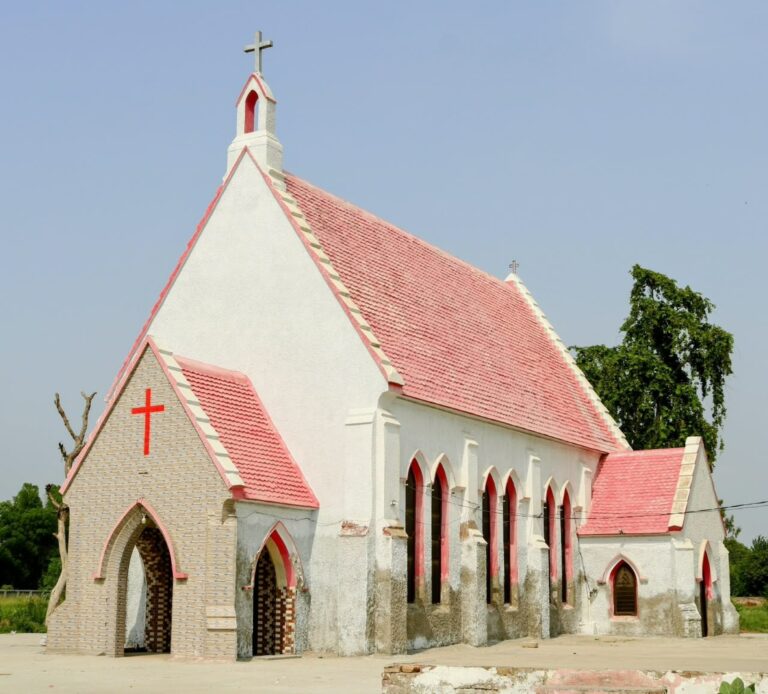
    There are some places we pass every day without realising how much history they hold. They remain untapped until some visitors put their eyes on them. During summer vacations, I travelled to Dera Ismail Khan, a district situated in southern Khyber Pakhtunkhwa. It takes six hours from Lahore to arrive in this historic city. During my stay there, I came across one such place that immediately captured my attention, and I thought to write about it. It was St Thomas Church, sacred place of worship for Christian community. A large cross standing at the entrance, old rusty walls, and an ambience of spiritualism. But the Church showcased more than that. Its walls contain historical accounts of colonial past, the military campaigns led by British soldiers in this area and a grave of one Lieutenant Governor of Punjab.   St Thomas Church was built in 1856 during British rule in the Indian subcontinent. It is one of the oldest churches in present-day Pakistan. It has survived political changes, the Partition of 1947, and the passing of time. Even today it stands as a symbol of the rich and diverse heritage of Dera Ismail Khan. The church is not only a place of worship but also a reminder that different faiths and communities have long been part of the history of this region. As we walked inside, we met the old priest and caretaker of the church named Chand. He welcomed us warmly and narrated the remarkable history of this place. There are memorials of British soldiers who lost their lives in this region during military campaigns. The priest stood in front of each tablet inscribed on the church wall and briefed about it. One memorial narrates the names, ranks and units of one hundred and 69 British military officers and other ranks who were killed or died due to injuries or disease in Waziristan military campaigns launched between 1919 to 1921.     Another memorial lists details of sixty-eight officers and other ranks who met a similar fate during the 1936-1938 Waziristan military campaigns. Similarly, one tablet erected by friends and fellow officers mourns the death of Herbert Walter Gee, ICS, deputy commissioner of Dera Ismail Khan, who died in 1901. There are other memorials as well, erected by colleagues in memory of the fallen officers. I thought that these names contain historical accounts year by year about what happened in this part of the world at that time. Every sentence of the Priest carried a new story, such as how the church has witnessed a lot of happenings through generations and that it still serves the small Christian community living in Dera Ismail Khan. As we stepped outside, believing our visit had come to an end, the priest said, “Wait. I have to show you one more thing.” He took me to the back of the building, where I saw a large white grave standing quietly among the dusty bushes. Here rests Lieutenant General Sir Henry Marion Durand (1812-1871). Durdand – a quite familiar name for the people of Pakistan and Afghanistan. Sir Durand was a career British military officer, diplomat, and administrator. He served in the East India Company Army, took part in several military campaigns, and later became the Lieutenant Governor of Punjab from 1870 to 1871. His son Sir Mortimer Durand is the one who drew the contours of the border between British India and Afghanistan in 1893. A man who once held such an important position now lies in silence behind an old church, while many people living nearby are unaware that his grave even exists. Henry Marion Durand died in 1871 at the age of 58 from a tragic accident. He was visiting Nawab of Tank Shahnawaz Khan along with his daughter when he fell from an elephant. The elephant was passing through the gateway by the town of Tank with the Nawab on the same elephant and an official (Chaprassy). The gate was too low to cross an elephant with howdah. The howdah struck the walls of crossing and the elephant got frightened resulting in the fall of Durand. He remained unconscious for a few days and never recovered. He was buried beside St. Thomas’ Church in Dera Ismail Khan. The British suspected some conspiracy into this incident. One of descendent of Nawab Shahnawaz Khan says that The British launched an enquiry into it. But the daughter of Durand gave testimony in favour of the Nawab that it was just an accident and there was no fault on his part. However, as a punishment, the British authorities stripped the powers of Nawab Shahnawaz Khan in 1875 and sent him to Lahore under strict watch. He passed away in 1881 while under surveillance. Standing beside the grave of Sir Henry Durand, I felt as if I had stepped into a forgotten chapter of history. The name engraved on the stone reminded me that many important events and personalities of the past remain connected to places that we often overlook. How easily history can fade from people’s memories, even when it is standing right in front of us. As I left St Thomas Church, I felt that I had walked through a chapter of history that few people ever get to read. Sir Henry Durand ruled Punjab from this soil, and his son later sat across a table in Kabul and drew the line that still separates Afghanistan and Pakistan today. That line appears in newspapers and political debates all the time. Yet the grave of the man whose name it carries lies quietly behind a church in Dera Ismail Khan.

  • | |

    Errors found in Mir Raza Ali’s initial post-…

    Fresh discrepancies have emerged in the initial post-mortem report of young businessman Mir Raza Ali, raising concerns that the investigation into his death could be compromised. According to medico-legal sources, several inconsistencies were identified after examining photographs of the body, prompting questions about the accuracy of the preliminary findings. Sources said the images showed a small gunshot wound on the lower back and a larger wound on the chest. They added that the injuries appeared inconsistent with the details recorded in the initial post-mortem report. The photographs also reportedly showed the fingers of the victim’s left hand tightly clenched around broken grass, while suspicious marks were observed on the right hand. Medico-legal officials said these details could be significant for the ongoing investigation. According to the sources, another visible injury was found beneath the victim’s chin, which was also not adequately addressed in the preliminary examination. The report further suggested that the body was approximately 24 to 36 hours old at the time it was examined. Sources familiar with the findings said the gunshot entry wound appeared larger than the exit wound in the report, while the photographs indicated the bullet had entered from the back and exited through the front. They stressed that these contradictions require further forensic review. Officials also noted that the body appeared swollen in the photographs and the face was severely disfigured. They said a detailed examination of the head could have helped determine the exact cause of the facial injuries and provided additional forensic evidence. The discrepancies have raised concerns that flaws in the initial post-mortem documentation may affect the direction and credibility of the investigation.

  • | |

    Pakistani documentary selected for Locarno Film Festival

    Pakistan’s presence on the international film festival circuit has grown significantly in recent years, and the latest milestone arrives in the form of a debut documentary that will carry the spirit of Sehwan to one of Europe’s most prestigious stages. Filmmaker Umair Bilal’s debut feature documentary As Light as Air has been selected for the 79th Locarno Film Festival in Switzerland, where it will have its world premiere in August. The selection places Pakistani independent cinema on a platform that celebrates outstanding documentary filmmaking from around the world, and represents another meaningful step in the growing global recognition of Pakistan’s independent film movement. The film is set in Sehwan, the historic Sufi town in Sindh that is home to the shrine of Lal Shahbaz Qalandar, one of Pakistan’s most revered spiritual sites. The documentary explores the lives of the pilgrims, wanderers and spiritual seekers who travel to Sehwan carrying grief, longing and hope, drawn by the promise of solace that the shrine and its rituals have offered for centuries. At the centre of the film is the practice of dhamaal, the devotional dance performed at the shrine, which Bilal has described as the heartbeat of Sehwan. Through the rhythm of the music, the movement of the devotees and the atmosphere of collective faith, the documentary offers an intimate and immersive portrait of a spiritual world that few outside Pakistan have encountered directly. As Light as Air has been selected for the Semaine de la Critique section of the Locarno festival, a dedicated showcase for outstanding documentary filmmaking that consistently attracts significant attention from international distributors and critics. The 79th Locarno Film Festival runs from August 5 to 15 and will present 103 world premieres this year across its various sections, including international competition, the Piazza Grande outdoor screenings and documentary showcases. The programme features new work by internationally acclaimed filmmakers including Hong Sangsoo, Denis Cote and Maria Back. The festival will also honour celebrated American director James Gray with its Career Leopard award, one of the most prestigious recognitions the festival offers to filmmakers who have made an enduring contribution to cinema. Festival organisers have described this year’s edition as reflecting a world shaped by conflict while celebrating the enduring power of cinema to connect audiences across cultures and borders. Against that backdrop, a documentary rooted in Pakistan’s Sufi traditions and set in one of the country’s most spiritually significant towns offers something genuinely distinctive, a window into a world of devotion, music and collective belonging that carries a universality capable of reaching audiences with no prior connection to its cultural context. For Umair Bilal, the Locarno selection is a remarkable achievement for a debut feature, and for Pakistani cinema more broadly it signals that stories told with authenticity and artistic conviction about the country’s own cultural heritage can find a home on the world stage.

Leave a Reply

Your email address will not be published. Required fields are marked *