war leaves gaza
| |

War leaves Gaza zoo animals malnourished

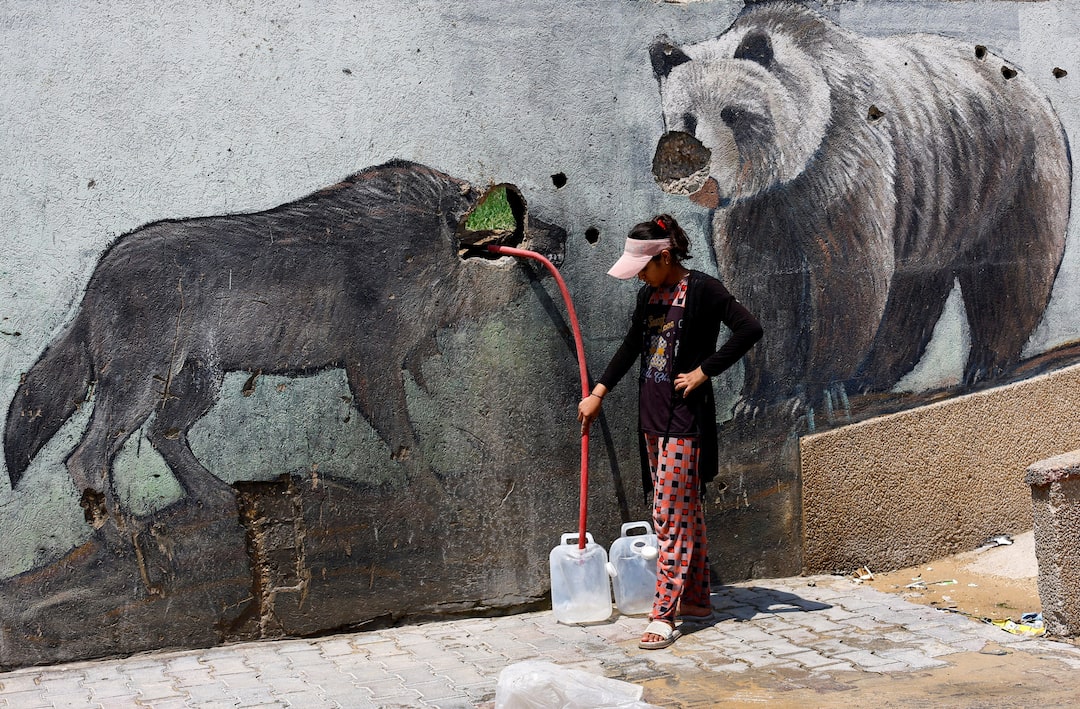
GAZA/CAIRO: The war in Gaza has taken a heavy toll on animals, with shortages of food, medicine and vaccines leaving many of them weak and malnourished.

At a zoo near the Nuseirat refugee camp, visitors found animals showing clear signs of the difficult conditions. A lion remained largely inactive inside its cage, while chimpanzees sat quietly in their enclosure.

The zoo is being operated by Mahmoud Gomaa, who has worked to keep the animals alive despite the continuing crisis. He previously ran a zoo in Rafah but was forced to leave the area after Israeli military operations reached the city in 2024.

Gomaa said saving the animals became a priority for him during the war. He moved the surviving animals from one location to another before eventually settling in Nuseirat, where he reopened the zoo earlier this year.

He said he had faced enormous difficulties in finding food and providing basic care for the animals.

Before the war, Gaza had several zoos that housed wild and exotic animals. The conflict, however, has made maintaining such facilities extremely difficult.

Veterinarians say the shortage of suitable food has affected the animals’ health. Some zoo owners have been forced to feed animals frozen meat because fresh food is difficult to obtain.

The war has also caused direct losses among Gaza’s animals.

When Gomaa left Rafah, he said he had to abandon three lions, several crocodiles and African ostriches. When he later returned, he found only the bones of the crocodiles and ostriches. The lions had also disappeared.

Animal welfare experts say the impact of war extends beyond food shortages and physical injuries. Continuous explosions, aircraft noise and fighting can cause severe stress among animals.

Veterinarian Amir Khalil, who has visited Gaza with the animal welfare organisation Four Paws, said animals can detect sounds and disturbances that humans may not notice. He said the constant conflict creates fear and extreme stress for them.

Despite the harsh conditions, the zoo has become a temporary place of relief for some children.

Children visiting the facility were able to interact with parrots and smaller monkeys. For many, it offered a rare opportunity to step away from the destruction surrounding them.

Residents say children have few places left where they can play. Large parts of Gaza have been reduced to rubble, while many families continue to live in tents.

The zoo therefore serves a purpose beyond displaying animals. It provides children with a brief moment of normality amid a devastating humanitarian crisis.

Yet keeping the facility operating remains a major challenge. Limited supplies, damaged infrastructure and the continuing conflict threaten both the animals and the people caring for them.
Similar Posts

  • | | |

    KP chief minister Sohail Afridi vows to improve pr…

    Khyber Pakhtunkhwa Chief Minister Sohail Afridi has pledged to improve the province’s situation, stating that the current challenges are the result of “closed-door decisions.” Speaking during a visit to the venue of an upcoming political rally in Peshawar, the chief minister assured party workers that his government is committed to restoring stability and addressing the province’s pressing issues. During his address, Afridi said that August 5 marks an important date in the country’s political history, as it represents the third anniversary of the arrest of his party’s founding chairman. He described the upcoming gathering as a political rally where the party would outline its future strategy and communicate its plans to supporters. The chief minister also referred to the political developments of April 9, 2022, claiming that the removal of the elected government on that date led to worsening conditions across the country. He argued that subsequent political decisions had contributed to the challenges currently being faced by Khyber Pakhtunkhwa. Highlighting his administration’s priorities, Afridi said that despite the difficult circumstances, his government is determined to improve governance, strengthen institutions, and address the issues affecting the province. He expressed confidence that his team would demonstrate tangible progress through practical measures rather than political rhetoric. According to the chief minister, the upcoming public gathering will not only commemorate the third anniversary of the party founder’s arrest but will also serve as a platform to announce the party’s next political course of action. Party workers have been actively preparing for the event, and leaders expect a large turnout of supporters. Afridi emphasized that his government remains focused on serving the people of Khyber Pakhtunkhwa despite ongoing political challenges. He reiterated that improving public services, maintaining stability, and addressing citizens’ concerns remain among the administration’s key objectives. The remarks come at a time when Pakistan continues to experience an active political environment, with major parties organizing rallies and public meetings to mobilize supporters and present their policy agendas. Political observers believe that such gatherings are likely to shape future political discourse and influence upcoming developments in the country’s political landscape. As preparations for the rally continue, attention remains focused on the announcements expected from the provincial leadership. Supporters anticipate that the event will outline the party’s future strategy, while political analysts will closely watch how the statements and proposed plans may affect the broader political situation in Khyber Pakhtunkhwa and Pakistan.

  • |

    Pope Leo XIV expresses deep concern over rising violence in the middle East, Gaza, and the occupied West Bank

    Pope Leo XIV, the spiritual leader of the Catholic Christian community, has expressed deep concern over the recent escalation of violent actions and the increasing loss of civilian lives in the Middle East, particularly in the occupied West Bank and Gaza. He called on all parties involved in the ongoing conflicts to immediately halt attacks and work towards restoring peace through dialogue, diplomacy, and a fair political resolution. In his weekly prayer address, Pope Leo XIV highlighted the devastating impact of continued violence on innocent civilians in Gaza and the West Bank. He expressed sorrow over the loss of human lives and emphasized that every effort must be made to protect civilians, reduce suffering, and prevent further escalation of tensions in the region. The Pope urged all sides involved in the conflict to reopen channels of communication and negotiations, stressing that lasting peace cannot be achieved through violence or military action alone. According to him, a sustainable solution requires political dialogue, mutual respect, and a commitment to justice for all communities affected by the conflict. Pope Leo XIV also condemned military operations that violate the dignity and sanctity of religious and historical sites. He emphasized that places considered sacred by different faiths must be respected and protected during times of conflict. He called for an end to actions that threaten the security and spiritual importance of these locations. The Catholic leader stressed the importance of finding a political solution that guarantees equal rights, security, and respect for all people living in the region. He stated that peace should be based on justice and recognition of the rights and dignity of every individual, regardless of their background or identity. The Pope’s statement comes amid growing international concerns over the humanitarian situation in Gaza and the occupied West Bank. The continued violence has resulted in significant civilian casualties, displacement, and worsening living conditions for many people. International organizations and humanitarian groups have repeatedly called for measures to protect civilians and ensure access to essential aid. Pope Leo XIV’s appeal reflects the Vatican’s long-standing position that conflicts should be resolved through peaceful means rather than armed confrontation. The Catholic Church has consistently called for dialogue between opposing sides and encouraged efforts aimed at achieving a just and lasting peace in the Middle East. During his address, the Pope also encouraged the international community to support diplomatic initiatives and humanitarian efforts designed to reduce suffering and create conditions for peace. He emphasized that the protection of human life and respect for human rights should remain the priority of all governments and organizations involved. The Pope’s remarks serve as a renewed call for an immediate reduction in violence and the beginning of meaningful negotiations. He urged world leaders and regional actors to work together to find a solution that allows all communities to live with security, equality, and dignity. As tensions continue in Gaza and the West Bank, Pope Leo XIV’s message highlights the urgent need for peaceful engagement, humanitarian responsibility, and political efforts to address the root causes of the conflict. His appeal aims to encourage reconciliation and hope for a future where justice and peace can prevail across the region.

  • | | |

    US embassy alerts citizens over worsening security…

    The United States has issued a fresh security advisory for its citizens across the Middle East, urging them to remain vigilant and be prepared for possible evacuation as regional tensions continue to rise. The warning comes amid growing concerns over the security situation, with US officials cautioning that conditions could deteriorate without notice. Through its embassies in Israel, Bahrain, Iraq, Jordan, Kuwait, Lebanon, Oman, Qatar, Saudi Arabia, and the United Arab Emirates, the US government advised American citizens to consider leaving the region if it is safe to do so or to be ready for immediate departure should the security environment worsen. According to the advisory, the current instability has increased the risk of unexpected security incidents, flight disruptions, and temporary airspace closures. Travelers were warned to expect airline cancellations, delays, and changes to flight schedules, and to remain informed through official sources and their airlines before making travel plans. The US Embassy in Oman noted that several airlines have delayed the resumption of scheduled services, while others have canceled flights on specific routes due to the evolving regional situation. Americans in the region were encouraged to review their travel plans and prepare for rapid evacuation if circumstances require. The advisory also urged US citizens outside the Middle East to carefully reconsider any plans to travel to the region or transit through it. Travelers were advised to monitor the latest airport and airline updates before departure and remain aware of changing security conditions. US officials warned that American diplomatic facilities, businesses, and other interests have previously been targeted during periods of heightened regional tension. The statement added that threats to US interests could extend beyond the Middle East and emphasized that areas previously considered safe may also face increased risks. The US Embassy in Jordan specifically advised American citizens to avoid visiting military installations and to stay informed through local government alerts, including emergency sirens and public safety announcements. Citizens were encouraged to follow instructions from local authorities and regularly check updates from the US Embassy. As part of the advisory, Americans were also instructed to avoid demonstrations, large public gatherings, and areas with a heavy security presence. They were encouraged to maintain a low profile, monitor local media, and remain alert at all times. The State Department further recommended enrolling in the Smart Traveler Enrollment Program (STEP), which enables the US government to provide security updates and facilitate communication with citizens during emergencies.

  • |

    UK vows to stand by Ukraine as Russia warns of “Consequences” over British drone support

    UK Prime Minister Andy Burnham has reaffirmed Britain’s commitment to supporting Ukraine, saying the country will continue to stand firmly with Kyiv despite warnings from Moscow over Britain’s involvement in the conflict. Burnham said the UK would remain a reliable supporter of Ukraine and would continue providing assistance as the war continues. His comments came after Russia criticised Britain’s role following confirmation that British-made drones had been used in recent Ukrainian attacks inside Russian territory. “We are not fair-weather friends,” Burnham said, stressing that Britain would remain with Ukraine during what he described as its “hour of need”. He added that the UK’s position was to provide Ukraine with the support necessary to defend itself. The Russian embassy in the UK responded by accusing Britain of deliberately increasing tensions surrounding the war. It warned that the greater Britain’s involvement in the conflict became, the greater the consequences could be for the UK. The embassy said London’s actions would eventually have consequences for which Britain would have to take responsibility. However, it did not provide specific details about what form those consequences might take. The latest dispute follows an increase in Ukrainian attacks against targets deep inside Russia. Ukrainian forces have recently focused on areas including Moscow and other parts of the country, with oil refineries, logistics facilities and other strategically important sites among the reported targets. One company affected by the attacks is Wildberries, a major Russian online retailer. Its logistics infrastructure has reportedly been damaged during recent Ukrainian drone strikes. Asked about Moscow’s warning, Burnham defended the UK’s policy of assisting Ukraine. He said Britain was providing support to enable Ukraine to protect itself and argued that this had been the country’s position throughout the conflict, including under previous British prime ministers. The UK has been one of Ukraine’s strongest international supporters since Russia launched its full-scale invasion in February 2022. Britain has supplied Kyiv with military equipment, training and technology, including drone capabilities and Storm Shadow missiles. The UK’s Ministry of Defence has also reiterated its commitment to supplying Ukraine with the equipment it needs to defend itself against Russian forces and what it described as President Vladimir Putin’s illegal invasion. Russia currently occupies around one-fifth of Ukraine, but Russian troops have made limited progress along the front line in recent months. Despite the lack of major advances, however, attacks and casualties continue to occur far from the main battlefield. United Nations officials have reported a sharp increase in civilian casualties. At least 437 civilians were killed in Ukraine last month, making it the country’s deadliest month for civilians since May 2022. More people were killed in the latest Russian attacks on Tuesday. Seventeen Ukrainians reportedly died in different parts of the country. Ten people were killed in the north-eastern village of Pechenihy after two missiles struck the area. Residential buildings, a cafe and a post office were among the places damaged. Other deaths were reported in Sumy, Zaporizhzhia and Kherson, with three people killed in Sumy and two each in Zaporizhzhia and Kherson. Meanwhile, Moscow’s latest warning came after a series of Ukrainian strikes inside Russia. Five people were reportedly killed in a residential area of Russia’s Rostov region during attacks over the weekend. Ukraine has also launched hundreds of drones towards the Moscow region in recent days. Regional governor Andrey Vorobyov said on Tuesday that a 10-year-old girl was injured and a Wildberries warehouse was damaged. Alongside foreign-made equipment, Ukraine has increasingly relied on its own defence industry. Ukrainian forces have recently used domestically developed drones and missiles, including the FP-5 Flamingo cruise missile. The latest developments demonstrate the increasingly long-range nature of the conflict and the growing risks faced by countries supporting Ukraine. Despite Moscow’s warnings, Britain maintains that helping Ukraine defend itself remains a central part of its policy.

  • | | | |

    Trump reveals why Secret Service changed his plane

    WASHINGTON: US President Donald Trump has confirmed that his surprise plane switch during his departure from Turkey last month was carried out on the advice of the Secret Service, amid concerns over a potential threat linked to Iran. Trump said the aircraft he had initially been expected to travel on could have faced a “greater risk,” adding that he does not trust Iran. His remarks came after reports revealed that his departure from Ankara following the NATO summit involved an elaborate security operation. According to reports, Trump publicly boarded Air Force One in front of cameras, creating the impression that he would fly out of Turkey on the presidential aircraft. However, he was later secretly transferred to a smaller C-32A military aircraft. The move was reportedly carried out using an airport catering truck to conceal his transfer. Journalists and some White House staff reportedly remained under the impression that Trump was aboard Air Force One. Reporters were also instructed to keep their window shades closed, adding to the secrecy surrounding the operation. Trump said he followed the Secret Service’s instructions when the aircraft change was made and did not challenge the security decision. The unusual operation reportedly stemmed from heightened concerns over Iranian threats against the US president. Trump’s latest comments have now confirmed key details of the previously undisclosed flight arrangement. The episode has drawn attention because of the extraordinary measures used to conceal the president’s movements. It also highlights the heightened security concerns surrounding Trump amid continuing tensions between Washington and Tehran. For a president whose movements are normally tracked closely by the media and security officials, the covert transfer from one aircraft to another remains one of the most unusual presidential travel episodes of the year.

  • | |

    Pakistani journalist Murtaza Ali Shah assaulted du…

    Pakistani journalist Murtaza Ali Shah was assaulted and injured while covering a protest march in central London. According to reports, Shah was attacked while reporting on a march organised by supporters of the banned Joint Awami Action Committee (JAAC), which began at Hyde Park and proceeded towards the Pakistan High Commission. A large number of British Kashmiris gathered at Hyde Park before the march to express concern over the deteriorating situation in Azad Kashmir. Protesters called for an end to violence, the restoration of fundamental rights, and the resumption of dialogue. Eyewitnesses and videos showed that Shah came under attack as the march approached the Pakistan High Commission. While reporting from the scene, he was allegedly kicked and punched from both the front and behind by at least three individuals. A crowd quickly surrounded the journalist, escalating tensions until Metropolitan Police officers, protest organisers, and other participants intervened to prevent the situation from worsening. Police later escorted Shah away from the crowd and ensured his safety. According to reports, when Shah returned to the Pakistan High Commission to continue his reporting, members of the same group allegedly attempted to harass him again.

Leave a Reply

Your email address will not be published. Required fields are marked *