ukrainian ambassador visits
| | |

Ukrainian Ambassador Visits Pattaya to Strengthen Ties and Boost Tourism Cooperation

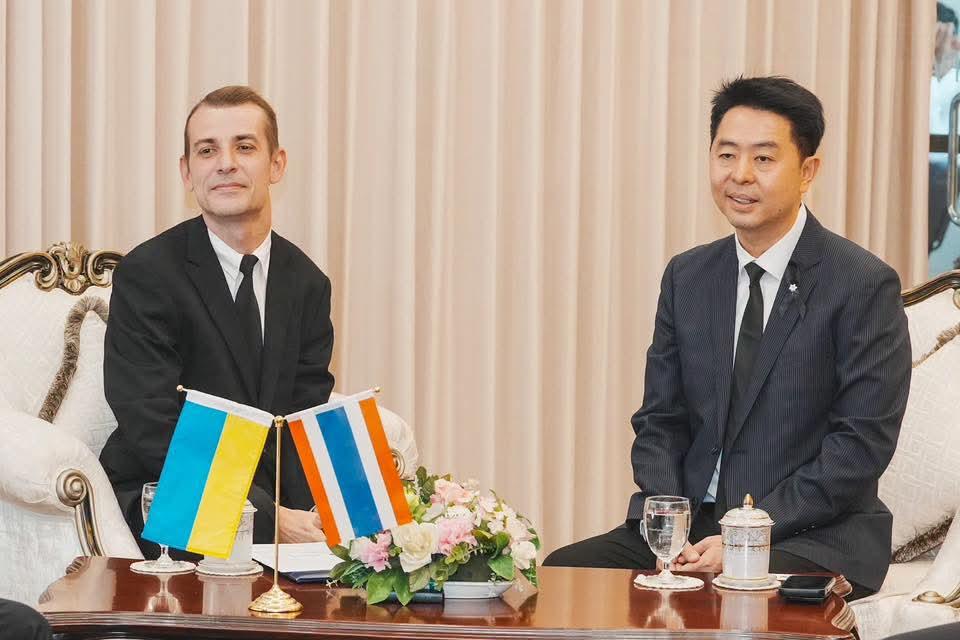
Pattaya, July 23rd, 2026 – Mayor Poramese Ngamphichet of Pattaya City, together with city executives and heads of government departments, welcomed H.E. Mr. Viktor Semenov, Ambassador of Ukraine to Thailand, and his delegation at Meeting Room 132 of Pattaya City Hall.

The visit was to discuss avenues for cooperation and further strengthen bilateral relations between Pattaya and Ukraine.
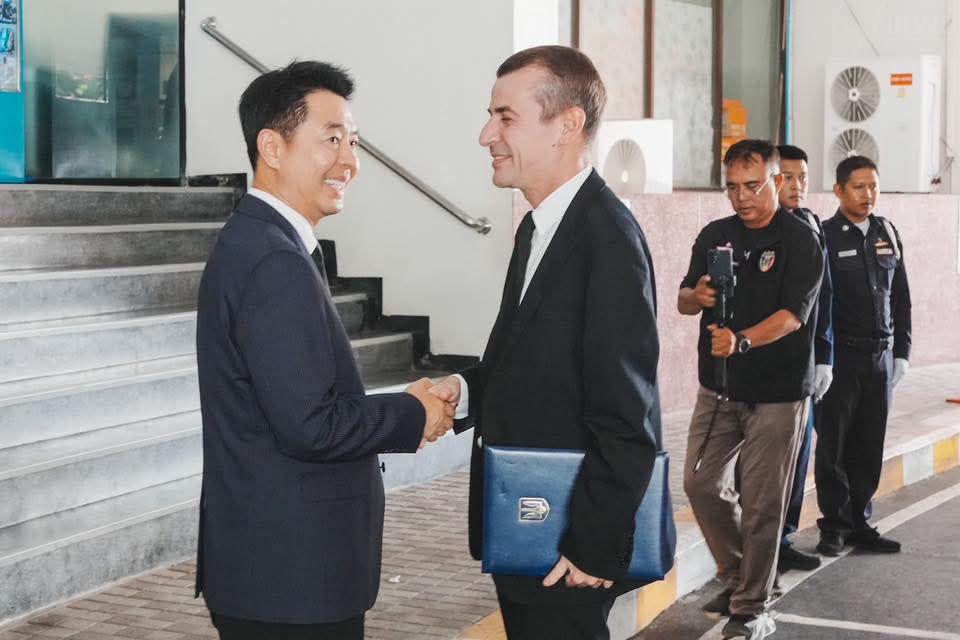
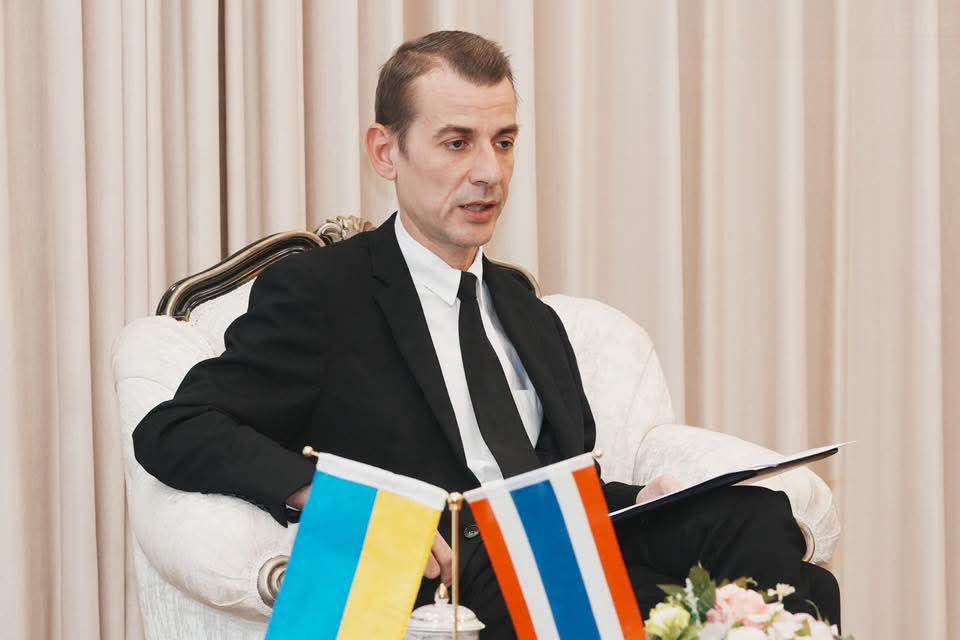
During the meeting, the Ukrainian Ambassador expressed admiration for Pattaya’s continuous development, which has elevated it into one of Thailand’s leading tourist destinations and a popular choice among Ukrainian visitors. He pointed to the city’s strong tourism potential, safety standards, and quality of services.

Mayor Poramese stated that Pattaya was delighted to host the Ambassador and his team, describing the occasion as a valuable opportunity to build on existing friendly relations. He reaffirmed the city’s full readiness to care for and facilitate tourists from all groups.
Pattaya continues to advance its vision of becoming a “Quality Tourism Destination,” with a strong emphasis on safety, service standards, and sustainable tourism. These efforts seek to build confidence and deliver positive experiences for visitors from around the world, including those from Ukraine. The visit marks another important step in enhancing Pattaya’s international image and reinforcing its role as a quality tourism city ready to welcome travelers globally.
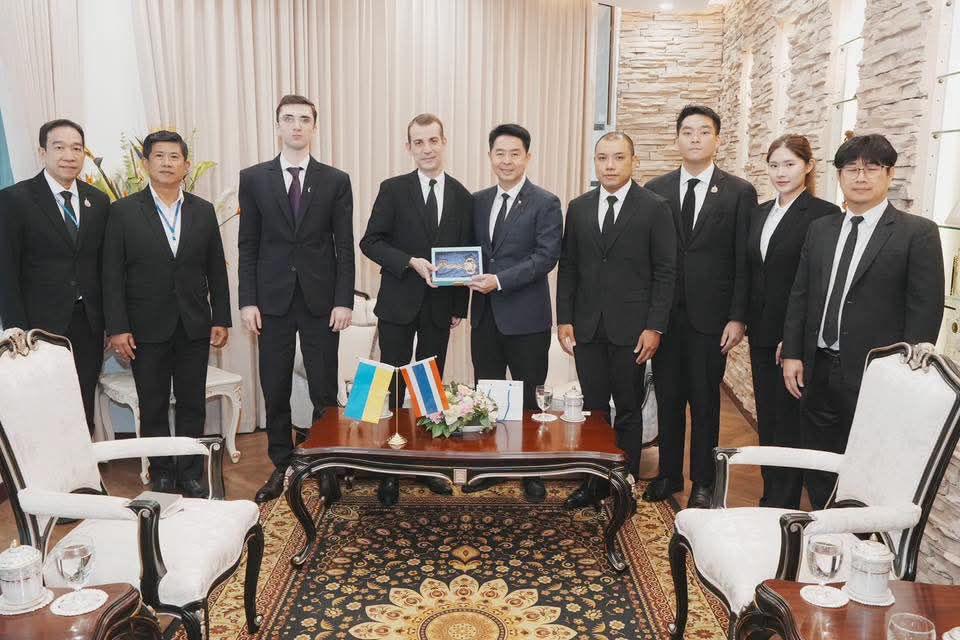
News by: Miss Siraprapha Thongsamut
Photos by: Mr. Somprasong Photphan
Public Relations Division, Tourism and Sports Office, Pattaya City

Similar Posts

  • | |

    Pakistan blames Afghan-based militants for rising …

    Islamabad: Pakistan’s Deputy Prime Minister and Foreign Minister Ishaq Dar has said that banned militant groups, including Tehreek-e-Taliban Pakistan (TTP), the Balochistan Liberation Army (BLA), and the East Turkestan Islamic Movement (ETIM), are operating from Afghan territory under the protection of the Afghan Taliban. Speaking at the Shanghai Cooperation Organization (SCO) Council of Foreign Ministers meeting, Dar described terrorism originating from Afghanistan as a serious threat to regional peace and stability. He said these militant groups continue to carry out attacks from across the border, posing a major security challenge for Pakistan. Dar stated that Pakistan has witnessed more than 2,000 terrorist attacks so far this year, resulting in the deaths of over 560 civilians. He also claimed that evidence had emerged linking some Afghan nationals to several of these attacks. The foreign minister urged SCO member states to call on the Afghan Taliban to fulfill their counterterrorism commitments and prevent Afghan territory from being used by militant organizations. Reaffirming Pakistan’s commitment to regional peace, Dar said dialogue, diplomacy, and mutual respect remain the only sustainable solutions to regional disputes. He highlighted Pakistan’s role in promoting diplomatic engagement and stressed the importance of supporting ongoing peace initiatives. Dar also noted that Pakistan hosted talks between Iran and the United States in April 2026, which, according to him, led to the signing of the Islamabad Memorandum of Understanding in June 2026. He urged the international community to support diplomatic efforts while remaining vigilant against attempts to undermine the peace process. Looking ahead, Dar said Pakistan will assume the chairmanship of the SCO Council of Heads of State in September 2026 and host the SCO Summit in 2027. During its chairmanship, Pakistan plans to prioritize regional connectivity, trade, agricultural cooperation, youth exchanges, and stronger people-to-people ties. On the sidelines of the SCO meeting, Dar also met Iranian Foreign Minister Abbas Araghchi. The two leaders discussed bilateral relations, regional developments, and efforts to promote peace and stability. Dar emphasized the need for restraint, de-escalation, and continued diplomatic engagement in addressing regional challenges, while both sides agreed to maintain close coordination on issues of mutual interest.

  • | |

    South Indian actress Shakeela undergoes neck surgery after excessive phone use

      South Indian actress Shakeela has revealed that her excessive use of mobile phones left her with a serious neck problem that eventually required surgery costing around Rs300,000 Indian rupees. The 53-year-old actress shared her experience in a video posted on her YouTube channel and urged people, especially parents, to limit unnecessary mobile phone use. Shakeela, who has worked in Malayalam, Tamil, Kannada and Telugu films, said her habit of playing games and watching videos on her phone for several hours caused significant damage to her neck. She explained that she would often lie on her side in bed for long periods while using her phone. “I used to play games on my phone continuously for four hours while lying on my side in bed,” Shakeela said. She added that she would only get up occasionally to have tea or coffee before returning to her phone. After playing games, she would spend hours watching reels on YouTube and Instagram. According to the actress, maintaining an incorrect posture while using her phone, combined with prolonged screen time, affected important blood vessels in her neck and eventually led to serious health complications. She underwent surgery in Chennai and said that a titanium screw was also used during the procedure. After returning home, doctors advised Shakeela to wear a neck collar until she recovered. She said that following the surgery, she has needed assistance even with basic activities such as getting out of bed and eating. Shakeela stressed that mobile phones are useful devices when used responsibly, but excessive use can have serious consequences. She advised people not to spend unnecessary hours watching videos or playing games, even if the content is entertaining. She also issued a warning to parents, urging them to avoid giving mobile phones to children unnecessarily. According to her, children should use phones only for essential activities and educational or useful content rather than spending long periods watching short videos and playing games. The actress said that people could end up paying a heavy financial and physical price for excessive phone use, adding that her own experience had cost her around Rs300,000 and caused considerable pain and difficulty. Shakeela Begum was born in Chennai. Her mother, Chand Bee, was from Andhra Pradesh, while her father, Chand Basha, was from Tamil Nadu. She began her acting career with a Tamil film in 1995. However, she gained widespread recognition after appearing in the Malayalam film Kinnarathumbikal, released in 2000. Over the years, Shakeela became a well-known name in South Indian cinema, particularly for her work in Malayalam films. Her latest health experience has now prompted her to use her public platform to raise awareness about responsible mobile phone use and the potential health risks associated with prolonged screen time and poor posture.

  • |

    Gen Z-led protest movement poses major challenge to Modi government in India

      India is witnessing a significant wave of youth-led protests that has intensified political pressure on Prime Minister Narendra Modi’s government during its third consecutive term. The growing movement, driven largely by Generation Z, has emerged as one of the most prominent public challenges to the current administration, reflecting widespread dissatisfaction over unemployment, alleged examination scandals, and concerns about the country’s education system. The protest movement has gained momentum through a platform known as the “Cockroach Janata Party,” which has become a symbolic outlet for the frustration of young Indians. Although the name began as a satirical expression on social media, it has rapidly evolved into a broader movement that has attracted thousands of participants across different regions. The campaign highlights the growing anger among students and young professionals who believe that the government has failed to address issues affecting their future. The movement received further attention following the hunger strike and reported forced removal of activist Sonam Wangchuk, developments that protesters say strengthened public support for the demonstrations. Many participants argue that such actions have reinforced concerns about the government’s response to peaceful dissent and have encouraged more young people to join the protests. According to a reports , the demonstrations are being viewed as the biggest wave of public pressure faced by Prime Minister Modi since the beginning of his third term in office. The protests are rooted in several long-standing grievances, including examination irregularities, rising unemployment among educated youth, and declining confidence in India’s education system. Protesters believe that these issues have seriously affected career opportunities and undermined trust in public institutions Tensions escalated during a protest march toward the Indian Parliament, where clashes broke out between demonstrators and security personnel. Authorities attempted to stop protesters from reaching the Parliament complex, leading to confrontations that further heightened the political atmosphere Official figures released after the clashes stated that at least 180 people were injured, including 118 police officers and 60 protesters. The remaining injured individuals were not immediately identified. In response to the unrest, authorities temporarily suspended mobile internet services in several sensitive areas of the city, citing security concerns. Such restrictions have drawn criticism from rights groups and civil society organizations, which argue that internet shutdowns limit communication and restrict access to information during times of public unrest. One of the protesters’ primary demands is the resignation of the country’s Education Minister. Demonstrators argue that accountability is necessary in light of the alleged examination controversies and the broader crisis facing the education sector. The movement continues to be led primarily by young people, and many observers describe it as the collective voice of Generation Z demanding greater transparency, fairness, and employment opportunities. According to Deutsche Welle (DW), the campaign initially began as a satirical online movement but quickly transformed into an organized nationwide protest. What started as digital criticism on social media has evolved into large-scale street demonstrations that reflect deep frustration among young Indians over limited job prospects, educational challenges, and uncertainty about their future. As the movement continues to expand, political analysts believe it represents a critical test for the Modi government. Whether the administration chooses dialogue, policy reforms, or stronger security measures in response to the protests could significantly influence public opinion and shape India’s political landscape in the months ahead.

  • | | |

    Rhea Chakraborty opens up about years of suspicion…

    Indian actress Rhea Chakraborty has opened up about one of the most difficult periods of her life, saying that she spent years under suspicion following the death of her former boyfriend and actor Sushant Singh Rajput. Rhea’s life changed dramatically in 2020 after Sushant Singh Rajput was found dead at his Mumbai residence. The case attracted enormous public attention, while Rhea faced intense scrutiny, criticism and legal proceedings. Months ago, the Central Bureau of Investigation (CBI) reportedly filed a closure report in the case, providing major relief to Rhea. She was cleared of the allegations connected to the case. Rhea and her brother Showik Chakraborty had also been arrested by India’s Narcotics Control Bureau in connection with a drugs-related case linked to the investigation into Sushant’s death. The actress recently discussed her experience while appearing on the second season of The Traitors. During a conversation with host Karan Johar, she was asked whether she would prefer to present herself as innocent or as a traitor in order to survive the show. Rhea chose the role of the innocent. Explaining her decision, she said that she had finally received a clean chit and that people had learned she was innocent. She added that she had remained under suspicion for a very long time and no longer liked the feeling of being viewed through that lens. The actress has previously spoken about the impact the controversy had on her life. She said the experience affected her mental well-being and that she struggled with post-traumatic stress disorder following the intense period of public and legal scrutiny. For Rhea Chakraborty, the recent developments appear to represent an important turning point. After years of controversy surrounding her name, the CBI closure report has allowed her to publicly emphasize her position and move forward. Her comments on The Traitors have once again brought attention to the long-running controversy, while also highlighting the personal toll she says the ordeal took on her. Rhea Chakraborty says she is innocent, and her latest remarks show how deeply the years of suspicion and public scrutiny continue to shape her perspective on that chapter of her life.

  • | | |

    Iran considers allowing European nations to clear …

    Iran is reportedly considering allowing European countries to participate in clearing naval mines from the Strait of Hormuz, marking a potential shift in its long-standing position as diplomatic efforts continue to restore safe navigation through one of the world’s most strategically important waterways. According to multiple diplomatic sources, Iranian officials are evaluating the possibility of permitting a European-led mine-clearing operation aimed at reopening commercial shipping lanes affected by months of heightened regional tensions. If approved, the move could help restore confidence in maritime trade and improve the flow of global energy supplies. Sources familiar with the discussions said the proposed policy change is intended to facilitate the safe passage of commercial vessels and oil tankers through the Strait of Hormuz, a critical route for international oil and liquefied natural gas exports. The waterway has remained under increased scrutiny due to ongoing security concerns and the reported presence of naval mines. Diplomatic officials indicated that Iran has attached several conditions to any potential European involvement. These reportedly include guarantees for the safety of European naval vessels, the existence of a ceasefire or a significant reduction in regional hostilities, approval from Iran’s Islamic Revolutionary Guard Corps (IRGC), and assurances that the mission would be limited strictly to humanitarian and commercial navigation rather than broader military operations. While the conditions have not yet been finalized, sources said negotiations are progressing in a constructive direction. No formal agreement has been announced, and discussions among the involved parties remain ongoing. The reported flexibility represents a notable departure from Iran’s previous public position, which has consistently opposed the involvement of foreign military or naval forces in security operations within the Strait of Hormuz. Diplomats, however, say recent closed-door talks suggest Tehran may be willing to reconsider its stance under specific circumstances. Oman is also believed to be playing a key diplomatic role in facilitating communication between Iran and Western countries. Iranian Foreign Ministry spokesperson Esmaeil Baghaei has previously stated that Tehran and Oman had reached an understanding on the geographical parameters of maritime routes, providing a basis for continued negotiations. The Strait of Hormuz is one of the world’s most vital energy corridors, carrying a significant share of globally traded crude oil and liquefied natural gas. Any improvement in security and navigation through the waterway could reduce shipping insurance costs, stabilize global energy markets, and support the uninterrupted movement of commercial vessels. Although negotiations are still underway, the reported discussions highlight growing diplomatic efforts to reduce regional tensions and ensure the safe resumption of international maritime trade.

Leave a Reply

Your email address will not be published. Required fields are marked *