muslim student russia
|

Muslim student in Russia named in India protest case 


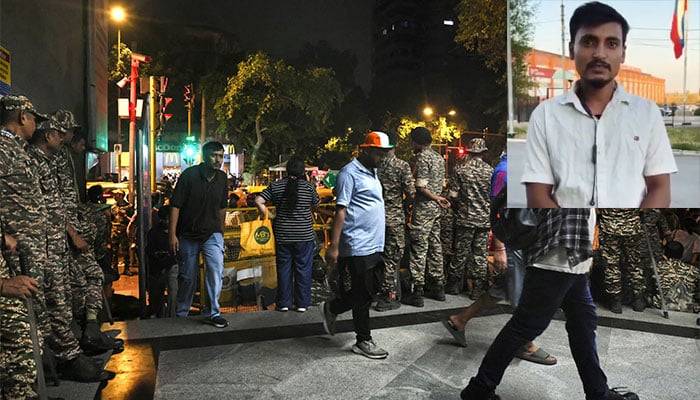
A Muslim student from India’s Bihar state has claimed that he was named in a police case related to protests against the alleged NEET examination paper leak, despite having lived in Russia for the past four months.

The student, identified as Mohammad Sadaqat, belongs to Kishanganj district in Bihar. He alleged that his name was included in a First Information Report (FIR) registered after demonstrations held on July 24 against the alleged NEET paper leak, even though he was not in India at the time of the protest.

In a video message shared on social media, Sadaqat said he has been residing in Russia for the last four months for educational purposes and therefore could not have participated in the protest. According to him, the case relates to a demonstration that took place at LRP Chowk, where people gathered to protest against the alleged irregularities surrounding the NEET examination.

The student maintained that he was shocked to learn that his name had been included among those accused in the case. He said his passport and travel records clearly show that he was outside India when the protest occurred. He urged the authorities to verify the facts and remove his name from the police case, arguing that it was impossible for him to have taken part in the demonstration while living abroad.

Sadaqat appealed to the district administration and police officials to conduct a fair investigation and correct what he described as an error. He emphasized that he was not present in India during the protest and requested that the allegations against him be withdrawn after proper verification.

Meanwhile, Kishanganj Superintendent of Police Hari Mohan Shukla neither confirmed nor denied whether the student had been named in the FIR. Responding to questions from the media, the police chief said that anyone who has concerns regarding the protest-related cases is welcome to approach the police.

He stated that authorities would examine any complaint submitted by an affected individual and review the available evidence before taking an appropriate decision. However, he did not specifically address Sadaqat’s claim or comment on the contents of the FIR.

The Bihar Police’s official account on X (formerly Twitter) initially responded to the student’s viral video by assuring the public that the matter would be investigated. The response suggested that the allegations raised in the video would be looked into by the relevant authorities.

However, the police later deleted the post without providing any explanation, prompting further discussion on social media. The deletion has raised questions among users, although officials have not commented on why the statement was removed.

The controversy comes amid widespread protests in Bihar over the alleged NEET paper leak, an issue that has sparked public outrage and demands for accountability. During a statewide strike organized in connection with the controversy, police reportedly detained 694 people for allegedly participating in protests and violating public order. According to reports, nearly half of those detained were minors.

The incident involving Mohammad Sadaqat has drawn significant attention online, with many social media users calling for a transparent investigation into his claims. Authorities have not yet released further details regarding the case, and the matter remains under official review.

Similar Posts

  • |

    New Delhi marks Pakistan’s Independence Day with zeal

    Pakistan’s 79th Independence Day was celebrated with patriotic spirit at Pakistani diplomatic missions in New Delhi, Dhaka and Tehran. Diplomats, Pakistani communities and local guests participated in the ceremonies. In New Delhi, the Pakistan High Commission organised a special Independence Day ceremony. Chargé d’Affaires Saad Ahmad Waraich attended the event along with officers, staff members and their families. Waraich hoisted the national flag at the Chancery lawn. The national anthem was played after the flag-hoisting ceremony. Messages from President Asif Ali Zardari and Prime Minister Shehbaz Sharif were also read out. In his address, Waraich highlighted the importance of the Two-Nation Theory. He said the creation of Pakistan fulfilled the longstanding desire of Muslims of the subcontinent to determine their own political future. He also paid tribute to the sacrifices made during the Pakistan Movement. Children took part in the New Delhi celebrations. They performed national songs and presented colourful tableaux. Their performances added to the festive atmosphere and reflected their patriotic spirit. Independence Day was also celebrated at the Pakistan High Commission in Dhaka. Pakistan High Commissioner Imran Haider hoisted the national flag. The national anthem was played on the occasion. A large number of Pakistanis living in Bangladesh attended the ceremony. Bangladeshi friends also participated. Students, journalists and representatives of civil society were among the guests. Messages from President Asif Ali Zardari, Prime Minister Shehbaz Sharif and Deputy Prime Minister and Foreign Minister Ishaq Dar were read out during the Dhaka ceremony. The messages highlighted Pakistan’s national progress, unity and commitment to peace. The high commission also organised an essay-writing competition for Bangladeshi students. The competition was titled “Historical Places of Pakistan”. Prizes and certificates were distributed among the students who participated in the activity. Meanwhile, Pakistan’s Independence Day was marked at Pakistan House in Tehran. A flag-hoisting ceremony was held in the Iranian capital. A large number of members of the Pakistani community attended the event. The national flag was hoisted during the ceremony. Participants also celebrated the occasion by cutting a cake. The atmosphere reflected the community’s enthusiasm for Pakistan’s Independence Day. The Pakistani ambassador in Tehran read out the messages of the President and Prime Minister. He also highlighted the contribution of the Pakistani community to relations between Pakistan and Iran. The ambassador said the Pakistani community was playing an important role in strengthening people-to-people ties between the two countries. He said Pakistan and Iran were committed to increasing bilateral trade to $10 billion.

  • |

    Bangladesh hints at joining Pakistan-Saudi-Türkiy…

    DHAKA: Bangladesh has signalled that it could consider joining the emerging economic or defence framework involving Pakistan, Saudi Arabia and Türkiye, opening a potentially significant new chapter in regional diplomacy and security cooperation. Bangladesh Prime Minister’s Foreign Affairs Adviser Humayun Kabir said Dhaka was taking a positive view of the possibility of becoming part of a framework involving the three countries. His comments come only weeks after Pakistan, Saudi Arabia and Türkiye signed the Makkah Joint Defence Agreement. The agreement, signed in Makkah on Aug 7, commits the three countries to strengthening collective security and defence cooperation. It also states that an armed attack against any one of the three signatories would be regarded as an attack against all three. Kabir, speaking to Bangladesh’s state news agency, indicated that Dhaka would examine the idea through the lens of its own national interests and the rapidly changing global economic and trade environment. “The government is following a Bangladesh First policy,” Kabir said, according to reports, stressing that national interests remain at the centre of Dhaka’s foreign policy. The remarks are particularly noteworthy because Bangladesh has recently been working to strengthen practical ties with Pakistan. Kabir said the two countries were seeking greater cooperation in trade and people-to-people contacts, suggesting that economic engagement could form an important part of the relationship. For Pakistan, Bangladesh’s interest could give the Makkah framework a wider South Asian dimension. For Saudi Arabia and Türkiye, Dhaka’s possible participation could also expand the reach of an arrangement that the signatories have described as defensive rather than directed against any particular country. Turkish President Recep Tayyip Erdogan has said the agreement is open to other friendly countries seeking peace, prosperity and stability in the region. Turkish officials have also stressed that the pact does not identify a common enemy and is intended to strengthen defence cooperation and collective deterrence. Bangladesh’s possible move comes as Dhaka is also deepening its relationship with Saudi Arabia. Kabir said Prime Minister Tarique Rahman is expected to visit Saudi Arabia following an invitation from Crown Prince Mohammed bin Salman. The visit could provide an opportunity for discussions on economic cooperation, regional security and Bangladesh’s possible role in broader regional frameworks. For now, Dhaka has not announced any formal decision to join the defence agreement. But its positive signal is already attracting attention, particularly because Bangladesh’s participation could reshape the strategic picture across South Asia and the wider Muslim world. The next step will likely depend on how Dhaka assesses the proposed framework against its national interests, economic priorities and wider foreign-policy objectives.

  • | | | |

    Iran rejects talks on ceasefire extension

    Pakistan is making diplomatic efforts to help extend the ceasefire between the United States and Iran, as the current truce is scheduled to expire on Sunday, August 16. Sources said Islamabad is trying to use the understanding reached under the Islamabad Memorandum of Understanding to encourage both sides to maintain the ceasefire and return to negotiations. According to the sources, mediators believe additional time is needed to bridge differences between Washington and Tehran. Diplomatic efforts are therefore continuing to prevent the situation from deteriorating after the current ceasefire period ends. However, an Iranian senior official gave a different assessment of the situation. The official said there have been no discussions between Iran and the United States regarding an extension of the ceasefire. Iran has maintained that Washington must return to the agreement and honour its previous commitments. Tehran has also demanded a clear and credible timeline for the implementation of those commitments before any further understanding can be reached. Meanwhile, US President Donald Trump has made strong statements about the strategic Strait of Hormuz. Trump claimed that the United States now has complete control over the vital waterway and said Iran has limited options to challenge the American naval blockade. The Strait of Hormuz remains a major international shipping route and plays a crucial role in global energy supplies. Any prolonged disruption in the waterway could have serious consequences for oil and gas markets and international trade. Iranian military officials have warned that a renewed US offensive could lead to a wider confrontation. An Iranian military spokesman said energy transmission networks, power plants and infrastructure connected to the global internet could become targets if American military action resumes. The warning has raised concerns that any collapse of the ceasefire could expand the conflict beyond conventional military targets and affect critical infrastructure. Meanwhile, Turkish President Recep Tayyip Erdogan has expressed hope that additional countries will join the Makkah Defence Agreement. He indicated that broader participation could strengthen regional security cooperation. In another development, US Central Command said a Panama-flagged cargo vessel attempting to breach the naval blockade was disabled after a US helicopter fired a missile at the ship. The incident has further highlighted the risks facing commercial shipping in the region amid continuing tensions between Washington and Tehran. Separately, Japanese Prime Minister Sanae Takaichi discussed the situation with Iranian President Masoud Pezeshkian in a telephone conversation. Takaichi called for the Strait of Hormuz to be reopened once negotiations between Iran and the United States reach a successful conclusion.

  • | | | |

    Trump touts Iran talks as Netanyahu arrives

    US President Donald Trump has said that Washington is engaged in “very friendly talks” with Tehran as efforts continue to prevent a fresh escalation in the Iran war. Trump’s remarks came as Israeli Prime Minister Benjamin Netanyahu arrived in Washington for talks with the US president. The meeting is expected to focus heavily on the conflict with Iran and the possibility of reaching a longer-term agreement. The latest developments come after several days of reduced military activity between the United States and Iran. However, tensions remain high. Both sides continue to issue warnings and maintain their military positions. Iran has indicated that it remains open to diplomacy. At the same time, Tehran has warned that it is prepared to respond strongly if the United States launches another attack. Iranian officials have also stressed that Washington will not decide when the country should choose between negotiations and confrontation. Tehran has said that communication with the US is continuing through intermediaries. Qatar and Pakistan are among the regional countries involved in facilitating communication between the two sides. Iranian officials have described the diplomatic channel as active but uncertain. Several major issues remain unresolved. The nuclear programme is expected to be one of the central subjects in any future agreement. Sanctions, compensation for war-related damage and security arrangements are also likely to complicate negotiations. The Strait of Hormuz remains another major obstacle. The strategic waterway is vital for international energy supplies. Iran has insisted on maintaining a significant role in controlling and regulating movement through the strait. Washington, meanwhile, wants the waterway to return to normal operations. The issue has become an important source of leverage for Tehran and a major concern for the global energy market. Trump has indicated that he wants an agreement but has also warned that military action could resume if diplomacy fails. His comments have added pressure to the ongoing negotiations. The situation has also created wider economic concerns. Australia, which relies heavily on imported fuel, is considering plans for a new domestic oil refinery. The proposal comes as disruptions to global energy supplies raise concerns about fuel security. The conflict has also affected several Gulf states. Saudi Arabia has condemned a reported drone attack by Iran-aligned groups in Iraq targeting Riyadh and energy infrastructure in the kingdom’s Eastern Province. Satellite imagery has also shown smoke rising from areas in Saudi Arabia after Yemen’s Iran-aligned Houthis claimed attacks against oil-related facilities. Meanwhile, Netanyahu’s visit to Washington has added another layer to the diplomatic situation. Israel took part in the military campaign against Iran alongside the United States but has not been directly involved in the latest US-Iran diplomatic contacts. The Israeli prime minister is expected to discuss the conflict with Trump. Differences could emerge over the direction of US policy and the possibility of a diplomatic settlement. The meeting also comes amid continuing Israeli military operations in the occupied West Bank. Israeli forces have carried out further raids in the territory, while former senior Israeli military officials have reportedly urged Trump to pressure Netanyahu to reduce the violence. UN High Commissioner for Human Rights Volker Turk has also raised concerns over alleged violations of international law in the region. His office has documented incidents in Lebanon and said some could potentially amount to war crimes. Despite the latest diplomatic activity, the path toward a lasting agreement remains uncertain. Washington and Tehran appear interested in avoiding another major escalation, but serious disagreements continue to stand in the way of a final settlement. The Strait of Hormuz, Iran’s nuclear programme, sanctions and the consequences of the conflict are likely to remain central to the next phase of negotiations.

  • |

    US, South Korea coordinate on North Korea

    The United States and South Korea have agreed to maintain close coordination on North Korea’s nuclear issue and work together to promote peace on the Korean Peninsula. The agreement came during a phone call between US Secretary of State Marco Rubio and South Korean Foreign Minister Cho Hyun on Monday, according to South Korea’s Foreign Ministry. The two officials stressed the importance of continued cooperation on North Korea’s nuclear program while maintaining a strong joint defence posture. However, South Korea’s Foreign Ministry did not specifically mention a renewed commitment to North Korea’s denuclearisation. US State Department spokesperson Tommy Pigott said Rubio stressed the need for Washington and Seoul to remain closely coordinated on issues important to their alliance. During the call, Cho said Seoul would support efforts to turn US President Donald Trump’s recent message to North Korea into an opportunity to restart dialogue between Washington and Pyongyang and promote peace on the peninsula. The Wall Street Journal reported that Trump is seeking a meeting with North Korean leader Kim Jong Un, potentially during his next Asia trip, which could include the Asia-Pacific Economic Cooperation (APEC) summit in Shenzhen, China, in November. Rubio and Cho also agreed to strengthen bilateral ties and seek mutually beneficial progress on issues including tariffs, investment and security cooperation.

  • | |

    Harper’s brisk knock powers Galle to strong total against Dambulla

    Sam Harper struck a quickfire 40 off just 22 balls to lay the foundation for a strong total from Galle Gallants against Dambulla Sixers in the eighth fixture of the Lanka Premier League 2026 at the Rangiri Dambulla International Stadium on Wednesday. Batting first after winning the toss, Galle posted 178 for 8 across their full 20 overs, with Harper’s early aggression setting the tone for the innings. Dambulla Sixers named a playing eleven of Marques Ackermann, Niroshan Dickwella as wicketkeeper, Reeza Hendricks, Pavan Rathnayake, Gulbadin Naib, Vishva Lahiru, Sachitha Jayatillake, Ramesh Mendis, Maheesh Theekshana, captain Dushmantha Chameera and Fazalhaq Farooqi. Galle Gallants fielded Lasith Croospulle, Sam Harper as wicketkeeper, Mehidy Hasan Miraz, Charith Asalanka, captain Dasun Shanaka, Mohammad Nawaz, Chamika Karunaratne, Dinura Kalupahana, Sahan Arachchige, Akif Javed and Vijayakanth Viyaskanth. More details on the match are expected to follow as the innings progresses.

Leave a Reply

Your email address will not be published. Required fields are marked *