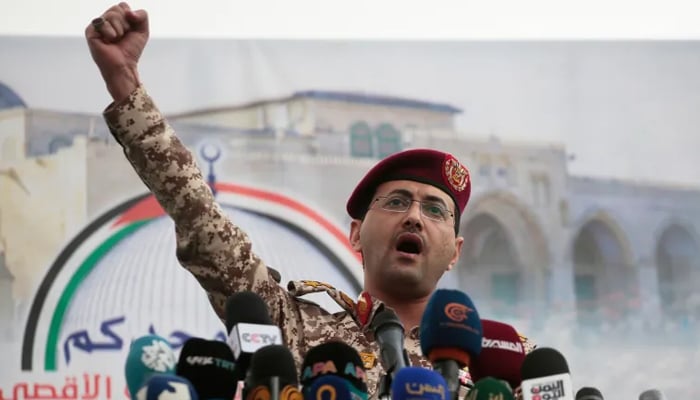
saudi defense minister
| |

Saudi Defense Minister holds urgent talks with Trump

Saudi Defense Minister Prince Khalid bin Salman held an urgent meeting with US President Donald Trump as Riyadh sought to convey a special message from Saudi Crown Prince Mohammed bin Salman to the American leadership, according to US media reports.

The meeting came amid heightened tensions in the Middle East, with Saudi Arabia reportedly pushing for de-escalation while also stressing its readiness to defend its territory and interests.

Earlier, during a meeting with US Vice President JD Vance, Prince Khalid said Saudi Arabia wanted to reduce tensions with Iran. He reportedly argued that Iran-backed Iraqi militias had crossed a red line by attacking critical infrastructure and energy facilities, leaving Riyadh with no choice but to respond.

However, the Saudi defense minister stressed that the military action in Iraq did not reflect a desire to escalate the regional conflict. He said the operation aimed to demonstrate that Saudi Arabia remains prepared to defend itself when necessary.

Prince Khalid also reportedly told Vance that Israeli Prime Minister Benjamin Netanyahu was pushing for greater confrontation with Iran, while Saudi Arabia preferred a path of de-escalation, which it considers more beneficial for regional stability and its own interests.

According to US media reports citing sources familiar with the discussions, Saudi Arabia also intended its strikes in Iraq to send a message to Yemen’s Houthi movement. Prince Khalid reportedly told the US vice president that Saudi Arabia has the capability to deal with the Houthis on its own and does not currently need direct US intervention on the issue.

The Saudi defense minister also said Riyadh continues to engage in talks with the Houthis, indicating that Saudi Arabia remains open to diplomatic efforts alongside its military preparedness.

The meetings highlight Riyadh’s attempt to balance military deterrence with diplomatic engagement as tensions involving Iran, Israel, Iraqi militias and the Houthis continue to shape the security situation across the region.

Similar Posts

  • | |

    Austria opens police station at house where Hitler…

    Austria has opened a police station inside the house in Braunau am Inn where Adolf Hitler was born, closing out years of debate over how to handle the building’s dark history. The 17th century structure once operated as an inn and served as the birthplace of the Nazi dictator in April 1889. Authorities have now completed a substantial renovation that changed the building’s facade, though managing the site has posed a persistent challenge for Austrian officials determined to prevent it from turning into a destination for neo Nazi pilgrimage. Hitler lived in the building, located at Salzburger Vorstadt 15, for only a few weeks before his family relocated to another address in Braunau. The family left the town permanently when Hitler was three years old. He briefly returned to Braunau in 1938 while traveling to Vienna after annexing Austria into Nazi Germany. Interior Minister Gerhard Karner attended the opening ceremony alongside other local officials, which featured police musicians performing on tuba and other brass instruments. Karner said Austria is taking responsibility for what he called the terrible legacy of the past, adding that although deciding the building’s fate proved difficult, he believes the new police station represents a fresh chapter for the site. He said the building will now stand as a place representing democracy, the rule of law, security, freedom and human dignity. A Catholic police chaplain then blessed two crosses that will hang inside the new station. For decades, Austria’s interior ministry rented the building from its former owner, a local woman named Gerlinde Pommer, paying her generous rent in an effort to keep the property from becoming a site for far right tourism. A local charity used the building for years as a day center and workshop for people with special needs, but the organization had to vacate in 2011 after Pommer blocked planned renovations. She also repeatedly declined to sell the property to the government, leaving the building empty for several years while she and authorities disputed terms. In 2016, Austria’s parliament passed legislation allowing the government to seize the property from Pommer, paying her compensation of 812,000 euros. She later challenged the amount in court, arguing it was too low, but ultimately lost the case. Wolfgang Sobotka, who served as interior minister at the time, suggested the building should be demolished and replaced with a new structure altogether, echoing an earlier proposal from a Russian lawmaker who had offered to purchase the house and destroy it. Both ideas drew significant criticism, with opponents arguing that tearing down the building would amount to denying Austria’s Nazi era history. In 2019, the government unveiled plans to convert the building into a police station and launched an EU wide competition inviting architects to submit design proposals. Officials subsequently spent millions of euros renovating the structure, transforming its appearance dramatically from its earlier state. The building, now painted white both inside and out, features extensive oak woodwork throughout, while an original winding staircase and arched entrance hall have been preserved from the earlier structure. The transformation marks a stark contrast to the building’s condition decades ago, when the Lebenshilfe charity operated a small shop in one of its front rooms. Police Chief Inspector Ludwig Heise said he feels fortunate to work in such a modern facility, noting the additional space compared to previous quarters, though he added that beyond its size, the station functions just like any other police facility in Austria. The reopening marks the culmination of a long and often contentious effort by Austrian authorities to neutralize the symbolic weight of Hitler’s birthplace, transforming a site once feared as a potential magnet for extremist sympathizers into a functioning symbol of the democratic institutions Austria has built in the decades since the Second World War.

  • Trump’s wildfire blame game with Canada draws scientist backlash

    President Trump’s claim that Canada is “poisoning” American air with wildfire smoke is facing strong pushback from climate scientists, who say he is blaming a country for a crisis it did not create. Trump raised the issue with Canadian Prime Minister Mark Carney and later told reporters at Joint Base Andrews that the fires need to stop. The exchange happened during the World Cup final. Trump confronted Carney at the match, telling him directly that American air was being poisoned and that the fires had to be brought under control. Afterward, he floated financial consequences. He suggested Canada should either pay damages or face new tariffs over the smoke. Trump has framed the fires in unusually aggressive terms. On Truth Social, he wrote that the United States was being “unnecessarily invaded” by polluted air from Canada’s poorly maintained forests, calling it willful negligence that costs America billions every year. Some allies in Congress have echoed that tone, with talk of legislation targeting Canada’s forestry practices. Meanwhile, the smoke itself has been widespread. Fires that began in mid-June spread further in July, affecting roughly 100 million Americans across 14 states. Canadian officials note that this year’s boreal forest losses are running well above the historical average. Scientists reject the idea that Canada is at fault. Climate researcher Michael Mann has compared Trump’s stance to someone causing a car crash through reckless driving, then sending the other driver the repair bill. He went on arguing that the administration’s own fossil fuel expansion is worsening the very problem it’s blaming on Canada. Stanford’s Marshall Burke points out that most of the burning Canadian forest is remote and largely unmanaged, unlike forests in the US. That rising global temperatures, not any lack of Canadian action, are driving the surge in extreme fire conditions. Wildfire ecologist Lori Daniels of the University of British Columbia called the attacks on Canada uninformed, saying they ignore both the human toll and the firefighters risking their lives on the front lines. She noted that targeted forest thinning, inspired by Indigenous land practices, could help in some North American forests, but wouldn’t make much difference across Canada’s vast, sparse boreal landscape. Carney has pushed back too, telling reporters that fighting climate change is “the responsibility of all countries, including the United States”, noting that some U.S. energy policies work against clean energy goals even as Canada pursues its own climate efforts globally.

  • |

    South Korea beats NASA to first photos of SpaceX Moon crash

    A spent SpaceX rocket stage slammed into the Moon on August 5, travelling at roughly 8,700 kilometres per hour. South Korea’s Danuri orbiter was perfectly positioned to capture the moment. The Korea Aerospace Administration released the images on August 6, beating NASA’s own Lunar Reconnaissance Orbiter to the first confirmed photos of the impact site. KASA had adjusted Danuri’s orbital path specifically for this event. The manoeuvre let the probe fly around 340 to 350 kilometres above the impact zone near Einstein Crater, capturing images just before and after the collision. Using its high-resolution Lunar Terrain Imager, the satellite photographed the site at an estimated resolution of five metres per pixel. A separate instrument measured changes in surface reflectivity to help gauge how much debris the impact had thrown up. KASA compared the difficulty of the shot to photographing a car crash in Busan from an aircraft flying above Seoul. The comparison highlighted just how precise the timing and positioning needed to be. The rocket stage originally launched in January 2025, carrying Firefly Aerospace’s Blue Ghost lander and ispace’s RESILIENCE spacecraft toward the Moon. Both spacecraft were part of separate lunar missions at the time. Falcon 9 upper stages are typically destroyed by burning up in Earth’s atmosphere after their missions end. This particular stage, however, had used up nearly all its fuel reaching lunar orbit, leaving it drifting as space debris. Gravitational and solar forces eventually pulled the stage back down, resulting in the lunar impact. SpaceX confirmed it had coordinated with NASA on the disposal process for the spent stage. The company noted that controlled descents are not always possible for upper stages following this kind of trajectory. NASA administrator Jared Isaacman downplayed the event’s significance afterward. Isaacman pointed out that meteoroids strike the lunar surface roughly every hour. He noted that impacts of this scale happen approximately every six days, framing the incident as fairly routine rather than dramatic.

  • | | |

    X blocks Houthi military spokesman Yahya Saree’s…

    SANAA: Social media platform X has reportedly suspended the account of Houthi military spokesman Yahya Saree, removing an important online channel used to communicate statements and announcements by the Yemen-based group. The account had more than 121,500 followers and was widely used for posts concerning the Houthis’ military activities and claims of attacks in the Red Sea and surrounding waters. According to the report, visitors to the account were shown an “Account Suspended” notice. X’s standard message on suspended accounts says the platform takes action against accounts that violate its rules. The specific reason for the suspension was not immediately clear. Saree has been a prominent public voice for the Houthi movement, frequently appearing in televised statements and issuing announcements concerning military operations. His statements have included claims about attacks on vessels in the Red Sea as well as operations targeting Saudi Arabia and other regional adversaries. The suspension could therefore affect one of the group’s most visible channels for communicating directly with its supporters and the wider public. Saree’s online presence has faced restrictions before. His earlier Twitter account was suspended in 2022, after which another account was created for continued communication. Historical reporting also shows that Houthi-affiliated accounts have faced changes to their verification status and other platform restrictions. The latest reported action comes amid continuing tensions surrounding Yemen and the Red Sea, where Houthi attacks on shipping have drawn international attention. The group has repeatedly said its operations are linked to the wider regional conflict and has issued statements claiming responsibility for attacks against vessels. The Houthis’ military statements are often closely watched because they provide the group’s own account of operations, although claims about attacks and damage are not always independently verified. The reported suspension also raises broader questions about how social media platforms handle accounts belonging to armed groups and their spokespeople, particularly when those accounts are used both for political messaging and military announcements. While the immediate reason for the latest action remains unclear, the removal of Saree’s account could make it more difficult for the Houthi movement to communicate through one of its established social media channels. For now, attention is likely to remain on whether X provides a specific explanation for the suspension and whether Saree or the Houthi authorities establish another account to continue distributing official statements.

Leave a Reply

Your email address will not be published. Required fields are marked *