trump8217s wildfire blame

Trump’s wildfire blame game with Canada draws scientist backlash

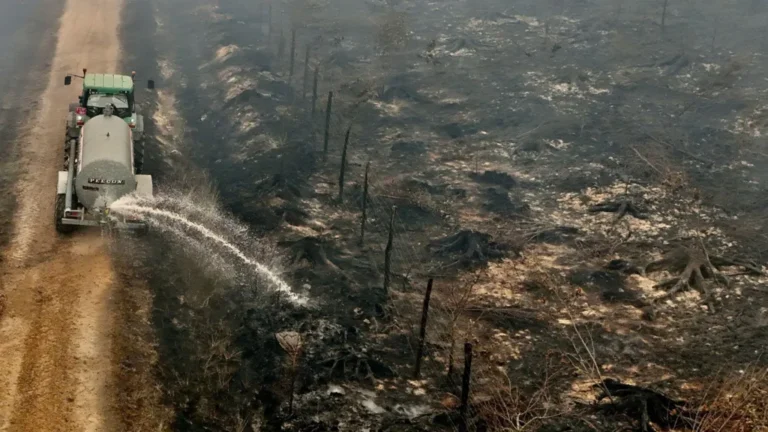
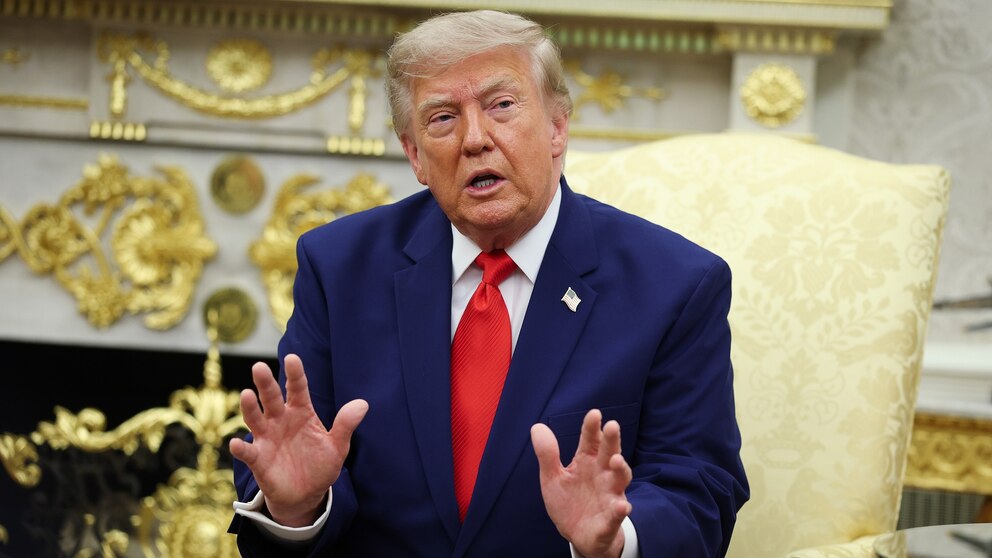
President Trump’s claim that Canada is “poisoning” American air with wildfire smoke is facing strong pushback from climate scientists, who say he is blaming a country for a crisis it did not create. Trump raised the issue with Canadian Prime Minister Mark Carney and later told reporters at Joint Base Andrews that the fires need to stop.

The exchange happened during the World Cup final. Trump confronted Carney at the match, telling him directly that American air was being poisoned and that the fires had to be brought under control.

Afterward, he floated financial consequences. He suggested Canada should either pay damages or face new tariffs over the smoke.

Trump has framed the fires in unusually aggressive terms. On Truth Social, he wrote that the United States was being “unnecessarily invaded” by polluted air from Canada’s poorly maintained forests, calling it willful negligence that costs America billions every year. Some allies in Congress have echoed that tone, with talk of legislation targeting Canada’s forestry practices.

Meanwhile, the smoke itself has been widespread. Fires that began in mid-June spread further in July, affecting roughly 100 million Americans across 14 states.

Canadian officials note that this year’s boreal forest losses are running well above the historical average.

Scientists reject the idea that Canada is at fault. Climate researcher Michael Mann has compared Trump’s stance to someone causing a car crash through reckless driving, then sending the other driver the repair bill. He went on arguing that the administration’s own fossil fuel expansion is worsening the very problem it’s blaming on Canada.

Stanford’s Marshall Burke points out that most of the burning Canadian forest is remote and largely unmanaged, unlike forests in the US. That rising global temperatures, not any lack of Canadian action, are driving the surge in extreme fire conditions.

Wildfire ecologist Lori Daniels of the University of British Columbia called the attacks on Canada uninformed, saying they ignore both the human toll and the firefighters risking their lives on the front lines. She noted that targeted forest thinning, inspired by Indigenous land practices, could help in some North American forests, but wouldn’t make much difference across Canada’s vast, sparse boreal landscape.

Carney has pushed back too, telling reporters that fighting climate change is “the responsibility of all countries, including the United States”, noting that some U.S. energy policies work against clean energy goals even as Canada pursues its own climate efforts globally.

Similar Posts

  • |

    30 children geared to have been conceived using wrong IVF donors

    At least 30 children, most of them believed to be British, may have been conceived through IVF treatment in northern Cyprus using sperm or egg donors different from those selected by their parents. The allegations have emerged from an investigation into fertility clinics in the region, raising serious concerns about the treatment of international patients and the regulation of fertility services. The parents involved say they carefully chose anonymous donors before undergoing treatment. Their decisions were based on detailed information provided by clinics, including the donors’ medical backgrounds, physical appearance, education, personalities, interests and hobbies. However, after their children were born, some parents began to question whether the donors they had selected were actually used during their IVF procedures. The latest investigation has identified at least 30 cases in which parents believe the wrong sperm or egg donors may have been used. This is a significant increase from the seven cases . Around half of the children were reportedly conceived following treatment at Dogus IVF Centre, a fertility clinic in northern Cyprus. Several individuals involved in the treatment of these patients have come under scrutiny, including doctors Firdevs Uguz Tip and Sevket Alpturk, as well as patient coordinator Julie Hodson. One mother, identified as Rachel, said she recently discovered that the sperm donor used during her treatment may not have been the donor she had chosen. She described the situation as extremely shocking and unacceptable. The parents have raised concerns that staff members at the clinic may have provided misleading information about the donors. Dr Firdevs Uguz Tip has denied any wrongdoing. The investigation has also uncovered information about the relationship between Dogus IVF Centre and Cryos International, one of the world’s largest sperm banks. Cryos placed Dogus on its blacklist in 2016, adding another concern surrounding the clinic’s practices. Northern Cyprus has become a popular destination for British and other international patients seeking fertility treatment. The region offers relatively low treatment costs, reportedly high success rates and access to a wide selection of sperm and egg donors. However, its regulatory system is significantly different from that of European Union countries. Northern Cyprus is internationally recognised only by Turkey, and EU laws do not apply there. Fertility clinics in the territory have been described as operating under relatively loose regulation, raising questions about oversight and accountability. According to previous reports on the emerging allegations in March, when seven parents came forward with concerns that they may have been misled about the donors used in their treatments. Following those reports, the Ministry of Health in northern Cyprus said it had opened an official investigation. However, the ministry has reportedly failed to provide further information. Many parents said clinics had promised them donors who had undergone health screening and were from Western European backgrounds. Their suspicions reportedly grew after their children were born. DNA testing has provided further evidence that has intensified these concerns. Eleven of the 30 children have undergone commercial DNA tests, with results indicating genetic ancestry connected to Turkey or nearby regions. According to the investigation, these results may suggest that the donors selected by the parents were not the individuals whose genetic material was ultimately used. The allegations have caused distress among affected families, many of whom travelled abroad believing they were receiving carefully selected fertility treatment. The growing number of cases is now raising serious questions about donor identification, patient information, clinic accountability and the regulation of fertility services in northern Cyprus.

  • | | | |

    Iran FM accuses West of ‘shameful hypocrisy’

    Iran FM accuses West of ‘shameful hypocrisy’Iranian Foreign Minister Abbas Araghchi has sharply criticised France and other Western countries over their stance on human rights and Iran’s treatment of protesters. Araghchi accused Western governments of adopting double standards by condemning Tehran over its response to domestic unrest while, in his view, failing to take meaningful action over Israel’s conduct in Gaza and the wider Middle East. In a statement on X, the Iranian foreign minister said countries such as France should stop giving lectures to others on human rights and international law. He described what he called Western hypocrisy as both “clear and shameful,” arguing that their policies had undermined their claims of moral authority. Araghchi also criticised Western support for Israel, saying that backing Israel during the Gaza conflict and what he described as aggression against Iran had damaged the credibility of Western governments on human rights issues. His comments came after the European Union and 20 other countries issued a joint statement expressing concern over the deaths of protesters in Iran. The countries called on the Iranian authorities to take meaningful measures to protect human rights. They also urged Tehran to end the use of the death penalty and release people who had allegedly been detained arbitrarily. Araghchi rejected the criticism and questioned the consistency of Western governments’ positions on human rights. The dispute highlights growing tensions between Iran and Western nations over the treatment of protesters, the use of capital punishment and the broader conflict in the Middle East. Iran has repeatedly accused Western governments of interfering in its internal affairs and applying selective standards to international human rights issues. Western governments, meanwhile, have continued to raise concerns about the treatment of protesters and detainees in Iran.

  • | | |

    Iran says every threat will strengthen its militar…

    TEHRAN: Iran’s acting Defence Minister, Seyed Majid Ibn al-Reza, has declared that Tehran will continue strengthening its military capabilities by treating every threat from its adversaries as genuine, even as the United States signals a renewed diplomatic effort. His remarks came after US President Donald Trump announced that Washington had postponed a planned military strike against Iran in favour of restarting negotiations aimed at reducing tensions in the Middle East. In a statement posted on social media platform X on Monday, Ibn al-Reza said Iran viewed recent statements from its enemies as part of a broader campaign of psychological and cognitive warfare. However, he stressed that Tehran would not dismiss any warning, regardless of its nature. “We consider every threat to be real and deserving of a serious response,” the acting defence minister said, adding that Iran’s strategy was to transform every external challenge into an opportunity to reinforce its military preparedness and national defence. He said the Iranian armed forces would neither be caught off guard nor remain passive in the face of rising regional tensions. Instead, every warning or hostile statement would serve as a catalyst for expanding the country’s defensive capabilities and maintaining operational readiness. The comments underscore Iran’s continued emphasis on deterrence at a time when uncertainty surrounds the future of US-Iran relations and broader security dynamics across the Gulf. Earlier, President Trump announced that the United States had suspended plans for military action against Iran after requests from Tehran and several Middle Eastern countries to give diplomacy another chance. Writing on his social media platform, Truth Social, Trump claimed the US military had been fully prepared for an operation of unprecedented scale, describing it as one of the largest potential military actions since the Second World War. According to Trump, the proposed negotiations focus on two key objectives: ensuring the immediate and uninterrupted reopening of the Strait of Hormuz for global shipping and addressing concerns over Iran’s nuclear programme. The Strait of Hormuz remains one of the world’s most strategically important maritime routes, carrying a significant share of global oil exports. Any disruption in the waterway has the potential to affect international energy markets and regional stability. While Washington has presented the renewed talks as an opportunity to prevent further escalation, Iranian officials continue to insist that the country will not relax its military vigilance during the diplomatic process. The latest exchange of statements reflects the delicate balance between diplomacy and deterrence, with both sides signalling a willingness to negotiate while simultaneously emphasizing military preparedness amid persistent regional tensions.

  • |

    Liberal democrats urge PM to intervene over EU entry-exit system disruptions

    The Liberal Democrats have called on Prime Minister Andy Burnham to directly contact European leaders and lobby for an immediate suspension of the EU’s Entry-Exit System (EES) until at least September. Speaking at Heathrow Airport, foreign affairs spokesperson Calum Miller criticised the biometric scheme as a “bungled, malfunctioning border system” that risks ruining summer holidays for millions of British citizens during peak travel periods. The call comes as approximately 2.2 million British holidaymakers prepare to travel abroad over the weekend following the start of school summer breaks across the UK. Spain, Greece, Portugal, Italy, and Turkey remain the primary destinations. While the EES requires non-EU citizens to undergo biometric registration, including photographs and fingerprinting, border police have retained discretion to relax checks during severe delays. Several European nations have already introduced temporary flexibilities or experienced tech issues, with automated border booths in France failing to function and Greece opting to exempt British nationals from additional biometric checks. Transport Secretary Heidi Alexander has held discussions with EU commissioners and French counterparts regarding cross-Channel concerns, particularly at French border posts situated in the UK, such as the Port of Dover. To mitigate severe queueing, French border police have temporarily suspended fingerprinting and photography for car passengers at ferry ports and the Eurotunnel terminal. Consequently, queue times at Dover have remained manageable, staying under 40 minutes despite heavy traffic volumes. Meanwhile, airlines such as easyJet are pressing the EU to extend border flexibility through the end of October to prevent further travel disruption.

  • | |

    Belgium’s largest wildfire in decades double…

    A wildfire officials describe as the largest in Belgium’s recent history more than doubled in size within 24 hours, local authorities said Sunday, as hundreds of firefighters entered a third day battling flames tearing through the country’s largest nature reserve. The blaze has forced the evacuation of two villages near Hautes Fagnes, a protected reserve close to Belgium’s eastern border with Germany. Local farmers have hauled water tankers toward the park to assist firefighting crews, while water bombing aircraft and helicopters sent from Sweden and the Netherlands have joined the effort from the air. The Belgian fire is one of several burning across Europe this weekend. At least two people died in forest fires on a Greek island off the coast of Athens on Sunday, part of a broader pattern of blazes spreading across the continent. Belgian officials said intense heat combined with the reserve’s difficult terrain, a mix of bog like wetlands, moorland and forest, has made the fire especially hard to contain. According to figures reported by a French news agency citing local officials, the fire grew from 80 hectares, or about 200 acres, on Friday to 850 hectares by Saturday morning, before expanding further to 3,000 hectares by early Sunday. Belgian Interior Minister Bernard Quintin said two fronts of the fire, one advancing toward Jalhay and the other toward Monschau, have now been brought under control. Authorities said conditions remain difficult overall and that they continue to rely heavily on aerial support to bring the fire under control, though no homes have been damaged so far. Two water bombing aircraft arrived from Sweden on Sunday afternoon to reinforce four helicopters, two Belgian and two Dutch, already working the fire. Nicolas Yernaux, a spokesman for regional authorities in Wallonia, said Saturday that the blaze ranks as the largest the country has seen in recent history. He said firefighters have allowed portions of the heathland to burn because those areas are extremely difficult to reach. Rescue teams have been unable to access the location where the fire started, leaving its cause unknown for now. Additional forest fires have broken out in Croatia, Spain and Serbia since Friday, following a summer of extreme heat that has left large parts of Europe either burning or scorched brown. In southwestern France, local officials in the Landes region said a separate wildfire forced the evacuation of 650 residents on Saturday. That fire first broke out Thursday and reignited Saturday, prompting authorities to deploy more than 500 firefighters to bring it under control. The EU’s climate monitoring service, Copernicus, has confirmed that western Europe just experienced its hottest June to July period on record, a finding that aligns with the wave of wildfires now spreading across multiple countries on the continent.

  • | |

    Zelensky removes army chief Syrskyi after week of …

    Ukrainian President Volodymyr Zelensky has dismissed the country’s commander in chief, Oleksandr Syrskyi, just days after removing popular Defence Minister Mykhailo Fedorov in a move that triggered widespread street protests across Ukraine. Early speculation that Fedorov’s removal stemmed from tension between him and Syrskyi was soon confirmed. Fedorov, 35, has drawn broad praise for reenergizing the defence ministry, driving reforms across the armed forces and pushing an anti corruption campaign. Syrskyi, 60, has been viewed by many in Ukraine as a Soviet trained commander resistant to sweeping changes within the military. In a farewell message posted on Telegram, Syrskyi defended his record, noting that the army he led through a difficult defensive campaign two years ago now stands on the offensive. He said he was handing over to his successor a force that is not just holding ground but advancing, and expressed hope that the offensive would continue. Zelensky named Mykhailo Drapatyi, 43, a popular and battle tested general, as Syrskyi’s replacement. Drapatyi said on Facebook that he would approach the role with full focus, responsibility and respect for those currently defending the country. He also thanked Syrskyi for his consistent work strengthening the Ukrainian army, saying he had grown up within it professionally. In a video posted late Tuesday, Zelensky thanked Syrskyi for his military leadership, including his role defending Kyiv during the earliest days of Russia’s full scale invasion in 2022. Zelensky also said he met with Fedorov earlier that day and offered him a worthy position within the government, though he did not specify whether Fedorov had accepted. Fedorov had been replaced last week by Yevhenii Khmara, a former senior official at Ukraine’s Security Service. Zelensky said all decisions would be formalized the following day. Fedorov congratulated Drapatyi on his new role, describing the appointment as a new source of hope in the broader fight of free people for freedom and justice, and calling it the voice of change that could no longer be ignored. Fedorov also said he called Syrskyi personally to thank him for defending the Kyiv region and for other significant battles, while adding that Ukraine needs to move even faster and correct past mistakes. Fedorov had only taken over as defence minister in January but quickly earned praise for using data driven analysis to improve battlefield performance. A former minister of digital transformation, he built a volunteer cyber unit known as the IT Army of Ukraine early in the full scale invasion. He later led a successful fundraising initiative called the Army of Drones and introduced elements of gamification into the war effort, creating a system that rewarded Ukrainian military units with credits for striking Russian targets. Fedorov’s removal sparked six days of widespread protests, placing mounting pressure on Zelensky to dismiss Syrskyi. Zelensky appeared to respond to that pressure by replacing him with Drapatyi, viewed as a younger and more innovative commander who is also considered a close friend of Fedorov’s. Fedorov’s clear support for Drapatyi’s appointment is likely to help ease the political tension that built up over the past week. Acting Defence Minister Khmara remains in his position for now, with Zelensky asking him and Drapatyi to develop a new defence strategy addressing issues including reform of the military corps system, weapons supply and drone capabilities. In an op-ed published Monday on the Militarny website, Syrskyi described his relationship with Fedorov as strictly professional and offered an apology if he had offended him. He said decisions surrounding military contracts, procurement and mobilization involve far more complexity than most people recognize, arguing that real progress, not public drama, ultimately determines the outcome of the war. Protesters are expected to continue pushing for Fedorov’s return to a position of genuine authority where he can keep driving innovation in Ukraine’s fight against Russia. Should that happen, Zelensky may succeed in repairing much of the immediate political damage, though many Ukrainians remain unlikely to forgive what they viewed as his original misstep in removing Fedorov in the first place.

Leave a Reply

Your email address will not be published. Required fields are marked *