liberal democrats urge
|

Liberal democrats urge PM to intervene over EU entry-exit system disruptions

The Liberal Democrats have called on Prime Minister Andy Burnham to directly contact European leaders and lobby for an immediate suspension of the EU’s Entry-Exit System (EES) until at least September.

Speaking at Heathrow Airport, foreign affairs spokesperson Calum Miller criticised the biometric scheme as a “bungled, malfunctioning border system” that risks ruining summer holidays for millions of British citizens during peak travel periods.

The call comes as approximately 2.2 million British holidaymakers prepare to travel abroad over the weekend following the start of school summer breaks across the UK. Spain, Greece, Portugal, Italy, and Turkey remain the primary destinations.

While the EES requires non-EU citizens to undergo biometric registration, including photographs and fingerprinting, border police have retained discretion to relax checks during severe delays.

Several European nations have already introduced temporary flexibilities or experienced tech issues, with automated border booths in France failing to function and Greece opting to exempt British nationals from additional biometric checks.

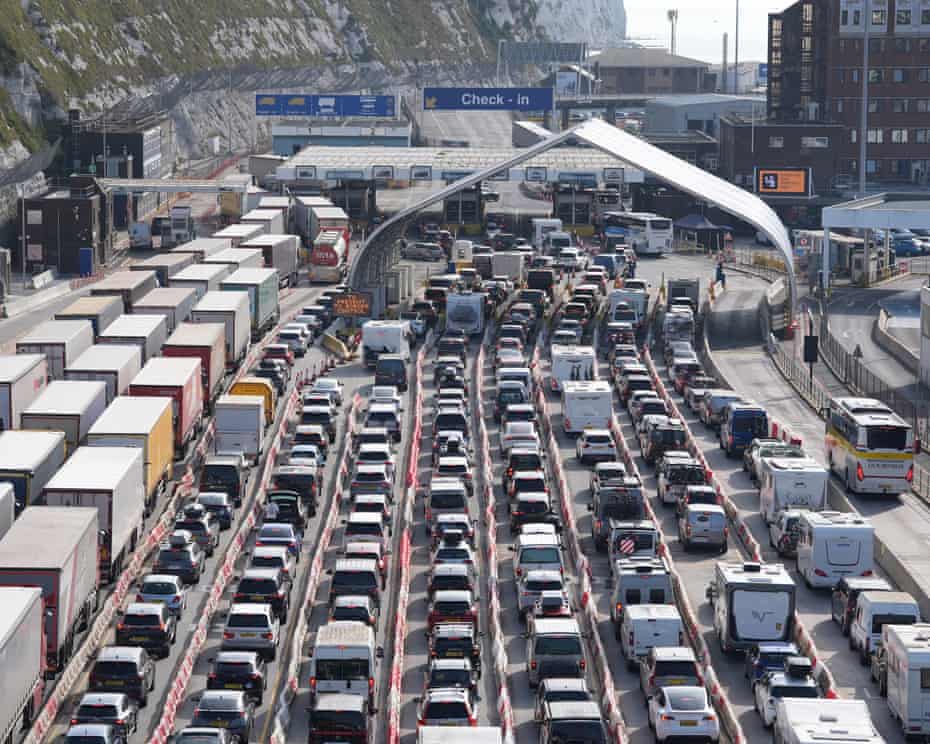
Transport Secretary Heidi Alexander has held discussions with EU commissioners and French counterparts regarding cross-Channel concerns, particularly at French border posts situated in the UK, such as the Port of Dover. To mitigate severe queueing, French border police have temporarily suspended fingerprinting and photography for car passengers at ferry ports and the Eurotunnel terminal.

Consequently, queue times at Dover have remained manageable, staying under 40 minutes despite heavy traffic volumes. Meanwhile, airlines such as easyJet are pressing the EU to extend border flexibility through the end of October to prevent further travel disruption.
Similar Posts

  • | |

    Shehbaz govt outlasts political forecasts

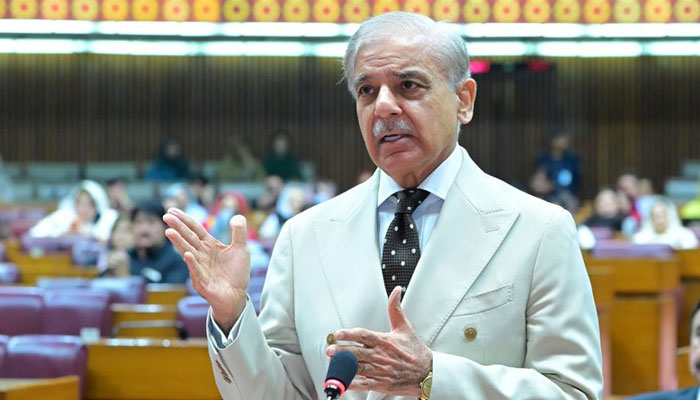
    ISLAMABAD: More than two years after Prime Minister Shehbaz Sharif’s coalition government took office, repeated predictions about its imminent collapse have yet to materialize, even as fresh deadlines continue to dominate Pakistan’s political debate. Since the Pakistan Muslim League-Nawaz (PML-N)-led coalition assumed power following the February 2024 general elections, political commentators, television analysts, and social media personalities have frequently forecast the government’s downfall. The expected timelines have varied—from 90 days to six months and beyond—but each prediction has ultimately passed without bringing the anticipated political change. Over time, different events have been presented as potential turning points, including IMF reviews, the federal budget, economic challenges, coalition disagreements, opposition campaigns, and speculation surrounding Pakistan’s political establishment. As one deadline expired, another quickly emerged, keeping the narrative alive despite the government’s continued survival. The latest claim suggests the government has been given six months to create new provinces. However, constitutional experts argue that such a proposal is highly unlikely within that timeframe. Under Pakistan’s Constitution, altering provincial boundaries requires a constitutional amendment approved by a two-thirds majority in both houses of Parliament as well as the consent of the relevant provincial assembly. Given the current political landscape and the absence of broad political consensus, analysts believe such a move faces significant constitutional and political hurdles. Political observers note that earlier forecasts were largely driven by concerns that the coalition lacked the strength to withstand inflation, IMF-linked reforms, and mounting economic pressures. Yet the government has managed to navigate successive economic and political challenges, prompting critics to repeatedly revise their predictions rather than abandon them. Speculation has also been fueled by statements from several political figures and commentators who have periodically hinted at major political developments or institutional changes. Although such claims have often generated widespread public discussion, none of the predicted political upheavals have occurred. In recent weeks, the Pakistan Peoples Party (PPP) has intensified its criticism of the federal government, particularly amid growing tensions with its coalition partner during the Azad Jammu and Kashmir election campaign. While the PPP has adopted a tougher political tone, analysts caution that electoral rhetoric and coalition disagreements do not necessarily signal the immediate collapse of the federal government. Rumors about possible alternatives to the current leadership have also surfaced repeatedly. Claims that a new political figure was being prepared to replace Prime Minister Shehbaz Sharif, along with speculation about the removal of senior cabinet members, have circulated over the past year. However, none of those predictions have been borne out by subsequent developments. Analysts say the recurring cycle of political forecasts reflects a broader trend in Pakistan’s political discourse, where speculation often outpaces reality. While acknowledging that every government faces political and economic challenges, they note that repeated predictions of the coalition’s imminent fall have consistently failed to match events on the ground, leaving each passing deadline followed by yet another countdown.

  • | |

    90,000 rubber ducks race through Chicago river in …

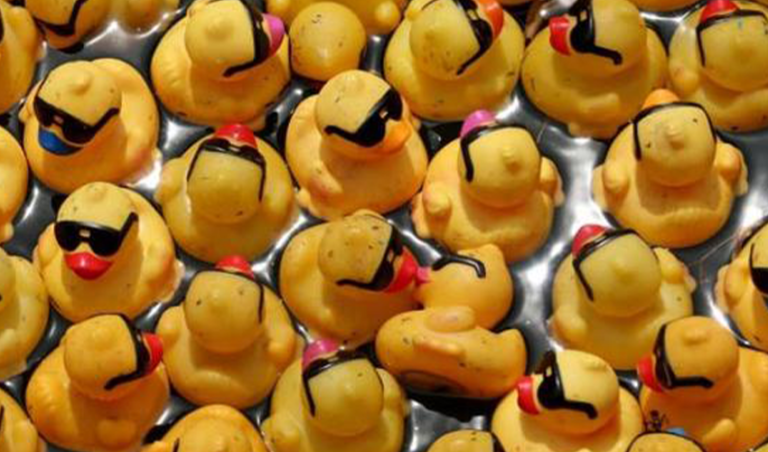
    CHICAGO: The Chicago River turned bright yellow on Thursday as around 90,000 rubber ducks were released into the water for the annual Chicago Ducky Derby, a colorful charity event that draws thousands of spectators and raises funds for Special Olympics Illinois. The unusual race began when the huge collection of rubber ducks was dropped into the river from one side of a partially opened bridge. Within moments, the water was covered with thousands of small yellow ducks, creating a striking spectacle for people gathered along both sides of the river. The ducks remained in the water for roughly 15 minutes as they floated and moved with the river’s current. Organizers then retrieved the ducks from the water to determine the winning entries and ensure that the river was cleared of the race participants. Thousands of people attended the event, turning the annual derby into a lively festival. Spectators gathered along the riverbanks to watch the race, take photographs and support the charitable cause. Many participants and visitors also wore colorful T-shirts featuring rubber duck designs. The Ducky Derby is organized to support Special Olympics Illinois, helping raise thousands of dollars for programs and activities for athletes with intellectual disabilities. One of the highlights of this year’s event came when 13-year-old Special Olympics athlete and Ducky Derby ambassador Becky Cavanaugh selected the winning duck. Her announcement was met with cheers from enthusiastic crowds gathered along the river. Cavanaugh said one of the things she values most about being involved with the Special Olympics is the opportunity to meet and build friendships with other people. The Chicago Ducky Derby has become a popular annual tradition, combining entertainment, community participation and fundraising. The event gives spectators a memorable experience while contributing to programs designed to support Special Olympics athletes across Illinois.

  • | |

    Hanif Abbasi says India tops list of Pakistan’s enemies

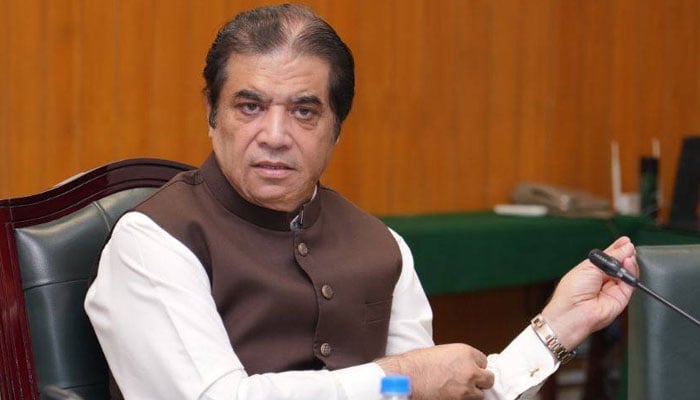
      ISLAMABAD: Federal Minister for Railways Hanif Abbasi has said that only two or three countries can be considered enemies of Pakistan, with India at the top of the list. He said Israel and Afghanistan are also among the countries that PakistanFederal Minister for Railways Hanif Abbasi has said that only two or three countries can be considered enemies of Pakistan, considers hostile. Speaking to journalists outside Parliament House, Abbasi said Pakistan does not regard all countries as enemies and stressed that the list is limited to a few states. His remarks came while discussing political and national issues with the media. The federal minister also spoke about his views regarding Jamiat Ulema-e-Islam-Fazl (JUI-F) chief Maulana Fazlur Rehman, describing him as a respected political figure. Abbasi said he would advise Fazlur Rehman to avoid making decisions while angry, arguing that emotional reactions can sometimes lead to wrong choices. Abbasi said that political differences were a normal part of democratic politics and that he was willing to accept opposition on political grounds. However, he drew a distinction between political disagreement and what he described as personal attacks. The minister said he could tolerate political opposition but did not accept personal hostility. Referring to remarks previously made by Pakistan Tehreek-e-Insaf (PTI) founder Imran Khan about Maulana Fazlur Rehman, Abbasi said that some of the words used against the JUI-F leader had been deeply disturbing. He said the language used against Fazlur Rehman was so harsh that it had left him shocked. According to Abbasi, political opponents could disagree with each other over policies, parties and political strategies, but personal criticism should not cross certain limits. “Political opposition would not have been an issue,” Abbasi said, while arguing that the criticism directed at Fazlur Rehman went beyond ordinary political differences and became personal. The minister’s comments reflect the continuing tensions and rivalries among Pakistan’s major political parties, where disagreements frequently extend beyond policy matters and involve criticism of individual political leaders. Abbasi’s remarks also highlighted the importance of maintaining political restraint, particularly when disagreements become intense. His advice to Fazlur Rehman suggested that political leaders should avoid taking major decisions while angry or under emotional pressure. The federal minister further indicated that political differences should be handled within the boundaries of democratic debate. While politicians may strongly oppose one another on ideological, policy or electoral matters, he suggested that personal attacks can deepen political divisions and make reconciliation more difficult. His comments regarding Pakistan’s perceived hostile countries also came amid continuing discussions about the country’s regional and international relationships. India has historically remained a major source of tension between Pakistan and its eastern neighbour, while relations with Afghanistan have also faced challenges over security and border-related issues. Pakistan’s relationship with Israel remains particularly sensitive due to the Palestinian issue and Islamabad’s longstanding position on the conflict. Abbasi’s statement therefore covered both domestic political differences and broader foreign-policy concerns. He emphasised that Pakistan has only a limited number of countries that it considers enemies, rather than viewing the wider international community through the same lens. The minister’s comments are likely to draw attention because of his criticism of personal attacks in politics and his appeal for political leaders to exercise greater restraint. His remarks underline the distinction between legitimate political opposition and criticism that becomes personal, an issue that continues to shape political discourse in Pakistan.

  • |

    Kriti Sanon turns a year older, here is a peek into her most stunning style moments

    As Kriti Sanon celebrates her birthday, there is plenty to toast than just another year. Beyond her impressive career as an actor, producer, entrepreneur, and National Award winner, she has quietly earned a reputation as one of the country’s most stylish celebrities. Whether she is commanding the red carpet, drawing attention at international fashion events, or effortlessly nailing a promotional look, every public appearance tends to become a talking point. To mark her birthday, here is a look back at some of her most memorable fashion moments over the years. One of her boldest looks came in the form of a sleek, body-hugging black dress featuring a dramatic thigh-high slit. The structured design and confident styling made it an instant standout. Equally unforgettable was an emerald green satin gown with striking cutouts and elegant draping, a look that quickly captured fans’ attention online. For a softer, more romantic vibe, Kriti wore a lavender couture gown with flowing sleeves and delicate layers, giving off an almost storybook quality. At an award ceremony, she chose a shimmering embellished gown that struck the right balance between glamour and understated elegance. She also proved that simplicity can make just as strong a statement, opting for a beige floral ensemble rich in subtle texture and detail. On another occasion, an off-shoulder black gown showcased her more classic, refined side, relying on clean lines rather than heavy embellishment. A sculpted white couture gown pushed her style further into high-fashion territory, giving the look an architectural, globally-inspired edge. She later brought old Hollywood glamour into the present with a crystal-embellished silver gown that sparkled effortlessly on every red carpet appearance. When it came to traditional wear, Kriti embraced regal elegance in a deep red embellished saree paired with statement jewelry, blending timeless tradition with a modern touch. Representing India on an international stage, she also turned heads at London Fashion Week in a Burberry ensemble complete with a trench coat, boots, and scarf, reflecting polished, global sophistication. From experimental couture to graceful Indian wear, Kriti Sanon continues to explore fashion fearlessly, letting every outfit reveal a different side of her personality. As she celebrates another year, her evolving style journey remains just as compelling as her accomplished career, proving she’s not just an actor to watch, but a true fashion icon in her own right.

  • | |

    Pakistani mountaineer Asma Mushtaq dies during Spa…

      GILGIT-BALTISTAN: Pakistani travel vlogger and mountaineer Dr Asma Mushtaqhas died during an expedition to Spantik Peak in Gilgit-Baltistan, while rescue teams are continuing efforts to locate and recover her body. Federal Information Minister Atta Tarar said in a statement that a rescue team has reached the location where Dr Asma’s body is believed to be present. According to the minister, the search operation has become increasingly difficult because of the vast area and heavy snowfall recorded in the region over the past two days. The intense snowfall has reportedly covered the body completely under snow, making recovery a challenging task for the rescue personnel. Atta Tarar said that the rescue team had been searching for Dr Asma for several hours, but her body had not yet been recovered. He added that the operation remains underway and teams are continuing their efforts to locate her. Dr Asma Mushtaq reportedly died while returning from the summit of Spantik, a prominent mountain located in the Shigar district of Gilgit-Baltistan. Born on February 7, 1992, Asma was known within the mountaineering community for her passion for adventure, mountains and natural landscapes. She also gained recognition as a travel vlogger, sharing her interest in Pakistan’s scenic destinations and outdoor adventures. Recently, Asma had joined an expedition to climb Spantik Peak, which stands at an elevation of approximately 7,027 metres and is located in Pakistan’s Karakoram mountain range. The mountain is considered one of the country’s notable climbing destinations and attracts mountaineers seeking challenging high-altitude expeditions. According to reports, Asma successfully reached the summit of Spantik along with her guide, Ali Akbar. At the time of reaching the summit, her health was reportedly stable and she was able to complete the ascent successfully. However, problems reportedly arose during the descent. After leaving the summit, Asma allegedly developed symptoms associated with high-altitude sickness, a potentially serious condition that can affect people at extreme elevations because the body receives less oxygen at high altitude. Her guide, Ali Akbar, reportedly provided her with initial medical assistance after her condition deteriorated. Despite the efforts to help her, she could not survive. The incident has highlighted the risks associated with high-altitude mountaineering, particularly during difficult weather conditions. Climbers face several hazards during such expeditions, including extreme cold, heavy snowfall, reduced oxygen levels, exhaustion and rapidly changing weather. The recovery operation is now focused on locating Asma’s body in an area affected by significant snowfall. Rescue teams are reportedly facing difficult conditions as they search through snow-covered terrain. Officials have said that the operation will continue until the body is located and recovered. The difficult terrain and heavy snowfall have made the search more complicated, while rescuers are working in challenging mountainous conditions. Asma’s death has been mourned by those familiar with her work and passion for mountaineering and travel. Her journey into Pakistan’s mountainous regions reflected her strong interest in adventure and the country’s natural beauty. The rescue authorities are continuing their efforts, while further details about the recovery operation are expected as the search progresses.

  • | |

    Gold becomes cheaper in Pakistan after major price…

    Gold prices in Pakistan witnessed a significant decline on Thursday, providing relief to buyers as rates fell in line with the downward trend in the international bullion market. According to the All Pakistan Sarafa Gems and Jewellers Association, the price of one tola of gold decreased by Rs. 1,800, bringing the new rate down to Rs. 432,036 per tola. The price of 10 grams of gold also recorded a decline of Rs. 1,543, settling at Rs. 370,401 across the local market. The drop in domestic gold prices follows a decline in international bullion rates. In the global market, the price of gold fell by $18 per ounce, reaching $4,096 per ounce. Gold prices in Pakistan are influenced by fluctuations in international markets as well as movements in the exchange rate. Market analysts say changes in global demand, investor sentiment, and economic developments continue to impact bullion prices on a daily basis. Traders expect gold prices to remain sensitive to international market trends in the coming days, with further fluctuations possible depending on global economic data and investor activity.

Leave a Reply

Your email address will not be published. Required fields are marked *