shehbaz govt outlasts
| |

Shehbaz govt outlasts political forecasts

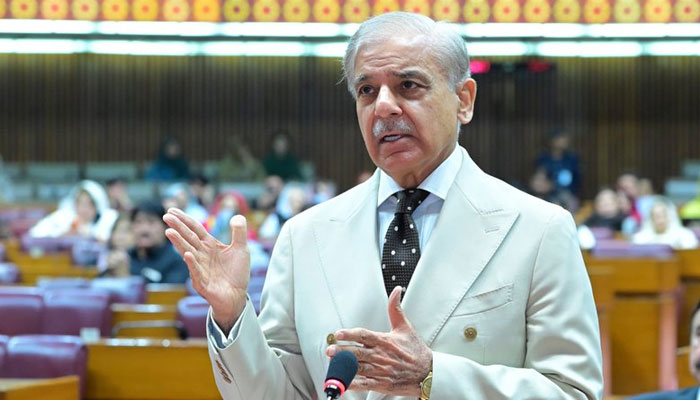
ISLAMABAD: More than two years after Prime Minister Shehbaz Sharif’s coalition government took office, repeated predictions about its imminent collapse have yet to materialize, even as fresh deadlines continue to dominate Pakistan’s political debate.

Since the Pakistan Muslim League-Nawaz (PML-N)-led coalition assumed power following the February 2024 general elections, political commentators, television analysts, and social media personalities have frequently forecast the government’s downfall. The expected timelines have varied—from 90 days to six months and beyond—but each prediction has ultimately passed without bringing the anticipated political change.

Over time, different events have been presented as potential turning points, including IMF reviews, the federal budget, economic challenges, coalition disagreements, opposition campaigns, and speculation surrounding Pakistan’s political establishment. As one deadline expired, another quickly emerged, keeping the narrative alive despite the government’s continued survival.

The latest claim suggests the government has been given six months to create new provinces. However, constitutional experts argue that such a proposal is highly unlikely within that timeframe. Under Pakistan’s Constitution, altering provincial boundaries requires a constitutional amendment approved by a two-thirds majority in both houses of Parliament as well as the consent of the relevant provincial assembly. Given the current political landscape and the absence of broad political consensus, analysts believe such a move faces significant constitutional and political hurdles.

Political observers note that earlier forecasts were largely driven by concerns that the coalition lacked the strength to withstand inflation, IMF-linked reforms, and mounting economic pressures. Yet the government has managed to navigate successive economic and political challenges, prompting critics to repeatedly revise their predictions rather than abandon them.

Speculation has also been fueled by statements from several political figures and commentators who have periodically hinted at major political developments or institutional changes. Although such claims have often generated widespread public discussion, none of the predicted political upheavals have occurred.

In recent weeks, the Pakistan Peoples Party (PPP) has intensified its criticism of the federal government, particularly amid growing tensions with its coalition partner during the Azad Jammu and Kashmir election campaign. While the PPP has adopted a tougher political tone, analysts caution that electoral rhetoric and coalition disagreements do not necessarily signal the immediate collapse of the federal government.

Rumors about possible alternatives to the current leadership have also surfaced repeatedly. Claims that a new political figure was being prepared to replace Prime Minister Shehbaz Sharif, along with speculation about the removal of senior cabinet members, have circulated over the past year. However, none of those predictions have been borne out by subsequent developments.

Analysts say the recurring cycle of political forecasts reflects a broader trend in Pakistan’s political discourse, where speculation often outpaces reality. While acknowledging that every government faces political and economic challenges, they note that repeated predictions of the coalition’s imminent fall have consistently failed to match events on the ground, leaving each passing deadline followed by yet another countdown.

Similar Posts

  • | |

    ECP proposes new powers to verify lawmakers’ ass…

    The Election Commission of Pakistan (ECP) has proposed amendments to the Election Rules, 2017, aiming to strengthen scrutiny of lawmakers’ annual declarations of assets and liabilities by allowing the commission to seek information directly from relevant institutions. According to a notification issued by the ECP, the proposed amendment would add a new provision to Rule 137 of the Election Rules. Under the proposed change, the commission would be empowered to seek clarification whenever it finds ambiguity or inconsistency in the asset and liability statements submitted by members of the National Assembly, Senate and provincial assemblies. The proposal would also authorize the ECP to obtain information not only from the concerned lawmaker but also from any individual, government department, organisation or financial institution that may possess relevant records. If approved, all entities approached by the commission would be legally required to provide the requested clarification or information within the timeframe specified by the ECP. The electoral body said the amendment has been proposed under the powers granted to it by Section 239 of the Elections Act, 2017. The draft amendment has been published to invite public feedback before it is finalised. Citizens and stakeholders have been invited to submit objections or suggestions regarding the proposed amendment to the ECP Secretariat in Islamabad by August 15, 2026. The commission said it will review all submissions and provide an opportunity for hearing before making a final decision. The draft amendment has also been uploaded to the ECP’s official website to ensure transparency and allow public participation in the legislative process.

  • | |

    AI-generated Independence Day song released by Pla…

    ISLAMABAD: An AI-generated Independence Day song released by Pakistan’s Ministry of Planning, Development and Special Initiatives has sparked widespread debate, with critics questioning the government’s decision to rely on artificial intelligence instead of showcasing the country’s creative talent. The song, shared by Federal Minister for Planning Ahsan Iqbal on social media, is dedicated to Pakistan’s youth and draws inspiration from the poetry and philosophy of Allama Muhammad Iqbal, particularly the themes of Khudi (selfhood) and the Shaheen (eagle), symbols of confidence, resilience, and ambition. In his message accompanying the release, Ahsan Iqbal said Pakistan’s future depends on a generation of young people who embrace knowledge, innovation, entrepreneurship, and hard work. He described the song as part of the government’s URAAN Pakistan initiative, which promotes reforms and development projects under the country’s 5Es National Economic Transformation Plan. Despite its patriotic message, the AI-produced music video has drawn criticism from artists, commentators, and social media users, many of whom argue that the government missed an opportunity to support Pakistan’s musicians, composers, filmmakers, and other creative professionals. Critics say that celebrating Independence Day with an AI-generated production sends the wrong message at a time when local artists continue to seek greater recognition and opportunities. The release has also reignited broader discussions about the growing use of artificial intelligence in the creative industry. Many artists around the world have voiced concerns that AI-generated content could reduce opportunities for writers, musicians, actors, and visual creators while raising questions about copyright, digital identity, and fair compensation. In Pakistan, similar concerns have emerged in recent months as actors and performers have warned about contracts involving AI-generated digital replicas and voice cloning. Industry professionals argue that stronger safeguards are needed to protect artists from unauthorized use of their work and likeness. The Planning Ministry’s latest campaign has therefore become more than just an Independence Day release. It has evolved into a wider conversation about the balance between embracing new technology and preserving the value of human creativity, with many calling for future national campaigns to highlight the work of Pakistan’s own artists alongside technological innovation.

  • Sindh announces 3-day holiday for Independence Day

    Karachi – The Sindh government has announced a public holiday on the occasion of Independence Day allowing citizens to enjoy three consecutive days off. According to details, the Government of Sindh has officially announced Friday, August 14, 2026 as a public holiday across the province on the occasion of Pakistan’s 79th Independence Day. A notification issued by the Services, General Administration and Coordination Department stated that the holiday will apply to all government offices, autonomous and semi-autonomous institutions, corporations and local councils under the administrative control of the Sindh government. However, institutions providing emergency and essential services will be exempt from the holiday and will continue their services as usual. As August 14 falls on a Friday followed by the regular Saturday and Sunday holidays, citizens will be able to enjoy three consecutive days off.

  • | |

    Sohail Afridi fires warning over Imran Khan’s sa…

    PTI leader and Khyber Pakhtunkhwa Chief Minister Sohail Afridi has said that the party does not want any harm to befall its founder, Imran Khan. Speaking at a press conference alongside other PTI leaders, Afridi said there was no alternative to resisting what he described as a “fake government”. He warned that young people were increasingly frustrated about their future and would come out of their homes on September 27. Afridi said PTI leaders had repeatedly sought a meeting with Imran Khan but had received no positive response. He said Khan’s family members were non-political and that both his family and lawyers were willing to give assurances that no political press conference would be held after the meeting. The chief minister also expressed concern about Khan’s health. He said the party wanted him to receive proper medical treatment and warned that PTI workers would stage a sit-in outside the Supreme Court if they were not allowed to meet him. Afridi reiterated that the party did not want Imran Khan to suffer any harm. He said PTI’s political struggle was centred around its founder and that his supporters would continue to raise their concerns over his treatment. Speaking on the occasion, PTI leader Salman Akram Raja said Imran Khan’s health was currently the party’s most important concern. Raja said no further interference with Khan’s health would be tolerated. He also indicated that the political campaign being planned by the party would continue and would not be stopped. He criticised the government and alleged that PTI supporters were being treated unfairly. He said the party would continue its political struggle against what he called an imposed government.

  • | |

    NCCIA arrests 3 in crackdown on cyber harassment, …

    LAHORE: Pakistan’s National Cyber Crime Investigation Agency (NCCIA) has arrested three men in separate operations in Lahore and Multan as part of a crackdown on cyber harassment, blackmail, threats and the misuse of personal data online, officials said. The operations were carried out on the directions of Director NCCIA Punjab Muhammad Ali Wasim, officials said. In Lahore, the NCCIA arrested Azeem Jafri, son of Syed Altaf Hussain Shah and a resident of Faisalabad, in connection with an online harassment and defamation complaint. Investigators said the suspect had been using online platforms to harass and defame complainant Syed Muzaffar Iqbal Zehrazai. A mobile phone was recovered from the suspect during the operation. The investigation is being conducted by Sub-Inspector Rai Shakeel Ahmed. In Multan, the agency carried out two separate operations and arrested Jamshed Mahmood Khan and Sajjad Sarwar. Jamshed Mahmood Khan was arrested from Gulgasht Gol Bagh Park in Multan. Investigators said he was involved in sharing objectionable data belonging to a woman through WhatsApp, issuing threats and blackmailing her. No recovery was made from the suspect. In a separate operation, NCCIA officials arrested Sajjad Sarwar in Dera Ghazi Khan. Investigators said he was involved in sharing objectionable data of a woman through WhatsApp, threatening her and blackmailing her. A mobile phone containing WhatsApp-related material was recovered from him. Director NCCIA Punjab Muhammad Ali Wasim said the agency would continue taking action against individuals using cyberspace for harassment, blackmail, threats and violations of privacy. He directed NCCIA teams to further strengthen investigations and enforcement against cybercrime and ensure effective protection of citizens’ privacy and digital rights.

  • | |

    Colombia’s death toll from earthquake climbs…

    Rescue crews continue combing through collapsed buildings across western Colombia after a powerful magnitude 7.4 earthquake struck the region on Monday, August 10, with officials confirming the death toll has risen to at least 164 people. Authorities said more than 880 people have sustained injuries, while over 3,200 remain unaccounted for as soldiers, emergency responders and local volunteers work through debris from dozens of collapsed structures. Thousands of residents have been forced from their homes since the quake struck, adding to the scale of the humanitarian response now underway. The earthquake flattened multi story buildings in cities including Pereira and Cali, and severely damaged one of the towers of a historic cathedral in Manizales. The tremor originated at an intermediate depth with its epicenter located near San José del Palmar in the western department of Chocó, causing widespread destruction across Pereira, Cali, Manizales and other communities in Colombia’s coffee growing region. Residential buildings, hospitals, schools and key infrastructure, including several regional airports, all suffered severe damage in the quake. At one city hospital, several upper floors, including sections dedicated to pediatric care, collapsed inward, trapping some patients inside and forcing hospital staff to treat roughly 600 additional patients outdoors on a street littered with debris, according to hospital director Irne Torres Castro, who spoke to a Colombian television network. That same city saw some of the earthquake’s most extensive destruction, with entire residential blocks reduced to piles of concrete and twisted metal. Video circulating online captured buildings shaking violently as residents fled into the streets, while separate footage showed a regional airport swaying dramatically during the quake as large sections of ceiling came down around people sheltering inside. Among the most widely shared images online is footage showing the Cathedral Basilica of Our Lady of the Rosary shaking and partially collapsing. The cathedral, built in the 1920s, holds the distinction of being Colombia’s tallest cathedral and ranks among the highest neo Gothic churches anywhere in the Americas. The disaster struck just days after Abelardo De La Espriella was sworn in as Colombia’s president, immediately confronting his new administration with a major crisis. The earthquake also comes with memories still fresh of a pair of devastating earthquakes that struck neighboring Venezuela in June. Colombia’s national government has declared a state of emergency and mobilized the military, police and specialized rescue units to lead recovery operations, while accepting offers of international assistance as the search for survivors continues. The disaster adds to a string of major seismic events across the region in recent months, underscoring the ongoing vulnerability of Andean nations to powerful earthquakes and the strain such disasters place on emergency infrastructure even in areas with established disaster response systems.

Leave a Reply

Your email address will not be published. Required fields are marked *