pakistan crashes out
|

Pakistan crashes out of World Junior Squash Championship

Pakistan’s hopes of securing an individual title at the World Junior Squash Championships came to an end after all four of its players were eliminated from the tournament, with Nauman Khan becoming the last Pakistani to exit following a straight-games defeat to Egypt’s top seed and defending champion Mohamed Zakaria.

The 12-day championship, currently underway in Niagara-on-the-Lake, Canada, saw Nauman face one of the tournament’s toughest opponents in the pre-quarterfinals. Zakaria displayed his class from the opening game, comfortably defeating the Pakistani youngster 11-4, 11-5, 11-6 to book his place in the quarterfinals.

Nauman had carried Pakistan’s final hopes in the individual competition after progressing further than his teammates, but the Egyptian star’s experience and attacking game proved too strong on the day.

Earlier in the tournament, Pakistan’s Mohammad Umair Arif, Yahya Khan, and Abdullah Nawaz were all knocked out in the Round of 32, leaving Nauman as the country’s lone remaining contender. His defeat officially ended Pakistan’s campaign in the individual event without a player reaching the medal rounds.

Egypt once again underlined its dominance in world junior squash, with defending champion Zakaria continuing his title defense in impressive fashion. The youngster controlled every stage of the match, forcing errors from Nauman and maintaining his unbeaten run in the competition.

Although the individual event has ended in disappointment for Pakistan, attention now shifts to the team competition, which is scheduled to begin on July 26.

The team event offers Pakistan another opportunity to make an impact on the international stage and restore confidence after a difficult singles campaign. Coaches are expected to regroup the squad and focus on collective performances as the tournament enters its next phase.

Pakistan has a proud history in world squash, having produced legendary champions who once dominated the sport. While recent years have brought challenges at the international level, the country’s young players continue to gain valuable exposure by competing against the world’s best juniors.

The upcoming team event will provide another chance for Pakistan’s rising talents to test themselves against leading squash nations and finish the championship on a stronger note after an early exit from the individual competition.

Similar Posts

  • | |

    ‘Never felt this helpless’: Dr Summaiya speaks…

    Police Surgeon Dr Summaiya Syed has expressed deep concern over developments in the Mir Raza Ali case, saying she has never felt so helpless during her four-year tenure as Karachi’s police surgeon and head of medico-legal services. In a post on social media platform X, Dr Summaiya said she had frequently faced obstacles while trying to establish the truth and ensure justice. However, she said the situation surrounding the Mir Raza case had left her extremely exhausted. “During my four-year tenure as Karachi’s medico-legal services/police surgeon, I have never felt this helpless,” she said. Dr Summaiya added that although difficulties had often come her way in the pursuit of truth and justice, she had now reached a point of extreme exhaustion. The police surgeon had earlier written a letter to the Senior Superintendent of Police (SSP) East regarding the Mir Raza Ali case. In the letter, she pointed out what she described as serious shortcomings in the post-mortem report prepared by Dr Usama Sheikh. Her concerns have raised questions about the findings recorded in the post-mortem report and the medico-legal procedures followed in the case. The matter has consequently drawn attention to the importance of accurate documentation and proper medical examination in sensitive cases. Dr Summaiya’s latest remarks indicate her continued concern over the handling of the case. Her public statement has also highlighted the difficulties she says she has encountered while carrying out her professional responsibilities and seeking truth and justice.

  • | |

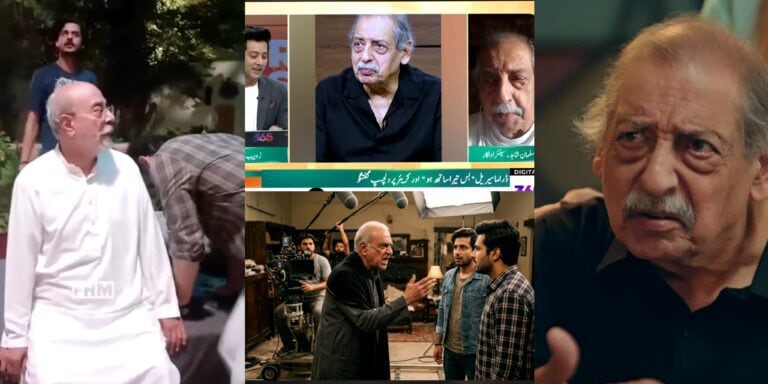
    Salman Shahid claims seniors also annoy youngsters

    The conversation sparked by Muhammad Ahmed’s recent remarks about the behaviour of junior actors on set has drawn a thoughtful and balanced response from veteran Pakistani actor Salman Shahid, who offered a perspective that many in the industry may have been thinking but had not yet said out loud. Shahid, who built his reputation through beloved comedy productions including Such Gup, Teen Bata Teen and Family Front before going on to appear in acclaimed dramas such as Seerhian, Aseer Zadi, Khuda Aur Mohabbat, Main Manto Nahi Hoon and Sher, appeared on Rise and Shine, hosted by Zohaib Hassan, where the conversation turned to Muhammad Ahmed’s complaints about junior actors on set. His response was measured, fair and grounded in his own experience of what set dynamics actually look like from the inside. “Listen, if juniors misbehave with seniors, there are also seniors who become unreasonable and behave the same way with younger actors,” he said. “It depends on a person’s nature. Sometimes, seniors also annoy juniors because they want to show their authority. They say things like, ‘You’re young, what do you know about acting? We’ve been doing this for so many years. You’re doing it wrong.’ So, this issue exists on both sides.” The point Shahid was making was not that Muhammad Ahmed’s concerns were invalid. It was that the problem is not generational but personal. Difficult behaviour on set is not exclusively a junior actor problem. It can come from anyone, regardless of how many years they have spent in the industry or how much respect they command. What made his remarks feel credible rather than defensive was the contrast he drew with his own approach to working life. He spoke with evident warmth about the aspects of set culture that he actively enjoys. “Personally, I love socialising,” he said. “I enjoy tea breaks and interacting with my co-stars on set. I really love it. It’s part of my social life, no matter what age my colleagues are. The image he painted was of someone who genuinely takes pleasure in the shared environment of a drama production, for whom the time between scenes is as much a part of the experience as the work itself. It was a reminder that sets are workplaces where people spend long hours together, and that the atmosphere on them is shaped by everyone present, senior and junior alike. Shahid is currently earning praise for his performance in the ongoing drama Bas Tera Saath Hu, which has resonated strongly with audiences. He is the son of legendary actress Begum Khursheed Shahid, is married to Tahira Ali, and has been a consistent and respected presence in Pakistani television for decades. His contribution to the current conversation about generational dynamics in the industry is characteristically grounded. He did not take sides. He simply told the truth.

  • | |

    Akbar Islam exposes reality of working with Sana Javed

    Sana Javed’s reputation within the Pakistani entertainment industry has been complicated for several years. Before her marriage to cricketer Shoaib Malik, a wave of allegations from colleagues and crew members described her as rude and difficult to work with on set, a controversy that temporarily cost her significant public goodwill. Following her marriage, she stepped away from acting for a period, and her return to screens in the ongoing drama Bas Tera Saath Ho has been watched closely by audiences curious about how the comeback would land. Now, a co-star from the same production has stepped forward to share his firsthand experience of working alongside her, and what he had to say runs contrary to the narrative that had built up around her. Akbar Islam, who plays a supportive neighbour uncle in Bas Tera Saath Ho, was asked directly about his experience working with Sana Javed and whether the stories about her difficult behaviour on set reflected the reality he had encountered. His response was thoughtful and contextual rather than simply defensive of the actress. He said that what people interpret as rudeness is not always what it appears to be. Actors, he explained, need to maintain a certain aura on set. A professional distance, a sense of presence and composure, is part of how performers protect the quality of the work and the integrity of their characters. What some people read as aloofness or arrogance may simply be an actor holding that professional boundary. He said this was the context in which he understood what had previously been said about Sana Javed, and about her co-star Farhan Saeed as well. As for his own experience working with them on Bas Tera Saath Ho, he described it plainly as a great one. He added that dynamics differ from set to set and production to production, suggesting that past accounts may have reflected specific circumstances rather than a fixed truth about either actor’s character. Sana Javed’s performance in Bas Tera Saath Ho has been receiving positive attention from viewers, marking a steady rehabilitation of her public image following the controversy that preceded her comeback. The drama itself has been well received, with Akbar Islam’s own performance drawing warm feedback from audiences who appreciate the warmth and depth he brings to his supporting role. His remarks offer a counterpoint to the accounts that once dominated the conversation about Sana Javed, framing the earlier criticism through the lens of professional behaviour rather than personal failing, and suggesting that the version of her colleagues have encountered during the filming of Bas Tera Saath Ho has been a different and more positive experience altogether.

  • | |

    Sindh IGP calls for proper investigation into Mir …

      Sindh Inspector General of Police (IGP) Javed Alam Odho has said that the death of Mir Raza is a tragic and deeply concerning incident, stressing that the case must be investigated and resolved properly  Speaking at a press conference in Sukkur, the Sindh police chief said that a committee had been formed to investigate the case and that a new investigation team would now carry out the inquiry. Commenting on the circumstances surrounding Mir Raza’s death, Odho said he believed that a communication gap or miscommunication had emerged in the case. He described the incident as unfortunate and said that the authorities were committed to ensuring that the matter was investigated in a proper and transparent manner. “We are not the policymakers; we are responsible for implementing the law,” the IGP said, adding that the investigation would eventually establish the facts surrounding the incident. Javed Alam Odho described the Mir Raza case as sensitive and said that both the police and the Sindh government wanted to ensure that it was handled appropriately. He said that much of the confusion surrounding the case had emerged because of the medical-legal report. According to him, an earlier report prepared by one doctor had presented in different findings, which contributed to uncertainty surrounding the case. The IGP said that a new committee had now been formed to investigate the matter and restore public confidence in the process. He explained that the previous committee had continued its work on the basis of the evidence that had been provided to it at the time. However, according to Odho, the evidence available to investigators had subsequently changed significantly. In light of the new evidence, he said, there was a need to restart the investigation using a different approach. The new investigation team has also been instructed to maintain open communication with the victim’s family and the media throughout the investigation, he added. Earlier, reports emerged that an attempt had allegedly been made to burn Mir Raza’s body with acid. According to forensic sources, traces of acid were reportedly found on his shirt, adding another dimension to the investigation. Meanwhile, the Sindh government had decided to have the Mir Raza case investigated through a judicial commission involving High Court judges. Sindh Law Minister Zia Lanjar said that a meeting had been held with the Chief Minister regarding the case. He said the government had decided to establish a judicial commission to investigate the circumstances surrounding Mir Raza’s death. Mir Raza Ali Khan went missing on July 28 from the Pakistan Employees Cooperative Housing Society (PECHS). According to reports, he left his home at around 4:09am in an online taxi. His body was recovered two days later from the Gulistan-e-Johar area. Police officials said that the body was found in a severely damaged condition and that Mir Raza had suffered a gunshot wound to the chest. Authorities also said that all of his social media accounts had been deactivated one day before his body was recovered, a development that investigators are expected to examine as part of the case. Mir Raza’s family has been seeking answers about the circumstances surrounding his death. His father previously said that Mir Raza was scheduled to get married on August 30 at Bait-ul-Mukarram Mosque in Gulshan-e-Iqbal. According to his father, Mir Raza had been extremely happy about starting a new chapter of his life and was looking forward to his upcoming marriage. The formation of a new investigation committee and the proposed judicial commission are expected to bring greater clarity to the case and address concerns raised by the victim’s family and the public.

  • |

    Kashmiri film Saffron Kingdom finds new home on Watermelon+

    Filmmaker Arfat Sheikh’s film Saffron Kingdom is now streaming worldwide. It has landed on the Palestinian-owned platform Watermelon+. The release comes after a strong run on the international festival circuit. Sheikh hails from India-Occupied Kashmir. He had earlier described the film as his attempt to reclaim his people’s stories from Bollywood. He said he wanted to take the pen back from an industry he views as a tool of oppression. The story follows Masrat, played by Diana Aras. She is a half-widow, a term used for Kashmiri women whose husbands have been forcibly disappeared by Indian forces. After her husband vanishes, Masrat flees the valley with her young son Rizwan, played by Alex Cheeks. The pair eventually settle in the United States. There, both mother and son must confront the trauma of their years spent living under occupation. Old memories resurface even as they try to build a new life. Sheikh said the film leans heavily on its female characters to carry the emotional core. He called the choice a deliberate allegory. According to him, the story centeres on two women rather than men. He explained that this reflects reality on the ground. Few men remain in India-Occupied Kashmir today, he said. The women who stay behind, he added, reveal what survival under occupation truly demands. Saffron Kingdom premiered at the Wake Forest Film Festival in the United States. It then travelled to six more countries. Screenings consistently drew full houses. The film found strong support from minority communities. Many viewers related to its themes of migration and inherited trauma. With its streaming debut, Saffron Kingdom now sits alongside other politically resonant titles on Watermelon+. These include Oscar nominee The Voice of Hind Rajab and Bafta-winning documentary Gaza: Doctors Under Attack. Pakistan’s 2025 Oscar submission The Glassworker is also part of the platform’s growing library. Together, these films reflect Watermelon+’s focus on stories of occupation, displacement, and resistance. The platform continues to build a catalogue centered on voices often left out of mainstream cinema.

  • |

    Karachi braces for cloudy, humid weather

    Karachi is expected to witness cloudy and humid weather over the next 24 hours, with light drizzle likely in some areas during the morning and evening, according to the latest forecast issued by the Pakistan Meteorological Department (PMD) on Monday. The Met Office said daytime temperatures in the port city are expected to remain between 33°C and 35°C, while the minimum temperature recorded early Monday was 28°C. Humidity levels remained high at 78 percent, making weather conditions feel warmer than the actual temperature. Sea breezes continued to blow across the city at a speed of around 15 kilometres per hour, providing some relief from the humid conditions. Weather officials said intermittent drizzle could occur in isolated parts of Karachi, particularly during the early morning and after sunset, although no widespread rainfall is expected. Meanwhile, the PMD has projected that August 2026 is likely to be drier than usual across much of Pakistan, with rainfall expected to remain below the long-term average in most regions. The monthly climate outlook, released on July 31, was prepared using forecasts generated by 10 internationally recognised seasonal climate prediction models, providing a comprehensive assessment of expected weather trends during the month. According to the department, large-scale climate patterns are expected to play a significant role in shaping weather conditions across the country. The El Niño-Southern Oscillation (ENSO) is currently in a positive phase and is likely to continue through August, while the Indian Ocean Dipole (IOD) has also shifted into a positive phase. Meteorologists say the combination of these climate systems is expected to suppress rainfall in many parts of Pakistan. As a result, below-average rainfall is forecast for most regions of the country. The greatest rainfall deficits are expected over northeastern and central Punjab, extending into adjoining parts of Khyber Pakhtunkhwa and Azad Jammu and Kashmir, as well as southeastern Sindh. In contrast, parts of Gilgit-Baltistan are expected to receive rainfall closer to normal levels during the month, making it one of the few regions where precipitation is not forecast to decline significantly. The PMD has also warned that temperatures across Pakistan are likely to remain above seasonal averages throughout August. The most pronounced rise in temperatures is expected over eastern Gilgit-Baltistan, central and northeastern Punjab, adjoining areas of Khyber Pakhtunkhwa, and northern Balochistan.

Leave a Reply

Your email address will not be published. Required fields are marked *