never felt this
| |

‘Never felt this helpless’: Dr Summaiya speaks…

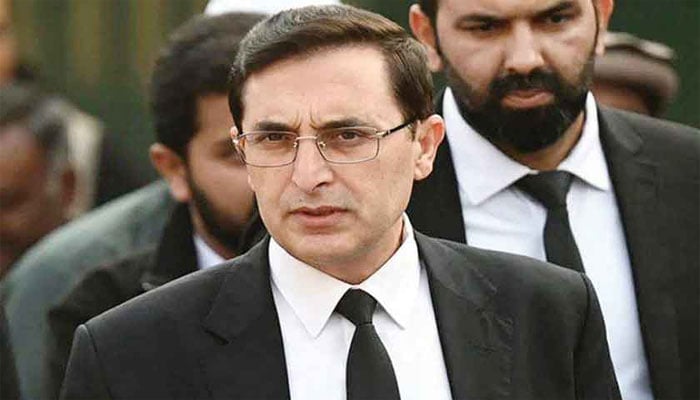
Police Surgeon Dr Summaiya Syed has expressed deep concern over developments in the Mir Raza Ali case, saying she has never felt so helpless during her four-year tenure as Karachi’s police surgeon and head of medico-legal services.

In a post on social media platform X, Dr Summaiya said she had frequently faced obstacles while trying to establish the truth and ensure justice. However, she said the situation surrounding the Mir Raza case had left her extremely exhausted.

“During my four-year tenure as Karachi’s medico-legal services/police surgeon, I have never felt this helpless,” she said. Dr Summaiya added that although difficulties had often come her way in the pursuit of truth and justice, she had now reached a point of extreme exhaustion.

The police surgeon had earlier written a letter to the Senior Superintendent of Police (SSP) East regarding the Mir Raza Ali case. In the letter, she pointed out what she described as serious shortcomings in the post-mortem report prepared by Dr Usama Sheikh.

Her concerns have raised questions about the findings recorded in the post-mortem report and the medico-legal procedures followed in the case. The matter has consequently drawn attention to the importance of accurate documentation and proper medical examination in sensitive cases.

Dr Summaiya’s latest remarks indicate her continued concern over the handling of the case. Her public statement has also highlighted the difficulties she says she has encountered while carrying out her professional responsibilities and seeking truth and justice.

Similar Posts

  • Junk food companies caught suing the laws meant to stop them

    The World Health Organization says something troubling is happening behind the scenes of the global obesity fight. Many of the same companies profiting from junk food sales are also dragging governments to court. Their goal is to block laws designed to curb the crisis. A joint investigation by The Guardian and Lighthouse Reports dug into this pattern. Academics and media groups across four continents took part. Together, they uncovered 235 lawsuits filed against governments over ultra-processed food policies. The cases span 2010 to 2025. Countries hit hardest include Mexico, Colombia, Brazil, the US, and the UK. Labelling rules were the most challenged policies. Junk food taxes came next, followed by marketing restrictions. Food companies did not fare well in court. They lost about 75 percent of decided cases. But WHO chief Tedros Adhanom Ghebreyesus says the scoreboard misses the real damage. It is the time these lawsuits consume that hurts most. Combined, the litigation added up to nearly 600 years. Each case dragged on for two and a half years on average. The costs go beyond legal bills. Governments spend billions on healthcare and courtroom battles alike. Tedros calls the resulting hesitation a “regulatory chill.” Long, expensive lawsuits make officials think twice before trying similar reforms. Researchers managed to trace plaintiffs in many of these cases. Of those identified, 38 percent came from just eight companies. The list includes Coca-Cola, PepsiCo, Mondelēz, Kellogg’s, Danone, Ferrero, Xignux, and Heartland Food Products Group. Some of these firms went a step further. They asked courts to keep their names hidden entirely. That secrecy tactic is not new. Researchers say it echoes moves once made by tobacco and alcohol companies. Both industries faced similar scrutiny in the past and used the same playbook. Tedros gave credit where it is due. He noted some companies have reformulated their products in good faith. Still, he insists that’s not enough while lawsuits keep piling up. There is also a wealth gap at play. Most legal battles are happening in richer nations. Poorer countries face the same obesity burden. But they have far fewer resources to defend new health policies if challenged in court. The scale of the crisis makes all this urgent. Nearly a billion people worldwide are currently living with obesity, per WHO estimates.

  • |

    Powerful El Niño could push 49 million more into …

    A powerful El Niño weather event could push nearly 49 million more people into acute hunger by the end of 2027, the United Nations’ World Food Programme (WFP) has warned, raising fresh concerns about a worsening global food crisis driven by climate change and extreme weather. According to a new WFP report released on Wednesday, there is an 81 percent probability that the developing El Niño will become a very strong event, with Pacific Ocean temperatures already reaching their highest levels since at least 1982. If current forecasts hold, it could become the strongest El Niño recorded since 1950. El Niño is a naturally occurring climate pattern that warms surface waters in the central and eastern Pacific Ocean. Although it originates in the Pacific, it disrupts weather systems worldwide, often triggering droughts, delayed monsoons, floods and unpredictable rainfall that damage crops and threaten food supplies. The WFP estimates that 274 million people across 45 vulnerable countries could face acute food insecurity by the end of next year, representing a 22 percent increase from current crisis levels. Central America and Southern Africa are expected to suffer the most severe consequences. Food insecurity in Central America could rise by 83 percent, while Southern Africa may experience a 75 percent increase. More than 12 million additional people in Southern Africa, South America and the Caribbean could struggle to access enough food. Jean-Martin Bauer, Director of WFP’s Food Security and Nutrition Analysis Service, said previous strong El Niño events have repeatedly triggered major hunger emergencies. “These are events that in the past have caused widespread food crises,” Bauer said, urging governments and humanitarian organisations to prepare before conditions worsen. Although global food markets entered this El Niño cycle in a relatively stable position following strong harvests in 2025. Bauer warned that ongoing conflict in the Middle East and possible crop failures caused by extreme weather could push food prices higher. While worldwide price spikes are not considered inevitable, regional shortages could make food increasingly unaffordable for millions of vulnerable families already struggling with poverty. The report also highlights another growing concern—declining humanitarian funding. Budget cuts from major donors in the United States and Europe have significantly reduced WFP’s ability to monitor food security. Household surveys dropped from 1.1 million in 2024 to around 800,000 in 2025, with further reductions recorded this year due to funding shortages. Experts warn that limited data collection could delay the identification of emerging hunger hotspots, making humanitarian responses slower and less effective. The WFP also forecasts below-average rainfall across parts of East Africa, the Sahel, Central America and the Caribbean, while countries such as Somalia could face an increased risk of flooding. Across South and Southeast Asia, delayed monsoons, drought and localized floods are expected to disrupt agricultural production and livelihoods. Despite the alarming outlook, the UN agency stressed that forecasts remain uncertain and impacts will vary from region to region. To reduce future losses, the WFP has expanded its anticipatory action programmes in 18 countries, providing cash assistance and emergency support to more than 1.3 million people ahead of expected climate shocks. The agency says acting early will be critical to preventing millions more people from falling into hunger as one of the strongest El Niño events in decades continues to develop.

  • | |

    The Shards star Homer Garrett reveals the first pe…

    Homer Garrett is preparing to make his acting debut in one of television’s most highly anticipated thriller series, The Shards, and the rising star says there was one person he immediately wanted to share the life-changing news with. Speaking about his first major acting role, Garrett revealed that the very first phone call he made after learning he had been cast was to his father, Richard Garrett. The young actor described his father as a constant source of encouragement and professional support throughout his journey into the entertainment industry. His heartfelt revelation offers a glimpse into the close bond the two share as Homer steps into the spotlight. The Shards, created by acclaimed television producer Ryan Murphy, is based on Bret Easton Ellis’ bestselling 2023 novel of the same name. The psychological thriller has generated significant buzz thanks to its dark storyline, star-studded creative team, and Murphy’s reputation for producing hit series. Garrett takes on the role of Robert Mallory, marking the first leading role of his acting career. (People⁠) Reflecting on the emotional moment he received the news, Garrett said his father was the first person he wanted to tell because he had always believed in him. He explained that Richard Garrett had supported his ambitions from the beginning, encouraging him to pursue acting while offering guidance whenever challenges arose. The actor admitted landing such a significant role still feels surreal. Taking the lead in a major television adaptation is a dream opportunity for any newcomer, and Garrett said he is grateful to begin his career with a project led by Ryan Murphy, one of Hollywood’s most successful television creators. The upcoming series follows a gripping mystery set within an elite Los Angeles high school during the 1980s. As unsettling events unfold, Robert Mallory becomes entangled in a story filled with suspense, secrets, and psychological twists. Fans of Bret Easton Ellis’ novel have eagerly awaited the adaptation, with expectations running high for Murphy’s interpretation of the acclaimed book. Garrett praised the cast and crew for helping him feel comfortable throughout production despite it being his first professional acting experience. He said working alongside experienced performers allowed him to grow both personally and professionally while gaining confidence in front of the camera. His comments about his father have also resonated with fans, highlighting the importance of family support during career milestones. While Hollywood success often focuses on glamorous premieres and major roles, Garrett’s story serves as a reminder that personal encouragement behind the scenes can be just as meaningful. As anticipation builds for The Shards, Garrett is emerging as one of Hollywood’s promising new talents. With Ryan Murphy leading the adaptation and Bret Easton Ellis’ celebrated novel providing the foundation, expectations for the series continue to grow. For Garrett, however, one memory stands above the rest. Before the excitement of filming began, before the headlines and interviews, he simply picked up the phone to thank the person who had believed in him from the very beginning—his father.

  • | | |

    Pakistan seeks to revive Iran-US mediation efforts

    ISLAMABAD: Pakistan is making fresh diplomatic efforts to revive its role as a mediator between Iran and the United States. Interior Minister Mohsin Naqvi travelled to Tehran on Tuesday for talks with senior Iranian officials. During his visit, he met Iranian Foreign Minister Abbas Araghchi and President Masoud Pezeshkian. The visit is aimed at keeping Pakistan’s mediation channel active. Islamabad is seeking progress on the Islamabad Memorandum of Understanding (MoU), which emerged from earlier efforts to ease tensions between Iran and the United States. Naqvi was received in Tehran by Iranian Interior Minister Eskandar Momeni. He later held discussions with Araghchi on bilateral relations and regional developments. Pakistan’s diplomatic efforts had slowed after Oman became more directly involved in talks concerning arrangements for navigation through the Strait of Hormuz. However, recent contacts between Oman and Iran appear to have created an opportunity for Islamabad to renew its broader mediation initiative. A diplomatic source said Pakistan wants to follow up on the Islamabad MoU and encourage both sides to return to a wider diplomatic process. The situation around the Strait of Hormuz remains particularly sensitive. The waterway is vital for international energy and trade routes. Iran has maintained that the Islamabad MoU remains the key framework for resolving the wider dispute. Tehran has also linked the full reopening of the Strait of Hormuz to implementation of the commitments contained in the agreement. Iran and Oman have been discussing arrangements for safer passage through the strategic waterway. Their discussions include possible shipping routes and mechanisms for managing navigation. However, Tehran has indicated that any understanding with Oman would initially address technical matters. It would not necessarily represent a complete resolution of the wider dispute. Iran has also called for concrete assurances from Washington before moving towards the next stage of negotiations. Tehran wants guarantees that can be verified rather than verbal commitments. Pakistan has continued to encourage dialogue between the two sides. Defence Minister Khawaja Asif also indicated that Washington and Tehran could be moving closer to an understanding. He said recent signals suggested that the two countries were again moving towards a possible peace arrangement or deal. Meanwhile, Pakistan has invited Iranian Foreign Minister Araghchi and Iranian Parliament Speaker Bagher Ghalibaf to visit Islamabad. Iranian officials have said the visit would take place at an appropriate time. Naqvi’s trip to Tehran is therefore significant because Islamabad is maintaining direct engagement instead of waiting for the Iranian delegation to visit Pakistan. During his meeting with President Pezeshkian, Naqvi described Pakistan-Iran relations as strong and longstanding. He conveyed Islamabad’s intention to further strengthen ties with Tehran. Pezeshkian also stressed the importance of bilateral relations. He said stronger cooperation between Pakistan and Iran could serve their national interests and contribute to regional stability. The discussions come amid broader diplomatic and security developments in the region. Pakistan recently signed a trilateral defence agreement with Saudi Arabia and Turkiye. Islamabad has maintained that the arrangement is defensive and is not directed against any country. Deputy Prime Minister and Foreign Minister Ishaq Dar also discussed the agreement with his Iranian counterpart. He briefed Araghchi on its objectives and stressed its focus on strategic cooperation and regional peace. At the same time, US President Donald Trump has adopted a tougher tone towards Iran’s negotiating team. Trump described Iranian negotiators as difficult and accused them of making commitments privately and later presenting them differently in public. He also warned that Iran’s economic problems and inflation were becoming increasingly difficult to sustain. Trump said Washington could continue applying economic pressure on Tehran. He also suggested that the United States could take stronger measures if necessary. The contrasting positions underline the difficulties facing diplomatic efforts. Pakistan is now attempting to keep communication channels open with Tehran while encouraging a broader political process involving Iran and the United States.

  • Thai Government Pushes Plan to Get 300,000 EVs on the Road

    BANGKOK — The Ministry of Transport is preparing an action plan to boost electric vehicle adoption by 300,000 vehicles, supported by tax incentives and a car trade-in scheme aimed at accelerating the shift away from petrol-powered transportation. Thailand pushes to put electric cars on the road Deputy Transport Minister Siripong Angkasakulkiat outlined two key measures […]

  • | | |

    UK border crisis: new record as 230 migrants cross…

    The UK’s ongoing small boat crisis has come under renewed scrutiny after around 230 migrants crossed the English Channel and arrived in Britain, raising fresh questions about the government’s efforts to tackle irregular migration. The latest arrival comes just 17 days after 165 people crossed the Channel in a single day, according to reports. The new figure has added to growing political pressure on the UK government as ministers face continued challenges in preventing dangerous journeys across one of the world’s busiest shipping routes. Hundreds of people are believed to have reached the UK by small boats during the current week, with reports putting the number at more than 900. The continued crossings have become a major political issue, with the government under pressure to demonstrate that its border policies can reduce the number of people making the journey. People-smuggling networks are believed to charge migrants thousands of pounds for the dangerous passage. Critics say the criminal gangs running these operations make substantial profits while placing migrants’ lives at serious risk by using overcrowded and often unsuitable boats. The latest development follows an incident last week in which a small boat caught fire while attempting to cross the Channel. A total of 173 people were reportedly rescued following the incident, highlighting the dangers faced by those attempting the journey. Shadow Home Secretary Chris Philp criticized the French authorities over the continued crossings. He argued that French officials could have prevented boats of this size from entering deeper waters but failed to do so. The issue has also drawn strong criticism from Reform UK leader Nigel Farage. He has called for small boat crossings to be treated as a national security emergency, reflecting the increasingly prominent role of immigration in Britain’s political debate. The UK government has repeatedly pledged to tackle illegal immigration and disrupt the criminal networks responsible for organizing Channel crossings. However, the continued arrival of boats demonstrates the difficulty of stopping the journeys despite increased enforcement measures and cooperation with French authorities. The small boat crisis has become one of the most contentious issues in British politics, with politicians divided over how best to address irregular migration. While supporters of tougher policies argue that stronger border controls are urgently needed, others have stressed the need to address the criminal smuggling networks and the wider factors driving people to attempt dangerous crossings. With hundreds more people arriving in Britain, pressure on the government is likely to remain intense as it seeks to reduce Channel crossings and restore public confidence in its immigration strategy.

Leave a Reply

Your email address will not be published. Required fields are marked *