flood death toll

Flood Death Toll Climbs to 162 in Southern Thailand as Relief Operations Accelerate

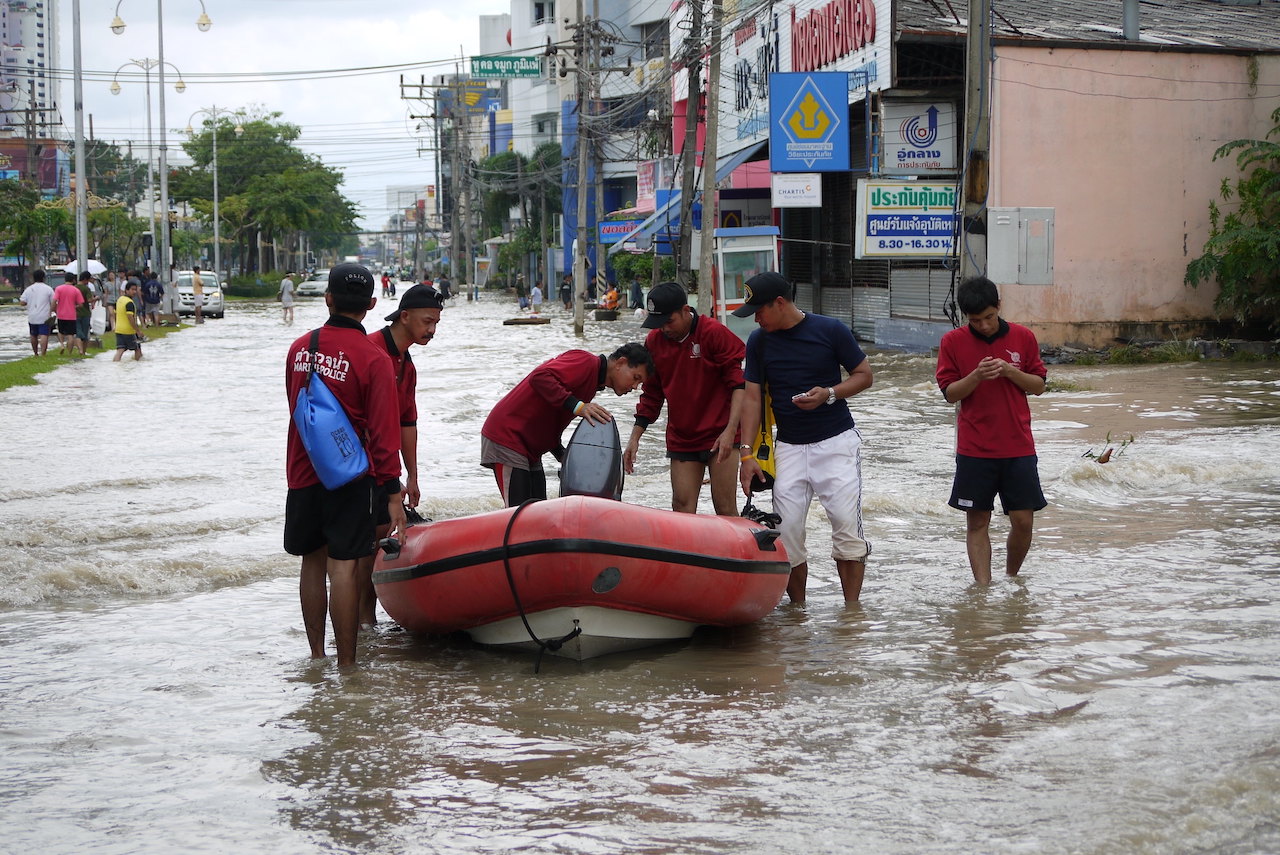
BANGKOK – The Emergency Flood Situation Operations Center (EOC) reported on November 29 that severe flooding across eight southern provinces has claimed 162 lives, with Songkhla province suffering the heaviest loss at 126 fatalities. While authorities confirmed that water levels and rainfall are finally receding, the scale of the disaster continues to strain essential services, with hospitals, utilities, and rescue agencies operating under significant pressure as recovery efforts expand.

Anutin Apologises for Hat Yai Flood Management

The government moved to address public concern regarding social media posts showing the Ministry of Public Health preparing 400 body bags in addition to 1,500 bags donated by private groups. Officials clarified that hospitals routinely maintain such reserves and that the donated bags were not specially requested for this disaster, emphasizing that the official death toll reflects only verified fatalities.

During a briefing at Government House, Spokesperson Siripong Angkasakulkiat stated that the director of the Emergency Flood Operations Center has invited civil society groups, including the Mirror Foundation, to provide input on rehabilitation plans for Songkhla. The government expressed gratitude to these and other organizations assisting affected communities, with discussions focused on accelerating recovery as weather conditions improve.

Officials anticipate that remaining floodwaters will be drained within three to five days. The Provincial Waterworks Authority has received instructions to restore tap-water supply immediately, with Prime Minister Anutin Charnvirakul emphasizing that service should resume even if initial flow is weak. Electricity has been restored to more than 80% of affected households, with approximately 20,000 connections still pending safety inspections.

Local administrations have launched large-scale cleaning campaigns and established temporary waste disposal points to reduce travel burdens for residents. The Ministry of Transport has designated vehicle relocation areas while national water authorities assess suitable terrain for water storage.

Southern Thailand Flood Death Toll Soars to 145, Recovery Efforts Intensify

In a critical development, the Thai Red Cross issued an urgent appeal for blood donations, reporting that only 20% of the required supply for flood-affected hospitals has been delivered. The Southern Blood Service Region 12 in Hat Yai remains inoperable due to flood damage, limiting mobile donation units and affecting supply to hospitals across seven southern provinces. The National Blood Service is coordinating shipments from other regions but warns that supplies remain critically low for over 135 hospitals, with donations being accepted at centers in 11 provinces including Chiang Mai, Khon Kaen, and Phuket.

-Thailand News (TN)
Similar Posts

  • | | |

    Mir Raza was shot 4 times, rejects suicide attempt

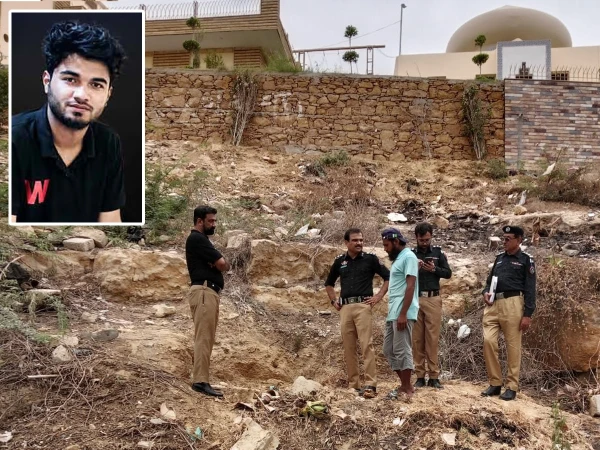
    Karachi: Sindh Governor Nahal Hashmi has claimed that the death of young businessman Mir Raza Ali was not a case of suicide, stating that the victim had sustained four bullet wounds. His remarks came while addressing a ceremony held under the Prime Minister’s Youth Laptop Program in Karachi. Speaking to students at the event, the governor said it was an honor to participate in the distribution of laptops, describing the initiative as a significant step toward empowering Pakistan’s youth through education and technology. He credited Prime Minister Shehbaz Sharif for prioritizing educational development and providing students with modern learning opportunities. Hashmi emphasized the importance of education by referring to the Quranic command “Iqra” (Read), saying that knowledge is the foundation of progress. He added that equipping young people with laptops would help them develop the skills needed for the digital era and contribute to the country’s future. Highlighting Pakistan’s technology ambitions, the governor said the country aims to achieve $25 billion in IT exports. He also praised the success of talented students from Karachi who recently established a company that was reportedly sold to Elon Musk for millions of dollars, calling it a source of pride for the nation. The governor reiterated his support for national unity, stressing that Pakistan was founded as a free and sovereign state in line with the vision of Quaid-e-Azam Muhammad Ali Jinnah. He also clarified that he serves as a constitutional governor and remains committed to fulfilling his responsibilities under the Constitution. Commenting on law and order, Hashmi urged authorities to further strengthen security measures in Karachi, noting that larger cities naturally face greater crime-related challenges. He said the city’s crime rate has improved significantly compared to previous years but acknowledged that more work is needed. Referring to the ongoing investigation into Mir Raza Ali’s death, the governor stated that, according to the information available to him, the victim had been shot four times and had not died by suicide. He noted that the investigation is still underway and expressed sorrow over the loss of a young life, saying the final conclusions would depend on the outcome of the official probe.

  • Cambodia Pushes for Immediate Ceasefire as Border Talks Resume

    BANGKOK – Cambodian Defence Minister Tea Seiha has formally called for an immediate end to hostilities and full implementation of existing ceasefire agreements in a letter to his Thai counterpart. The proposal, dated December 22, urges a return to the terms of the Kuala Lumpur ceasefire agreement signed on July 26 and the Joint Declaration […]

  • Thailand to Enter Summer on February 22, Temperatures Expected to Soar to 42°C in Northern Regions

    BANGKOK — Thailand is set to officially transition into its hot season on February 22, with meteorological authorities warning that temperatures in some northern provinces could climb above 42 degrees Celsius (107.6 degrees Fahrenheit) during the peak of the summer months. The announcement was made Thursday by the Meteorological Department, signaling the end of the […]

  • | | | | |

    Trump says Iran serious about talks but not ready …

    US President Donald Trump has said Iran is showing greater seriousness toward negotiations than before, but cautioned that Tehran is still not prepared to reach a final agreement with Washington. Speaking to reporters at the White House, Trump said communication between the United States and Iran remains ongoing, although the prospects for an immediate breakthrough are still uncertain. According to media reports, the US president noted that Iran’s approach has changed compared with earlier stages of the diplomatic process, describing the country’s current attitude toward negotiations as more constructive. “Iran appears to be taking the talks more seriously than before,” Trump said, while emphasizing that a final deal is not yet within reach. He added that although discussions are continuing, significant progress is still needed before both sides can arrive at a mutually acceptable agreement. Trump said his administration remains committed to pursuing diplomatic efforts and is closely monitoring developments. He stressed that the coming days and weeks would be important in determining whether the ongoing contacts can lead to meaningful progress. The latest remarks come amid continued tensions between Washington and Tehran, with diplomatic channels remaining active despite months of regional instability and military confrontations. While both sides have maintained communication, key differences over major issues have continued to prevent a comprehensive agreement. Neither US officials nor Iranian authorities have announced any new breakthrough in the negotiations following Trump’s comments. Analysts say Trump’s latest assessment may signal cautious optimism, but they also note that complex disputes remain unresolved. They believe any potential agreement would require extensive negotiations and compromises from both sides before a deal could be finalized. For now, Trump’s message suggests that while diplomacy remains alive, expectations for an immediate agreement should remain measured. Observers will be watching closely for any signs of further progress as discussions continue, with the outcome likely to have significant implications for regional stability and US-Iran relations.

  • | |

    Prosecution raises objections over Anmol Pinky cas…

    Three drug-related cases involving accused Anmol Pinky came under discussion before the Judicial Magistrate South court, where the prosecution raised objections over deficiencies in the police challans. Police had submitted interim charge sheets in all three cases to the prosecution for review. However, the Deputy District Public Prosecutor found several important details missing from the documents and returned them to the police with instructions to make the required corrections. The prosecution pointed out that the interim challans did not contain any mention of proceedings to declare Anmol Pinky a proclaimed offender. The prosecutor directed police to provide complete details of the legal proceedings related to her status and incorporate them into the revised challans. Another objection concerned accused persons who had already been acquitted in the cases. According to the prosecution, the police challans failed to provide details about those acquittals. The police were therefore instructed to attach copies of the relevant acquittal orders to the case records so that the challans contain complete information about all accused persons and the outcome of proceedings against them. The prosecutor directed the investigating authorities to address all the objections before resubmitting the documents. The revised interim challans will be presented to the prosecution after the required amendments and additional records have been included. The development comes as legal proceedings continue in the three drug cases against Anmol Pinky. The prosecution’s objections mean that the interim challans have not yet been accepted in their submitted form and must first be corrected according to the instructions issued by the prosecutor.

  • A Long War Ahead: Diplomacy, Nerves, and a Region …

    The Middle East appears to be entering a prolonged phase of strategic tension—one defined not only by the possibility of conflict, but by a high-stakes battle of nerves accompanied by intense diplomatic maneuvering. The American Centcom has briefed the president about the next phase of attacks that Centcom thinks will decaptilze the Iranian power. They warn that they will target the Iranian power plants and with meeting Israeli pm natanyahu also assured and second the trump decision. In response the Iranian also ready to attack in Israeli power plants and in Gcc American bases. So a long war ahead. At the center of this evolving landscape stands Mohammed bin Salman (MBS), whose regional vision and leadership now face one of their most critical tests.   Over the past decade, the Gulf Cooperation Council (GCC), under Saudi Arabia’s influence, aligned itself closely with the United States. This alignment brought undeniable short-term gains: an influx of multinational corporations, the emergence of technology hubs, ambitious infrastructure projects like NEOM, and a rebranding of the Gulf as a global tourism and investment destination. These developments projected an image of modernity and economic diversification—an intentional shift away from rigid conservatism.   However, beneath this transformation lies a deeper geopolitical calculation. The United States sought not only economic engagement but strategic positioning in the Middle East, particularly in the context of its long-standing rivalry with Iran. By encouraging normalization with Israel through frameworks like the Abraham Accords, Washington aimed to consolidate a regional bloc that could counterbalance Tehran.   This strategy, while effective in shaping alliances, also came at a cost. Iran was increasingly portrayed in Western narratives as rigid, anti-modern, and resistant to democratic values. Whether accurate or exaggerated, this portrayal contributed to its diplomatic isolation. Yet, Iran has not remained passive. Instead, it has adopted a dual-track approach—maintaining a posture of resistance while keeping diplomatic channels open. This calculated balance has allowed Tehran to assert its relevance in any future regional order.   Recent developments suggest that the initial cohesion within the GCC may be more fragile than it appeared. Trust built over decades can erode rapidly under pressure, and shifting geopolitical realities have exposed underlying vulnerabilities. If Iran successfully convinces regional actors that its inclusion is essential for stability, it could reshape the Middle Eastern power structure in its favor.   Meanwhile, other key players—Pakistan, Qatar, and Turkey—have attempted to position themselves as mediators. However, their efforts have been slow and, at times, constrained by their own strategic dependencies. Qatar has shown willingness to facilitate dialogue, but Turkey’s independent stance and Pakistan’s cautious approach—often influenced by its ties with Washington—have limited the effectiveness of a unified diplomatic front.   The question, then, is whether diplomacy can still alter the trajectory. Iran’s willingness to engage, even while projecting strength, indicates that a negotiated outcome remains possible. If Tehran can compel regional actors, including Saudi Arabia, to broaden the dialogue and incorporate Turkey into a more inclusive framework, it may shift the balance away from confrontation.   For the United States, the situation presents no clear path to victory. Military escalation risks triggering a wider, multi-stage conflict that could engulf the entire region, placing GCC states in a precarious position. What may have once been framed as a strategic contest could evolve into a prolonged struggle driven by perceptions of credibility and prestige.   In this volatile environment, the risk is not just war—but a drawn-out cycle of escalation and retaliation. Iran, despite sustained pressure, appears increasingly resilient, with its strategic resolve hardening over time. Conversely, the Gulf states must reassess whether their current alignments serve long-term stability or merely short-term gains.   Ultimately, the region stands at a strong moment. The path forward will depend not only on military power but on the success of diplomacy in bridging deep-seated divides. There remains a possibility—however uncertain—that actors like China and Russia could play a crucial role in de-escalation. But trump also hinted that both assured him their neutrality during Iran war. The drones however allegedly counter thinks a Russian help under the war table. If such efforts succeed, they may prevent the Middle East from sliding into a conflict whose consequences would extend far beyond its borders.

Leave a Reply

Your email address will not be published. Required fields are marked *