jpmc doctor seeks
| |

JPMC doctor seeks relief amid patient death contro…

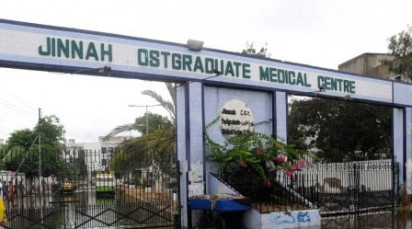
A senior doctor at Jinnah Postgraduate Medical Centre (JPMC) has asked to step down from her responsibilities amid controversy surrounding the death of a 65-year-old patient who was shifted from the hospital’s emergency department to the National Institute of Cardiovascular Diseases (NICVD) on July 28.

Dr Sanobar Sikandar, JPMC’s only senior emergency medicine specialist, submitted a request to the hospital’s Executive Director seeking relief from her duties as an assistant professor of medicine. She cited mounting professional pressure, internal interference and what she described as an unhealthy working environment.

Dr Sanobar said the hospital administration criticised her after asking her to explain the circumstances surrounding the patient’s death. She said the situation had made it increasingly difficult for her to continue managing her medical, teaching and administrative responsibilities effectively.

In her application, she highlighted what she described as a lack of professional respect in the emergency department, political interference and inappropriate conduct by some junior doctors. She said these issues had caused her severe mental stress and made it difficult to continue working under the prevailing conditions.

The Young Doctors Association (YDA) Sindh has backed Dr Sanobar and urged the JPMC administration to address the dispute immediately.

YDA Sindh Chairman Dr Mehboob Noonari said Dr Sanobar is the hospital’s only FCPS assistant professor in emergency medicine. He noted that she also serves as faculty for the FCPS programme and supervises trainee doctors.

Dr Noonari warned that her departure could seriously disrupt emergency medicine training at JPMC and may even put the FCPS programme at risk of closure.

He also alleged that the administration was pressuring Dr Sanobar to protect the doctor who was in charge of the night shift when the incident occurred. He questioned why the night-shift in-charge was being shielded and demanded that hospital authorities clarify the matter.

The YDA chairman further claimed that senior doctors had questioned Dr Sanobar over her decision to issue an explanation regarding the patient’s death, raising concerns about the handling of the case within the hospital.

Similar Posts

  • | |

    HSA controversy: representation before president a…

    Islamabad: A representation submitted before the President of Pakistan has requested an early decision in a workplace harassment case involving Dr. Shahzad Ali Khan and Dr. Ayesha Khan, after the applicant claimed the matter remained pending despite the completion of hearings. The application was addressed to the President of the Islamic Republic of Pakistan through the Secretary to the President, seeking directions for an early decision on Representation No. 18/WO/2026 pending before the Consultant to the President. According to the application, the Federal Ombudsperson for Protection Against Harassment of Women at Workplace (FOSPAH) issued an order on 13 February 2026, dismissing Dr. Shahzad Ali Khan’s complaint and ordering his removal from service. The applicant later filed a representation under Section 9 of the Protection Against Harassment of Women at Workplace Act, 2010. The representation states that both parties appeared before the Consultant to the President and presented their arguments. After hearing the matter, the Consultant reserved the decision on 12 May 2026, but according to the application, the final decision has not yet been announced. The applicant argued that unnecessary delay in deciding the representation is increasing difficulties and hardship, requesting that the matter be decided without further delay according to legal principles of timely justice. The case relates to proceedings under the workplace harassment law involving Dr. Shahzad Ali Khan and Dr. Ayesha Khan. The President Secretariat had earlier issued hearing notices regarding the representation against the FOSPAH order dated 13 February 2026 in Complaint No. FOH HQR H/0341/2025. The President Secretariat scheduled hearings before Mr. Justice (Retired) Irfan Qadir, Consultant Legal Affairs to the President, first on 2 April 2026 and later refixed the matter for 12 May 2026. The notices stated that the matter would be decided on the basis of available record. The dispute has attracted attention because the representation challenges a previous order passed by FOSPAH, while the final decision on the pending matter remains awaited. The available record shows that filing a representation does not itself establish innocence or final relief. The matter remains subject to examination under the applicable legal process, and the final outcome depends on the decision of the competent authority.

  • |

    Government adjusted petrol and diesel rates

    The federal government has announced the rate of petrol by Re0.94 per litre while raising high-speed diesel (HSD) by Re0.54 per litre. Under the newly adjusted tariffs, petrol will now sell at Rs324.98 per litre, whereas HSD will cost consumers Rs382.79 per litre. Despite these minor shifts, significant fiscal levies remain embedded in local pump prices, with taxes and duties standing at Rs114 per litre for petrol and Rs100 per litre for diesel. According to official directives issued by the Petroleum Division, the revised rates take effect immediately for August 13. This latest decision highlights a broader downward trend from the historic spikes observed earlier this year. Fuel prices experienced an unprecedented surge following the breakout of the US-Iran conflict in late February. HSD, which traded around Rs281 per litre before the geopolitical crisis, climbed sharply to reach an all-time peak of Rs520.35 on April 3 before gradually retreating. Similarly, petrol prices escalated from Rs266 in early March to a maximum height of Rs458.41 on the same April date before cooling down to present levels. In a structural shift to handle ongoing market volatility, Petroleum Minister Ali Pervaiz Malik revealed that fuel pricing will transition to a daily adjustment mechanism. While the government had temporarily relied on weekly pricing revisions and targeted subsidy schemes since March to buffer against Middle Eastern supply disruptions, authority over price setting has now been formally handed over to the Oil and Gas Regulatory Authority (OGRA). Under the approval of the Prime Minister and the federal cabinet, OGRA will directly track daily international market fluctuations to determine local retail costs. However, this policy pivot has met swift pushback from commercial stakeholders. The All Pakistan Dealers Association strongly rejected the transition to daily rate changes, warning that the organization is formulating a formal protest strategy to oppose the decision.   The economic stakes of these pricing shifts remain high across every level of society. Petrol costs directly influence everyday commuters, small vehicle operators, rickshaw drivers, and motorcycle owners, placing immediate financial pressure on middle- and lower-income households when rates rise. On the other hand, diesel price movements carry a broader inflationary impact, as HSD powers heavy transport fleets, agricultural machinery, power generation plants, and industrial backup generators. Together, petrol and diesel form the bedrock of the national energy supply and state revenue, generating massive combined monthly sales of 700,000 to 800,000 tonnes, compared to a meager 10,000 tonnes of monthly demand for kerosene. Daily adjustments will now determine how these vital economic drivers impact consumers nationwide.

  • | |

    Punjab teachers union rejects pay hikes, demands b…

    LAHORE: The Punjab Teachers Union has rejected the recent increases in salaries and pensions announced by the provincial government, describing them as inadequate in the face of rising inflation and calling for the restoration of cutbacks in employee benefits. Central President of the Punjab Teachers Union Rana Anwar-ul-Haq, along with Yasin Warraich, Rana Liaquat and other office-bearers, said the government must end what they described as discriminatory economic treatment of public-sector employees. The union leaders said inflation had reached unprecedented levels, with prices now rising almost daily, making it increasingly difficult for government employees to meet their household expenses. They termed the announced 7 per cent salary increase and 3.5 per cent pension increase insufficient, arguing that the relief did not correspond with the rapidly rising cost of living. They demanded that Punjab employees receive salary increases at par with federal government employees. They also called for the restoration of cuts affecting leave encashment, pensions and gratuity. Yasin Warraich demanded a 45 per cent Disparity Reduction Allowance for Punjab government employees, arguing that denying them such an allowance while similar measures were being considered or implemented at the federal level would amount to unfair treatment. The union representatives also criticised the provincial government for failing to address the growing gap in compensation among public-sector employees. They said Punjab employees should not be deprived of financial benefits available to workers in other parts of the country. Rana Liaquat said employees affiliated with the All Government Employees Grand Alliance (AGEGA) Punjab remained united under the leadership of Chairman Khalid Javed Sangheera and expressed full confidence in the alliance’s leadership. The teachers’ representatives said they would honour the agreement reached between the two AGEGA groups at Masjid-e-Shuhada on June 16. They further announced that the Punjab Teachers Union would fully implement the protest schedule issued under the umbrella of AGEGA. The union leaders maintained that employees would continue their struggle for equitable salaries, pensions and service benefits until their demands were addressed.

  • | |

    Colombia’s death toll from earthquake climbs…

    Rescue crews continue combing through collapsed buildings across western Colombia after a powerful magnitude 7.4 earthquake struck the region on Monday, August 10, with officials confirming the death toll has risen to at least 164 people. Authorities said more than 880 people have sustained injuries, while over 3,200 remain unaccounted for as soldiers, emergency responders and local volunteers work through debris from dozens of collapsed structures. Thousands of residents have been forced from their homes since the quake struck, adding to the scale of the humanitarian response now underway. The earthquake flattened multi story buildings in cities including Pereira and Cali, and severely damaged one of the towers of a historic cathedral in Manizales. The tremor originated at an intermediate depth with its epicenter located near San José del Palmar in the western department of Chocó, causing widespread destruction across Pereira, Cali, Manizales and other communities in Colombia’s coffee growing region. Residential buildings, hospitals, schools and key infrastructure, including several regional airports, all suffered severe damage in the quake. At one city hospital, several upper floors, including sections dedicated to pediatric care, collapsed inward, trapping some patients inside and forcing hospital staff to treat roughly 600 additional patients outdoors on a street littered with debris, according to hospital director Irne Torres Castro, who spoke to a Colombian television network. That same city saw some of the earthquake’s most extensive destruction, with entire residential blocks reduced to piles of concrete and twisted metal. Video circulating online captured buildings shaking violently as residents fled into the streets, while separate footage showed a regional airport swaying dramatically during the quake as large sections of ceiling came down around people sheltering inside. Among the most widely shared images online is footage showing the Cathedral Basilica of Our Lady of the Rosary shaking and partially collapsing. The cathedral, built in the 1920s, holds the distinction of being Colombia’s tallest cathedral and ranks among the highest neo Gothic churches anywhere in the Americas. The disaster struck just days after Abelardo De La Espriella was sworn in as Colombia’s president, immediately confronting his new administration with a major crisis. The earthquake also comes with memories still fresh of a pair of devastating earthquakes that struck neighboring Venezuela in June. Colombia’s national government has declared a state of emergency and mobilized the military, police and specialized rescue units to lead recovery operations, while accepting offers of international assistance as the search for survivors continues. The disaster adds to a string of major seismic events across the region in recent months, underscoring the ongoing vulnerability of Andean nations to powerful earthquakes and the strain such disasters place on emergency infrastructure even in areas with established disaster response systems.

  • Songkran Road Toll at 71, With 317 Injured After Two Days

    BANGKOK — Seventy-one people have been killed and 317 others injured in traffic accidents during the first two days of the Songkran festival holiday period, according to figures released by the Ministry of Public Health on Sunday. Twenty Road Fatalities on First ‘Dangerous Day’ of Songkran Holidays The victims were involved in 344 traffic accidents […]

  • | | |

    Corruption cases transferred back to NAB courts in…

    KARACHI: Corruption cases that had been shifted from accountability courts to anti-corruption courts have now been transferred back to the National Accountability Bureau (NAB) courts. The development came after a request from a NAB prosecutor, following a Sindh High Court ruling that declared the earlier transfer of the cases to anti-corruption courts invalid. The accountability court has initiated proceedings to revive 15 references that were previously transferred. The Sindh High Court had directed that the cases pending before accountability courts be returned to NAB courts after setting aside the order through which they were moved to anti-corruption courts. NAB subsequently filed an application seeking restoration of the cases in compliance with the high court’s decision. The accountability court issued notices to the accused persons nominated in 15 separate references and summoned them for proceedings. Several officials and other individuals have been named in cases involving alleged corruption and illegal allocation of land. Balochistan provincial minister Ali Hassan Brohi is among those nominated in the cases. The court also issued notices to former Sindh chief secretary and former Land Utilisation member Siddiq Memon. Former Malir deputy commissioner Qazi Jan Muhammad and former district officer revenue Ijaz Hussain were also summoned. Notices were further issued to former additional secretary of Land Utilisation Abdul Qadir Memon and former section officer Ghulam Mustafa. Treasury officer Muhammad Musa Kazmi and assistant treasury officer Abdul Latif Khoso were also summoned by the court. The court additionally issued notices to Mirpur Sakro tapedar Nisar Ahmed Wagan and Ali Asghar Mendhro. Former Mukhtiarkar Iqbal Awan and Muhammad Hanif were also among those summoned in connection with the cases. The accountability court has also called several revenue officials and builders, including Javed Iqbal and Waseem Ahmed Sheikh, to appear before it.

Leave a Reply

Your email address will not be published. Required fields are marked *